
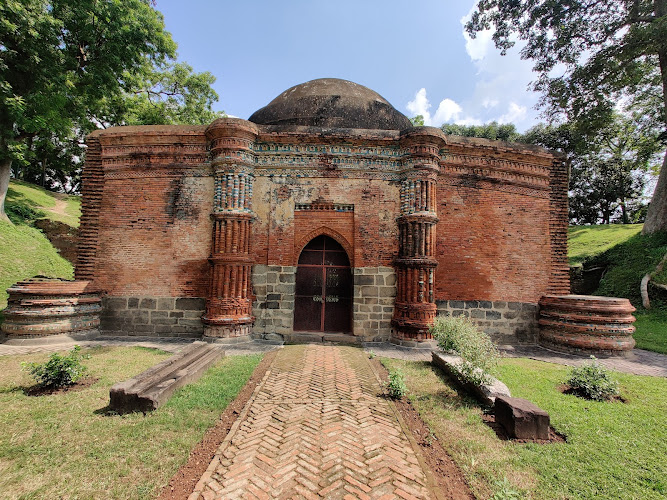
Gumti Darwaza
About Gumti Darwaza
Description
Gumti Darwaza stands as a silent witness to centuries gone by, a gateway carved out of brick and terracotta that once marked the eastern entrance to the citadel of Gaur-Lakhnauti—the capital of the Bengal Sultanate. Built way back in 1512 by Alauddin Hussain Shah, this monument is not just a doorway but a portal into the rich tapestry of Bengal’s history. You can almost feel the echoes of ancient footsteps and the whispers of royal courts as you stand before its faded, yet still striking, façade.
Now, here’s the thing—Gumti Darwaza isn’t your usual tourist hotspot with flashy lights and crowds buzzing around. It’s more of a quiet, contemplative spot, perfect for those who appreciate history without the distractions. And while it’s closed to the public inside, just gazing at the intricate terracotta work and imagining the once-glorious colors and gold leaf that adorned it is a trip back in time. The craftsmanship is something special, a rare glimpse into Sultanate architecture that’s quite distinct from other Indian monuments.
Accessibility-wise, it’s pretty thoughtful. There’s wheelchair accessible parking which means everyone can get a chance to soak in its grandeur without hassle. Families with kids find it a good spot too, as it’s not overwhelming but still sparks curiosity about the past. It’s a place that invites you to slow down, look closely, and let your imagination wander through the ages.
Key Features
- Built in 1512 by Alauddin Hussain Shah, a prominent ruler of the Bengal Sultanate
- Made primarily of brick and terracotta, showcasing exquisite Sultanate-era craftsmanship
- Once decorated with real gold, remnants of which still hint at its former glory
- Serves as the eastern gateway to the historic city of Gaur, a major medieval capital
- Located near the Chika Mosque, adding to the historical cluster of the area
- Wheelchair accessible parking available, ensuring ease of access for all visitors
- Family-friendly environment suitable for children to explore history
- Quiet and less crowded, ideal for reflective visits and photography
Best Time to Visit
Visiting Gumti Darwaza is best done in the cooler months, from October through March. The weather during this period is mild and pleasant, making your stroll around the monument and nearby historical sites comfortable. Summers in Malda can get pretty intense, with temperatures soaring and humidity that might just sap your energy faster than you’d like.
Early mornings or late afternoons are golden hours for photography here. The soft sunlight plays beautifully on the terracotta surfaces, highlighting the textures and the faint traces of color that remain. Plus, visiting during these times means you’ll avoid the few crowds that do come by, giving you a more personal experience with the monument.
How to Get There
Getting to Gumti Darwaza is a bit of an adventure that adds to its charm. The site is located in Malda district, West Bengal, which is well connected by rail and road. If you’re coming from Kolkata or other major cities, the train is a convenient and scenic option. Malda Town railway station is the nearest major stop, and from there, local transport like auto-rickshaws or taxis can take you right to the site.
If you’re driving, the roads are fairly straightforward, and parking is available near the monument. The wheelchair accessible parking lot is a nice touch that not many historical sites offer, so that’s a win in my book. Public buses also run regularly to Malda from surrounding cities, but be prepared for a little local navigation once you’re close.
Tips for Visiting
First off, don’t expect a touristy, commercialized experience here. Gumti Darwaza is more about soaking in history quietly. So, bring your curiosity and maybe a guidebook or app to help fill in the gaps because the site itself doesn’t have extensive signage or facilities.
Since the Darwaza is closed to the public, focus on the exterior details—the terracotta work is fascinating if you take your time. A pair of binoculars or a zoom lens can help you catch the finer architectural details from a distance. And hey, if you’re into photography, this place is a gem, especially with the play of natural light.
Wear comfortable shoes because you’ll likely want to explore the surrounding ruins and nearby historical spots like Chika Mosque. Bring water and a hat, especially if you’re visiting outside the cooler months. And if you’re traveling with kids, it’s a good idea to prepare some stories about the Bengal Sultanate to keep them engaged—they’ll love imagining the days when kings and queens walked these grounds.
Lastly, respect the site. It’s a fragile piece of history, so no climbing or touching the walls. And since it’s a quieter spot, your peaceful presence helps keep the atmosphere just right for everyone else who comes looking to step back in time.
Key Features
- Built in 1512 by Alauddin Hussain Shah, a prominent ruler of the Bengal Sultanate
- Made primarily of brick and terracotta, showcasing exquisite Sultanate-era craftsmanship
- Once decorated with real gold, remnants of which still hint at its former glory
- Serves as the eastern gateway to the historic city of Gaur, a major medieval capital
- Located near the Chika Mosque, adding to the historical cluster of the area
- Wheelchair accessible parking available, ensuring ease of access for all visitors
- Family-friendly environment suitable for children to explore history
- Quiet and less crowded, ideal for reflective visits and photography
More Details
Updated July 17, 2025
Table of Contents
Description
Gumti Darwaza stands as a silent witness to centuries gone by, a gateway carved out of brick and terracotta that once marked the eastern entrance to the citadel of Gaur-Lakhnauti—the capital of the Bengal Sultanate. Built way back in 1512 by Alauddin Hussain Shah, this monument is not just a doorway but a portal into the rich tapestry of Bengal’s history. You can almost feel the echoes of ancient footsteps and the whispers of royal courts as you stand before its faded, yet still striking, façade.
Now, here’s the thing—Gumti Darwaza isn’t your usual tourist hotspot with flashy lights and crowds buzzing around. It’s more of a quiet, contemplative spot, perfect for those who appreciate history without the distractions. And while it’s closed to the public inside, just gazing at the intricate terracotta work and imagining the once-glorious colors and gold leaf that adorned it is a trip back in time. The craftsmanship is something special, a rare glimpse into Sultanate architecture that’s quite distinct from other Indian monuments.
Accessibility-wise, it’s pretty thoughtful. There’s wheelchair accessible parking which means everyone can get a chance to soak in its grandeur without hassle. Families with kids find it a good spot too, as it’s not overwhelming but still sparks curiosity about the past. It’s a place that invites you to slow down, look closely, and let your imagination wander through the ages.
Key Features
- Built in 1512 by Alauddin Hussain Shah, a prominent ruler of the Bengal Sultanate
- Made primarily of brick and terracotta, showcasing exquisite Sultanate-era craftsmanship
- Once decorated with real gold, remnants of which still hint at its former glory
- Serves as the eastern gateway to the historic city of Gaur, a major medieval capital
- Located near the Chika Mosque, adding to the historical cluster of the area
- Wheelchair accessible parking available, ensuring ease of access for all visitors
- Family-friendly environment suitable for children to explore history
- Quiet and less crowded, ideal for reflective visits and photography
Best Time to Visit
Visiting Gumti Darwaza is best done in the cooler months, from October through March. The weather during this period is mild and pleasant, making your stroll around the monument and nearby historical sites comfortable. Summers in Malda can get pretty intense, with temperatures soaring and humidity that might just sap your energy faster than you’d like.
Early mornings or late afternoons are golden hours for photography here. The soft sunlight plays beautifully on the terracotta surfaces, highlighting the textures and the faint traces of color that remain. Plus, visiting during these times means you’ll avoid the few crowds that do come by, giving you a more personal experience with the monument.
How to Get There
Getting to Gumti Darwaza is a bit of an adventure that adds to its charm. The site is located in Malda district, West Bengal, which is well connected by rail and road. If you’re coming from Kolkata or other major cities, the train is a convenient and scenic option. Malda Town railway station is the nearest major stop, and from there, local transport like auto-rickshaws or taxis can take you right to the site.
If you’re driving, the roads are fairly straightforward, and parking is available near the monument. The wheelchair accessible parking lot is a nice touch that not many historical sites offer, so that’s a win in my book. Public buses also run regularly to Malda from surrounding cities, but be prepared for a little local navigation once you’re close.
Tips for Visiting
First off, don’t expect a touristy, commercialized experience here. Gumti Darwaza is more about soaking in history quietly. So, bring your curiosity and maybe a guidebook or app to help fill in the gaps because the site itself doesn’t have extensive signage or facilities.
Since the Darwaza is closed to the public, focus on the exterior details—the terracotta work is fascinating if you take your time. A pair of binoculars or a zoom lens can help you catch the finer architectural details from a distance. And hey, if you’re into photography, this place is a gem, especially with the play of natural light.
Wear comfortable shoes because you’ll likely want to explore the surrounding ruins and nearby historical spots like Chika Mosque. Bring water and a hat, especially if you’re visiting outside the cooler months. And if you’re traveling with kids, it’s a good idea to prepare some stories about the Bengal Sultanate to keep them engaged—they’ll love imagining the days when kings and queens walked these grounds.
Lastly, respect the site. It’s a fragile piece of history, so no climbing or touching the walls. And since it’s a quieter spot, your peaceful presence helps keep the atmosphere just right for everyone else who comes looking to step back in time.
Key Highlights
- Built in 1512 by Alauddin Hussain Shah, a prominent ruler of the Bengal Sultanate
- Made primarily of brick and terracotta, showcasing exquisite Sultanate-era craftsmanship
- Once decorated with real gold, remnants of which still hint at its former glory
- Serves as the eastern gateway to the historic city of Gaur, a major medieval capital
- Located near the Chika Mosque, adding to the historical cluster of the area
- Wheelchair accessible parking available, ensuring ease of access for all visitors
- Family-friendly environment suitable for children to explore history
- Quiet and less crowded, ideal for reflective visits and photography
Location
Places to Stay Near Gumti Darwaza
Find and Book a Tour
Explore More Travel Guides
No reviews found! Be the first to review!
Traveler Reviews for Gumti Darwaza
There are no reviews yet. Be the first one to write one.
Have you visited Gumti Darwaza? Help other travelers by sharing your review.
You Might Also Like
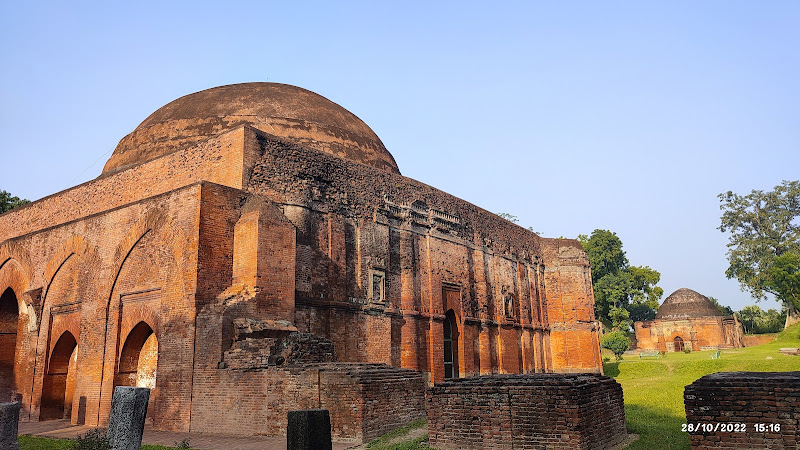
Find Accommodations Nearby
Recommended Tours & Activities
Visitor Reviews
There are no reviews yet. Be the first one to write one.
Share Your Experience
Have you visited Gumti Darwaza? Help other travelers by leaving a review.