
Gruta da Pedra da Santa – Catuné
About Gruta da Pedra da Santa – Catuné
Description
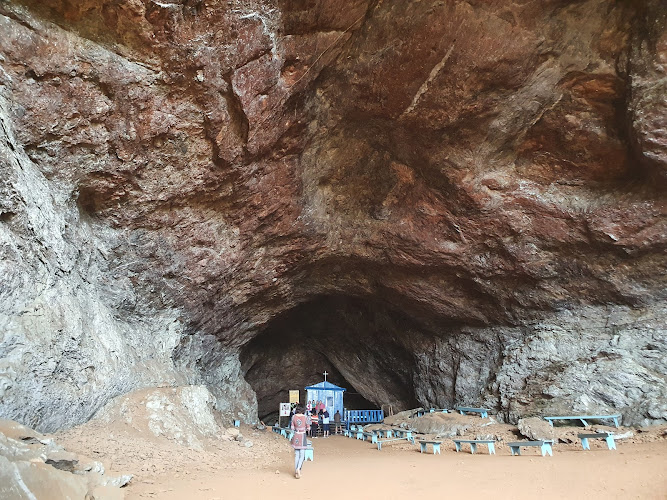
The Gruta da Pedra da Santa in Catuné represents one of Brazil's most extraordinary examples of nature meeting spirituality. This remarkable cave system, located in the district of Catuné within Tombos, Minas Gerais, has evolved from a simple natural chamber into a sacred space that draws thousands of pilgrims and travelers annually. What makes this place truly fascinating is how it's grown organically – and I mean that quite literally.
Here's something that'll blow your mind: this cave has been expanding naturally over the past century. Originally covering just 150 square meters, the main chamber now spans an impressive 1,200 square meters with ceilings reaching 35 meters high. Scientists are still scratching their heads trying to figure out exactly how this rapid expansion continues to occur. And here's the kicker – there's another cave chamber forming right alongside it, already reaching 400 square meters and gradually merging with the original.
The cave serves as an active church dedicated to Our Lady of Lourdes, where locals and visitors gather for worship in this naturally formed cathedral. But don't expect your typical tourist trap experience here. The space remains authentically spiritual, with minimal modifications – just a leveled floor, simple altar, and wooden benches that respect the cave's natural architecture.
What struck me most about researching this place is how it perfectly embodies that uniquely Brazilian blend of natural wonder and deep faith. The cave exists as part of the "Caminho da Luz" (Path of Light), drawing people seeking everything from quiet contemplation to spiritual healing. And honestly, standing in a space that's literally growing around you while you pray or meditate? That's got to be pretty powerful.
Key Features
The Gruta da Pedra da Santa offers visitors several distinctive characteristics that set it apart from typical cave systems or religious sites:
- Expanding Cave System – The main chamber continues growing naturally, having increased from 150 to 1,200 square meters over roughly 100 years
- Active Underground Church – Features a functioning chapel with altar and seating dedicated to Nossa Senhora de Lourdes
- Minimal Human Intervention – The cave remains largely unmodified, preserving its natural geological features
- Secondary Cave Formation – An additional 400-square-meter chamber is developing adjacent to the main grotto
- Pilgrimage Destination – Serves as a significant stop along Brazil's Caminho da Luz spiritual route
- Annual Religious Festival – Hosts a major celebration every third Sunday in July
- Scientific Mystery – The rapid natural expansion puzzles geologists and cave specialists
- Family-Friendly Environment – Welcomes children and offers accessible spiritual experiences
- Hiking Opportunities – Surrounded by trails suitable for various skill levels
- Peaceful Atmosphere – Maintains a quiet, contemplative environment year-round
Best Time to Visit
Timing your visit to Gruta da Pedra da Santa depends largely on what kind of experience you're after. The cave maintains a naturally cool temperature throughout the year, making it comfortable regardless of external weather conditions – which is honestly a blessing during Brazil's intense summer heat.
If you want to witness the site at its most vibrant, plan your trip around the third Sunday in July. This is when the annual religious festival takes place, transforming the quiet grotto into a hub of celebration and devotion. Thousands of pilgrims converge during this time, creating an atmosphere that's both festive and deeply spiritual. But fair warning – this is also when you'll encounter the biggest crowds and potentially limited parking.
For a more intimate experience, consider visiting during the shoulder seasons of April through June or August through October. The weather's generally pleasant, and you'll have better opportunities for quiet reflection without fighting crowds for space. Plus, the surrounding hiking trails are at their most enjoyable during these months.
Dry season (May through September) offers the most reliable weather for combining your cave visit with outdoor activities. The trails around Catuné become more accessible, and you won't have to worry about sudden tropical downpours interrupting your spiritual journey.
Early morning visits, regardless of season, provide the most serene experience. You'll often find yourself sharing the space with just a few local worshippers, which really lets you appreciate the cave's natural acoustics and the way light filters through the entrance. And honestly? There's something magical about starting your day in a place that's literally growing around you.
How to Get There
Getting to Gruta da Pedra da Santa requires a bit of planning, but the journey itself becomes part of the experience. The cave is located in Catuné, which serves as a district of Tombos in Minas Gerais state. Your best bet is flying into either Belo Horizonte or Rio de Janeiro, then making the overland journey.
From Belo Horizonte, you're looking at roughly a 4-hour drive southeast toward the Zona da Mata region. Take BR-040 toward Juiz de Fora, then connect to regional roads leading to Tombos. The final stretch to Catuné involves smaller roads that wind through some genuinely beautiful countryside – so don't rush it.
If you're starting from Rio de Janeiro, the drive takes about 3.5 hours heading north. You'll want to take BR-040 toward Juiz de Fora, then branch off toward Tombos. This route actually offers some spectacular mountain views, especially as you approach the region.
Public transportation exists but requires patience and planning. Bus services connect major cities to Tombos, but getting from Tombos to Catuné typically involves local transportation or taxi services. Many visitors find it worthwhile to rent a car for the flexibility it provides, especially if you want to explore other sites along the Caminho da Luz route.
GPS coordinates help, but don't rely entirely on technology once you reach Catuné. The final approach involves some local roads that might not appear on all mapping systems. Asking locals for "Pedra Santa" will get you pointed in the right direction – everyone in the area knows exactly where you're headed.
Tips for Visiting
Approaching Gruta da Pedra da Santa requires a different mindset than your typical tourist destination. This is an active place of worship first, tourist attraction second, so respect for the space and other visitors should guide your entire experience.
Dress appropriately for both the spiritual setting and cave environment. That means modest clothing covering shoulders and knees, plus sturdy footwear with good grip. The cave floor can be uneven despite leveling efforts, and you don't want to be that person slipping around during a quiet prayer service.
Bring a light jacket or sweater regardless of outside temperature. Caves maintain cooler temperatures year-round, and you might find yourself staying longer than planned once you experience the peaceful atmosphere. I'd also suggest packing a small flashlight or headlamp – while the main areas are accessible, having your own light source helps you appreciate the geological features.
Photography etiquette matters here. While photos are generally permitted, be mindful of ongoing religious services and other visitors' spiritual practices. Flash photography can be disruptive, and the natural lighting often creates more atmospheric images anyway.
Plan for basic facilities but don't expect luxury amenities. Public restrooms are available, but bring hand sanitizer and tissues just in case. Water fountains might not be reliable, so carry your own hydration – especially important if you're combining your visit with hiking activities.
Consider learning a few basic Portuguese phrases if you don't speak the language. While some visitors might speak English, you'll have richer interactions with locals who can share stories about the cave's continuing expansion and spiritual significance.
Timing your visit around local customs enhances the experience significantly. If you arrive during prayer times or informal services, joining respectfully (even if you don't share the specific faith) often leads to meaningful cultural exchanges.
Don't rush your visit. The cave's most remarkable feature – its ongoing natural expansion – isn't something you'll notice in a quick 15-minute tour. Spend time sitting quietly, observing the rock formations, and really absorbing the unique atmosphere of this growing sacred space.
Finally, consider extending your stay in the Catuné area. The district offers additional hiking opportunities and connects to other sites along the Caminho da Luz route. Many visitors find that the cave visit becomes just the beginning of a deeper exploration of this spiritually significant region of Minas Gerais.
Key Features
- Key Features
- Best Time to Visit
- How to Get There
- Tips for Visiting
More Details
Updated September 12, 2025
Table of Contents
Description
The Gruta da Pedra da Santa in Catuné represents one of Brazil’s most extraordinary examples of nature meeting spirituality. This remarkable cave system, located in the district of Catuné within Tombos, Minas Gerais, has evolved from a simple natural chamber into a sacred space that draws thousands of pilgrims and travelers annually. What makes this place truly fascinating is how it’s grown organically – and I mean that quite literally.
Here’s something that’ll blow your mind: this cave has been expanding naturally over the past century. Originally covering just 150 square meters, the main chamber now spans an impressive 1,200 square meters with ceilings reaching 35 meters high. Scientists are still scratching their heads trying to figure out exactly how this rapid expansion continues to occur. And here’s the kicker – there’s another cave chamber forming right alongside it, already reaching 400 square meters and gradually merging with the original.
The cave serves as an active church dedicated to Our Lady of Lourdes, where locals and visitors gather for worship in this naturally formed cathedral. But don’t expect your typical tourist trap experience here. The space remains authentically spiritual, with minimal modifications – just a leveled floor, simple altar, and wooden benches that respect the cave’s natural architecture.
What struck me most about researching this place is how it perfectly embodies that uniquely Brazilian blend of natural wonder and deep faith. The cave exists as part of the “Caminho da Luz” (Path of Light), drawing people seeking everything from quiet contemplation to spiritual healing. And honestly, standing in a space that’s literally growing around you while you pray or meditate? That’s got to be pretty powerful.
Key Features
The Gruta da Pedra da Santa offers visitors several distinctive characteristics that set it apart from typical cave systems or religious sites:
- Expanding Cave System – The main chamber continues growing naturally, having increased from 150 to 1,200 square meters over roughly 100 years
- Active Underground Church – Features a functioning chapel with altar and seating dedicated to Nossa Senhora de Lourdes
- Minimal Human Intervention – The cave remains largely unmodified, preserving its natural geological features
- Secondary Cave Formation – An additional 400-square-meter chamber is developing adjacent to the main grotto
- Pilgrimage Destination – Serves as a significant stop along Brazil’s Caminho da Luz spiritual route
- Annual Religious Festival – Hosts a major celebration every third Sunday in July
- Scientific Mystery – The rapid natural expansion puzzles geologists and cave specialists
- Family-Friendly Environment – Welcomes children and offers accessible spiritual experiences
- Hiking Opportunities – Surrounded by trails suitable for various skill levels
- Peaceful Atmosphere – Maintains a quiet, contemplative environment year-round
Best Time to Visit
Timing your visit to Gruta da Pedra da Santa depends largely on what kind of experience you’re after. The cave maintains a naturally cool temperature throughout the year, making it comfortable regardless of external weather conditions – which is honestly a blessing during Brazil’s intense summer heat.
If you want to witness the site at its most vibrant, plan your trip around the third Sunday in July. This is when the annual religious festival takes place, transforming the quiet grotto into a hub of celebration and devotion. Thousands of pilgrims converge during this time, creating an atmosphere that’s both festive and deeply spiritual. But fair warning – this is also when you’ll encounter the biggest crowds and potentially limited parking.
For a more intimate experience, consider visiting during the shoulder seasons of April through June or August through October. The weather’s generally pleasant, and you’ll have better opportunities for quiet reflection without fighting crowds for space. Plus, the surrounding hiking trails are at their most enjoyable during these months.
Dry season (May through September) offers the most reliable weather for combining your cave visit with outdoor activities. The trails around Catuné become more accessible, and you won’t have to worry about sudden tropical downpours interrupting your spiritual journey.
Early morning visits, regardless of season, provide the most serene experience. You’ll often find yourself sharing the space with just a few local worshippers, which really lets you appreciate the cave’s natural acoustics and the way light filters through the entrance. And honestly? There’s something magical about starting your day in a place that’s literally growing around you.
How to Get There
Getting to Gruta da Pedra da Santa requires a bit of planning, but the journey itself becomes part of the experience. The cave is located in Catuné, which serves as a district of Tombos in Minas Gerais state. Your best bet is flying into either Belo Horizonte or Rio de Janeiro, then making the overland journey.
From Belo Horizonte, you’re looking at roughly a 4-hour drive southeast toward the Zona da Mata region. Take BR-040 toward Juiz de Fora, then connect to regional roads leading to Tombos. The final stretch to Catuné involves smaller roads that wind through some genuinely beautiful countryside – so don’t rush it.
If you’re starting from Rio de Janeiro, the drive takes about 3.5 hours heading north. You’ll want to take BR-040 toward Juiz de Fora, then branch off toward Tombos. This route actually offers some spectacular mountain views, especially as you approach the region.
Public transportation exists but requires patience and planning. Bus services connect major cities to Tombos, but getting from Tombos to Catuné typically involves local transportation or taxi services. Many visitors find it worthwhile to rent a car for the flexibility it provides, especially if you want to explore other sites along the Caminho da Luz route.
GPS coordinates help, but don’t rely entirely on technology once you reach Catuné. The final approach involves some local roads that might not appear on all mapping systems. Asking locals for “Pedra Santa” will get you pointed in the right direction – everyone in the area knows exactly where you’re headed.
Tips for Visiting
Approaching Gruta da Pedra da Santa requires a different mindset than your typical tourist destination. This is an active place of worship first, tourist attraction second, so respect for the space and other visitors should guide your entire experience.
Dress appropriately for both the spiritual setting and cave environment. That means modest clothing covering shoulders and knees, plus sturdy footwear with good grip. The cave floor can be uneven despite leveling efforts, and you don’t want to be that person slipping around during a quiet prayer service.
Bring a light jacket or sweater regardless of outside temperature. Caves maintain cooler temperatures year-round, and you might find yourself staying longer than planned once you experience the peaceful atmosphere. I’d also suggest packing a small flashlight or headlamp – while the main areas are accessible, having your own light source helps you appreciate the geological features.
Photography etiquette matters here. While photos are generally permitted, be mindful of ongoing religious services and other visitors’ spiritual practices. Flash photography can be disruptive, and the natural lighting often creates more atmospheric images anyway.
Plan for basic facilities but don’t expect luxury amenities. Public restrooms are available, but bring hand sanitizer and tissues just in case. Water fountains might not be reliable, so carry your own hydration – especially important if you’re combining your visit with hiking activities.
Consider learning a few basic Portuguese phrases if you don’t speak the language. While some visitors might speak English, you’ll have richer interactions with locals who can share stories about the cave’s continuing expansion and spiritual significance.
Timing your visit around local customs enhances the experience significantly. If you arrive during prayer times or informal services, joining respectfully (even if you don’t share the specific faith) often leads to meaningful cultural exchanges.
Don’t rush your visit. The cave’s most remarkable feature – its ongoing natural expansion – isn’t something you’ll notice in a quick 15-minute tour. Spend time sitting quietly, observing the rock formations, and really absorbing the unique atmosphere of this growing sacred space.
Finally, consider extending your stay in the Catuné area. The district offers additional hiking opportunities and connects to other sites along the Caminho da Luz route. Many visitors find that the cave visit becomes just the beginning of a deeper exploration of this spiritually significant region of Minas Gerais.
Key Highlights
- Key Features
- Best Time to Visit
- How to Get There
- Tips for Visiting
Location
Places to Stay Near Gruta da Pedra da Santa - Catuné
Find and Book a Tour
Explore More Travel Guides
No reviews found! Be the first to review!
Traveler Reviews for Gruta da Pedra da Santa – Catuné
There are no reviews yet. Be the first one to write one.
Have you visited Gruta da Pedra da Santa – Catuné? Help other travelers by sharing your review.
You Might Also Like
CENTRO CULTURAL DE ARACAJU
Park Olavo Ferreira de Sá

Boqueirão beach
Find Accommodations Nearby
Recommended Tours & Activities
Visitor Reviews
There are no reviews yet. Be the first one to write one.
Share Your Experience
Have you visited Gruta da Pedra da Santa – Catuné? Help other travelers by leaving a review.