
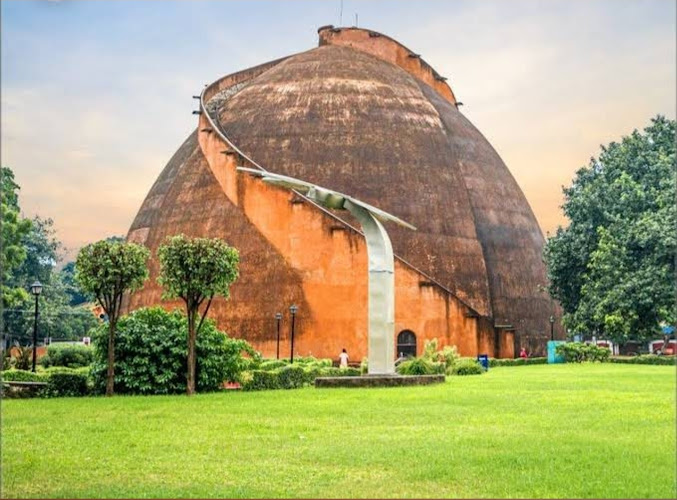
Golghar
About Golghar
Description
Golghar in Patna is one of those places that quietly grabs your attention the moment you see it. It’s not flashy or overly ornate, but there’s something about its round, stupa-like shape that makes you stop and stare for a second. Built way back in 1786 by Captain John Garstin during the British era, this massive granary was originally designed to store grain and prevent famine in the region. And yet today, it stands as a symbol of both history and resilience, watching over the city like an old guardian that’s seen everything—from colonial days to modern chaos.
When you walk around the base of Golghar, you can almost feel the weight of time in its thick walls. The structure is entirely solid, made without a single pillar inside, which still amazes engineers and travelers alike. The echo inside is something else—if you ever whisper, the sound bounces back in the most peculiar way. I remember visiting once on a hot afternoon, and even though the sun was blazing, the interior stayed surprisingly cool. It’s that kind of place where you can slow down, take a deep breath, and just feel the story of the place.
Climbing the winding staircase to the top is a bit of a workout, I’ll admit. But once you reach the summit, the view makes every step worth it. From up there, the entire city of Patna unfolds beneath you—the Ganges glimmering in the distance, the crowded streets, and the faint hum of daily life. It’s peaceful and chaotic all at once. Many visitors find that moment on top to be the highlight of their trip, and honestly, I can’t blame them. There’s something deeply grounding about standing on a monument built centuries ago and seeing how much the world around it has changed.
Though some travelers feel that the site could use a bit more maintenance, most agree that Golghar’s charm lies in its simplicity. It’s not a polished tourist trap—it’s raw, real, and full of character. Families, history buffs, and photographers all find something here that speaks to them. Whether you’re into architecture, colonial history, or just love a good panoramic view, Golghar has a quiet magic that’s hard to ignore.
Key Features
- Massive dome-shaped structure built in 1786, inspired by the traditional Buddhist stupa design.
- Constructed as a granary to store up to 140,000 tons of grain during British rule.
- Features a spiral staircase with 145 steps leading to the top for a 360-degree view of Patna and the Ganges River.
- Unique echo effect due to its hollow, pillarless design.
- Accessible to visitors with wheelchair-friendly entry and parking facilities.
- Popular spot for photography, especially during sunrise and sunset.
- Surrounded by lush gardens and open spaces ideal for families and kids.
- Nearby attractions include Gandhi Maidan and the Patna Museum.
Best Time to Visit
If you ask me, the best time to visit Golghar is between October and March. The weather during these months is cooler, making it much easier to climb those long stairs without melting halfway up. The winter air is crisp, and the Ganges looks especially beautiful under the soft sunlight. Summers, on the other hand, can be brutally hot in Bihar, and the humidity doesn’t help either. I once made the mistake of visiting in May—let’s just say I spent more time looking for shade than sightseeing.
Evenings are lovely here, no matter the season. Locals often come for a walk, and you’ll find families enjoying snacks from nearby stalls. The golden hour light hitting the dome gives it a warm glow that’s a photographer’s dream. If you’re into sunsets (and who isn’t?), plan to reach the top just before dusk. Watching the city slowly light up as the sun dips behind the horizon feels like something straight out of a travel diary.
How to Get There
Getting to Golghar is quite straightforward. Patna is well connected by air, rail, and road, so no matter where you’re coming from, you’ll find a way. Once you’re in the city, local transport options like auto-rickshaws, taxis, and even app-based cabs can take you directly to the site. It’s located near the heart of Patna, so you won’t have to travel far from major landmarks or hotels.
If you’re feeling adventurous, try taking a walk from Gandhi Maidan—it’s a short distance and gives you a nice glimpse of everyday Patna life. The roads are busy, yes, but that’s part of the experience. You’ll pass by old colonial buildings, bustling tea stalls, and maybe even a few curious locals who’ll ask where you’re from. That’s the charm of Bihar—people here are warm, chatty, and full of stories.
Public buses also stop near the area, though they can get crowded. If you’re traveling with family or kids, a private cab might be more comfortable. Parking is available nearby, and the entrance is wheelchair accessible, which makes it convenient for all kinds of travelers.
Tips for Visiting
Here’s the thing about Golghar—it’s simple, but planning a few details can make your visit so much better. First, try to go early in the morning or late in the evening. The midday sun can be harsh, especially if you’re planning to climb to the top. Carry a bottle of water, wear comfortable shoes, and don’t forget your camera. The panoramic views are too good to miss.
If you’re traveling with kids, they’ll enjoy running around the open gardens at the base. There’s plenty of space, and it’s generally safe and family-friendly. Just keep an eye on them while climbing the stairs—it’s a bit steep in places. The site is also accessible for visitors with mobility needs, which is a big plus.
A small but important tip: avoid shouting or clapping inside the dome. The echo is strong, and while it’s fun for a second, it can get overwhelming quickly. Instead, take a quiet moment to listen. You’ll hear the faint hum of the city, the rustle of trees, and maybe even the distant call of a train. It’s oddly peaceful.
If you’re into photography, bring a wide-angle lens for the best shots from the top. And if you enjoy local snacks, there are plenty of small food stalls nearby selling everything from spicy samosas to sweet jalebis. Nothing beats munching on a hot snack while watching the sunset over the Ganges—it’s one of those simple pleasures that stick with you long after you’ve left.
Lastly, be patient. Golghar might not have the polish of some big tourist attractions, but that’s part of its appeal. It’s a slice of history still standing proud amidst the modern city. And if you take your time, you’ll see it for what it really is—a place built for survival that ended up becoming a symbol of endurance and beauty.
So, whether you’re a history lover, a curious traveler, or just someone looking for a quiet spot with a view, Golghar deserves a spot on your list. It’s one of those rare places where the past and present meet in the most unassuming yet unforgettable way.
Key Features
- Massive dome-shaped structure built in 1786, inspired by the traditional Buddhist stupa design.
- Constructed as a granary to store up to 140,000 tons of grain during British rule.
- Features a spiral staircase with 145 steps leading to the top for a 360-degree view of Patna and the Ganges River.
- Unique echo effect due to its hollow, pillarless design.
- Accessible to visitors with wheelchair-friendly entry and parking facilities.
- Popular spot for photography, especially during sunrise and sunset.
- Surrounded by lush gardens and open spaces ideal for families and kids.
- Nearby attractions include Gandhi Maidan and the Patna Museum.
More Details
Updated December 1, 2025
Table of Contents
Description
Golghar in Patna is one of those places that quietly grabs your attention the moment you see it. It’s not flashy or overly ornate, but there’s something about its round, stupa-like shape that makes you stop and stare for a second. Built way back in 1786 by Captain John Garstin during the British era, this massive granary was originally designed to store grain and prevent famine in the region. And yet today, it stands as a symbol of both history and resilience, watching over the city like an old guardian that’s seen everything—from colonial days to modern chaos.
When you walk around the base of Golghar, you can almost feel the weight of time in its thick walls. The structure is entirely solid, made without a single pillar inside, which still amazes engineers and travelers alike. The echo inside is something else—if you ever whisper, the sound bounces back in the most peculiar way. I remember visiting once on a hot afternoon, and even though the sun was blazing, the interior stayed surprisingly cool. It’s that kind of place where you can slow down, take a deep breath, and just feel the story of the place.
Climbing the winding staircase to the top is a bit of a workout, I’ll admit. But once you reach the summit, the view makes every step worth it. From up there, the entire city of Patna unfolds beneath you—the Ganges glimmering in the distance, the crowded streets, and the faint hum of daily life. It’s peaceful and chaotic all at once. Many visitors find that moment on top to be the highlight of their trip, and honestly, I can’t blame them. There’s something deeply grounding about standing on a monument built centuries ago and seeing how much the world around it has changed.
Though some travelers feel that the site could use a bit more maintenance, most agree that Golghar’s charm lies in its simplicity. It’s not a polished tourist trap—it’s raw, real, and full of character. Families, history buffs, and photographers all find something here that speaks to them. Whether you’re into architecture, colonial history, or just love a good panoramic view, Golghar has a quiet magic that’s hard to ignore.
Key Features
- Massive dome-shaped structure built in 1786, inspired by the traditional Buddhist stupa design.
- Constructed as a granary to store up to 140,000 tons of grain during British rule.
- Features a spiral staircase with 145 steps leading to the top for a 360-degree view of Patna and the Ganges River.
- Unique echo effect due to its hollow, pillarless design.
- Accessible to visitors with wheelchair-friendly entry and parking facilities.
- Popular spot for photography, especially during sunrise and sunset.
- Surrounded by lush gardens and open spaces ideal for families and kids.
- Nearby attractions include Gandhi Maidan and the Patna Museum.
Best Time to Visit
If you ask me, the best time to visit Golghar is between October and March. The weather during these months is cooler, making it much easier to climb those long stairs without melting halfway up. The winter air is crisp, and the Ganges looks especially beautiful under the soft sunlight. Summers, on the other hand, can be brutally hot in Bihar, and the humidity doesn’t help either. I once made the mistake of visiting in May—let’s just say I spent more time looking for shade than sightseeing.
Evenings are lovely here, no matter the season. Locals often come for a walk, and you’ll find families enjoying snacks from nearby stalls. The golden hour light hitting the dome gives it a warm glow that’s a photographer’s dream. If you’re into sunsets (and who isn’t?), plan to reach the top just before dusk. Watching the city slowly light up as the sun dips behind the horizon feels like something straight out of a travel diary.
How to Get There
Getting to Golghar is quite straightforward. Patna is well connected by air, rail, and road, so no matter where you’re coming from, you’ll find a way. Once you’re in the city, local transport options like auto-rickshaws, taxis, and even app-based cabs can take you directly to the site. It’s located near the heart of Patna, so you won’t have to travel far from major landmarks or hotels.
If you’re feeling adventurous, try taking a walk from Gandhi Maidan—it’s a short distance and gives you a nice glimpse of everyday Patna life. The roads are busy, yes, but that’s part of the experience. You’ll pass by old colonial buildings, bustling tea stalls, and maybe even a few curious locals who’ll ask where you’re from. That’s the charm of Bihar—people here are warm, chatty, and full of stories.
Public buses also stop near the area, though they can get crowded. If you’re traveling with family or kids, a private cab might be more comfortable. Parking is available nearby, and the entrance is wheelchair accessible, which makes it convenient for all kinds of travelers.
Tips for Visiting
Here’s the thing about Golghar—it’s simple, but planning a few details can make your visit so much better. First, try to go early in the morning or late in the evening. The midday sun can be harsh, especially if you’re planning to climb to the top. Carry a bottle of water, wear comfortable shoes, and don’t forget your camera. The panoramic views are too good to miss.
If you’re traveling with kids, they’ll enjoy running around the open gardens at the base. There’s plenty of space, and it’s generally safe and family-friendly. Just keep an eye on them while climbing the stairs—it’s a bit steep in places. The site is also accessible for visitors with mobility needs, which is a big plus.
A small but important tip: avoid shouting or clapping inside the dome. The echo is strong, and while it’s fun for a second, it can get overwhelming quickly. Instead, take a quiet moment to listen. You’ll hear the faint hum of the city, the rustle of trees, and maybe even the distant call of a train. It’s oddly peaceful.
If you’re into photography, bring a wide-angle lens for the best shots from the top. And if you enjoy local snacks, there are plenty of small food stalls nearby selling everything from spicy samosas to sweet jalebis. Nothing beats munching on a hot snack while watching the sunset over the Ganges—it’s one of those simple pleasures that stick with you long after you’ve left.
Lastly, be patient. Golghar might not have the polish of some big tourist attractions, but that’s part of its appeal. It’s a slice of history still standing proud amidst the modern city. And if you take your time, you’ll see it for what it really is—a place built for survival that ended up becoming a symbol of endurance and beauty.
So, whether you’re a history lover, a curious traveler, or just someone looking for a quiet spot with a view, Golghar deserves a spot on your list. It’s one of those rare places where the past and present meet in the most unassuming yet unforgettable way.
Key Highlights
- Massive dome-shaped structure built in 1786, inspired by the traditional Buddhist stupa design.
- Constructed as a granary to store up to 140,000 tons of grain during British rule.
- Features a spiral staircase with 145 steps leading to the top for a 360-degree view of Patna and the Ganges River.
- Unique echo effect due to its hollow, pillarless design.
- Accessible to visitors with wheelchair-friendly entry and parking facilities.
- Popular spot for photography, especially during sunrise and sunset.
- Surrounded by lush gardens and open spaces ideal for families and kids.
- Nearby attractions include Gandhi Maidan and the Patna Museum.
Location
Places to Stay Near Golghar
Find and Book a Tour
Explore More Travel Guides
No reviews found! Be the first to review!
Traveler Reviews for Golghar
There are no reviews yet. Be the first one to write one.
Have you visited Golghar? Help other travelers by sharing your review.
You Might Also Like
Find Accommodations Nearby
Recommended Tours & Activities
Visitor Reviews
There are no reviews yet. Be the first one to write one.
Share Your Experience
Have you visited Golghar? Help other travelers by leaving a review.