
Gold Nugget Museum
About Gold Nugget Museum
Description
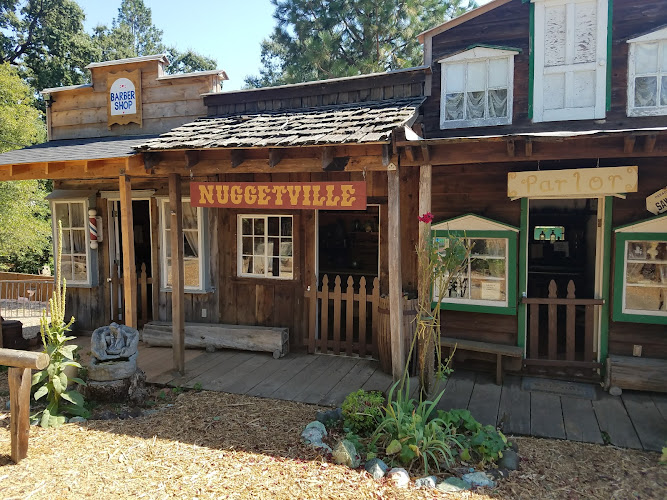
The Gold Nugget Museum in Paradise, California, presents a plainspoken, tactile look at Gold Rush-era life that many travelers find unexpectedly charming. Rather than glitzy showcases of enormous nuggets, the museum focuses on the everyday rhythms of a mining community: tools with dents and dirt still in the seams, a blacksmith shop that smells faintly of iron and oil, a one-room schoolhouse that seems to hold a dozen whispered stories, and a covered bridge that invites you to slow down for a minute and listen. Visitors who come expecting polished, high-tech displays may be surprised — and many are delighted — to find exhibits that favor authenticity and local memory over spectacle.
Located in a small town with strong ties to the California gold mining story, the museum serves both casual sightseers and history buffs. The layout is straightforward: outdoor areas recreate a little of the townscape while indoor rooms hold maps, photographs, and artifacts that trace the region from indigenous use to the frenetic days of gold discovery and on through quieter years of community life. Text panels are concise and practical; docents tend to be volunteers who grew up nearby or developed a genuine curiosity about miners, tailings, sluices, and the odd social detail that makes history feel, well, human. Expect conversational answers to your questions, and sometimes a local anecdote about who used to live in that house or where that big rock once sat.
Accessibility is handled thoughtfully. The entrance and parking are wheelchair accessible, and there are accessible restrooms on site. That matters because the museum’s appeal is broad: families with kids who like to touch things, older visitors who remember a different pace of life, school groups on field trips, and travelers passing through on a regional California history route. A modest gift shop offers locally made mementos and basic guidebooks; it’s perfect for picking up a small, useful souvenir without the tourist-trap prices. There’s no restaurant inside, so plan for a picnic or a quick stop in town afterward. On-site parking keeps the visit easy, and the whole visit often fits neatly into a couple of hours if someone in the group gets restless — which they do, sometimes.
What sets this museum apart is its focus on process and place. Instead of simply showing an enormous gold nugget and stopping there, the museum invites visitors to see how people lived around gold, and how mining reshaped landscape, labor, and local economies. The blacksmith shop is a highlight: visitors can watch (at scheduled times) demonstrations or see well-preserved anvils and bellows that hint at the daily grind of keeping wagons, tools, and household implements working. The schoolhouse is more than a display; it’s a small capsule of community life, with desks, slate boards, and an old reader on the shelf that lets parents explain schooling in the 19th century to curious kids. And the covered bridge — yes, it creaks a little and that’s part of its charm — gives a pleasant photo op and a real sense of crossing into a slower time.
The museum’s exhibits touch on several layers of history. There are panels on the miners themselves, profiles of some of the town’s early families, and artifacts that show how local industries evolved after the initial rush. But the site also nods to the region’s Native American history and environmental change, albeit in a measured way. Visitors who care about deeper context will find references to how mining techniques changed over the decades, how watercourses were redirected, and how communities adapted. That balanced approach makes the museum useful for researchers and for families who want a solid primer on northern California mining history without getting bogged down in arcane detail.
Practical travelers will appreciate how the museum handles visits: it’s designed to be approachable rather than exhaustive. Many people use it as a stopover between outdoor adventures in the nearby foothills or as an educational break on a longer California road trip. The onsite amenities — restroom, accessible parking, and plainly labeled displays — reduce friction. The museum staff are known to answer routing questions and to suggest nearby scenic drives or other small historic sites in Butte County. This is the sort of place where the volunteer at the desk might point out a little-known lookout, or tell you where to pan for gold if you want to try your hand at something local and low-cost.
There are a few quirks worth mentioning. The exhibits lean toward the rustic side and are intentionally modest; they reflect community memory rather than museum blockbuster funding. Lighting is functional rather than theatrical, labels are brief, and many artifacts are presented in context — a rusted pick next to a miner’s lunch pail, for example — rather than behind layers of glass. That intimacy is a selling point for people who prefer tactile, grounded history. Photographers and writers often appreciate the textured surfaces and the museum’s unpretentious aesthetic; it’s an ideal place for candid photos that aren’t overproduced.
Families with children tend to rate the experience highly because the museum is hands-on in a controlled way. Kids can imagine being a blacksmith’s helper or sitting at one of the old school desks; signage invites questions. Still, this is not an interactive theme park. Parents should be ready to guide attention toward the scenes and to frame the mining history in age-appropriate terms. For teens and adults, the museum provides a neat, readable overview of mining technology and local social life; it’s the kind of local history stop that enriches a drive through northern California and helps explain why small towns in the foothills developed the way they did.
A quiet but important point: the museum doubles as a community memory bank. Local events, occasional talks, and seasonal programming highlight regional hobbies and traditions. People who live in the area sometimes revisit to reconnect with family history or to research ancestors who worked in the mines. That community orientation gives the museum a warmth not always found in larger institutions; it feels lived-in. Visitors who chat with volunteers may come away with brilliant little stories — a miner who ran a bakery after the rush, or a bridge that survived a winter flood by sheer luck — that don’t make the label copy but do make the place stick in one’s head.
For travelers prioritizing efficiency, the museum makes a good half-day stop. It’s compact enough to explore without a map and rich enough to satisfy curiosity about California’s gold-era footprint. Explore slowly and notice the small details: handwritten ledger pages, rust patterns, and the way a tool bears the imprint of repeated use. Those are the kinds of things that tell the story more clearly than a single headline fact. In short, the museum works best for people who enjoy history told in objects and anecdotes rather than in sweeping narratives.
Finally, this is the sort of destination that rewards a curious mindset. Go expecting authenticity, a few local surprises, and a low-key, informative experience. The Gold Nugget Museum is not aiming for flashy, and that’s precisely why many visitors leave feeling like they discovered a genuine slice of California mining life. It quietly educates, and because it’s run by people with ties to the place, it carries a sense of stewardship that visitors often comment on — even if they don’t say it in the exact words, they tend to feel they saw a place that remembers itself honestly.
Key Features
More Details
Updated August 30, 2025
Table of Contents
Description
The Gold Nugget Museum in Paradise, California, presents a plainspoken, tactile look at Gold Rush-era life that many travelers find unexpectedly charming. Rather than glitzy showcases of enormous nuggets, the museum focuses on the everyday rhythms of a mining community: tools with dents and dirt still in the seams, a blacksmith shop that smells faintly of iron and oil, a one-room schoolhouse that seems to hold a dozen whispered stories, and a covered bridge that invites you to slow down for a minute and listen. Visitors who come expecting polished, high-tech displays may be surprised — and many are delighted — to find exhibits that favor authenticity and local memory over spectacle.
Located in a small town with strong ties to the California gold mining story, the museum serves both casual sightseers and history buffs. The layout is straightforward: outdoor areas recreate a little of the townscape while indoor rooms hold maps, photographs, and artifacts that trace the region from indigenous use to the frenetic days of gold discovery and on through quieter years of community life. Text panels are concise and practical; docents tend to be volunteers who grew up nearby or developed a genuine curiosity about miners, tailings, sluices, and the odd social detail that makes history feel, well, human. Expect conversational answers to your questions, and sometimes a local anecdote about who used to live in that house or where that big rock once sat.
Accessibility is handled thoughtfully. The entrance and parking are wheelchair accessible, and there are accessible restrooms on site. That matters because the museum’s appeal is broad: families with kids who like to touch things, older visitors who remember a different pace of life, school groups on field trips, and travelers passing through on a regional California history route. A modest gift shop offers locally made mementos and basic guidebooks; it’s perfect for picking up a small, useful souvenir without the tourist-trap prices. There’s no restaurant inside, so plan for a picnic or a quick stop in town afterward. On-site parking keeps the visit easy, and the whole visit often fits neatly into a couple of hours if someone in the group gets restless — which they do, sometimes.
What sets this museum apart is its focus on process and place. Instead of simply showing an enormous gold nugget and stopping there, the museum invites visitors to see how people lived around gold, and how mining reshaped landscape, labor, and local economies. The blacksmith shop is a highlight: visitors can watch (at scheduled times) demonstrations or see well-preserved anvils and bellows that hint at the daily grind of keeping wagons, tools, and household implements working. The schoolhouse is more than a display; it’s a small capsule of community life, with desks, slate boards, and an old reader on the shelf that lets parents explain schooling in the 19th century to curious kids. And the covered bridge — yes, it creaks a little and that’s part of its charm — gives a pleasant photo op and a real sense of crossing into a slower time.
The museum’s exhibits touch on several layers of history. There are panels on the miners themselves, profiles of some of the town’s early families, and artifacts that show how local industries evolved after the initial rush. But the site also nods to the region’s Native American history and environmental change, albeit in a measured way. Visitors who care about deeper context will find references to how mining techniques changed over the decades, how watercourses were redirected, and how communities adapted. That balanced approach makes the museum useful for researchers and for families who want a solid primer on northern California mining history without getting bogged down in arcane detail.
Practical travelers will appreciate how the museum handles visits: it’s designed to be approachable rather than exhaustive. Many people use it as a stopover between outdoor adventures in the nearby foothills or as an educational break on a longer California road trip. The onsite amenities — restroom, accessible parking, and plainly labeled displays — reduce friction. The museum staff are known to answer routing questions and to suggest nearby scenic drives or other small historic sites in Butte County. This is the sort of place where the volunteer at the desk might point out a little-known lookout, or tell you where to pan for gold if you want to try your hand at something local and low-cost.
There are a few quirks worth mentioning. The exhibits lean toward the rustic side and are intentionally modest; they reflect community memory rather than museum blockbuster funding. Lighting is functional rather than theatrical, labels are brief, and many artifacts are presented in context — a rusted pick next to a miner’s lunch pail, for example — rather than behind layers of glass. That intimacy is a selling point for people who prefer tactile, grounded history. Photographers and writers often appreciate the textured surfaces and the museum’s unpretentious aesthetic; it’s an ideal place for candid photos that aren’t overproduced.
Families with children tend to rate the experience highly because the museum is hands-on in a controlled way. Kids can imagine being a blacksmith’s helper or sitting at one of the old school desks; signage invites questions. Still, this is not an interactive theme park. Parents should be ready to guide attention toward the scenes and to frame the mining history in age-appropriate terms. For teens and adults, the museum provides a neat, readable overview of mining technology and local social life; it’s the kind of local history stop that enriches a drive through northern California and helps explain why small towns in the foothills developed the way they did.
A quiet but important point: the museum doubles as a community memory bank. Local events, occasional talks, and seasonal programming highlight regional hobbies and traditions. People who live in the area sometimes revisit to reconnect with family history or to research ancestors who worked in the mines. That community orientation gives the museum a warmth not always found in larger institutions; it feels lived-in. Visitors who chat with volunteers may come away with brilliant little stories — a miner who ran a bakery after the rush, or a bridge that survived a winter flood by sheer luck — that don’t make the label copy but do make the place stick in one’s head.
For travelers prioritizing efficiency, the museum makes a good half-day stop. It’s compact enough to explore without a map and rich enough to satisfy curiosity about California’s gold-era footprint. Explore slowly and notice the small details: handwritten ledger pages, rust patterns, and the way a tool bears the imprint of repeated use. Those are the kinds of things that tell the story more clearly than a single headline fact. In short, the museum works best for people who enjoy history told in objects and anecdotes rather than in sweeping narratives.
Finally, this is the sort of destination that rewards a curious mindset. Go expecting authenticity, a few local surprises, and a low-key, informative experience. The Gold Nugget Museum is not aiming for flashy, and that’s precisely why many visitors leave feeling like they discovered a genuine slice of California mining life. It quietly educates, and because it’s run by people with ties to the place, it carries a sense of stewardship that visitors often comment on — even if they don’t say it in the exact words, they tend to feel they saw a place that remembers itself honestly.
Key Highlights
Gold Nugget Museum
Location
Places to Stay Near Gold Nugget Museum
Find and Book a Tour
Explore More Travel Guides
No reviews found! Be the first to review!
Traveler Reviews for Gold Nugget Museum
There are no reviews yet. Be the first one to write one.
Have you visited Gold Nugget Museum? Help other travelers by sharing your review.
You Might Also Like

Paradise Depot Museum
Great Lakes Shipwreck Museum
Caesars Palace
Find Accommodations Nearby
Recommended Tours & Activities
Visitor Reviews
There are no reviews yet. Be the first one to write one.
Share Your Experience
Have you visited Gold Nugget Museum? Help other travelers by leaving a review.