
Gastown Steam Clock
About Gastown Steam Clock
Key Features
More Details
Updated June 26, 2025
The Steam Clock in Gastown, Vancouver – Lavender and Lovage
## Gastown Steam Clock (Vancouver): what to expect, how it works, and how to time your visit
The Gastown Steam Clock is a street-side landmark at 305 Water St in Vancouver’s historic Gastown district, at the corner of Water Street and Cambie Street.
It’s not a museum piece behind glass—it’s a working public clock built as a piece of functional streetscape, designed to put on a short, repeatable “show” you can catch in a few minutes.
### Quick facts (so you can plan fast)
– Address: 305 Water St, Vancouver, BC
– Corner: Water St & Cambie St Columbia Magazine
– Built: 1977
– Built by: Canadian clockmaker Raymond Saunders
– What it does: Whistles/plays chimes on a schedule and vents steam as part of the display Columbia Magazine
## Why this clock is famous (and what’s actually “steam” about it)
A lot of people arrive expecting a fully steam-driven clock in the old industrial sense. The reality is more interesting—and more reliable.
– The clock partially relies on steam, but it also uses an electric motor.
– It’s designed to announce the quarter-hours with a whistle chime that plays the Westminster Quarters (the familiar “Big Ben”-style pattern).
If you’re trying to “get it” in one sentence: steam is used for the audible/visual performance, while the clock’s timekeeping is supported electrically.
## The 15-minute timing trick (how to catch the moment without waiting around)
You don’t have to gamble with timing. Multiple sources describe a predictable schedule:
– Every 15 minutes: the clock whistles/plays the Westminster pattern. Columbia Magazine
– On the hour: it produces a bigger “event”—sources describe an hourly steam/whistle emphasis, including a puff of steam on the hour.
Practical move: show up a couple minutes before a quarter hour (00, 15, 30, 45) and you’ll usually get the experience without lingering.
## The origin story (why it was built here)
The clock was built in 1977 in Gastown, and one commonly cited purpose was to cover a steam grate/vent tied to Vancouver’s steam heating system downtown.
– Wikipedia’s summary notes it was built to cover a steam grate and harness/mask steam venting at this corner.
– British Columbia Magazine explains that steam pipes run under downtown Vancouver, connecting to a generating plant at Georgia and Beatty streets, and that this network supplies steam used for the clock’s whistle. Columbia Magazine
It’s also broadly described as a project commissioned by Gastown merchants as a monument/attraction, rather than a city vanity build. Columbia Magazine
## How the mechanism works (in human terms)
If you look closely, you’ll notice the clock has the visual language of Victorian street furniture—black metal, brass elements, multiple faces—because it’s meant to read as “historic,” even though it’s late-20th-century.
Mechanically, sources describe a hybrid system:
– The clock is powered by descending weights, which is a traditional clockmaking approach. Columbia Magazine
– A small steam engine helps wind/raise the weights, and the system is paired with an electric motor for reliability. Columbia Magazine
– The whistle performance is tied to its quarter-hour schedule (Westminster chimes). Columbia Magazine
This matters as a visitor because it explains why the clock can be both dramatic (steam + whistles) and consistent (electric assist) in a public street environment.
## What it feels like on-site
This is a “micro-attraction” in the best sense: you’re there for a few minutes, camera goes up, and you’re off to the next block.
Expect:
– A street-corner crowd cluster, especially if someone is clearly waiting for the chime.
– A short audible whistle sequence at quarter-hours, and visible steam venting at key moments (especially around the hour). Columbia Magazine
– Plenty of people filming—so if you want a cleaner shot, you may need to hang back until the cluster thins.
## Photography and video tips (that actually work)
– Shoot from slightly back, not right at the base. If you’re too close, you’ll crop the top steam pipes and the full faces.
– Wait for the “reset” moment after the chime. Many people lower phones immediately after the whistle sequence; that’s often your window for a clearer frame.
– Capture both cues: the audio (Westminster-style chime) plus the visible steam. Those together communicate the point of the clock better than a still photo. Columbia Magazine
## Accessibility and comfort notes
Because the Steam Clock is on a public sidewalk corner, you can approach it without tickets or gates. (It’s presented as a “thing to do/sightseeing” stop rather than a venue with entry controls.)
A practical caution for many visitors: Gastown’s streetscape includes older paving and busy corners, so allow extra time if you’re using mobility aids or traveling with a stroller—especially when crowds form for the quarter-hour chime.
## Make it part of a smarter Gastown walk
If you’re building a short Gastown loop, the Steam Clock works best as a punctuation mark, not the whole plan:
– Start with the clock to “sync” your walk to a timed moment.
– Then use Gastown for what it does well: architecture, small shops, and food/coffee stops (the area’s density is the point).
## Data freshness and accuracy flags
– The core facts here—location (Water & Cambie / 305 Water St), build year (1977), maker (Raymond Saunders), and quarter-hour Westminster chimes—are consistently documented across visitor-facing tourism and reference sources.
– If you’re planning around the steam-heating infrastructure details (like the generating plant location), treat them as informational context rather than something you need for timing your visit. Columbia Magazine
Table of Contents
Key Highlights
Gastown Steam Clock
Location
Places to Stay Near Gastown Steam Clock"beautiful neighborhood, lots of thing to do and eat."
Find and Book a Tour
Explore More Travel Guides
No reviews found! Be the first to review!
Traveler Reviews for Gastown Steam Clock
There are no reviews yet. Be the first one to write one.
Have you visited Gastown Steam Clock? Help other travelers by sharing your review.
You Might Also Like
Capilano Suspension Bridge Park
H.R. MacMillan Space Centre
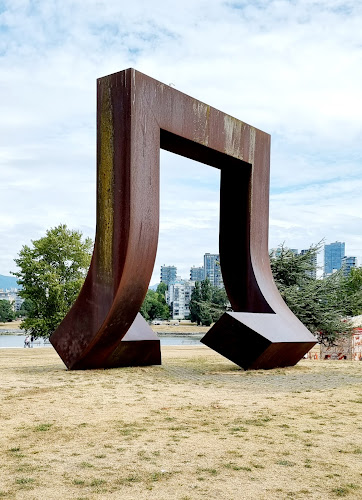
Vanier Park
Find Accommodations Nearby
Recommended Tours & Activities
Visitor Reviews
There are no reviews yet. Be the first one to write one.
Share Your Experience
Have you visited Gastown Steam Clock? Help other travelers by leaving a review.