
Fort de La Bastille
About Fort de La Bastille
Key Features
More Details
Updated June 11, 2025
Fort de la Bastille – Grenoble France
## Fort de La Bastille (Grenoble): what it is, why it matters, how to visit well
Fort de La Bastille sits above Grenoble on the hillside that guards the city’s narrow valley crossroads. It’s both a 19th-century military fortification and Grenoble’s most straightforward “big view, low effort” outing—especially if you use the cable car. Bastille Grenoble
Place details (from your dataset):
– Name: Fort de La Bastille
– Address: Quai Stéphane Jay, 38000 Grenoble, France
– Coordinates: 45.1990418, 5.7245134
– Type: Tourist attraction
– Rating: 4.6
## Why it’s worth your time (even if you “just want the view”)
The Bastille is the rare landmark that works for very different travelers:
– First-timers get an instant read on Grenoble’s geography—rivers, neighborhoods, and the mountain ranges that frame the city. Tourisme
– History-minded visitors get a real fortification system rather than a decorative ruin: construction spanned the early-to-mid 1800s (works beginning in 1823, completed in 1847 are widely cited).
– Active travelers can treat it as a trailhead and do a short climb or a longer loop into the surrounding terrain. Bastille Grenoble
Your on-site review snippet—“View to all the metropole but few entertainment activities”—is a useful framing. This is primarily a panorama + walk + fort architecture experience. If you go expecting a packed slate of exhibits, you may feel it’s light; if you go for perspective, it overdelivers.
## A concise history you can trust
What’s commonly referred to as “La Bastille” in Grenoble is a fortification complex above the city. The most-cited build period for the main 19th-century fort works is 1823–1847.
A key historical point that helps visitors understand what they’re seeing:
– This is not a medieval castle. It’s a 19th-century defensive project designed for artillery-era warfare, with terraced works and casemates (vaulted chambers) integrated into the slope.
If you like anchoring a visit with one “timeline hook”: the Bastille became dramatically more accessible to everyday visitors after the Grenoble cable car opened in 1934, turning a strategic military height into a city icon. Bastille Grenoble
## Getting there: cable car vs. walking (and how to choose)
### Option 1: Grenoble cable car (fastest, most iconic)
The cable car is the “default” visit for most people: it’s billed as about 6 minutes to reach the Bastille. Bastille Grenoble
A few operational details that matter in real life:
– Departures: listed as every 5 to 10 minutes, running continuously during opening periods. Bastille Grenoble
– Cutoff: the last ascent is 15 minutes before closing (don’t arrive at the station at “closing time” and expect to go up). Bastille Grenoble
– The tourism office notes the “bubble” cabins as a symbol of the city and states cabins can carry up to 6 people per cabin. Tourisme
Outdated-data flag (important): opening hours vary by season and the cable car operator lists annual maintenance closures (for example, it explicitly notes closure from Monday, Jan 5, 2026 for maintenance through the month, and also shows hours up to Sunday, Jan 4, 2026 in its current schedule page). Always verify the operator’s latest schedule close to your visit. Bastille Grenoble
### Option 2: Walk up (better if you want context, not just a photo)
If you walk, you get the “earned view,” plus you notice how the fort works with the terrain—why this hill mattered militarily.
For route planning, it’s reasonable to use established trail listings as a reality check on distance/difficulty:
– A popular loop labeled “Jardin des Dauphins – Fort de la Bastille” is listed as 1.9 miles and “moderately challenging.”
– A longer option “Bastille – Mont Jalla – Château de Narbonne” is listed as 8.6 miles with an average duration of ~4h 35m and “moderately challenging.”
(Those are trail-platform figures; treat them as planning inputs, not guarantees.)
## What to do at the Bastille (beyond the obvious viewpoint)
### 1) Read the fort like an engineer
Even without a guided tour, you can “decode” the site:
– Look for casemates (arched, bomb-resistant spaces) and how terraces stack to control approaches.
– Notice how walls and platforms are aligned with sightlines down into the city—this is defensive geometry, not decoration.
### 2) Use it as a trail hub
The Bastille operator positions the area as a gateway to multiple marked paths suitable for walkers, hikers, and trail runners. Bastille Grenoble
If your goal is “view + movement” rather than “view + café,” plan a loop that starts with the cable car up and walks down—that gives you the panorama early and saves your knees on the ascent.
### 3) Time your visit for the light you actually want
This is practical, not poetic:
– Midday can flatten the mountains in photos.
– Late afternoon often gives stronger relief on ridgelines and better city contrast—especially useful if you’re trying to capture Grenoble’s valley shape.
(That’s general photography physics; it doesn’t depend on claims about local sunset times.)
## Practical tips that prevent common disappointments
– Expect the “activity density” to be lower than a museum district. The payoff is outdoor scale—views, air, and fort structure—more than a checklist of attractions. (This aligns with your snippet about limited entertainment.)
– Dress for the hill, not the city. Wind exposure is typical on elevated sites; even if Grenoble feels mild, the top can feel sharper.
– If mobility is a concern: the cable car minimizes elevation gain, but fort complexes typically include uneven surfaces and slopes. If you need step-free certainty, check the operator/site accessibility notes before committing (access conditions can change).
## Two contextual internal links (RealJourneyTravels.com)
You asked for two internal links “if possible.” I don’t know your exact URL structure, so here are safe, contextual targets you can map to existing pages:
– Internal link idea #1: Things to Do in Grenoble (French Alps city guide) — anchor from your “Getting there” or “What to do” section.
– Internal link idea #2: Best Day Trips from Grenoble (Chartreuse + Alpine viewpoints) — anchor from the “Trails” section.
## Quick reference
– Location: Grenoble, France (Quai Stéphane Jay)
– Coordinates: 45.1990418, 5.7245134
– Best for: city panorama, fortification architecture, short hikes/trail connections
– Verify before you go: cable car hours + maintenance closures Bastille Grenoble
If you want, paste the two RealJourneyTravels URLs you’d like to use for internal links (or your slug pattern), and I’ll drop them in cleanly with anchor text that matches your style.
Table of Contents
Key Highlights
Fort de La Bastille
Location
Places to Stay Near Fort de La Bastille"View to all the metropole but few entertainment activities"
Find and Book a Tour
Explore More Travel Guides
No reviews found! Be the first to review!
Traveler Reviews for Fort de La Bastille
There are no reviews yet. Be the first one to write one.
Have you visited Fort de La Bastille? Help other travelers by sharing your review.
You Might Also Like

Musée dauphinois
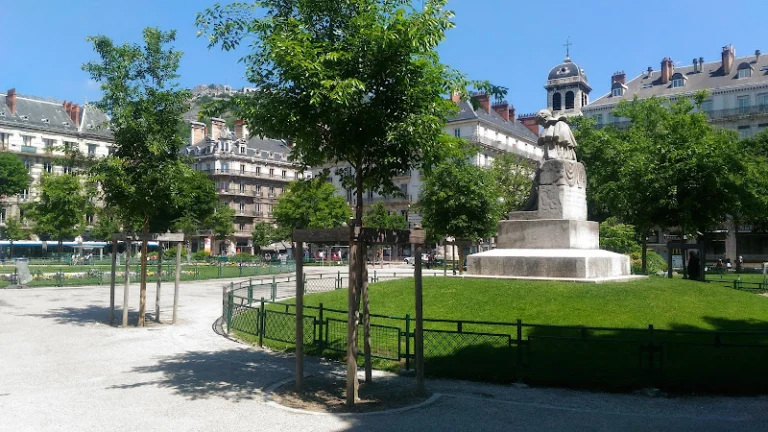
Le Palais
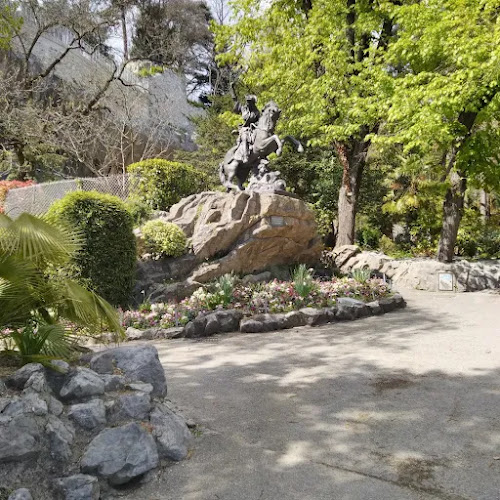
Jardin des Dauphins
Find Accommodations Nearby
Recommended Tours & Activities
Visitor Reviews
There are no reviews yet. Be the first one to write one.
Share Your Experience
Have you visited Fort de La Bastille? Help other travelers by leaving a review.