
Ermita de San Mateo
About Ermita de San Mateo
Key Features
More Details
Updated April 16, 2024
## Ermita de San Mateo (Carmona, Seville): what it is, why it matters, and what to look for
Ermita de San Mateo is a small historic hermitage (chapel) on the outskirts of Carmona (Seville province, Andalusia). It’s closely tied to a pivotal date in the city’s medieval history: 21 September 1247, when Carmona became part of the Crown of Castile on the feast day of Saint Matthew—an event the city later commemorated by raising this hermitage in gratitude to the evangelist. Turismo
If you like places where architecture, local memory, and landscape come together in a single, quiet stop—this is one of those.
—
## Quick facts (verified)
– Name: Ermita de San Mateo Turismo
– City: Carmona, Seville, Spain
– Coordinates (from your dataset): 37.4705091, -5.6342357
– Google-style rating (from your dataset): 4.4
– Type (from your dataset): Tourist attraction
– Official tourism-office location note: It is situated beneath the former Puerta de Morón (an old city gate). Turismo
– Construction start: 14th century. Turismo
– Officially listed address (Tourism Office of Carmona): Cuesta de San Mateo, s/n. Turismo
### Important data flag: address mismatch
Your dataset lists “Diseminado Diseminados 2, 117, 41410 Carmona…”, while Carmona’s Tourism Office lists “Cuesta de San Mateo, s/n.” Turismo
Those can’t both be the primary street address in the usual sense. Before publishing, verify the correct visitor-facing address via a live map pin (and update the article’s “Getting there” section accordingly).
—
## Why it’s historically significant (and not just “another small chapel”)
The hermitage’s origin story is explicitly civic: Carmona raised it in gratitude to Saint Matthew, because the city’s incorporation into the Crown of Castile happened on his feast day (21 Sept 1247). Turismo
That’s the key to interpreting the site. You’re not looking at a random roadside shrine; you’re looking at a physical marker of Carmona’s medieval political turning point—remembered and reinforced through religious dedication.
—
## What to look for inside: architecture and surviving art
Carmona’s Tourism Office provides unusually concrete interior detail—use it to guide readers on what to notice:
### Layout and roofing
– The church has three naves (aisles). Turismo
– Side naves: timber roofs. Turismo
– Central nave: a groin vault (“bóveda de aristas”). Turismo
This mix of wood roofing and vaulted central space is exactly the sort of detail many visitors miss unless you give them the “what am I looking at?” lens.
### Arches: the detail most people walk past
The naves are separated by arcades featuring pointed horseshoe arches framed within alfices (a rectangular molding typical of Iberian Islamic and Mudéjar-influenced design language). Turismo
Even if a visitor doesn’t know the vocabulary, this is the “signature” visual rhythm: the arches don’t read like plain Romanesque/early Gothic; they carry a distinctly Andalusian lineage.
### Objects of worship (or the lack of them)
According to the Tourism Office, no objects of worship remain inside, except for remains of a mural—possibly 15th century—depicting Saint Lucy (Santa Lucía). Turismo
That absence is worth stating plainly: it sets expectations. Readers won’t arrive expecting a fully dressed altar space—and they’ll be more likely to focus on structure, arches, and the surviving painted fragment.
—
## Setting and viewpoint value: why the location choice makes sense
The hermitage’s placement is described as being under the former Puerta de Morón, outside the historic core. Turismo
That matters for visitors because it explains two practical realities:
– It’s not an “on-the-way” stop in the tight old town lanes; it’s an edge-of-town / extramuros site in character.
– The surroundings are part of the experience: you’re reading Carmona’s boundary history in the landscape, not only in the building.
(If you later add driving/walking directions, do it using verified map routing—don’t guess, because the address mismatch increases the odds of sending people to the wrong point.)
—
## Accessibility and safety notes (fact-based, not speculative)
Because this is an outskirts / former-gate location by definition (and not described as an indoor museum site with managed access in the Tourism Office entry), treat it like a heritage stop where conditions can vary:
– If you have limited mobility, plan to confirm surface conditions and access before you go (especially if you’re relying on step-free routes).
– Bring sun protection and water in warmer months—Carmona’s exposed edges can feel hotter than shaded streets in the center.
I’m not asserting specific terrain features here (those require on-the-ground verification); this is a conservative planning stance for rural-edge monuments.
—
## What I’m not claiming (to keep accuracy tight)
– Opening hours / regular visiting schedule: not provided on the Tourism Office page excerpt we can verify here, so I’m not stating hours. Turismo
– Exact route details from the historic center: would require confirming the correct address/pin first (and ideally validating current access).
– Current condition/restoration status: not stated in the official entry we’re relying on.
—
## Source notes (freshness + reliability)
The most load-bearing details above (history, construction start, architectural description, lack of interior objects, Saint Lucy mural, official address line) come directly from Carmona’s official tourism site entry for Ermita de San Mateo. Turismo
If you want, paste your preferred internal-link targets (existing RealJourneyTravels URLs for Carmona / Seville day trips), and I’ll weave in two contextual internal links without inventing pages that may not exist.
Table of Contents
Key Highlights
Ermita de San Mateo
Location
Places to Stay Near Ermita de San Mateo
Find and Book a Tour
Explore More Travel Guides
No reviews found! Be the first to review!
Traveler Reviews for Ermita de San Mateo
There are no reviews yet. Be the first one to write one.
Have you visited Ermita de San Mateo? Help other travelers by sharing your review.
You Might Also Like
Iglesia de San Blas
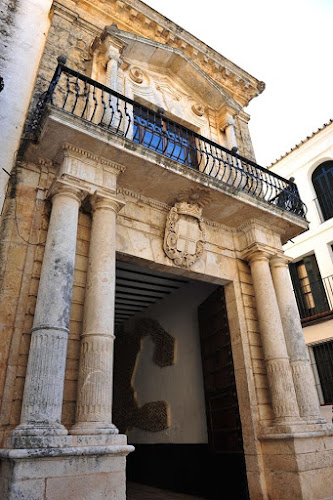
Museo de la Ciudad de Carmona
Casa-Palacio de los Aguilar
Find Accommodations Nearby
Recommended Tours & Activities
Visitor Reviews
There are no reviews yet. Be the first one to write one.
Share Your Experience
Have you visited Ermita de San Mateo? Help other travelers by leaving a review.