
DONKIN RESERVE, PYRAMID AND LIGHTHOUSE
About DONKIN RESERVE, PYRAMID AND LIGHTHOUSE
Description
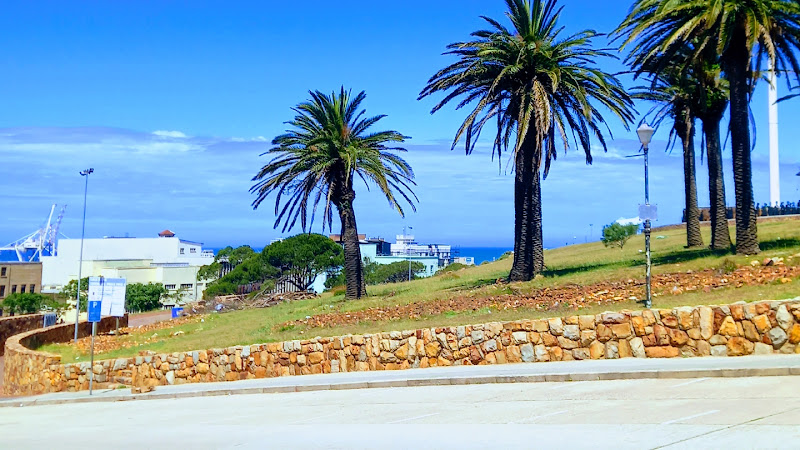
There’s something quietly powerful about standing on the grassy slopes of the Donkin Reserve, watching the wind whip across the bay while the old stone pyramid keeps its silent vigil. It’s one of those places that doesn’t just tell a story—it makes you feel it. The Donkin Reserve, Pyramid, and Lighthouse form the heart of Gqeberha’s (formerly Port Elizabeth’s) historic core, a spot that blends memory, architecture, and coastal beauty in a way that’s hard to forget.
The reserve was established in the early 1820s by Sir Rufane Donkin, the acting governor of the Cape Colony, in memory of his late wife, Elizabeth. The pyramid, about ten meters tall, stands as a symbol of love and loss—simple but commanding. Just beside it rises the Donkin Lighthouse, built in 1861, which once guided ships safely into Algoa Bay. Today, both structures are part of a four-hectare public park filled with art installations, sculptures, and a massive mosaic South African flag that sprawls across the ground like a colorful patchwork of pride.
Walking here feels like flipping through the pages of a living history book. You’ll see locals lounging on the grass, kids chasing pigeons, and travelers craning their necks to capture the perfect photo of the pyramid against the skyline. The air carries that salty tang from the ocean below, and if you climb the lighthouse tower, the reward is a sweeping view of the city and harbor that’s nothing short of breathtaking.
It’s not a perfectly polished tourist attraction—and that’s part of its charm. Some visitors find the area a bit weathered, others see it as authentic and soulful. Either way, there’s no denying the emotional weight of this place. It’s where history, art, and community meet under the wide African sky.
Key Features
- Historic Pyramid: A ten-meter-high stone monument built by Sir Rufane Donkin in memory of his wife Elizabeth, dating back to the early 1820s.
- Donkin Lighthouse: Constructed in 1861, this lighthouse once guided ships into Algoa Bay and now offers panoramic city and harbor views from its top.
- Public Art and Mosaic Flag: A massive mosaic South African flag and several sculptures celebrate national pride and creativity, making the reserve a visual feast.
- Green Open Space: The four-hectare park provides a peaceful spot for picnics, walks, and photography with sweeping coastal views.
- Accessibility: The site is wheelchair accessible, with an assistive hearing loop and accessible parking available.
- Community Spirit: The reserve is LGBTQ+ friendly and welcoming to families, making it an inclusive space for all visitors.
Best Time to Visit
If you ask locals, they’ll tell you the Donkin Reserve is beautiful year-round, but the best time to visit really depends on what you’re after. Personally, I love it in late spring (around October to November) when the weather is warm but not too harsh, and the breeze off the bay feels just right. Mornings are particularly magical—the light hits the pyramid just so, and the city below slowly wakes up.
Summer (December to February) can get hot, but it’s also when the city buzzes with energy. You’ll find street performers, food vendors nearby, and plenty of chatter echoing across the park. If you prefer a quieter experience, aim for early weekdays or late afternoons when the crowds thin out and the shadows stretch long across the grass.
Avoid windy days if you can; Gqeberha’s coastal gusts have a reputation for turning an easy stroll into a hair-whipping adventure. But honestly, even that has its charm—there’s something freeing about standing on that hill with the wind roaring around you, feeling tiny and alive all at once.
How to Get There
Getting to the Donkin Reserve is pretty straightforward. It sits right in the heart of Gqeberha’s central area, making it easy to reach from most parts of the city. If you’re staying nearby, you can easily walk there—it’s one of those places that’s best approached on foot, giving you a chance to take in the surrounding colonial architecture and street art along the way.
For those driving, there’s ample parking close to the reserve, and the area is well-signposted. Public transport options like taxis and local ride-hailing services are also readily available. If you’re arriving from the airport, it’s roughly a 10–15 minute drive, depending on traffic.
Once you arrive, you’ll spot the pyramid and lighthouse almost immediately—they’re hard to miss against the skyline. The entrance is open and welcoming, with paths leading up the hill and around the monuments. And if you’re not sure where to go next, the on-site Tourist Information Centre inside the lighthouse is a great place to start—they’re friendly and always happy to share local insights.
Tips for Visiting
Here’s where a few insider tips can make your visit even better. First off, wear comfortable shoes. The reserve’s pathways can be uneven in places, and you’ll probably want to climb the lighthouse tower for that unbeatable view. Trust me, it’s worth every step.
Bring a hat and sunscreen—there’s not much shade, and the South African sun doesn’t mess around. If you’re into photography, come early or late in the day when the light is softer. The pyramid and lighthouse cast dramatic shadows that make for stunning shots.
I’d also suggest taking a few minutes to read the inscriptions on the pyramid and nearby plaques. They tell a love story that’s both tragic and touching—a reminder that even in the bustle of modern life, some places hold deep emotional roots.
Safety-wise, the area is generally fine during the day, especially when there are other visitors around. Like any urban park, it’s best to stay aware of your surroundings and avoid visiting alone at night. If you’re traveling with kids, they’ll love the open space and colorful mosaic flag, but keep an eye on them near the edges of the hill—it’s a bit steep in some spots.
And here’s a little personal note: bring a snack or a coffee and just sit for a while. Watch the city below, listen to the seagulls, and let the history of the place sink in. There’s a quiet magic here, the kind that sneaks up on you when you least expect it.
For those who like to dig deeper, the Donkin Reserve is part of the Donkin Heritage Trail—a self-guided walking route that connects over 40 historical sites around Gqeberha. Following the trail gives you a broader sense of the city’s story, from colonial beginnings to modern transformation.
In the end, the Donkin Reserve isn’t just a photo stop—it’s a place to breathe, reflect, and connect with the past. Whether you’re a history buff, a casual traveler, or someone just looking for a scenic view, it’s one of those rare spots that stays with you long after you’ve left.
So take your time here. Climb the lighthouse. Touch the stone of the pyramid. Feel the wind and the weight of history all around you. It’s not the flashiest attraction, but it’s real—and that’s what makes it unforgettable.
Key Features
- Key Features
- Best Time to Visit
- How to Get There
- Tips for Visiting
More Details
Updated November 30, 2025
Table of Contents
- Description
- Key Features
- Best Time to Visit
- How to Get There
- Tips for Visiting
- Key Highlights
- Location
- Places to Stay Near DONKIN RESERVE, PYRAMID AND LIGHTHOUSE
- Find and Book a Tour
- Explore More Travel Guides
- Nearby Places You Might Like
- Traveler Reviews for DONKIN RESERVE, PYRAMID AND LIGHTHOUSE
- Share Your Experience
Description
There’s something quietly powerful about standing on the grassy slopes of the Donkin Reserve, watching the wind whip across the bay while the old stone pyramid keeps its silent vigil. It’s one of those places that doesn’t just tell a story—it makes you feel it. The Donkin Reserve, Pyramid, and Lighthouse form the heart of Gqeberha’s (formerly Port Elizabeth’s) historic core, a spot that blends memory, architecture, and coastal beauty in a way that’s hard to forget.
The reserve was established in the early 1820s by Sir Rufane Donkin, the acting governor of the Cape Colony, in memory of his late wife, Elizabeth. The pyramid, about ten meters tall, stands as a symbol of love and loss—simple but commanding. Just beside it rises the Donkin Lighthouse, built in 1861, which once guided ships safely into Algoa Bay. Today, both structures are part of a four-hectare public park filled with art installations, sculptures, and a massive mosaic South African flag that sprawls across the ground like a colorful patchwork of pride.
Walking here feels like flipping through the pages of a living history book. You’ll see locals lounging on the grass, kids chasing pigeons, and travelers craning their necks to capture the perfect photo of the pyramid against the skyline. The air carries that salty tang from the ocean below, and if you climb the lighthouse tower, the reward is a sweeping view of the city and harbor that’s nothing short of breathtaking.
It’s not a perfectly polished tourist attraction—and that’s part of its charm. Some visitors find the area a bit weathered, others see it as authentic and soulful. Either way, there’s no denying the emotional weight of this place. It’s where history, art, and community meet under the wide African sky.
Key Features
- Historic Pyramid: A ten-meter-high stone monument built by Sir Rufane Donkin in memory of his wife Elizabeth, dating back to the early 1820s.
- Donkin Lighthouse: Constructed in 1861, this lighthouse once guided ships into Algoa Bay and now offers panoramic city and harbor views from its top.
- Public Art and Mosaic Flag: A massive mosaic South African flag and several sculptures celebrate national pride and creativity, making the reserve a visual feast.
- Green Open Space: The four-hectare park provides a peaceful spot for picnics, walks, and photography with sweeping coastal views.
- Accessibility: The site is wheelchair accessible, with an assistive hearing loop and accessible parking available.
- Community Spirit: The reserve is LGBTQ+ friendly and welcoming to families, making it an inclusive space for all visitors.
Best Time to Visit
If you ask locals, they’ll tell you the Donkin Reserve is beautiful year-round, but the best time to visit really depends on what you’re after. Personally, I love it in late spring (around October to November) when the weather is warm but not too harsh, and the breeze off the bay feels just right. Mornings are particularly magical—the light hits the pyramid just so, and the city below slowly wakes up.
Summer (December to February) can get hot, but it’s also when the city buzzes with energy. You’ll find street performers, food vendors nearby, and plenty of chatter echoing across the park. If you prefer a quieter experience, aim for early weekdays or late afternoons when the crowds thin out and the shadows stretch long across the grass.
Avoid windy days if you can; Gqeberha’s coastal gusts have a reputation for turning an easy stroll into a hair-whipping adventure. But honestly, even that has its charm—there’s something freeing about standing on that hill with the wind roaring around you, feeling tiny and alive all at once.
How to Get There
Getting to the Donkin Reserve is pretty straightforward. It sits right in the heart of Gqeberha’s central area, making it easy to reach from most parts of the city. If you’re staying nearby, you can easily walk there—it’s one of those places that’s best approached on foot, giving you a chance to take in the surrounding colonial architecture and street art along the way.
For those driving, there’s ample parking close to the reserve, and the area is well-signposted. Public transport options like taxis and local ride-hailing services are also readily available. If you’re arriving from the airport, it’s roughly a 10–15 minute drive, depending on traffic.
Once you arrive, you’ll spot the pyramid and lighthouse almost immediately—they’re hard to miss against the skyline. The entrance is open and welcoming, with paths leading up the hill and around the monuments. And if you’re not sure where to go next, the on-site Tourist Information Centre inside the lighthouse is a great place to start—they’re friendly and always happy to share local insights.
Tips for Visiting
Here’s where a few insider tips can make your visit even better. First off, wear comfortable shoes. The reserve’s pathways can be uneven in places, and you’ll probably want to climb the lighthouse tower for that unbeatable view. Trust me, it’s worth every step.
Bring a hat and sunscreen—there’s not much shade, and the South African sun doesn’t mess around. If you’re into photography, come early or late in the day when the light is softer. The pyramid and lighthouse cast dramatic shadows that make for stunning shots.
I’d also suggest taking a few minutes to read the inscriptions on the pyramid and nearby plaques. They tell a love story that’s both tragic and touching—a reminder that even in the bustle of modern life, some places hold deep emotional roots.
Safety-wise, the area is generally fine during the day, especially when there are other visitors around. Like any urban park, it’s best to stay aware of your surroundings and avoid visiting alone at night. If you’re traveling with kids, they’ll love the open space and colorful mosaic flag, but keep an eye on them near the edges of the hill—it’s a bit steep in some spots.
And here’s a little personal note: bring a snack or a coffee and just sit for a while. Watch the city below, listen to the seagulls, and let the history of the place sink in. There’s a quiet magic here, the kind that sneaks up on you when you least expect it.
For those who like to dig deeper, the Donkin Reserve is part of the Donkin Heritage Trail—a self-guided walking route that connects over 40 historical sites around Gqeberha. Following the trail gives you a broader sense of the city’s story, from colonial beginnings to modern transformation.
In the end, the Donkin Reserve isn’t just a photo stop—it’s a place to breathe, reflect, and connect with the past. Whether you’re a history buff, a casual traveler, or someone just looking for a scenic view, it’s one of those rare spots that stays with you long after you’ve left.
So take your time here. Climb the lighthouse. Touch the stone of the pyramid. Feel the wind and the weight of history all around you. It’s not the flashiest attraction, but it’s real—and that’s what makes it unforgettable.
Key Highlights
- Key Features
- Best Time to Visit
- How to Get There
- Tips for Visiting
Location
Places to Stay Near DONKIN RESERVE, PYRAMID AND LIGHTHOUSE
Find and Book a Tour
Explore More Travel Guides
No reviews found! Be the first to review!
Traveler Reviews for DONKIN RESERVE, PYRAMID AND LIGHTHOUSE
There are no reviews yet. Be the first one to write one.
Have you visited DONKIN RESERVE, PYRAMID AND LIGHTHOUSE? Help other travelers by sharing your review.
You Might Also Like

kids park port elizabeth

South African Air Force Museum, Port Elizabeth Branch

Port Elizabeth City Hall
Find Accommodations Nearby
Recommended Tours & Activities
Visitor Reviews
There are no reviews yet. Be the first one to write one.
Share Your Experience
Have you visited DONKIN RESERVE, PYRAMID AND LIGHTHOUSE? Help other travelers by leaving a review.