Curug Dengdeng
About Curug Dengdeng
Description
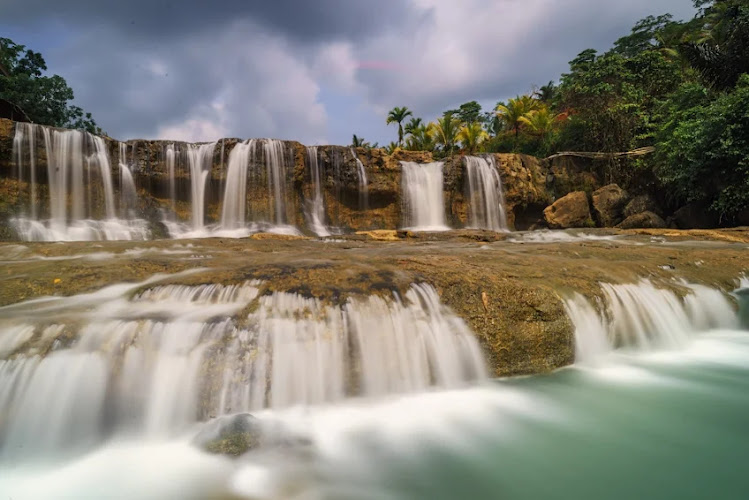
Curug Dengdeng, tucked away in the lush hills of Tasikmalaya, West Java, is one of those places that quietly steals your heart before you even realize it. Imagine three cascading tiers of crystal-clear water tumbling over wide rock faces, surrounded by green rice fields and forested slopes. It’s not the kind of place where you’ll find polished concrete paths or souvenir stalls on every corner. Instead, it’s raw, natural, and refreshingly unpretentious — the kind of spot that makes you forget about Wi-Fi for a while.
The waterfall’s name, “Dengdeng,” comes from the local Sundanese word meaning “layered,” which perfectly describes its unique structure. Each level has its own character — the top one calm and scenic, the middle one powerful and loud, and the bottom one perfect for a refreshing dip. The sound of rushing water mixes with birdsong and the occasional laughter of local kids playing nearby. It’s a scene that feels almost cinematic, yet completely real.
Some visitors say the trek down to the falls is a bit challenging, especially after rain, but that’s part of the adventure. The path winds through terraced farmland and small settlements, giving you glimpses of rural life that feel almost timeless. And once you reach the waterfall, the payoff is worth every step. It’s not just about the view — it’s about the feeling of being somewhere that hasn’t been overrun by crowds or commercialization.
While the site has gained popularity among local travelers, it still retains a sense of authenticity. It’s a place that welcomes families, nature lovers, and even casual explorers who just want to breathe in some fresh mountain air. Some people come for the photos (and yes, the waterfall is ridiculously photogenic), but most stay a little longer than planned — just sitting, listening, and soaking in the peaceful rhythm of the place.
Key Features
- Multi-tiered waterfall: Three cascading levels create a dramatic natural spectacle unlike most waterfalls in West Java.
- Scenic surroundings: Framed by rice paddies, hills, and tropical vegetation, the area offers postcard-worthy views in every direction.
- Natural swimming pools: The lower tier forms calm pools where visitors can safely wade or swim.
- Photographic opportunities: The wide rock formations and misty spray make for stunning photos, especially during golden hour.
- Local culture: The route to the waterfall passes through traditional Sundanese villages, offering a glimpse into daily life in rural Tasikmalaya.
- Peaceful atmosphere: Despite its growing fame, Curug Dengdeng remains relatively uncrowded compared to other waterfalls in Java.
Best Time to Visit
If there’s one thing I’ve learned from visiting waterfalls across Indonesia, it’s that timing can make or break the experience. Curug Dengdeng is no exception. The best time to visit is during the dry season — roughly from May to September — when the trails are easier to navigate and the water is clear but still flowing strongly. During the rainy months, the falls become more powerful, but the paths can get muddy and slippery (and trust me, you don’t want to test your balance on those steep sections after a downpour).
Morning visits are magical. The soft sunlight filters through the trees, casting golden reflections on the water. You’ll also avoid the midday heat and any small crowds that may arrive later. If you’re a photographer, sunrise or just after dawn is your golden ticket — the mist, the light, the stillness… it’s pure poetry.
That said, there’s something to be said for visiting in the late afternoon too. The air cools down, and the surrounding hills take on a warm, amber hue. Just make sure you start heading back before dusk, as the trails aren’t well-lit and can be tricky to navigate in the dark.
How to Get There
Getting to Curug Dengdeng is an adventure in itself — part scenic drive, part mini hike, part local discovery. From Tasikmalaya city, it’s about a 3-hour journey covering roughly 90 kilometers. The road winds through small towns and countryside landscapes that seem straight out of a painting. If you’re driving or renting a motorbike, be prepared for some bumpy stretches as you get closer to the site. The last few kilometers are a bit rugged, but that’s often the case with hidden gems like this.
Public transport options exist, but they’re not the most convenient. You can take a local bus toward Cipatujah and then hop on an ojek (motorcycle taxi) for the final leg. Personally, I’d recommend hiring a private car or joining a small tour group if you’re not used to rural roads. The flexibility of stopping along the way — maybe to grab a coconut or snap a few photos — makes the trip that much more enjoyable.
Once you arrive at the parking area, there’s a short trek down to the waterfall. It’s not overly long, but it can be steep in places. Wear proper shoes, bring some water, and take your time. The descent offers glimpses of the falls through the trees, teasing you with what’s to come. And when you finally reach the base and feel the spray on your face, it all feels worth it.
Tips for Visiting
Now, here’s where a few insider tips can really make your visit smoother. I’ve learned these the hard way — a few muddy shoes, a forgotten snack, and one too many mosquito bites later.
- Bring sturdy footwear: The trail can get uneven and slippery, especially after rain. Flip-flops are a no-go here.
- Pack light but smart: A small backpack with water, snacks, and a towel is plenty. You’ll want your hands free for balance.
- Arrive early: The morning hours are quieter, cooler, and perfect for photos. Plus, you’ll beat any small crowds that might show up later.
- Respect the environment: This place thrives because it’s still clean and natural. Take your trash back with you, and avoid using soap in the water.
- Prepare for limited facilities: Don’t expect fancy restrooms or cafes. A few small warungs (local stalls) might sell drinks or snacks, but it’s best to bring your own.
- Stay alert during rainy season: The water flow can get quite strong, and the rocks become slippery. If it’s raining heavily, admire the view from a safe distance.
- Engage with locals: The villagers around the area are friendly and often curious about visitors. A simple smile or “sampurasun” (a Sundanese greeting) goes a long way.
One thing I personally love about Curug Dengdeng is how it reminds you that travel doesn’t always have to be about ticking off famous landmarks. Sometimes, it’s about finding quiet corners of the world that make you slow down, breathe deeper, and notice the little things — the way sunlight hits the water, the laughter of kids splashing nearby, the earthy smell of wet leaves after rain.
So if you ever find yourself in West Java and crave a slice of nature that still feels untouched, make your way to Curug Dengdeng. Go with an open heart, a bit of curiosity, and maybe a willingness to get your feet muddy. You’ll come back with more than just photos — you’ll come back with a story.
Key Features
- Key Features
- Best Time to Visit
- How to Get There
- Tips for Visiting
More Details
Updated November 7, 2025
Table of Contents
Description
Curug Dengdeng, tucked away in the lush hills of Tasikmalaya, West Java, is one of those places that quietly steals your heart before you even realize it. Imagine three cascading tiers of crystal-clear water tumbling over wide rock faces, surrounded by green rice fields and forested slopes. It’s not the kind of place where you’ll find polished concrete paths or souvenir stalls on every corner. Instead, it’s raw, natural, and refreshingly unpretentious — the kind of spot that makes you forget about Wi-Fi for a while.
The waterfall’s name, “Dengdeng,” comes from the local Sundanese word meaning “layered,” which perfectly describes its unique structure. Each level has its own character — the top one calm and scenic, the middle one powerful and loud, and the bottom one perfect for a refreshing dip. The sound of rushing water mixes with birdsong and the occasional laughter of local kids playing nearby. It’s a scene that feels almost cinematic, yet completely real.
Some visitors say the trek down to the falls is a bit challenging, especially after rain, but that’s part of the adventure. The path winds through terraced farmland and small settlements, giving you glimpses of rural life that feel almost timeless. And once you reach the waterfall, the payoff is worth every step. It’s not just about the view — it’s about the feeling of being somewhere that hasn’t been overrun by crowds or commercialization.
While the site has gained popularity among local travelers, it still retains a sense of authenticity. It’s a place that welcomes families, nature lovers, and even casual explorers who just want to breathe in some fresh mountain air. Some people come for the photos (and yes, the waterfall is ridiculously photogenic), but most stay a little longer than planned — just sitting, listening, and soaking in the peaceful rhythm of the place.
Key Features
- Multi-tiered waterfall: Three cascading levels create a dramatic natural spectacle unlike most waterfalls in West Java.
- Scenic surroundings: Framed by rice paddies, hills, and tropical vegetation, the area offers postcard-worthy views in every direction.
- Natural swimming pools: The lower tier forms calm pools where visitors can safely wade or swim.
- Photographic opportunities: The wide rock formations and misty spray make for stunning photos, especially during golden hour.
- Local culture: The route to the waterfall passes through traditional Sundanese villages, offering a glimpse into daily life in rural Tasikmalaya.
- Peaceful atmosphere: Despite its growing fame, Curug Dengdeng remains relatively uncrowded compared to other waterfalls in Java.
Best Time to Visit
If there’s one thing I’ve learned from visiting waterfalls across Indonesia, it’s that timing can make or break the experience. Curug Dengdeng is no exception. The best time to visit is during the dry season — roughly from May to September — when the trails are easier to navigate and the water is clear but still flowing strongly. During the rainy months, the falls become more powerful, but the paths can get muddy and slippery (and trust me, you don’t want to test your balance on those steep sections after a downpour).
Morning visits are magical. The soft sunlight filters through the trees, casting golden reflections on the water. You’ll also avoid the midday heat and any small crowds that may arrive later. If you’re a photographer, sunrise or just after dawn is your golden ticket — the mist, the light, the stillness… it’s pure poetry.
That said, there’s something to be said for visiting in the late afternoon too. The air cools down, and the surrounding hills take on a warm, amber hue. Just make sure you start heading back before dusk, as the trails aren’t well-lit and can be tricky to navigate in the dark.
How to Get There
Getting to Curug Dengdeng is an adventure in itself — part scenic drive, part mini hike, part local discovery. From Tasikmalaya city, it’s about a 3-hour journey covering roughly 90 kilometers. The road winds through small towns and countryside landscapes that seem straight out of a painting. If you’re driving or renting a motorbike, be prepared for some bumpy stretches as you get closer to the site. The last few kilometers are a bit rugged, but that’s often the case with hidden gems like this.
Public transport options exist, but they’re not the most convenient. You can take a local bus toward Cipatujah and then hop on an ojek (motorcycle taxi) for the final leg. Personally, I’d recommend hiring a private car or joining a small tour group if you’re not used to rural roads. The flexibility of stopping along the way — maybe to grab a coconut or snap a few photos — makes the trip that much more enjoyable.
Once you arrive at the parking area, there’s a short trek down to the waterfall. It’s not overly long, but it can be steep in places. Wear proper shoes, bring some water, and take your time. The descent offers glimpses of the falls through the trees, teasing you with what’s to come. And when you finally reach the base and feel the spray on your face, it all feels worth it.
Tips for Visiting
Now, here’s where a few insider tips can really make your visit smoother. I’ve learned these the hard way — a few muddy shoes, a forgotten snack, and one too many mosquito bites later.
- Bring sturdy footwear: The trail can get uneven and slippery, especially after rain. Flip-flops are a no-go here.
- Pack light but smart: A small backpack with water, snacks, and a towel is plenty. You’ll want your hands free for balance.
- Arrive early: The morning hours are quieter, cooler, and perfect for photos. Plus, you’ll beat any small crowds that might show up later.
- Respect the environment: This place thrives because it’s still clean and natural. Take your trash back with you, and avoid using soap in the water.
- Prepare for limited facilities: Don’t expect fancy restrooms or cafes. A few small warungs (local stalls) might sell drinks or snacks, but it’s best to bring your own.
- Stay alert during rainy season: The water flow can get quite strong, and the rocks become slippery. If it’s raining heavily, admire the view from a safe distance.
- Engage with locals: The villagers around the area are friendly and often curious about visitors. A simple smile or “sampurasun” (a Sundanese greeting) goes a long way.
One thing I personally love about Curug Dengdeng is how it reminds you that travel doesn’t always have to be about ticking off famous landmarks. Sometimes, it’s about finding quiet corners of the world that make you slow down, breathe deeper, and notice the little things — the way sunlight hits the water, the laughter of kids splashing nearby, the earthy smell of wet leaves after rain.
So if you ever find yourself in West Java and crave a slice of nature that still feels untouched, make your way to Curug Dengdeng. Go with an open heart, a bit of curiosity, and maybe a willingness to get your feet muddy. You’ll come back with more than just photos — you’ll come back with a story.

Key Highlights
- Key Features
- Best Time to Visit
- How to Get There
- Tips for Visiting
Location
Places to Stay Near Curug Dengdeng
Find and Book a Tour
Explore More Travel Guides
No reviews found! Be the first to review!
Traveler Reviews for Curug Dengdeng
There are no reviews yet. Be the first one to write one.
Have you visited Curug Dengdeng? Help other travelers by sharing your review.
Find Accommodations Nearby
Recommended Tours & Activities
Visitor Reviews
There are no reviews yet. Be the first one to write one.
Share Your Experience
Have you visited Curug Dengdeng? Help other travelers by leaving a review.