About Crazy House – Hang Nga Villa

Description

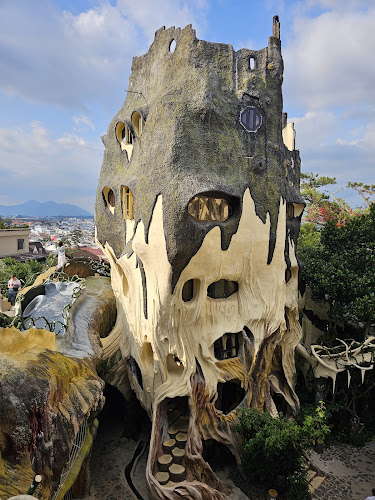
The Crazy House, officially known as the Hang Nga Villa, is one of those places that make you pause and wonder if you’ve accidentally stepped into a dream—or perhaps a Salvador Dalí painting. It’s not your typical hotel or tourist attraction. This wildly imaginative building in Da Lat, Vietnam, was designed by architect Đặng Việt Nga, who clearly decided that straight lines and conventional logic were overrated. The result? A surreal, almost organic structure that looks part tree, part cave, and part fairytale castle.

Walking through its winding staircases and oddly shaped rooms feels like exploring the inside of a giant tree—or maybe the mind of an artist who never stopped believing in magic. Every corner hides something unexpected: a window shaped like a spiderweb, a stairway that twists like a vine, or a balcony that opens to sweeping views of Da Lat’s rolling hills. It’s eccentric, yes, but in the best possible way. You can’t help but smile at the whimsy of it all.

What makes the Crazy House so fascinating isn’t just its bizarre architecture, but the story behind it. Đặng Việt Nga, the woman behind this masterpiece, wanted to create a space that connects people with nature. And she did exactly that—using concrete to mimic the shapes of trees, animals, and natural forms. It’s a place where art, architecture, and emotion blend together. Sure, some visitors find it chaotic or even unsettling, but that’s part of its charm. It’s not trying to please everyone—it’s an experience, not just a building.

And yes, you can actually stay here. The guest rooms are each uniquely themed—think animal-inspired designs, earthy tones, and furniture that seems to grow right out of the walls. It’s not luxury in the traditional sense, but if you’re looking for a stay that you’ll remember forever, this is it. The Crazy House is more than a hotel; it’s a living piece of art that keeps evolving.

Key Features

  • Designed by Vietnamese architect Đặng Việt Nga, inspired by nature and surrealism.
  • Architecture resembling a giant tree with twisting stairways, organic shapes, and sculpted facades.
  • Each room features a unique theme, such as the Tiger Room, Kangaroo Room, or Ant Room.
  • Offers panoramic views of Da Lat from the rooftop terrace.
  • Women-owned and LGBTQ+ friendly, reflecting a welcoming and inclusive atmosphere.
  • Includes free Wi-Fi, free breakfast, and room service for overnight guests.
  • Family-friendly environment with creative spaces that captivate children and adults alike.
  • Restaurant on-site serving local Vietnamese dishes in a cozy, artistic setting.
  • Convenient free street parking for visitors and guests.
  • Recognized as one of the most unique architectural landmarks in Vietnam.

Best Time to Visit

Da Lat’s mild highland climate means the Crazy House is worth visiting year-round, but if you want the best experience, aim for the dry months from December to March. The skies are clearer, the gardens around the villa are lush and colorful, and you can wander the outdoor pathways without worrying about sudden rain showers. I once visited in February, and the cool breeze made climbing those narrow staircases feel like a little adventure rather than a workout.

If you prefer fewer crowds, try visiting early in the morning or later in the afternoon. The light during those times is perfect for photos—the kind of soft, golden glow that makes the whimsical shapes of the house look even more surreal. Avoid weekends or holidays if you can, as the place tends to draw curious visitors from all over Vietnam (and plenty of Instagrammers, too).

How to Get There

Getting to the Crazy House is fairly straightforward once you’re in Da Lat. Most travelers arrive in the city by bus or car from Ho Chi Minh City, which takes around six to seven hours, or by flight to Lien Khuong Airport followed by a 45-minute drive. From Da Lat’s city center, it’s just a short ride—about five minutes by taxi or motorbike—to reach the villa.

If you’re feeling adventurous, you can even walk from the main market area—it’s about a 20-minute stroll through Da Lat’s charming streets. I did that on my first visit, and it was a great way to see the local life unfolding along the way: families selling flowers, small cafés serving steaming cups of Vietnamese coffee, and that ever-present scent of pine in the air.

There’s free street parking available nearby, though spaces can be limited during peak hours. Just keep in mind that while the entrance isn’t fully wheelchair accessible, the staff are kind and always willing to assist where possible.

Tips for Visiting

Visiting the Crazy House isn’t just about sightseeing—it’s about embracing the unexpected. Here are a few tips from someone who’s been there (and got a little lost in the process):

  • Wear comfortable shoes. The stairways are narrow and winding, and some of them feel more like climbing a tree than walking through a building.
  • Take your time. Don’t rush through. Every curve, every corner has a story. Look closely—you’ll notice faces, animals, and shapes hidden in the walls.
  • Bring a camera, but also put it down sometimes. It’s tempting to photograph everything, but the real magic is in soaking it all in with your own eyes.
  • Stay overnight if you can. The experience of waking up inside this architectural wonder is something else entirely. It’s quiet, a bit eerie, and absolutely unforgettable.
  • Mind the weather. Da Lat can get chilly at night, especially in the winter months, so pack a sweater even if you’re coming from the coast.
  • Visit the rooftop. The view from up there is worth the climb—rolling hills, misty mornings, and a panoramic look at Da Lat’s charming patchwork of roofs.
  • Respect the space. Remember, this is more than a tourist attraction—it’s the life’s work of an artist who poured her heart into every detail.

And maybe this is just me, but there’s something oddly grounding about this place. Amid all its weirdness, it reminds you that creativity doesn’t have to follow rules. It’s a little chaotic, a little imperfect, and that’s exactly what makes it beautiful. If you’re the kind of traveler who loves places that make you think and feel rather than just look, the Crazy House is one of those rare gems that will stay with you long after you’ve left.

So go ahead—wander through the twisting corridors, climb the uneven steps, and let your imagination run wild. Because in a world full of straight lines and predictable hotels, the Crazy House stands proudly as a celebration of the wonderfully strange.

Key Features

  • Designed by Vietnamese architect Đặng Việt Nga, inspired by nature and surrealism.
  • Architecture resembling a giant tree with twisting stairways, organic shapes, and sculpted facades.
  • Each room features a unique theme, such as the Tiger Room, Kangaroo Room, or Ant Room.
  • Offers panoramic views of Da Lat from the rooftop terrace.
  • Women-owned and LGBTQ+ friendly, reflecting a welcoming and inclusive atmosphere.
  • Includes free Wi-Fi, free breakfast, and room service for overnight guests.
  • Family-friendly environment with creative spaces that captivate children and adults alike.
  • Restaurant on-site serving local Vietnamese dishes in a cozy, artistic setting.

More Details

Updated December 1, 2025


Description

The Crazy House, officially known as the Hang Nga Villa, is one of those places that make you pause and wonder if you’ve accidentally stepped into a dream—or perhaps a Salvador Dalí painting. It’s not your typical hotel or tourist attraction. This wildly imaginative building in Da Lat, Vietnam, was designed by architect Đặng Việt Nga, who clearly decided that straight lines and conventional logic were overrated. The result? A surreal, almost organic structure that looks part tree, part cave, and part fairytale castle.

Walking through its winding staircases and oddly shaped rooms feels like exploring the inside of a giant tree—or maybe the mind of an artist who never stopped believing in magic. Every corner hides something unexpected: a window shaped like a spiderweb, a stairway that twists like a vine, or a balcony that opens to sweeping views of Da Lat’s rolling hills. It’s eccentric, yes, but in the best possible way. You can’t help but smile at the whimsy of it all.

What makes the Crazy House so fascinating isn’t just its bizarre architecture, but the story behind it. Đặng Việt Nga, the woman behind this masterpiece, wanted to create a space that connects people with nature. And she did exactly that—using concrete to mimic the shapes of trees, animals, and natural forms. It’s a place where art, architecture, and emotion blend together. Sure, some visitors find it chaotic or even unsettling, but that’s part of its charm. It’s not trying to please everyone—it’s an experience, not just a building.

And yes, you can actually stay here. The guest rooms are each uniquely themed—think animal-inspired designs, earthy tones, and furniture that seems to grow right out of the walls. It’s not luxury in the traditional sense, but if you’re looking for a stay that you’ll remember forever, this is it. The Crazy House is more than a hotel; it’s a living piece of art that keeps evolving.

Key Features

  • Designed by Vietnamese architect Đặng Việt Nga, inspired by nature and surrealism.
  • Architecture resembling a giant tree with twisting stairways, organic shapes, and sculpted facades.
  • Each room features a unique theme, such as the Tiger Room, Kangaroo Room, or Ant Room.
  • Offers panoramic views of Da Lat from the rooftop terrace.
  • Women-owned and LGBTQ+ friendly, reflecting a welcoming and inclusive atmosphere.
  • Includes free Wi-Fi, free breakfast, and room service for overnight guests.
  • Family-friendly environment with creative spaces that captivate children and adults alike.
  • Restaurant on-site serving local Vietnamese dishes in a cozy, artistic setting.
  • Convenient free street parking for visitors and guests.
  • Recognized as one of the most unique architectural landmarks in Vietnam.

Best Time to Visit

Da Lat’s mild highland climate means the Crazy House is worth visiting year-round, but if you want the best experience, aim for the dry months from December to March. The skies are clearer, the gardens around the villa are lush and colorful, and you can wander the outdoor pathways without worrying about sudden rain showers. I once visited in February, and the cool breeze made climbing those narrow staircases feel like a little adventure rather than a workout.

If you prefer fewer crowds, try visiting early in the morning or later in the afternoon. The light during those times is perfect for photos—the kind of soft, golden glow that makes the whimsical shapes of the house look even more surreal. Avoid weekends or holidays if you can, as the place tends to draw curious visitors from all over Vietnam (and plenty of Instagrammers, too).

How to Get There

Getting to the Crazy House is fairly straightforward once you’re in Da Lat. Most travelers arrive in the city by bus or car from Ho Chi Minh City, which takes around six to seven hours, or by flight to Lien Khuong Airport followed by a 45-minute drive. From Da Lat’s city center, it’s just a short ride—about five minutes by taxi or motorbike—to reach the villa.

If you’re feeling adventurous, you can even walk from the main market area—it’s about a 20-minute stroll through Da Lat’s charming streets. I did that on my first visit, and it was a great way to see the local life unfolding along the way: families selling flowers, small cafés serving steaming cups of Vietnamese coffee, and that ever-present scent of pine in the air.

There’s free street parking available nearby, though spaces can be limited during peak hours. Just keep in mind that while the entrance isn’t fully wheelchair accessible, the staff are kind and always willing to assist where possible.

Tips for Visiting

Visiting the Crazy House isn’t just about sightseeing—it’s about embracing the unexpected. Here are a few tips from someone who’s been there (and got a little lost in the process):

  • Wear comfortable shoes. The stairways are narrow and winding, and some of them feel more like climbing a tree than walking through a building.
  • Take your time. Don’t rush through. Every curve, every corner has a story. Look closely—you’ll notice faces, animals, and shapes hidden in the walls.
  • Bring a camera, but also put it down sometimes. It’s tempting to photograph everything, but the real magic is in soaking it all in with your own eyes.
  • Stay overnight if you can. The experience of waking up inside this architectural wonder is something else entirely. It’s quiet, a bit eerie, and absolutely unforgettable.
  • Mind the weather. Da Lat can get chilly at night, especially in the winter months, so pack a sweater even if you’re coming from the coast.
  • Visit the rooftop. The view from up there is worth the climb—rolling hills, misty mornings, and a panoramic look at Da Lat’s charming patchwork of roofs.
  • Respect the space. Remember, this is more than a tourist attraction—it’s the life’s work of an artist who poured her heart into every detail.

And maybe this is just me, but there’s something oddly grounding about this place. Amid all its weirdness, it reminds you that creativity doesn’t have to follow rules. It’s a little chaotic, a little imperfect, and that’s exactly what makes it beautiful. If you’re the kind of traveler who loves places that make you think and feel rather than just look, the Crazy House is one of those rare gems that will stay with you long after you’ve left.

So go ahead—wander through the twisting corridors, climb the uneven steps, and let your imagination run wild. Because in a world full of straight lines and predictable hotels, the Crazy House stands proudly as a celebration of the wonderfully strange.

Key Highlights

  • Designed by Vietnamese architect Đặng Việt Nga, inspired by nature and surrealism.
  • Architecture resembling a giant tree with twisting stairways, organic shapes, and sculpted facades.
  • Each room features a unique theme, such as the Tiger Room, Kangaroo Room, or Ant Room.
  • Offers panoramic views of Da Lat from the rooftop terrace.
  • Women-owned and LGBTQ+ friendly, reflecting a welcoming and inclusive atmosphere.
  • Includes free Wi-Fi, free breakfast, and room service for overnight guests.
  • Family-friendly environment with creative spaces that captivate children and adults alike.
  • Restaurant on-site serving local Vietnamese dishes in a cozy, artistic setting.

Location

Places to Stay Near Crazy House - Hang Nga Villa

Find and Book a Tour

Explore More Travel Guides

No reviews found! Be the first to review!

Traveler Reviews for Crazy House – Hang Nga Villa

There are no reviews yet. Be the first one to write one.

Share Your Experience

Have you visited Crazy House – Hang Nga Villa? Help other travelers by sharing your review.

Find Accommodations Nearby

Recommended Tours & Activities

Visitor Reviews

There are no reviews yet. Be the first one to write one.

Share Your Experience

Have you visited Crazy House – Hang Nga Villa? Help other travelers by leaving a review.