
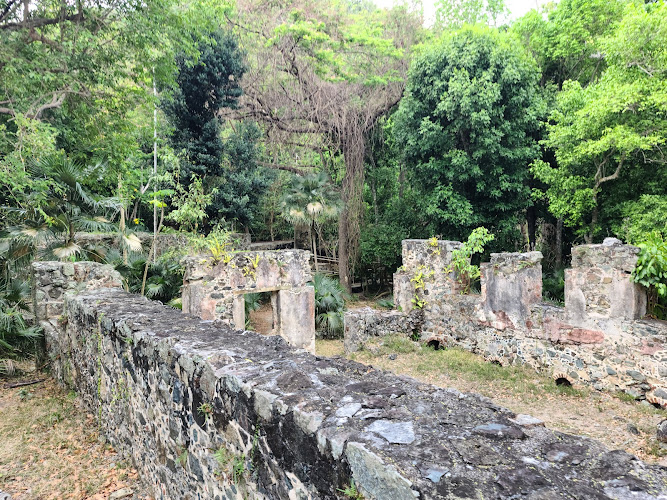
Cinnamon Bay Plantation Ruins
About Cinnamon Bay Plantation Ruins
Description
The Cinnamon Bay Plantation Ruins on St. John are the kind of place that quietly sneaks up on you. At first glance, it’s just a cluster of limestone walls and weathered stone arches tucked into the forest. But once you step closer, you realize you’re walking through the remains of a Danish sugar plantation that dates back to around 1717. There’s the old factory where sugar cane was boiled down into molasses and rum, the outlines of a manor house where the plantation owners lived, and the haunting remnants of slave quarters that remind visitors of the human cost behind the industry. It’s both beautiful and sobering, a place where history lingers in the air as much as the smell of salt from the nearby sea.
What makes these ruins stand out compared to others on the island is how approachable they feel. The trail leading through them is short and shaded, so you don’t need to be an avid hiker to enjoy it. Families often bring kids along, and it’s easy to imagine children scampering over the stones while parents pause to read the interpretive signs. The ruins are remarkably well preserved, and you can still trace the story of sugar production from field to factory. At the same time, there’s a quiet, reflective atmosphere here. It’s not flashy or commercialized—just raw history meeting wild Caribbean nature.
Personally, I remember walking this loop and being struck by how the forest seemed to be taking the plantation back. Roots twist through the walls, vines curl around the chimneys, and birds dart in and out of the cracks. It’s like nature is gently reminding us that nothing man-made lasts forever. And yet, the ruins still stand strong after more than 300 years, which says something about resilience—both of the structures and, in a way, of the people who lived and worked here.
Key Features
- 18th-century sugar factory ruins with visible boiling room and storage areas
- Remnants of the plantation manor house and servant quarters
- Two small cemeteries tucked into the grounds
- Shady, easy .5 mile loop trail suitable for families
- Interpretive signs explaining plantation life, sugar production, and local ecology
- Surrounding tropical forest with native trees and wildlife
- Close proximity to Cinnamon Bay Beach, making it easy to pair history with relaxation
Best Time to Visit
If you’re planning a trip, the cooler months from December through April are the sweet spot. The weather is drier, the skies are clear, and walking the trail feels comfortable even in the middle of the day. Summer months can be hot and sticky, with the occasional afternoon downpour, but the forest canopy does offer a lot of shade. I’ve visited in July before, and while I was sweating buckets, the ruins felt almost mystical with the steam rising off the stones after a quick rain shower. If you’re someone who likes fewer crowds, late spring or early fall can be a good choice. Just keep an eye on hurricane season if you’re traveling in September or October.
How to Get There
Reaching the Cinnamon Bay Plantation Ruins is straightforward. They’re located along the North Shore Road on St. John, inside Virgin Islands National Park. Most visitors arrive by taking the ferry from St. Thomas to Cruz Bay, then renting a jeep or catching a taxi that runs the scenic coastal route. The ruins are right across from Cinnamon Bay Beach, so you can easily spot the trailhead. It’s about a 10-minute drive from Cruz Bay, which makes it one of the most accessible historic sites on the island. The path itself is flat and short, so you don’t need to carve out a huge block of time—though honestly, you might want to linger longer than you expect.
Tips for Visiting
Here are a few things I’ve learned (sometimes the hard way) that might help you make the most of your visit:
- Wear sturdy shoes: Even though it’s a short trail, the ground can be uneven, and flip-flops don’t cut it if you want to explore properly.
- Bring water: It’s the tropics, and you’ll get thirsty faster than you think. A cold bottle of water makes the walk much more pleasant.
- Pair it with the beach: Since Cinnamon Bay Beach is right across the road, plan to swim or snorkel after your walk. It’s the perfect combo of history and relaxation.
- Take your time: Don’t just rush through the ruins. Stop, read the signs, and imagine what life was like here three centuries ago. It gives the place a whole different weight.
- Respect the site: These ruins are fragile and historic. Climbing on the walls might look tempting, but it damages the structures and isn’t safe.
- Look for details: Notice the coral stones in the walls, the way the tree roots weave through the buildings, and the small artifacts you might spot along the ground.
- Bring kids along: It’s a great spot for families, and children often enjoy the sense of adventure that comes with exploring old ruins.
One last personal note—don’t be surprised if you find yourself unexpectedly moved here. I thought I was just popping by to see some old walls, but I left with a deeper appreciation for the island’s complicated past and how it still shapes the present. It’s the kind of place that sticks with you long after you’ve left.
Key Features
- 18th-century sugar factory ruins with visible boiling room and storage areas
- Remnants of the plantation manor house and servant quarters
- Two small cemeteries tucked into the grounds
- Shady, easy .5 mile loop trail suitable for families
- Interpretive signs explaining plantation life, sugar production, and local ecology
- Surrounding tropical forest with native trees and wildlife
- Close proximity to Cinnamon Bay Beach, making it easy to pair history with relaxation
More Details
Updated October 1, 2025
Table of Contents
Description
The Cinnamon Bay Plantation Ruins on St. John are the kind of place that quietly sneaks up on you. At first glance, it’s just a cluster of limestone walls and weathered stone arches tucked into the forest. But once you step closer, you realize you’re walking through the remains of a Danish sugar plantation that dates back to around 1717. There’s the old factory where sugar cane was boiled down into molasses and rum, the outlines of a manor house where the plantation owners lived, and the haunting remnants of slave quarters that remind visitors of the human cost behind the industry. It’s both beautiful and sobering, a place where history lingers in the air as much as the smell of salt from the nearby sea.
What makes these ruins stand out compared to others on the island is how approachable they feel. The trail leading through them is short and shaded, so you don’t need to be an avid hiker to enjoy it. Families often bring kids along, and it’s easy to imagine children scampering over the stones while parents pause to read the interpretive signs. The ruins are remarkably well preserved, and you can still trace the story of sugar production from field to factory. At the same time, there’s a quiet, reflective atmosphere here. It’s not flashy or commercialized—just raw history meeting wild Caribbean nature.
Personally, I remember walking this loop and being struck by how the forest seemed to be taking the plantation back. Roots twist through the walls, vines curl around the chimneys, and birds dart in and out of the cracks. It’s like nature is gently reminding us that nothing man-made lasts forever. And yet, the ruins still stand strong after more than 300 years, which says something about resilience—both of the structures and, in a way, of the people who lived and worked here.
Key Features
- 18th-century sugar factory ruins with visible boiling room and storage areas
- Remnants of the plantation manor house and servant quarters
- Two small cemeteries tucked into the grounds
- Shady, easy .5 mile loop trail suitable for families
- Interpretive signs explaining plantation life, sugar production, and local ecology
- Surrounding tropical forest with native trees and wildlife
- Close proximity to Cinnamon Bay Beach, making it easy to pair history with relaxation
Best Time to Visit
If you’re planning a trip, the cooler months from December through April are the sweet spot. The weather is drier, the skies are clear, and walking the trail feels comfortable even in the middle of the day. Summer months can be hot and sticky, with the occasional afternoon downpour, but the forest canopy does offer a lot of shade. I’ve visited in July before, and while I was sweating buckets, the ruins felt almost mystical with the steam rising off the stones after a quick rain shower. If you’re someone who likes fewer crowds, late spring or early fall can be a good choice. Just keep an eye on hurricane season if you’re traveling in September or October.
How to Get There
Reaching the Cinnamon Bay Plantation Ruins is straightforward. They’re located along the North Shore Road on St. John, inside Virgin Islands National Park. Most visitors arrive by taking the ferry from St. Thomas to Cruz Bay, then renting a jeep or catching a taxi that runs the scenic coastal route. The ruins are right across from Cinnamon Bay Beach, so you can easily spot the trailhead. It’s about a 10-minute drive from Cruz Bay, which makes it one of the most accessible historic sites on the island. The path itself is flat and short, so you don’t need to carve out a huge block of time—though honestly, you might want to linger longer than you expect.
Tips for Visiting
Here are a few things I’ve learned (sometimes the hard way) that might help you make the most of your visit:
- Wear sturdy shoes: Even though it’s a short trail, the ground can be uneven, and flip-flops don’t cut it if you want to explore properly.
- Bring water: It’s the tropics, and you’ll get thirsty faster than you think. A cold bottle of water makes the walk much more pleasant.
- Pair it with the beach: Since Cinnamon Bay Beach is right across the road, plan to swim or snorkel after your walk. It’s the perfect combo of history and relaxation.
- Take your time: Don’t just rush through the ruins. Stop, read the signs, and imagine what life was like here three centuries ago. It gives the place a whole different weight.
- Respect the site: These ruins are fragile and historic. Climbing on the walls might look tempting, but it damages the structures and isn’t safe.
- Look for details: Notice the coral stones in the walls, the way the tree roots weave through the buildings, and the small artifacts you might spot along the ground.
- Bring kids along: It’s a great spot for families, and children often enjoy the sense of adventure that comes with exploring old ruins.
One last personal note—don’t be surprised if you find yourself unexpectedly moved here. I thought I was just popping by to see some old walls, but I left with a deeper appreciation for the island’s complicated past and how it still shapes the present. It’s the kind of place that sticks with you long after you’ve left.
Key Highlights
- 18th-century sugar factory ruins with visible boiling room and storage areas
- Remnants of the plantation manor house and servant quarters
- Two small cemeteries tucked into the grounds
- Shady, easy .5 mile loop trail suitable for families
- Interpretive signs explaining plantation life, sugar production, and local ecology
- Surrounding tropical forest with native trees and wildlife
- Close proximity to Cinnamon Bay Beach, making it easy to pair history with relaxation
Location
Places to Stay Near Cinnamon Bay Plantation Ruins
Find and Book a Tour
Explore More Travel Guides
No reviews found! Be the first to review!
Traveler Reviews for Cinnamon Bay Plantation Ruins
There are no reviews yet. Be the first one to write one.
Have you visited Cinnamon Bay Plantation Ruins? Help other travelers by sharing your review.
Find Accommodations Nearby
Recommended Tours & Activities
Visitor Reviews
There are no reviews yet. Be the first one to write one.
Share Your Experience
Have you visited Cinnamon Bay Plantation Ruins? Help other travelers by leaving a review.