
Cimetière de Roubaix
About Cimetière de Roubaix
Key Features
More Details
Updated April 16, 2024
Le cimetière, Roubaix – VPAH
## Cimetière de Roubaix (Place Chaptal): a living archive of Roubaix’s industrial age
If you want to understand Roubaix beyond storefronts and former mills, start where the city wrote its long memory in stone. The Cimetière de Roubaix—the municipal cemetery at 1 Place Chaptal, 59100 Roubaix—is a large, tree-lined site where funerary art, civic history, and social status are laid out in clear patterns: main avenues, family chapels, and a military section that anchors the 20th century. de Roubaix
Roubaix’s cemetery isn’t just “old”; it’s structurally significant. It opened in 1850 (during the city’s industrial ascent) and today covers 17 hectares.
—
## Essential facts for visitors
### Location
– Address: 1 Place Chaptal, 59100 Roubaix, France de Roubaix
– City: Roubaix (Hauts-de-France)
### Entrances (useful if you’re walking vs. arriving with mobility needs)
The city notes multiple access points: de Roubaix
– Place Chaptal: pedestrians, funeral convoys, professional vehicles (and some private vehicles under conditions)
– Rue Ampère: pedestrians only
– Rue de Cartigny: pedestrians + funeral convoys
### Opening hours (seasonal)
On Roubaix’s municipal services directory, the cemetery is listed as open: de Roubaix
– Winter (2 Nov → 28/29 Feb): 8:00–17:00 (including holidays)
– Summer (1 Mar → 1 Nov): 8:00–18:00 (including holidays)
Outdated-data flag: opening times can shift for events/holiday crowd management. For example, a local Roubaix-focused outlet described Toussaint-related timings and gate-specific closing minutes (information that is inherently date-specific). Always verify if you’re visiting around late Oct/early Nov. XL
### Getting around inside (mobility-friendly detail many guides skip)
Roubaix states that two vehicles are available to transport the public free of charge inside the cemetery. de Roubaix
There are also time windows for private vehicle circulation for permit holders, with seasonal differences. de Roubaix
—
## What makes Cimetière de Roubaix worth your time
### 1) It’s a concentrated “museum” of funerary architecture
The heritage documentation emphasizes that the cemetery contains hundreds of monuments with notable architecture and symbolism, and that industrials, politicians, and artists linked to Roubaix’s reputation are buried here.
A standout metric: the site “concentrates more than 300 chapels.”
That matters because chapels are where you’ll see the most visual variety—portals, ironwork, carved stone, family crests, and the architectural “language” of success.
### 2) Allée 3 is unusual on a European scale
The same heritage source calls out the alignments of Allée 3 as unique in Europe, tied to how Roubaix’s major industrial families chose to project legacy and power.
If you only have 30–45 minutes: aim for the main avenues + Allée 3. You’ll get the clearest sense of the site’s “planned grandeur” rather than wandering randomly.
### 3) The cemetery shows how a city adapts burial space over time
Several dozen chapels have been restored and converted into columbariums, according to the heritage write-up.
That’s a practical, modern reuse—and it changes what you’re looking at. Some restored chapels may function differently than their original intent, so don’t assume every chapel is an abandoned family tomb.
### 4) The military square is precisely documented
The cemetery includes a military section developed from 1922. It contains 1,177 steles and gathers 1,185 victims of conflicts since 1914. A full renovation was carried out in 2018 as part of the Armistice centenary commemorations.
For historically-minded travelers, this is the most clearly “dated” landscape in the cemetery—names, regiment patterns, and the standardized geometry of remembrance.
—
## A practical walking route (no guesswork, just what’s supported)
### 60–90 minute route
– Enter via Place Chaptal (main approach; easiest orientation) de Roubaix
– Walk the principal avenues to get your bearings (the cemetery is organized in alleys, squares, and numbers) de Roubaix
– Seek out Allée 3 alignments
– Finish at the military square to understand the 20th-century layer of the site
### Finding a specific grave
The city provides an official tool to search for a concession (grave plot) by criteria such as name and year of birth/death, and it also provides cemetery plans. de Roubaix
If you’re visiting for genealogy or a notable local figure, use that search first—this cemetery is large enough that “we’ll just find it” often turns into an hour.
—
## Etiquette and photography: what’s respectful (and usually welcomed)
This is a municipal cemetery and an active place of mourning. Keep your visit quiet, avoid photographing people at graves, and treat chapels and memorial sections as you would a museum gallery—look closely, don’t touch fragile elements, and don’t step onto graves or planted borders.
—
## Ratings and reviews: treat them as volatile
You provided a 3.1 rating in your dataset. Online ratings for cemeteries often swing due to non-visitor factors (administrative experiences, funeral services, or one-off issues) and can be outdated fast. If you’re using ratings in-page, consider framing them as “online ratings vary” rather than a single definitive score.
—
Table of Contents
Key Highlights
Cimetière de Roubaix
Location
Places to Stay Near Cimetière de Roubaix
Find and Book a Tour
Explore More Travel Guides
No reviews found! Be the first to review!
Traveler Reviews for Cimetière de Roubaix
There are no reviews yet. Be the first one to write one.
Have you visited Cimetière de Roubaix? Help other travelers by sharing your review.
You Might Also Like
LaM, Lille Métropole Musée d
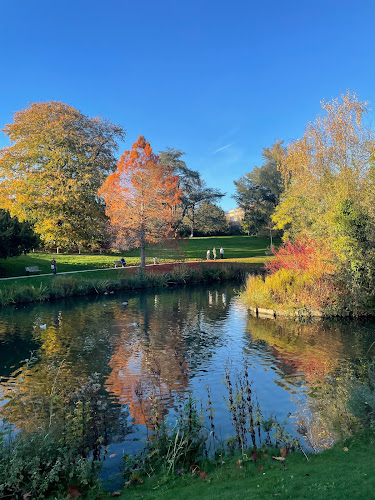
Parc Barbieux
Cita-Parc
Find Accommodations Nearby
Recommended Tours & Activities
Visitor Reviews
There are no reviews yet. Be the first one to write one.
Share Your Experience
Have you visited Cimetière de Roubaix? Help other travelers by leaving a review.