
Cherry Hinton Chalk Pits
About Cherry Hinton Chalk Pits
Key Features
More Details
Updated June 11, 2025
## Cherry Hinton Chalk Pits, Cambridge: Chalk Cliffs, Rare Wildflowers & Quiet City-Edge Walking
Cherry Hinton Chalk Pits is one of Cambridge’s most surprising green spaces: a set of former chalk quarries on the south-eastern edge of the city that’s now a protected nature reserve and Site of Special Scientific Interest (SSSI). The reserve, managed as Cherry Hinton Chalk Pits by the Wildlife Trust for Bedfordshire, Cambridgeshire and Northamptonshire, covers East Pit and Limekiln Close, with neighbouring West Pit forming a separate Local Nature Reserve.
Within about 12.8 hectares, you get steep white cliffs, chalk grassland rich in wildflowers, scrub alive with birdsong, and a quietly dramatic landscape that feels a world away from the colleges in the city centre.
—
## Why Cherry Hinton Chalk Pits Is Special
A few things make this site stand out in the wider Cambridge green-space mix:
– SSSI status for rare plants – The Cherry Hinton Pit SSSI was designated for four nationally uncommon species, including great pignut, moon carrot and grape hyacinth, three of which are on the British Red List of Threatened Species.
– Former industrial landscape turned refuge – The pits once supplied hard chalk for Cambridge University colleges and lime for cement; quarrying in Limekiln Close ceased roughly 200 years ago, while East Pit was worked until the early 1980s.
– Chalk grassland biodiversity – Reprofiling of the East Pit floor in 2009 broke up the solid chalk and allowed grassland with wildflowers such as milkwort, harebell and kidney vetch to establish and spread.
– Rich birdlife and nocturnal species – Scrub and grassland here provide nesting and feeding sites for more than 60 bird species, and the reserve supports glow-worms that can sometimes be seen on summer nights.
This mix of geology, ecology and history makes Cherry Hinton Chalk Pits a strong choice if you want a short, meaningful walk with proper “sense of place” rather than just another city park.
—
## A Short History: From Quarry to Nature Reserve
### Quarrying and the making of Cambridge
The Cherry Hinton pits are part of a chalk ridge on the edge of the Gog Magog Hills. For centuries, hard chalk was quarried here to build Cambridge’s colleges and to burn in limekilns for mortar and cement.
– Limekiln Close (often called “The Spinney” locally) supplied building material until around 1800. As quarrying stopped, woodland took over, dominated today by ash and field maple, with cherry trees that are thought to be descendants of those that gave Cherry Hinton its name.
– East Pit, the largest quarry, continued in use until the early 1980s before being acquired by the Wildlife Trust and opened as a Local Nature Reserve in 2009.
Quarrying left high chalk faces and a stark, bowl-like floor. Conservation work in 2009 broke up that compacted chalk, precisely to encourage colonisation by chalk grassland species – a deliberate rewilding move rather than simply letting the site scrub over.
### Archaeology and the War Ditches
The reserve also hides deep time.
– Archaeologists have found human bones, Roman and Iron Age pottery and the remains of a substantial ditch system, often referred to as the War Ditches, interpreted as part of an Iron Age hill fort.
– The fort sat on Lime Kiln Hill at the north-western edge of the Gog Magog Hills; quarrying removed much of the original earthwork, but the site now lies within East Pit, with interpretation boards on-site. Bullivant
For visitors, this means your walk here is not just through a nature reserve, but through a landscape with continuous human activity from prehistory to modern industry.
—
## What You’ll See on the Ground
### East Pit: Chalk amphitheatre and wildflower grassland
Most visitors experience Cherry Hinton Chalk Pits via East Pit, entered from Limekiln Road:
– You walk into a natural “arena” surrounded by steep white chalk cliffs with patches of scrub. | AccessAble
– The reprofiled floor supports chalk grassland with wildflowers such as milkwort, harebell and kidney vetch.
– The rare moon carrot grows here and at only two other sites in Britain (Beachy Head in East Sussex and Knocking Hoe in Bedfordshire), and monitoring shows its population in East Pit is increasing.
There’s a level, surfaced path around part of East Pit, making it easier for some visitors who might struggle with loose ground. Beyond that path, expect steeper slopes and rougher tracks. City Council
### Limekiln Close: Woodland spinney with long-observed wildlife
Next to East Pit, Limekiln Close (often known locally as “The Spinney”) gives a very different feel:
– Mature ash and field maples dominate, with cherry trees recorded here since at least the 17th century.
– Plants recorded include wild liquorice, knapweed and thyme, and an elsewhere-rare moss, Tortula vahliana, has been found on the roadside.
– Birdlife is strong: over 50 species have been noted over time, including garden warblers, goldfinches and linnets.
Limekiln Close is steeply sloping, so it’s atmospheric but not the easiest corner of the reserve for anyone with limited mobility. City Council
### West Pit: Chalk woodland and caravan-park enclave
Across Limekiln Road lies West Pit, a 4.3-hectare Local Nature Reserve managed by Cambridge City Council.
– It’s also part of the SSSI and supports moon carrot in a steeply sloping woodland with a caravan park in the centre.
– Access is via the entrance to the caravan park on Limekiln Road; there is no internal public route linking West Pit and East Pit, although the entrances sit close together.
If you’re planning a broader “edge of Cambridge nature” day, West Pit can pair with East Pit and Limekiln Close to show three distinct habitats in a compact radius – classic anchor text territory for a more detailed Cambridge nature-walks guide.
—
## Wildlife Highlights
Even on a short visit, you’re likely to see or hear:
– Chalk grassland plants – milkwort, harebell, kidney vetch and other specialists of thin, lime-rich soils.
– Rare flora – great pignut, moon carrot and a rare grape hyacinth (Muscari), which are key reasons for the SSSI designation.
– Birds in scrub and woodland – scrubby slopes and trees support dozens of species; surveys and council notes refer to more than 50 bird species around the pits and Limekiln Close.
– Glow-worms – summer evening “glow-worm walks” have been run in East Pit, reflecting a healthy population of these beetles.
Because species lists are compiled over years and conditions shift with management and climate, specific sightings can vary. If you’re targeting certain plants or invertebrates, it’s worth checking recent Wildlife Trust updates or local natural history society notes before you go.
—
## Practical Visitor Information
### Location and access
The reserve sits on the south-eastern edge of Cambridge, around 2.5 miles from the city centre.
Key access points include:
– Limekiln Road entrance (East Pit / Limekiln Close) – Used by many visitors; AccessAble notes a gate with a slope and steeper ground beyond, plus a level surfaced path around part of East Pit. | AccessAble
– Queen Edith’s Way entrance – Another access point, but with a flight of steps and no handrails, so it is challenging for many visitors. | AccessAble
– West Pit entrance – From the entrance to the caravan park on Limekiln Road.
There is a bus stop within roughly 150 m of one of the reserve entrances, and Cambridge station is the nearest National Rail link. | AccessAble
### Opening hours and cost
– Opening times: Both Wildlife Trust and accessibility sources describe the site as open at all times / 24 hours.
– Entry fee: There is no admission charge.
Because management policies can change (for example, during extreme weather, conservation works or safety issues), it’s wise to check the Wildlife Trust’s Cherry Hinton Chalk Pits page shortly before visiting, especially if you’re planning an early-morning or late-evening trip.
### Parking and facilities
Current official information notes:
– Parking: Visitors are advised to park in the lay-by opposite the public house on Fulbourn Road.
– Toilets: There are no toilets (standard or accessible) within the reserve, according to AccessAble’s detailed guide. | AccessAble
– Car park: The reserve itself does not have a dedicated public car park; AccessAble also reports no marked public car park within 200 m of the entrances. | AccessAble
Again, parking regulations and nearby pub arrangements can change, so treat this as a snapshot and double-check signage on arrival.
### Terrain, accessibility and safety
– Expect steep slopes and steps across much of the site; East Pit’s partial surfaced path is the main relatively even option. City Council
– There are no accessible toilets, and step-free access is limited; this will be a significant factor for many visitors with mobility or continence needs. | AccessAble
– The Wildlife Trust specifically warns visitors not to climb the cliffs and to keep away from the base of the chalk faces because of potential falling rocks.
For anyone planning a visit with mobility aids, young children, or older relatives, the AccessAble guide is worth reading in full before you go. | AccessAble
### Dogs and responsible visiting
– Dogs are allowed on a lead, reflecting both wildlife sensitivity and the steep terrain.
– As at many chalk pits, open water areas nearby have safety restrictions; local accounts note that a reservoir-type pit behind the brook is closed to the public, while East Pit on Limekiln Road is the long-standing public nature reserve.
Sticking to paths, avoiding cliff edges, and keeping dogs from scrambling on the slopes directly supports ongoing conservation work on the chalk grassland.
—
## How to Build Cherry Hinton into a Wider Cambridge Day
For trip-planning, Cherry Hinton Chalk Pits works well as:
Table of Contents
Key Highlights
Cherry Hinton Chalk Pits
Location
Places to Stay Near Cherry Hinton Chalk Pits"Really nice scenic place if you like that sort of thing"
Find and Book a Tour
Explore More Travel Guides
No reviews found! Be the first to review!
Traveler Reviews for Cherry Hinton Chalk Pits
There are no reviews yet. Be the first one to write one.
Have you visited Cherry Hinton Chalk Pits? Help other travelers by sharing your review.
You Might Also Like
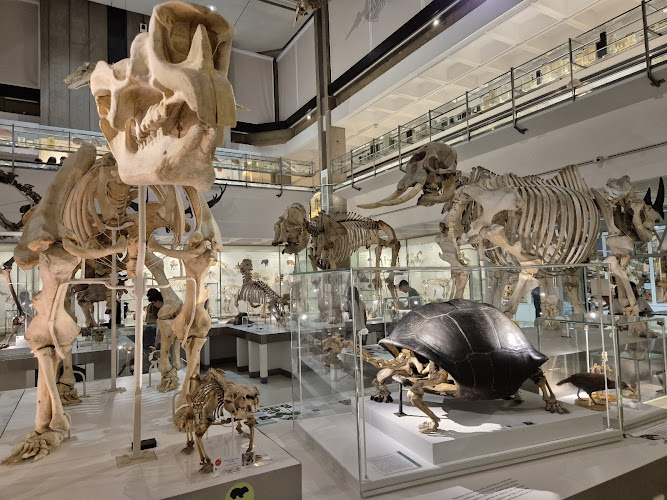
University Museum Of Zoology
King’s College Chapel
Cambridge University Botanic Garden
Find Accommodations Nearby
Recommended Tours & Activities
Visitor Reviews
There are no reviews yet. Be the first one to write one.
Share Your Experience
Have you visited Cherry Hinton Chalk Pits? Help other travelers by leaving a review.