
Cambridge University Botanic Garden
About Cambridge University Botanic Garden
Key Features
More Details
Updated June 11, 2025
## Cambridge University Botanic Garden: A Quiet, Fascinating Side of Cambridge
Cambridge University Botanic Garden is one of the city’s most rewarding “second-layer” attractions: a working scientific garden, a calm green space, and a showcase for plant life from around the world.
– Location: 1 Brookside, Cambridge CB2 1JE, United Kingdom
– Size: 16 hectares / 40 acres
– Collections: Over 8,000 plant species and roughly 14,000 living accessions University Botanic Garden
– Founded for the University: 1831, by Professor John Stevens Henslow, Charles Darwin’s teacher
– Status: Open to the public all year, with a short closure over Christmas and New Year University Botanic Garden
On review sites it consistently scores highly, with thousands of positive visitor reviews, which aligns with the description you provided: “There are lots of things to see, quiet and interesting.”
On this page
– Highlights of Cambridge University Botanic Garden
– Planning your visit to Cambridge University Botanic Garden
– Seasonal reasons to go
– Practical tips, accessibility and inclusivity
—
## Highlights of Cambridge University Botanic Garden
### A living laboratory with 8,000+ plant species
The garden is part of the University of Cambridge’s Department of Plant Sciences. Its main purpose is to support teaching and research, and the public gets to walk through that living laboratory.
Key facts about the collections:
– Around 8,000 plant species from around the world are grown here. University Botanic Garden
– These are organised into roughly 14,000 “accessions” (individual cultivated records) across the landscape. University Botanic Garden
– The layout includes systematic beds, where flowering plants are grouped by botanical family, making it unusually easy to see plant relationships side by side. University Botanic Garden
For travellers interested in more than just pretty borders, that scientific backbone makes the experience much richer: labels tend to be clear, and you can connect what you see in the garden with what you might read later in field guides or natural history books.
### Historic glasshouses and global plant zones
A prominent feature is the chain of glasshouses that hold about 3,000 species from climates that can’t cope with the English weather.
Within these, the garden has created distinct climate- and theme-based displays, including:
– Tropical Rainforests – showing competition for light and space in humid environments.
– Arid Lands – drought-tolerant plants from Africa and the Americas, including many succulents and cacti, illustrating convergent evolution.
– Carnivores – an area dedicated to different types of carnivorous plant traps.
– Oceanic Islands and Mountains – focusing on how plants adapt to isolation and cold.
– “Life Before Flowers” – ferns and similar groups, highlighting plant evolution.
These glasshouses mean you can still have a substantial visit even in poor weather, which is useful in a city-break itinerary where you can’t control the forecast.
### Rock garden, lake and specialist collections
The site is largely flat, but early designers used an old gravel pit to form a lake and a raised rock garden, which are still key landmarks today.
Across the 40 acres you’ll also find: University Botanic Garden
– Rock gardens (including limestone and sandstone areas) for alpine and mountain plants.
– A Winter Garden (December–April) built around bark, stems, fragrance and structure when other gardens can feel empty.
– A Dry Garden, demonstrating planting that requires reduced watering.
– A Scented Garden, designed around smell and texture.
– National plant collections, including groups such as Alchemilla, Bergenia, European fritillaries, Lonicera, Ribes, Ruscus, Saxifraga, species tulips and hardy geraniums.
If you’re building a broader Cambridge itinerary that includes historic colleges and museums, this gives you a genuine contrast: you move from stone and manuscripts to a carefully curated outdoor collection of living things.
### A small but real piece of climate history
On 25 July 2019, the garden recorded 38.7°C (101.7°F), at the time the highest temperature ever officially recorded in the UK.
That record was overtaken in 2022, when 40.3°C was recorded in Coningsby, Lincolnshire, but the botanic garden also broke its own previous mark and reached 39.9°C that day.
For visitors, this is a reminder that you are walking through a site used for serious, long-term environmental data, not just a pleasure garden.
### Newton’s “apple tree” – and what’s there now
Until February 2022, the garden was home to a Flower of Kent apple tree grown from a cutting of the tree associated (by long tradition) with Isaac Newton’s gravitational insights. It was blown down in Storm Eunice in 2022.
This is important from an “outdated data” perspective: older guidebooks and blogs may still tell you to look for “Newton’s apple tree” in the garden today. That is no longer accurate; the tree is now part of the garden’s history, not its current landscape.
—
## Planning your visit to Cambridge University Botanic Garden
### Location and getting there
The main public entrance is at 1 Brookside, Cambridge CB2 1JE, close to Cambridge railway station.
Factual logistics you can rely on:
– The garden sits between Trumpington Road (west), Bateman Street (north) and Hills Road (east). University Botanic Garden
– Cambridge railway station is the main public transport reference point listed for the garden. University Botanic Garden
From a practical travel point of view, that means:
– It fits very well into a rail-based day trip to Cambridge.
– If you’re staying near the station, it’s one of the closest major attractions.
### Opening times and seasonal closures
The official site states that the garden is open every day throughout the year, with a planned Christmas closure each year (for example, in 2025–26 the closure is from 4pm on 23 December until 10am on 2 January). University Botanic Garden
Because these specific dates can change annually, treat any exact closure dates you see in older articles as potentially outdated and always check the garden’s own “Visit Us” page shortly before you travel.
### Tickets and admission – what’s current, what may age
The Museums of Cambridge information hub lists the following standard adult admission for the Botanic Garden: £8.00 (with an option to pay £8.80 including a 10% voluntary donation that can be Gift Aided).
Important caveats so you’re not misled by old data:
– These prices are accurate for the listing at the time it was crawled; ticket prices can and do change.
– The garden itself advises visitors to check current ticket prices and booking options via its official “Visit Us” and “Ticket Prices” pages. University Botanic Garden
Children and concessions are mentioned on the museum listing, but because individual rates and age bands change over time, it’s safer to verify the latest details directly on the official site rather than relying on a fixed number from any article.
### Facilities on site
The garden’s own visitor information confirms the following facilities: University Botanic Garden
– Garden Café – for drinks and light food.
– Garden Shop – selling gifts, books and plant-related items.
– Toilets – including accessible toilets (the exact configuration is detailed on the accessibility pages).
– Garden map, group visit information and guided tours on selected dates.
– Press and photography guidance for those planning to shoot more than casual snapshots.
For a Cambridge itinerary that includes walking, punting and museums, having toilets, food and indoor glasshouses all within one paid site is useful when travelling with children, older visitors or anyone who prefers to limit long walks between facilities.
—
## Seasonal reasons to go
Because the garden is a scientific collection rather than a purely ornamental park, there is planned interest in most months of the year. Features specifically called out in the official and reference material include: University Botanic Garden
– Winter (Dec–Apr): the Winter Garden focuses on bark, foliage, fragrance and structural planting designed for colder months.
– Spring: superb displays of bulbs and early flowering species, including parts of the national collections (for example, species tulips and fritillaries).
– Summer: herbaceous borders, the lake, water garden and glasshouses are all in full use.
– Autumn: an Autumn Colour Garden highlights foliage and late-season interest.
The garden’s own site also runs seasonal campaigns such as “What’s On in the Garden this Winter 2025–2026”, so events and emphases change year to year. University Botanic Garden
Any article claiming that a specific seasonal event (for example, a named trail from several years ago) is currently available should be treated as potentially outdated unless it cites this year’s programme.
—
## Practical tips, accessibility and inclusivity
### Accessibility and assistance dogs
The garden has a dedicated Accessibility section in its visitor information and encourages people with access needs to consult it when planning a visit. University Botanic Garden
One very clear, factual policy you should be aware of:
– Only trained assistance dogs supporting a disabled handler are permitted in the garden. Other dogs are not allowed. University Botanic Garden
This is important for visitors who travel with emotional-support animals or family pets; older blog posts sometimes gloss over this, so rely on the current wording on the official site.
### Families, schools and learning
The garden actively positions itself as a place for family and school learning:
Table of Contents
Key Highlights
Cambridge University Botanic Garden
Location
Places to Stay Near Cambridge University Botanic Garden"There are lots of things to see, quiet and interesting."
Find and Book a Tour
Explore More Travel Guides
No reviews found! Be the first to review!
Traveler Reviews for Cambridge University Botanic Garden
There are no reviews yet. Be the first one to write one.
Have you visited Cambridge University Botanic Garden? Help other travelers by sharing your review.
You Might Also Like

Alewife Brook Reservation
Lets Go Punting Cambridge
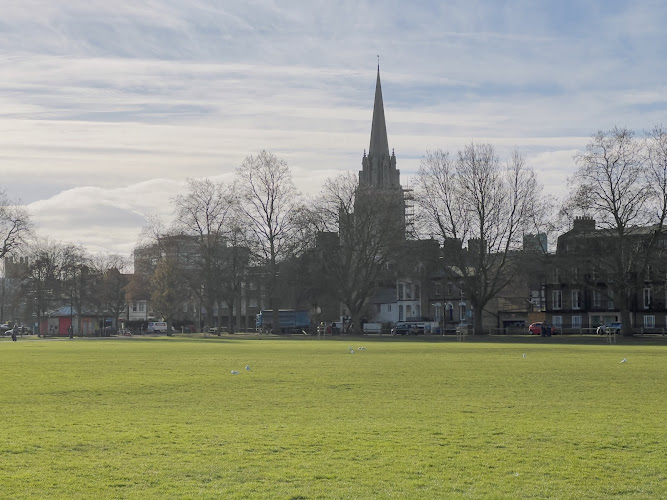
Parker's Piece
Find Accommodations Nearby
Recommended Tours & Activities
Visitor Reviews
There are no reviews yet. Be the first one to write one.
Share Your Experience
Have you visited Cambridge University Botanic Garden? Help other travelers by leaving a review.