
Chaukundi Graveyard
About Chaukundi Graveyard
Key Features
More Details
Updated April 15, 2024
Chaukhandi Tombs – Stdc
## Chaukundi Graveyard (Chaukhandi Tombs), Karachi – Early Islamic Art in the Open Air
East of Karachi’s high-rises and traffic, the landscape suddenly breaks into hundreds of stepped sandstone tombs: this is Chaukundi Graveyard, better known internationally as the Chaukhandi Tombs. It’s one of Pakistan’s most distinctive Islamic cemeteries and an easy heritage day trip from Karachi along the N-5 National Highway near Landhi Town. Pakistan
For RealJourneyTravels.com readers, this is the sort of place that quietly rewires how you think about “cemeteries” in South Asia: not just rows of graves, but a whole open-air gallery of carved stone, tribal memory, and Sindhi funerary architecture.
—
## Where Is Chaukundi Graveyard?
– Location: Eastern edge of Karachi, Sindh, Pakistan, near Landhi Town, just off the N-5 National Highway towards Thatta/Hyderabad. Pakistan
– Approximate distance from central Karachi: About 29–30 km east of the city centre. Pakistan
– Coordinates: Around 24.8644° N, 67.2714° E, matching the cluster of tombs on the plateau above the highway.
Several independent guides and tour operators treat Chaukhandi as the first stop on a longer heritage route towards Bhambhore, Makli Necropolis and Thatta, which gives you a sense of how conveniently it sits on the main Karachi–Thatta corridor.
Because traffic conditions in Karachi fluctuate, actual travel time varies. Published guides and tour descriptions typically estimate 40–75 minutes each way by road, depending on route and congestion. Pakistani
—
## A Brief History of Chaukhandi Tombs
### Tribal cemetery on Karachi’s edge
Archaeologists class Chaukhandi as an early Islamic cemetery, with most tombs dating from roughly the 15th to 18th centuries CE, during and after the Mughal period in Sindh.
The graveyard is strongly linked to local tribes:
– Traditionally described as the family graveyard of the Sindhi Jokhio (Jokhiya) tribe,
– With tombs also associated with Burfat, Jakhra and Shaikh groups,
– And Baloch (particularly Kalmati) families represented as well.
Older research often labelled these “Baloch tombs”, but more recent scholarship treats the Chaukhandi style as a regional Sindhi funerary tradition that multiple communities adopted, rather than a single-tribe phenomenon.
### From neglected field to protected heritage
A few key milestones in the site’s modern history:
– Early 1900s: The cemetery was described by colonial scholars and brought under the Ancient Monuments Preservation Act of 1904 in 1922, giving it early legal protection.
– 14 December 1993: “Chaukhandi Tombs, Karachi” was placed on UNESCO’s Tentative List as a cultural property, the first Pakistani entry on that list. World Heritage Centre
– Post-2013: After Pakistan’s 18th constitutional amendment, administrative control shifted to the Sindh provincial government.
– Recent years: Sindh authorities have declared the graveyard a protected area and announced plans to develop it as an archaeological park, responding to concerns about crumbling stonework and surrounding encroachments.
Some earlier reports highlighted damage, theft of carved stones and illegal construction near the site. More recent on-the-ground accounts describe cleaned-up paths, basic amenities and visible conservation work, suggesting conditions have improved compared with a decade ago. Heritage Site
Because restoration and park-development plans are ongoing, infrastructure and presentation may change; if you have specific needs (e.g., mobility, toilets, shade), it’s worth checking the latest local updates before you go.
—
## What You’ll Actually See: Reading the Stone
### A dense necropolis on a sandstone rise
The core cemetery spreads over dozens of acres on a slightly elevated, sandy plateau above the highway. Estimates vary, but scholarly and field reports consistently mention hundreds to around 1,500 carved sandstone tombs clustered in family groups, plus simpler, more recent burials on the fringes. World Heritage Centre
This density is striking: from a distance, the stepped sarcophagi and occasional domed pavilions form a jagged skyline of golden stone against the flat Sindh landscape.
### Distinctive Chaukhandi tomb design
Across Sindh and Balochistan, “Chaukhandi-type” tombs share a recognizable construction method:
– Buff-coloured sandstone: Local stone, stacked without mortar, has weathered surprisingly well in the arid climate.
– Stepped, pyramidal form:
– Rectangular burial area aligned north–south, typical for Muslim graves.
– Two stacked stone “boxes” of vertical slabs, the upper smaller than the lower, create a pyramid-like profile.
– Several flat slabs cap the top, often ending in a vertical finial at the north end, interpreted as a stylised crown or turban.
– Platforms and pavilions:
– Many graves are grouped on shared raised platforms, marking family plots.
– A minority sit under canopy structures or chhatri-like pavilions, supported by multiple pillars and sometimes a dome – the closest the site comes to full mausoleums.
Architecturally, researchers see strong links between Chaukhandi and the Makli Necropolis near Thatta, a UNESCO World Heritage Site with its own clusters of elaborately carved sandstone tombs.
### Carvings that hint at the life of the deceased
Look closely at the sandstone and you’ll start to see recurring themes:
– Geometric and floral patterns dominate: interlaced bands, rosettes, chevrons and basket-weave motifs, carved in shallow relief.
– Figural scenes, unusual in an Islamic funerary context, appear on some tombs:
– Mounted horsemen with weapons (sword, bow, shield), often interpreted as warriors or chieftains.
– Hunting scenes and symbolic animals such as fish or snakes.
– Gendered decoration:
– Carvings on many male graves emphasise arms and horsemanship.
– Female graves frequently show jewellery—bracelets, necklaces, rings and anklets—echoing adornments worn in life.
Art historians point out that the carving style likely evolved from wood carving traditions in lower Sindh, translated into stone and expanded into this monumental, stacked-sarcophagus form. Travel Guide
—
## When to Visit: Weather & Light
Karachi has a hot, semi-arid coastal climate with long, humid summers and short, dry winters.
– Most comfortable months for outdoor exploring:
– December–February: Mild daytime temperatures (roughly mid-teens to mid-20s °C on average) and low rainfall make this the most comfortable window for walking around exposed sites like Chaukhandi.
– More challenging conditions:
– Late spring to early autumn (roughly May–September) brings high heat and humidity; Karachi is prone to very hot days and occasional heatwaves, and monsoon rains can cause localised flooding or muddy approach tracks.
Regardless of month, most visitors find:
– Early morning or late afternoon is best for both temperature and photography, when the low sun pulls out the relief in the carvings and shadows across the platforms. This timing advice appears consistently in recent travel write-ups and tour descriptions.
—
## Practical Visit Tips (Facilities, Safety, Accessibility)
### Time on site
Traveller reports suggest most people spend 30–60 minutes walking the main clusters of tombs, with longer for photography or sketching. Heritage Site
### Facilities and current condition
Recent, detailed visitor reviews and heritage-site reports note: Heritage Site
– A formal entrance gate with a caretaker/guide.
– Basic amenities such as toilets on-site.
– Improved paths and planted areas, following conservation work around 2020.
– No standard ticket office mentioned in recent field reports; some visitors report no fixed entrance fee but tipping the guide. (Always treat this as subject to change and confirm locally.)
At the same time, provincial media and government briefings still highlight:
– Ongoing erosion and structural decay of some tombs.
– Past and present issues with encroachments and illegal structures in the wider buffer zone.
This combination—visible improvements inside the main enclosure, continued pressure on the surroundings—is important context if you’re interested in heritage conservation.
### Getting there & moving around
– Road access: The site sits close to the N-5 highway; most travellers and organised tours use a private car, hired driver or tour vehicle from Karachi. Travel-time estimates from reputable Pakistan travel operators and day-trip blogs cluster around 45 minutes to just over an hour each way, depending on city traffic.
– On foot inside the graveyard:
– Expect uneven sandy ground, low steps and stone platforms.
– There are some marked paths, but you will still be stepping on rough surfaces and small mounds. Based on photos and field descriptions, the site is not wheelchair-friendly and may be difficult for visitors with significant mobility challenges. Heritage Site
### Safety & respectful behaviour
There is no evidence in recent reporting of widespread security issues specifically targeted at visitors at Chaukhandi, but general Pakistan travel guidance applies: use a trusted local driver or guide, and visit in daylight hours. Activities
On site:
– This remains a cemetery and protected cultural property. Dress modestly, avoid climbing directly on fragile carved surfaces, and keep noise low out of respect for both the dead and any local visitors.
– A local caretaker or guide can help you interpret motifs and point out details you might otherwise miss.
—
## Why Chaukundi Graveyard Matters
Chaukhandi Tombs appear again and again in academic work on Islamic funerary architecture because they represent something rare:
Table of Contents
Key Highlights
Chaukundi Graveyard
Location
Places to Stay Near Chaukundi Graveyard
Find and Book a Tour
Explore More Travel Guides
No reviews found! Be the first to review!
Traveler Reviews for Chaukundi Graveyard
There are no reviews yet. Be the first one to write one.
Have you visited Chaukundi Graveyard? Help other travelers by sharing your review.
You Might Also Like
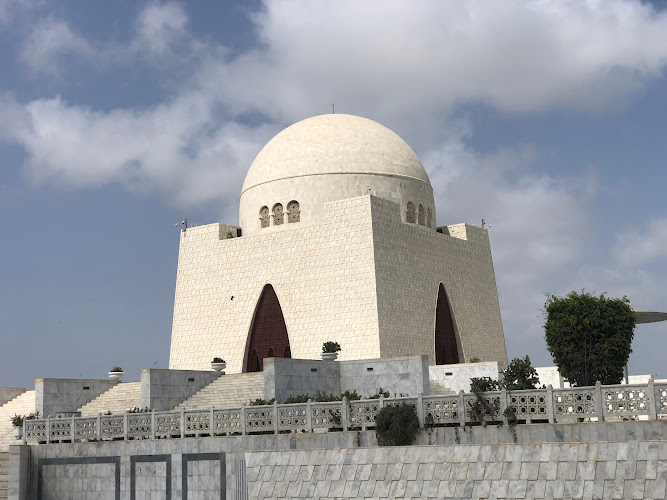
Mazar-e-Quaid-e-Azam

National Museum Of Pakistan
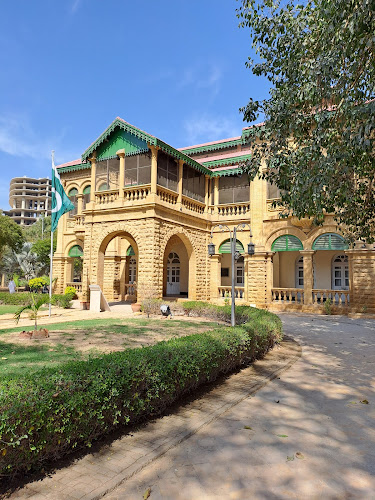
Quaid e Azam House Museum
Find Accommodations Nearby
Recommended Tours & Activities
Visitor Reviews
There are no reviews yet. Be the first one to write one.
Share Your Experience
Have you visited Chaukundi Graveyard? Help other travelers by leaving a review.