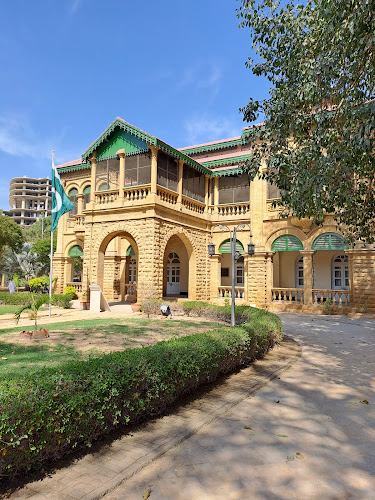
Quaid e Azam House Museum is one of Karachi’s most personal historical stops: a preserved residence associated with Muhammad Ali Jinnah, the founder of Pakistan. Rather than presenting history only through broad political narratives, the house invites visitors to consider the domestic setting around a public figure whose life remains central to the country’s story. Its rooms, furnishings, photographs and memorabilia create a quieter, more intimate encounter with the past than a large national museum.
Set in Karachi Cantonment, the museum occupies a distinctive colonial-era yellow-stone building whose character is part of the visit. Limestone masonry, timber roof trusses and the proportions of an early twentieth-century residence give the site an atmosphere that differs markedly from the city’s newer commercial districts. Come for Jinnah’s legacy, but allow time to look at the house itself: its architecture helps place the collection within the Karachi of its period and makes the museum rewarding for heritage-minded visitors as well as students of Pakistani history.
Standout Highlights & Experience
The strongest impression comes from seeing political history through the scale of a home. Displays and preserved interiors help connect the formal image of Jinnah as a statesman with the routines, spaces and objects of private life. Read captions closely, especially around photographs, documents and correspondence, as these materials provide useful context for the independence movement and the political climate of the subcontinent.
- Colonial-era architecture: Study the yellow limestone exterior, masonry details and wooden roof trusses before entering.
- Preserved domestic rooms: Look for the contrast between living spaces, private quarters and areas associated with work and receiving visitors.
- Jinnah-related memorabilia: Personal effects give the collection its human scale and distinguish it from a purely chronological history display.
- Photographs and documents: These exhibits add political and biographical context to the residence and its occupants.
- A sense of period: Notice how furniture, room layout and architectural finishes combine to evoke an earlier Karachi.
- Focused heritage visit: The museum is compact enough to reward slow observation without requiring a full day.
Practical Visitor Strategy
| Factor | What to Know |
|---|
| Best Time to Go | Earlier in the day is generally the most comfortable choice in Karachi’s warmer months and can leave room for another central-city stop afterward. |
| Suggested Duration | Allow roughly 45 to 90 minutes for the house, exhibits and exterior details; history enthusiasts may wish to linger longer over labels and photographs. |
| Crowd & Entry Tips | Build in flexibility for security procedures, access arrangements or temporary changes to visitor operations. Confirm current opening and entry information before setting out. |
| Getting Oriented | Begin outside to appreciate the structure, then move room by room. A chronological reading of the displays makes the biographical story easier to follow. |
This is best approached as a reflective museum rather than a rapid photo stop. Start with the exterior, then take each room in sequence and pause at interpretive material before moving on. The collection’s value lies in the relationship between the building, the household setting and the historical record. Photography rules, bag checks and access conditions can change, so visitors should verify current requirements independently before arrival.
Honest Fit: Who Will Love It (and Trade-Offs)
Quaid e Azam House Museum is an especially good fit for travelers interested in Pakistan’s formation, architectural heritage, biography and the social history behind major political events. It also works well for families with older children, school groups and visitors seeking a meaningful cultural stop without the scale or sensory intensity of a major museum complex. Travelers looking for interactive exhibits, extensive multilingual interpretation or a broad survey of all Pakistani history may find the experience comparatively focused. As with many preserved historic residences, circulation may involve narrower passages, thresholds or level changes; visitors with mobility needs should confirm current accessibility support in advance. Pair the visit with another cultural, civic or architectural stop in central Karachi, and leave time to absorb the house rather than treating it as a quick addition between appointments.
 Real Journey Travels