
Chapel of the Hearers
About Chapel of the Hearers
Key Features
More Details
Updated April 15, 2024
## Chapel of the Hearers (Capilla del Oidor) in Alcalá de Henares
A Cervantes-linked chapel in the heart of a UNESCO World Heritage city
In the compact historic center of Alcalá de Henares, just off the main pedestrian core, the Chapel of the Hearers (Spanish: Capilla del Oidor) is one of those small sites that explains why this city is on the UNESCO World Heritage List. Once part of a medieval parish church, today it’s a hybrid space: a historic chapel, a visitor information point, and an exhibition hall tied closely to the life of Miguel de Cervantes. en Alcalá de Henares
—
## Why the Chapel of the Hearers matters
– The chapel preserves the baptismal font where Miguel de Cervantes received the sacrament on 9 October 1547. The font itself was moved here in 1905 during restoration works so it could be better preserved and interpreted. en Alcalá de Henares
– Inside you can also see a facsimile of the parish baptismal book from Santa María, displaying Cervantes’ baptismal entry and those of several of his siblings, all baptized in the same parish. en Alcalá de Henares
– The building is one of the last remnants of the old church of Santa María la Mayor, largely destroyed during the Spanish Civil War; what survives today is the Chapel of the Oidor and the adjacent tower.
For travelers interested in Spanish literature, Reformation-era history, or the broader story of the University and Historic Precinct of Alcalá de Henares (UNESCO-listed since 1998), this small chapel is one of the city’s key stops. en Alcalá de Henares
—
## A brief history of the Chapel of the Hearers
The Chapel of the Hearers forms part of a religious complex whose origins go back to at least the 14th century, when a chapel was added to the medieval church of Santa María. en Alcalá de Henares
Over the centuries, the building evolved:
– Medieval foundations: The original structure showed clear Gothic influences, including pointed arches and slender vertical lines. Turismo
– Later additions: Renaissance details were gradually incorporated, reflecting the wealth and importance of Alcalá during the rise of its university and its role in Spain’s Golden Age. Turismo
– War damage: During the 20th century, particularly the Spanish Civil War, much of Santa María was destroyed. Modern descriptions and visitor accounts are consistent in noting that only the chapel and the bell tower survived as architectural witnesses of the old church.
After restoration, the Cervantes baptismal font was relocated here in 1905, effectively turning the chapel into both a place of memory and a small interpretation center focused on the writer’s life and the parish’s role in his story. en Alcalá de Henares
—
## Architecture: what to look for outside
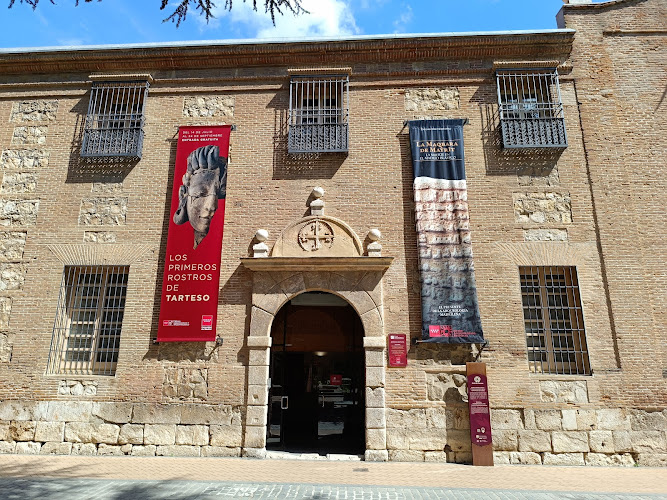
Step into Plaza Rodríguez Marín and you immediately see how the chapel anchors the space:
– The façade combines exposed stone and patterned brickwork, typical of historic religious architecture in central Spain.
– Large blind arches on the exterior wall mark where the former church nave once extended, giving a clear sense of the volume that has disappeared.
– The modest doorway with a classical-style portal reflects later refurbishments, superimposed on older masonry.
– To one side you can usually see the tower of Santa María, the other surviving element of the old church, which now functions as a mirador (viewpoint) over the historic center according to local tourism descriptions.
This layered masonry is useful when you’re explaining the site to companions: you can literally point to different sections of wall and show the palimpsest of medieval, Renaissance, and later interventions.
—
## Inside the chapel today: Cervantes, exhibitions, and more
### Cervantes’ baptismal font and records
Inside, the focus is firmly on Cervantes:
– The baptismal font, originally from the parish of Santa María, is displayed in a way that makes it easy to understand its significance; interpretive materials explain that Cervantes was baptized here in 1547. en Alcalá de Henares
– A facsimile of the parish baptismal book shows his baptismal entry along with reproductions of entries for four of his siblings (Andrés, Andrea, Luisa, and Rodrigo). en Alcalá de Henares
This combination of original liturgical object and documentary evidence is rare for a 16th-century writer and makes the site particularly compelling for visitors who care about primary sources.
### Tourist information and exhibition space
Today the chapel functions as:
– One of the city’s main tourist information points.
– One of Alcalá’s principal exhibition halls, used for temporary shows and interpretive displays linked to local history and culture. en Alcalá de Henares
Recent examples include a 2025 exhibition titled “Alcalá de Henares, 500 años de Gigantes”, which explored five centuries of the city’s festival giants with historic photos, documents, and the figures themselves. That particular show was scheduled to run until 31 August 2025, so if you’re reading this later, treat it as a past case study rather than a current listing. SER
Because the chapel is a flexible municipal space, exhibitions change over time. For current shows and opening times, it’s safest to check the official local tourism site or on-site notices; specific exhibitions mentioned here may no longer be on view when you visit. en Alcalá de Henares
—
## Accessibility and inclusivity
Accessibility is one of the strong points of this site compared with many historic religious buildings:
According to Spain’s accessible-tourism platform Tur4all, the Chapel of the Hearers / Capilla del Oidor offers:
– Step-free access, making it suitable for many wheelchair users and travelers with reduced mobility.
– Reserved parking spaces for people with reduced mobility (PRM) in the area.
– Assistance dogs permitted.
– Facilities for families with small children, which is useful if you’re visiting with a stroller or need child-friendly amenities.
Because accessibility measures can change when spaces are refurbished, it’s wise for travelers with specific needs to confirm details with the local tourist office in advance using the contact information on the official tourism website.
—
## Visiting information & practical tips
### Location and setting
– Address: Plaza Rodríguez Marín, 28801 Alcalá de Henares, Madrid, Spain.
– The chapel stands a short walk from Plaza de Cervantes and the main pedestrian streets of the historic center, in the core of the UNESCO-listed area. en Alcalá de Henares
### Opening hours and prices (check for updates)
Current aggregator sites describe the Chapel of the Hearers as a free-to-enter historic attraction, and at least one travel platform explicitly notes free admission to the chapel itself.
However:
– Opening hours and any special restrictions can change, especially when exhibitions are being installed or the plaza is under works.
– For the most up-to-date information, consult the official tourism website of Alcalá de Henares or Spain’s national tourism portal, both of which list the Chapel of the Oidor with contact email and phone number. en Alcalá de Henares
### How to get there from Madrid
Alcalá de Henares is well connected to Madrid:
– Commuter rail (Cercanías): Lines C2 and C7 link Alcalá with central Madrid in roughly 30–35 minutes under normal conditions.
– From Alcalá de Henares train station, it’s a straightforward walk (through modern streets leading into the old town) to Plaza de Cervantes and then a short stroll to Plaza Rodríguez Marín.
– There are also intercity buses from Madrid and nearby towns, but exact routes and numbers can change over time; always confirm locally or via the regional transport website.
### Visitor experience & reviews
Recent review aggregations give the Chapel of the Hearers / Capilla del Oidor a rating of around 4.4 out of 5, based on roughly 280–290 visitor reviews, highlighting it as a small but essential stop for understanding Cervantes’ connection to the city.
Be aware that ratings and review counts are dynamic and will change as more travelers leave feedback.
—
## The chapel in today’s Alcalá: lighting projects and urban works
Two recent developments are worth noting for context; they may affect the atmosphere around the chapel during your visit:
1. Plaza de Cervantes rehabilitation (2025–2026)
– In 2025, Alcalá began major works to renovate Plaza de Cervantes, including upgrades in accessibility, paving, lighting, and green areas. The project’s first phase starts on the southern side of the square, close to the Chapel of the Oidor. SER
– Depending on timing, you may encounter construction equipment or temporary barriers near the plaza. These works are time-limited (originally estimated at about a year) but exact timelines are subject to change, so treat this as situational rather than permanent information.
2. “Alcalá Luce” monumental lighting plan
– In late 2025 the city launched “Alcalá Luce”, a project to enhance night-time illumination of key monuments using energy-efficient, heritage-sensitive lighting. SER
– The first phase focuses on areas around Calle Libreros and several historic colleges, while a future phase is planned to incorporate spaces like the Capilla del Oidor and the tower of Santa María. Since implementation will roll out over time, check local updates if you’re specifically interested in night photography or evening walks. SER
Because both projects rely on public funding and municipal planning, details may evolve; all timing and scope references here are accurate as of the latest 2025 reporting but should be treated as potentially time-sensitive.
—
## Combining your visit with nearby highlights
A stop at the Chapel of the Hearers is easy to fold into a broader walk through Alcalá’s UNESCO-listed center:
Table of Contents
Key Highlights
Chapel of the Hearers
Location
Places to Stay Near Chapel of the Hearers
Find and Book a Tour
Explore More Travel Guides
No reviews found! Be the first to review!
Traveler Reviews for Chapel of the Hearers
There are no reviews yet. Be the first one to write one.
Have you visited Chapel of the Hearers? Help other travelers by sharing your review.
You Might Also Like
Regional Archaeological Museum of Madrid
CENTRO DE INTERPRETACION ALCALÁ MEDIEVAL

Juan de Austria de Alcalá de Henares Park
Find Accommodations Nearby
Recommended Tours & Activities
Visitor Reviews
There are no reviews yet. Be the first one to write one.
Share Your Experience
Have you visited Chapel of the Hearers? Help other travelers by leaving a review.