
Changchun Planning Pavilion
About Changchun Planning Pavilion
Key Features
More Details
Updated April 15, 2024
## Changchun Planning Pavilion: Where the City’s Past and Future Share the Same Room
Changchun doesn’t shout for attention the way Beijing or Shanghai do, but if you want to understand how modern Chinese cities actually get built, the Changchun Planning Pavilion (also called Changchun City Planning Exhibition Hall / Planning Museum) is one of the most revealing stops you can make in Jilin.
Think of it as a hybrid: part urban-planning museum, part immersive media show, part future-city laboratory. It pulls together Changchun’s history from the 1800s, its industrial boom, and its long-term vision all the way out to around 2080. Daily Government Services
—
## Quick Orientation
– Location: No. 3366 North Renmin Street, Kuancheng District, Changchun, Jilin Province, China. Daily Government Services
– Coordinates (for GPS apps): roughly 43.81149° N, 125.31834° E (from your provided data).
– Type: Urban planning museum / city-planning exhibition hall. Daily Government Services
– Scale: The wider complex covers around 7.3 hectares, with total construction area reported at up to 63,000 m², and about 15,000–21,000 m² of dedicated exhibition space. Journal
– Floors: Three levels above ground plus a basement level used partly for technical space and exhibitions.
Some sources still describe it as “newly opened,” but those articles date from 2017–2018. At this point, you can treat it as a fully established city landmark rather than a brand-new attraction.
—
## The Building: A “City Flower” Turned Into Architecture
From the outside, the pavilion is deliberately symbolic. The design team led by architect Cui Kai conceived the building as a “city flower blooming in a green city” – the structure opens upward like a stylised blossom or ruyi motif, meant to express Changchun’s identity and optimism. Journal
Key architectural notes you can safely highlight in your copy:
– The complex sits on a 7.3-hectare site in southern Changchun’s metro area. Journal
– The main exhibition building uses hyperboloid forms and hybrid steel construction, which is why the elevations feel sculptural rather than boxy. Daily Government Services
– Inside, visitors are greeted by a huge golden “flower of the city” wall piece that mirrors the building’s exterior concept and introduces the planning theme. Daily Government Services
For travel readers, this isn’t just a museum – it’s also a piece of contemporary Chinese civic architecture worth seeking out if you’re into design, urbanism, or large-scale public buildings.
—
## How the Exhibitions Are Structured
The Changchun Planning Pavilion is laid out with a very clear narrative. You move through the city’s past, present, and future in sequence, with each floor dedicated to a different layer of urban planning. Journal
### 1. Ground Floor – History and “Spring City” Origins
The first floor focuses on city history and construction achievements: Journal
– “Spring City Overview” and “Centurial Changchun” walk you through the city’s evolution since the 1800s – from early settlement through rail-driven growth and industrialisation.
– Historical maps, archival photos, and early planning documents show how Changchun shifted from regional town to provincial capital.
– This is also where the museum emphasizes the idea of Changchun as a “Spring City”, tying climate, landscape and planning together as part of the urban identity.
### 2. Second Floor – National Strategy & Urban Planning
The second floor zooms out to the policy level: Journal
– Exhibits link Changchun’s spatial planning to national strategies such as the Belt and Road Initiative and regional integration across Northeast Asia.
– Panels and models break down topics like:
– land-use zoning
– transportation corridors and ring roads
– industrial clusters and logistics hubs
– This is where urban planning enthusiasts get into the nuts and bolts: diagrams of transit networks, redevelopment areas, “sponge city” storm-water concepts and ecological corridors. Daily Government Services
### 3. Third Floor – Special Plans and Future Vision (Up to 2080)
The top level is the most obviously “future-city” part of the museum. Thematic zones include: Journal
– Accessible Traffic – how metro lines, BRT, and road networks are meant to knit the city together.
– Water Civilization / Sponge City – Changchun’s approach to flood control, wetlands, lakes and water recycling.
– Ecological Livable City – green belts, parks, low-carbon development, and the city’s environmental targets.
– Municipal Infrastructure – energy grids, utilities and underground systems that keep the city running.
– Digital Changchun – smart-city control systems, data dashboards, and information platforms.
– Fast-Forward to 2080 – conceptual renderings of how Changchun might look at the end of the century, combining transport, density, and green space projections.
This floor is ideal if your readers care about sustainability, smart cities, and climate-resilient planning rather than just sightseeing.
—
## The Star Attractions Inside
### Immersive Sand-Table City Model
One of the standout features is a gigantic, projection-mapped sand-table model of Changchun.
– The table is about 28 metres in diameter and sits inside a hemispherical theatre where projectors also cover the ceiling and a 36-metre-wide curved screen, creating a fully wrapped visual environment.
– High-powered Christie projectors are used to overlay animated data on the physical model — traffic flows, lighting, development phases — so you can literally watch the city’s expansion and future plans play out in 3D.
For RealJourneyTravels readers, this is the moment where urban planning feels cinematic rather than academic.
### Three-Screen Projection System
The exhibition hall is also known for what official sources describe as China’s first three-screen projection system in a planning museum:
– Films are projected simultaneously onto the roof, wall and floor, giving a 3D-style experience of future city life and infrastructure. Daily Government Services
– Content focuses on topics like smart transport, environmental protection, and life in a “digital Changchun” several decades from now.
This is a good hook for your snippet/intro: you can legitimately pitch it as “one of China’s most immersive city-planning museums.”
### Family-Friendly Learning Space
Government sources explicitly note that the Planning Pavilion is set up so visitors can “exchange views and educate their children, as well as be entertained.” Daily Government Services
That gives you safe ground to position it as:
– a family-friendly rainy-day / winter activity
– especially useful for kids interested in models, maps, and big-screen visuals
Just avoid promising specific children’s playrooms or hands-on labs that aren’t clearly documented.
—
## Practical Visitor Guide
### Opening Hours & Tickets
Different travel sites summarise the basics slightly differently, but there’s a consistent pattern:
– Recent listings indicate free entry and suggest 1–2 hours as a typical visit time.
Because both operating hours and ticketing policies can change, especially for government-run museums, tell readers to confirm the latest details via:
– the local tourism bureau
– hotel concierge
– or up-to-date travel platforms right before visiting
That both keeps you factually honest and flags the potential for outdated info.
### How Long to Spend
– If you only want a quick overview and a look at the big city model, 1–2 hours is realistic.
– If you’re genuinely into architecture, transport or sustainable urban planning, allow 2–3 hours to properly work through each floor and stay for a full projection cycle on the sand-table show.
### Getting There
– Official address: No. 3366, North Renmin Street, Kuancheng District, Changchun. Daily Government Services
– Most visitors rely on a taxi or ride-hailing app, using the Chinese name 长春市规划展览馆 to show the driver. (This is standard practice across Chinese cities and avoids mis-communication with similar-sounding attractions.)
– For mapping apps, the GPS coordinates you provided (43.81149, 125.31834) will drop you in the immediate area of the pavilion.
Rather than guessing exact bus or metro routes – which are subject to frequent adjustments – it’s safer to point readers to current local transit apps or hotel staff for the final step of their route planning.
### Best Time of Year to Visit
Changchun has a continental climate with four very distinct seasons:
– Winters (Nov–Mar) are long, dry and extremely cold, with average January temperatures around –14 °C (6 °F) and historical lows much colder.
– Summers (Jun–Aug) are warm and humid, with average July temperatures around 23–24 °C (74–75 °F). Data
Because the Planning Pavilion is fully indoors and climate-controlled, it’s:
– an excellent winter or shoulder-season activity when parks and outdoor sites are less comfortable
– a useful midday escape in summer when the sun on open plazas gets intense
You can frame it as the intellectual anchor in a day that also includes outdoor highlights like Changchun World Sculpture Park or the Museum of the Imperial Palace of Manchukuo, both of which are major attractions in the city.
—
## Who Will Get the Most Out of It?
Based on how the museum is designed and what recent visitors emphasise in reviews, the Changchun Planning Pavilion is particularly rewarding for:
Table of Contents
Key Highlights
Changchun Planning Pavilion
Location
Places to Stay Near Changchun Planning Pavilion
Find and Book a Tour
Explore More Travel Guides
No reviews found! Be the first to review!
Traveler Reviews for Changchun Planning Pavilion
There are no reviews yet. Be the first one to write one.
Have you visited Changchun Planning Pavilion? Help other travelers by sharing your review.
You Might Also Like
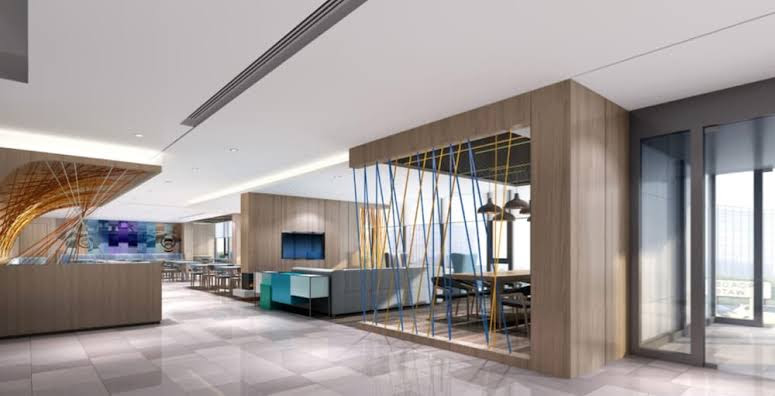
Holiday Inn Express Changchun High-tech Zone

Hyatt Regency Changchun

Changchun World Sculpture Park
Find Accommodations Nearby
Recommended Tours & Activities
Visitor Reviews
There are no reviews yet. Be the first one to write one.
Share Your Experience
Have you visited Changchun Planning Pavilion? Help other travelers by leaving a review.