
Centro Cultural del Bicentenario
About Centro Cultural del Bicentenario
Key Features
More Details
Updated April 15, 2024
CENTRO CULTURAL DEL BICENTENARIO – CCB
# Centro Cultural del Bicentenario in Santiago del Estero: Complete Visitor Guide
The Centro Cultural del Bicentenario (CCB) is the cultural heart of Santiago del Estero and one of the most important museum complexes in northern Argentina. It brings together history, anthropology, and fine arts in a single, thoughtfully restored building right on Plaza Libertad in the city center.
This guide walks you through what the complex actually contains, how to plan your visit, and what to pay attention to once you’re inside.
—
## What Exactly Is the Centro Cultural del Bicentenario?
The CCB is a multi-museum cultural complex housed in part of the former provincial Government House (“Casa de Gobierno”) with a large, modern extension behind the historical façade.
Inside the complex you’ll find:
– Three provincial museums
– Museo Histórico “Dr. Orestes Di Lullo”
– Museo de Ciencias Antropológicas y Naturales “Emilio y Duncan Wagner”
– Museo de Bellas Artes “Ramón Gómez Cornet”
– A large central hall with a historic fountain
– An auditorium for concerts, conferences, film cycles, and talks
– A grand temporary exhibition hall, classrooms for workshops, and circulation spaces (galleries, corridors, patios, and restored tunnels)
The complex opened in its current form on 24 July 2010, following an extensive restoration and expansion program, and is considered a flagship cultural project for the province.
—
## A Quick Architectural & Historical Snapshot
### From Government House to Cultural Hub
– The original building dates from 1868 and functioned as the provincial Government House, facing Plaza Libertad on Calle Libertad.
– It was designed and built by Swiss brothers Agustín and Nicolás Cánepa, with works starting in 1866 under governor Manuel Taboada.
– In 1987 the building was declared a Monumento Histórico Provincial, which guided the careful restoration.
During the CCB project, the historic structure was preserved as much as possible, while a new glass-roofed volume of around 7,500 m² was added at the rear, bringing the total complex to roughly 10,000 m² of cultural space.
### The Portico and the Tunnels
Two details matter if you care about architectural stories:
– Replica portico on Peatonal Tucumán
The pedestrian entrance on Calle Tucumán is framed by a replica of the Pórtico del Colegio de San Jerónimo, originally part of the Hospital de los Reyes Católicos on Plaza del Obradoiro in Santiago de Compostela, Spain. It reflects Romanesque influences and underlines the symbolic link between the two “Santiagos.”
– Restored underground tunnels
Inside, you can visit restored tunnels that local oral tradition associates with historic escape routes, connections between different points in the city, or even former detention spaces. The CCB presents these as part of the city’s layered historical memory, explicitly framing them as tradition and multiple versions, not as a single proven narrative.
—
## The Three Museums Inside the CCB
You’re not visiting “one museum” but three distinct collections under one roof. Planning your time around these is the best way to approach the complex.
### 1. Museo Histórico “Dr. Orestes Di Lullo”
The provincial historical museum traces the trajectory of Santiago del Estero and its role in Argentine history through objects, documents, and themed rooms.
Key points:
– Founded in 1941 by historian Dr. Orestes Di Lullo, who was also its first director.
– Originally located on Calle Urquiza, it moved into the CCB in 2010.
– Exhibits are arranged chronologically to highlight key periods in the city’s development and the province’s political, social, and economic life.
Expect objects like period furniture, official documents, religious art, and everyday items that show how life changed across centuries in this part of Argentina.
### 2. Museo de Ciencias Antropológicas y Naturales “Emilio y Duncan Wagner”
This museum is often the most surprising section for visitors who don’t expect such a deep anthropological and natural history collection in a provincial capital.
Highlights include:
– Archaeological and ethnographic objects from the Chaco–Santiagueña region, representing the communities that inhabited the area over thousands of years.
– A collection that started with a donation of around 3,000 archaeological and ethnographic pieces by Dr. Alejandro Gancedo in 1917, when the institution was called “Museo Arcaico.”
– Paleontological material, including notable fossils (such as mastodon and glyptodont remains, mentioned in visitor descriptions).
If you’re interested in Indigenous ceramics, jewelry, musical instruments, and pre-Hispanic material culture, this section is particularly important in the regional context.
### 3. Museo de Bellas Artes “Ramón Gómez Cornet”
On the upper floor, the fine arts museum focuses on Argentine and regional painting, with a strong emphasis on 20th-century artists.
Important facts:
– The museum was founded by decree in 1942, driven by local artist Ramón Gómez Cornet, who became its first director.
– The collection includes works by Gómez Cornet himself and artists such as Carlos Alonso, Guillermo Butler, Juan Carlos Castagnino, Leopoldo Presas, Benito Quinquela Martín, Raúl Soldi, Roberto Delgado, Santiago J. Chierico, and Antonio Berni, among others.
For travelers exploring art in northern Argentina, this is one of the key places to see how national names and local figures intersect in a provincial capital.
—
## The Central Hall, Fountain, and Public Spaces
After crossing the historic cloister, you arrive at a large, glass-covered central hall. This space is crucial for orientation and also works as a meeting point and event venue.
Here you’ll find:
– A restored historic fountain, originally located in Plaza Libertad and relocated to the hall during the CCB project.
– Access points to:
– The three museums (via escalators and elevators)
– The auditorium
– The bar/restaurant area
– Temporary exhibition rooms and workshop classrooms
These design choices make the building work well for multi-generational groups: you can split up between museums, then regroup at the fountain or café without losing each other.
—
## Cultural Agenda, Exhibitions, and Workshops
The CCB operates as a living cultural center, not just a static museum complex. According to its official communication channels and local press:
– It hosts temporary exhibitions, concerts, book presentations, theater performances, and film series in its large exhibition hall and auditorium.
– It offers workshops (talleres) that are typically open to the community and promoted through the center’s Instagram and Facebook pages.
– Anniversary celebrations (for example, the 13th and 15th anniversaries marked in 2023 and 2025) are used to showcase the center’s role in local cultural life.
Programming changes frequently, so for current exhibitions, performances, or special events, checking the official website and social media before your visit is essential.
—
## Practical Visitor Information
> Important: Opening hours and conditions can change. The details below come from the official website and recent local coverage but should be verified close to your visit.
### Location
– Address: Libertad 439, in front of Plaza Libertad, Santiago del Estero, Argentina.
Being on the main square, the CCB is easy to combine with a broader walk through the historic center, including civic buildings and nearby churches.
### Opening Hours
According to the official site, the CCB is open:
– Tuesday to Saturday & public holidays: generally 09:00–14:00 and 16:00/17:00–21:00/22:00
– Sundays: typically open in the late afternoon–evening
– Mondays: closed
There are slight variations between the website, local news, and social updates regarding the exact split between the afternoon and evening blocks. Because of that, it’s safest to confirm via:
– Official website
– Instagram (@ccbsantiagodelestero)
– Recent posts on the CCB’s Facebook page
### Tickets and Services
The official pages do not provide a clear, stable price list, and conditions (free entry, reduced fees, special events) can vary. To avoid outdated information, it’s best to check directly with the CCB through its contact phone or on-site information the week you plan to visit.
On-site, the complex includes:
– A museum shop (tienda) selling local artisan products, textiles, and stationery, supplied by craftspeople from the city and province.
– A bar/café area next to the central hall.
Accessibility details (such as full step-free routing, tactile resources, or adapted signage) aren’t fully documented in public sources. We know the complex uses elevators and escalators and was designed with modern circulation in mind, but travelers with specific accessibility needs should contact the center in advance to get up-to-date, precise information.
—
## How to Structure Your Visit Inside the CCB
Because the complex is large, planning a rough route is helpful.
– Short visit (1–2 hours)
– Central hall and fountain
– A focused walk through one museum (usually Historical or Anthropology & Natural Sciences)
– Quick look at any major temporary exhibition on the ground floor
– Deeper visit (3–4+ hours)
– All three museums, taking the elevator/escalators between floors
– Time in the tunnels section (if open during your visit)
– A break at the café followed by the temporary exhibition hall
This is also where you can think about internal linking on your site: for example, linking this guide from a broader Santiago del Estero travel guide and your regional Northwest Argentina itinerary hub page to give readers more context on how to fit the CCB into a longer trip.
—
## Who Will Get the Most Out of the CCB?
Based on what the collection and building actually offer:
Table of Contents
Key Highlights
Centro Cultural del Bicentenario
Location
Places to Stay Near Centro Cultural del Bicentenario
Find and Book a Tour
Explore More Travel Guides
No reviews found! Be the first to review!
Traveler Reviews for Centro Cultural del Bicentenario
There are no reviews yet. Be the first one to write one.
Have you visited Centro Cultural del Bicentenario? Help other travelers by sharing your review.
You Might Also Like
Juan Felipe Ibarra complex
Cerro de los Guanacos
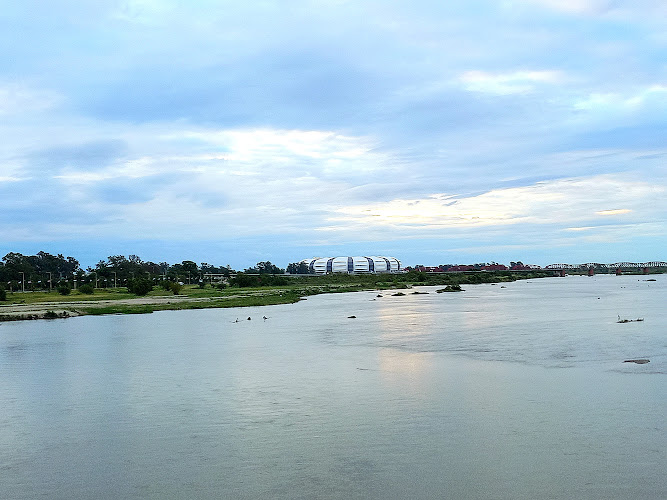
Costanera Parque Aguirre
Find Accommodations Nearby
Recommended Tours & Activities
Visitor Reviews
There are no reviews yet. Be the first one to write one.
Share Your Experience
Have you visited Centro Cultural del Bicentenario? Help other travelers by leaving a review.