
Cathedral of the Dormition of the Mother of God
About Cathedral of the Dormition of the Mother of God
Key Features
More Details
Updated April 16, 2024
## Visiting the Cathedral of the Dormition of the Mother of God in Tuzla, Bosnia & Herzegovina
The Cathedral of the Dormition of the Mother of God (Serbian: Саборни храм Успења Пресвете Богородице) is the main Serbian Orthodox church in Tuzla and the symbolic heart of the local Orthodox community. It’s one of those places that quietly explains the city’s story: religion, salt, politics, and the way Bosnia’s cultures overlap in a few city blocks.
Located on Đorđa Mihajlovića 3, just east of the central area and not far from Tuzla’s main squares, the cathedral is easy to work into a short walking route between the old town and the Pannonian Lakes. BiH
—
## Why the Cathedral Matters in Tuzla
Tuzla is famous for its salt – and for Europe’s only urban saltwater lakes – but it also has a dense mix of religious buildings: mosques, Orthodox churches, and Catholic churches all within walking distance.
In that context, the Cathedral of the Dormition of the Mother of God stands out in a few ways:
– Seat of an Orthodox diocese: The church serves as the nominal cathedral of the Eparchy of Zvornik and Tuzla, one of the historic eparchies of the Serbian Orthodox Church that covers much of north-eastern Bosnia.
– Architectural landmark: Its large Byzantine-style structure with blue-green cupolas dominates Tuzla’s skyline; you can clearly pick it out from viewpoints like Slana Banja.
– Protected heritage site: The complex (church and selected movable heritage) has been listed as a National Monument of Bosnia and Herzegovina since 2007, underlining its cultural significance beyond the religious community.
For travellers, this means you’re not just visiting a “pretty church,” but a key reference point in Tuzla’s religious life and national heritage.
—
## A Short History: Salt, Empire, and Survival
The story of the cathedral mirrors Bosnia’s late-Ottoman and Austro-Hungarian transition.
### 19th-century origins
– Fund-raising started in 1860: Tuzla’s Orthodox community began collecting money for a new church; by 1868 they had raised around four thousand ducats – a substantial sum for a provincial town at the time.
– Foundation laid in 1874: The foundations were consecrated on 6 May 1874, in a ceremony attended by Ottoman local officials. This was still Ottoman Bosnia, just a few years before the Austro-Hungarian occupation.
– Interrupted by war and politics: The Serbian–Ottoman War (1876) and regional instability delayed construction, which only resumed after Austria-Hungary took control of Bosnia in 1878.
### Completion and Habsburg patronage
– Construction finished in 1882: The church was completed on 27 August 1882 and consecrated by Metropolitan Dionisije Ilić.
– Imperial donation: Emperor Franz Joseph I is recorded as contributing 600 florins to the project, underscoring how important the building was in the empire’s strategy of stabilising and “modernising” Bosnia.
### Threat from salt mining
Tuzla’s underground salt deposits have caused long-term subsidence; whole streets and historic buildings have suffered. The Orthodox cathedral was one of the structures threatened by this ground movement.
– In the 19th century, the church took around eight years to build in the 1870s, and in modern times its surroundings had to be demolished due to instability.
– The cathedral itself was secured with a new concrete foundation system, which allowed it to survive while nearby buildings were removed.
This background explains why the cathedral today stands quite prominently in an area that once had more dense historical fabric.
### Renovations and protected status
The building has been renovated several times: in 1909–1910 (including changes to the bell tower), again in 1925, in 1968, and during the 1990s, before gaining national-monument status in 2007.
Potentially outdated: renovation details and any newer works after 2007 may not be fully reflected in currently available sources, so expect minor differences on the ground (fresh paint, updated iconostasis details, or restored façades).
—
## Architecture: A Byzantine Profile with Blue Cupolas
From a distance, the Cathedral of the Dormition of the Mother of God is easy to recognise:
– Byzantine-inspired layout: A large central dome with smaller cupolas and a tall bell tower gives the church a classic Orthodox profile, adapted to the 19th-century Balkan context.
– Blue-green domes: The cupolas have a distinctive bluish colour (often seen as blue or blue-green in photos and descriptions), which contrasts nicely with the pale masonry walls and surrounding greenery.
– Visible from viewpoints: From the memorial park at Slana Banja, the cathedral stands out more than the city’s mosques, whose minarets are more slender and visually modest in the skyline.
Inside, expect a more intimate atmosphere than the imposing exterior suggests:
– Rich iconography: Visitors describe walls and iconostasis covered with colourful icons typical for Serbian Orthodox churches.
– Chandeliers and arches: Large chandeliers and a series of arches frame the sanctuary, creating a layered visual effect when you step in from the bright daylight outside.
– Small church shop: Just to the right after you enter, a modest kiosk sells candles and religious items; this is a common feature in working Orthodox cathedrals. Several visitors note that staff and worshippers they met were welcoming and discreet.
—
## How to Visit: Practical Tips
### Location and access
– Address: Đorđa Mihajlovića 3, Tuzla 75000, Bosnia & Herzegovina. BiH
– Urban context: The cathedral sits roughly 400 metres east of Trg Slobode (Freedom Square) and the historic central area, making it easy to combine with a walk through the old town and along Korzo, the main pedestrian street. Futé
### Opening times and services
There is no reliable, consistently updated official schedule in the public English-language sources. Service times (especially for Sunday liturgy and major feast days like the Dormition on 15 August) can change depending on the parish calendar.
– To stay accurate: check locally – via the church noticeboard, the official website of the Eparchy of Zvornik and Tuzla, or by asking nearby residents – rather than relying on old online listings.
### Etiquette inside an Orthodox cathedral
To keep your visit respectful and comfortable:
– Dress with shoulders and knees covered, especially if you plan to enter during a service.
– Photography policies can vary. In many active Orthodox churches, discreet photography without flash is tolerated outside of services, but always look for posted signs or ask someone at the candle stand before shooting the interior.
– Lighting candles and standing quietly for a few minutes is completely acceptable even if you are not Orthodox; just avoid standing directly in front of worshippers or blocking paths.
This is a working place of worship, not a museum, so plan to move slowly and follow the cues of people around you.
—
## Combining the Cathedral with a Tuzla Walking Route
You can easily make the cathedral part of a relaxed half-day circuit through Tuzla:
1. Old town and Trg Slobode – Start with a coffee around Freedom Square and explore the streets that show a mix of Ottoman and Austro-Hungarian architecture.
2. Gazi Turali-beg Mosque – Visit this historically important mosque, rebuilt after subsidence issues but still central to Tuzla’s Islamic heritage.
3. Cathedral of the Dormition of the Mother of God – Walk east to the cathedral for a contrasting Orthodox perspective and a look at how salt-related ground issues reshaped the area.
4. Pannonian Lakes (Panonska Jezera) – Finish at the urban salt lakes complex, unique in Europe as a cluster of swimmable salt lakes right in a central district, with promenades, leisure facilities, and a small geological park.
This loop gives you a compact snapshot of Tuzla’s multi-faith urban fabric, industrial history, and leisure culture in a single day.
—
## Context for Travellers: Religious Heritage and Inclusivity
Bosnia & Herzegovina’s religious landscape can be complex, and Tuzla is no exception:
– The cathedral is part of the Serbian Orthodox tradition and belongs to a diocese whose official languages of worship include Church Slavonic and Serbian.
– Within a short walk you’ll also find mosques associated with the Bosniak Muslim community and, elsewhere in the city and region, Catholic churches.
As a visitor, the most helpful mindset is simply to treat each site as a living community space. Facilities, accessibility ramps, and information panels may be limited or uneven between sites; if you have mobility or sensory needs, plan for a bit of flexibility and don’t hesitate to ask locals for the easiest approach routes.
—
## Suggested Internal Links (for RealJourneyTravels.com)
To strengthen topical authority and user journey on your site, this article naturally supports links to:
– A broader Tuzla city guide covering Pannonian Lakes, old town highlights, and practical travel logistics.
– A country-level Bosnia & Herzegovina travel guide with road-trip routes, Sarajevo and Mostar itineraries, and background on history and culture.
—
## What to Expect Overall
Based on available visitor reports, the Cathedral of the Dormition of the Mother of God gets a modest but positive review profile online – one English-language TripAdvisor review rates it 4/5 and highlights the clean, well-kept interior and friendly atmosphere.
Important caveat: ratings and review counts on platforms like TripAdvisor can change quickly; figures cited here may be outdated by the time you visit.
If you’re already in Tuzla for the salt lakes or using the city as a base on a Bosnia road trip, stopping by this cathedral makes sense:
Key Highlights
Cathedral of the Dormition of the Mother of God
Location
Places to Stay Near Cathedral of the Dormition of the Mother of God
Find and Book a Tour
Explore More Travel Guides
No reviews found! Be the first to review!
Traveler Reviews for Cathedral of the Dormition of the Mother of God
There are no reviews yet. Be the first one to write one.
Have you visited Cathedral of the Dormition of the Mother of God? Help other travelers by sharing your review.
You Might Also Like
Arheološki park neolitsko-sojeničko naselje
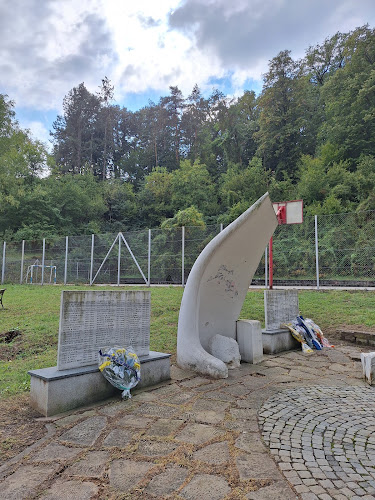
Spomen park Tušanj

Museum of East Bosnia
Find Accommodations Nearby
Recommended Tours & Activities
Visitor Reviews
There are no reviews yet. Be the first one to write one.
Share Your Experience
Have you visited Cathedral of the Dormition of the Mother of God? Help other travelers by leaving a review.