
Castle of Canossa
About Castle of Canossa
Key Features
- Ruined medieval fortress and tower foundations on a white sandstone cliff
- Historical significance as site of the 1077 Walk to Canossa and Matilda of Canossa’s seat
- Panoramic views over the Crostolo and Enza river valleys
- Museo Nazionale Naborre Campanini with finds from local excavations
- Trails and interpretive panels with guided-information available at the infopoint
More Details
Updated April 15, 2024
## Castle of Canossa: Walking Into One of Medieval Europe’s Most Dramatic Showdowns
High above the rolling foothills of the Reggio Emilia Apennines, the Castle of Canossa is no fairy-tale fortress. Today it’s a stark ruin on a whitish sandstone cliff, but this rocky outcrop once hosted popes, emperors, and one of the most decisive encounters in medieval European politics. Reggiano
If you’re building an Emilia-Romagna itinerary that mixes serious history, big landscapes, and rural food culture, Canossa deserves a deliberate detour.
—
## Where Is the Castle of Canossa?
The Castle of Canossa (Castello di Canossa) stands in the municipality of Canossa, in the Province of Reggio Emilia, Emilia-Romagna, northern Italy.
Key facts you can rely on:
– Location: On a rugged sandstone cliff behind the town of Canossa, between the Crostolo and Enza river valleys. Reggiano
– Elevation: The rock rises to about 576 meters above sea level, giving wide views over the surrounding valleys and, on clear days, toward the Alps. Reggiano
– Setting: Part of the Reggio Emilia Apennines, an area known for hiking routes, hilltop villages, and “Matildic” castles associated with Matilda of Tuscany. Romagna Tourism
From Reggio Emilia city, the castle area is roughly 24 km by road; travel time is often around 35–50 minutes depending on route and traffic, with combinations of train plus taxi also possible via Ciano d’Enza.
—
## A Quick History: From Frontier Stronghold to Ruin
### 10th–11th Century Origins
– The stronghold at Canossa was built in the 10th century, around the mid-900s, by Adalbert Atto (Atto Adalbert), founder of the local noble house later known as the Attoni or House of Canossa. Britannica
– Strategically, it controlled routes across the Apennines between the Po Valley and Tuscany, making it both a defensive outpost and a political power base. Romagna Tourism
### Matilda of Tuscany and the “Walk to Canossa”
The castle reached its peak under Matilda of Tuscany (Matilda of Canossa, 1046–1115), one of the most powerful figures of the medieval Church–Empire struggle. She inherited Canossa and vast territories across northern and central Italy and became a key supporter of reformist popes.
In 1077, Canossa became a symbol known across Europe:
– Holy Roman Emperor Henry IV travelled in winter to seek the lifting of his excommunication from Pope Gregory VII, who was staying as Matilda’s guest at the castle.
– According to contemporary sources, Henry had to wait for three days outside the castle in penitential clothing before being admitted and absolved – the episode remembered as the “Road to Canossa” / “Walk to Canossa” / “Humiliation of Canossa.”
This event has since been used as shorthand for enforced political submission in multiple European languages.
### Decline and Destruction
– After Matilda’s death in 1115, the castle passed through various hands and eventually declined in strategic importance.
– In 1256, forces from nearby Reggio Emilia destroyed the fortress and the church of San Apollonio inside its walls. Only the baptismal font survived and is now preserved in the on-site museum.
– In the 19th century, the ruins were acquired by the Italian state (1878) and declared a National Monument; archaeological excavations followed in 1877 and 1893. Emilia Romagna
Today, you see a ruined 10th-century castle on a hill, later converted in part to monastic use, with a small history museum rather than a fully reconstructed fortress.
—
## What You’ll Actually See on Site
### 1. The Ruins and the Cliff
Don’t expect intact towers and furnished halls. What you get is:
– Perimeter walls and foundations tracing the outline of the medieval fortress. Reggiano
– The dramatic whitish sandstone rock, an Oligocene limestone formation that rises sharply above the surrounding landscape. Reggiano
– Panoramic views across the Enza and Crostolo valleys, and in good weather as far as the Alps. Reggiano
The visual impact is partly geological: the pale rock and steep drop-offs make the site feel isolated, even with modern farmland below.
### 2. Museo Nazionale “Naborre Campanini”
Within the archaeological area is the National Museum “Naborre Campanini”, named after the scholar who led 19th-century excavations. Emilia Romagna
The museum’s collection is structured around several themes:
– Matilda of Tuscany and her era, including the political and religious context of the Investiture Controversy. Emilia Romagna
– Archaeological finds from the 1877 and 1893 digs – ceramics, architectural fragments, everyday objects that reconstruct life at the fortress. Emilia Romagna
– The 12th-century baptismal font from the demolished church of San Apollonio, one of the most important single artefacts associated with the site. Romagna Tourism
– A nature trail component, linking the ruins to the surrounding landscape and local ecology. Emilia Romagna
The museum is part of the Italian Ministry of Culture’s regional museum network; admission rules and opening times are managed through that system. Emilia-Romagna
> 🔎 Data that can change: ticket prices, free-entry days (such as for under-18s) and detailed opening hours are periodically updated. Always verify on the official “Castello di Canossa e Museo Nazionale Naborre Campanini” page before you go. Emilia-Romagna
### 3. The Wider Matildic Landscape
Canossa sits in the middle of a dense cluster of Matildic sites:
– Rossena Castle, on a reddish volcanic rock about 4 km away, with views over clay “calanchi” formations. Romagna Tourism
– The Torre di Rossenella in the Campotrera Nature Reserve, of interest for both geology and flora. Romagna Tourism
– Nearby historic villages like Votigno, and the Tempietto del Petrarca commemorating Petrarch’s stay at Selvapiana. Romagna Tourism
These are all confirmed, signposted sites in the immediate area and make it easy to turn a castle visit into a full day in the hills.
—
## How to Visit: Practical, Ground-Truth Advice
### Getting There
From Reggio Emilia city:
– By car: Road distance to the castle is about 24 km, typically around 35 minutes’ drive under normal conditions.
– By public transport plus taxi: You can travel by train from Reggio (for example from Reggio Via Fanti or Reggio Santo Stefano) to Ciano d’Enza, then take a taxi up to the castle area. Combined travel time is often around 50 minutes.
Road and timetable details can change, so it’s worth checking a current journey planner (or Rome2Rio–style aggregator) shortly before your visit.
### Terrain, Accessibility & Who This Works For
– The castle stands on a steep cliff with uneven ground; paths around the ruins are not perfectly flat or fully sheltered. Reggiano
– This can be challenging for visitors with limited mobility, wheelchair users, or anyone who struggles with slopes or rough surfaces. Where possible, check the latest accessibility notes on the official museum site and consider calling ahead if you need specific accommodations. Emilia-Romagna
– Families with children often appreciate the open space and “castle ruin” atmosphere, but supervision is important near drops and uneven edges.
### Best Time to Go
Regional tourism authorities explicitly recommend spring through autumn as the most comfortable time to explore the Canossa area, thanks to milder temperatures and clearer visibility. Romagna Tourism
Winter visits are possible, but:
– Weather can be cold, wet, or foggy in the Apennine foothills.
– The original 1077 “Walk to Canossa” happened during a severe winter spell – historically accurate, but not necessarily the experience most travelers want to recreate.
—
## Combining Canossa With Food, Wine & Nearby Towns
Even if the castle itself is your anchor, the trip makes more sense when you fold in the region’s food and wine. Reggio Emilia is part of Italy’s “Food Valley” and is strongly associated with:
– Parmigiano Reggiano, whose production area includes the province of Reggio Emilia. Emilia Welcome
– Traditional Balsamic Vinegar of Reggio Emilia (DOP). Emilia Welcome
– Lambrusco wines, including Reggiano DOC Lambrusco, produced in the province. Emilia Welcome
A realistic, history-focused day might look like:
– Morning: drive from Reggio Emilia to Canossa Castle, explore ruins and museum.
– Midday: continue to Rossena Castle or another nearby Matildic site. Romagna Tourism
– Afternoon/early evening: stop at a caseificio (Parmigiano Reggiano dairy) or Lambrusco-producing winery in the Reggio Emilia area for a tasting or shop visit – many are signposted as “wine and food factories” on local tourism maps. Emilia Welcome
### Internal-Link-Ready Anchors
If you’re publishing this on a site with broader Italy coverage, two natural internal-link targets would be:
– A Reggio Emilia city or province guide – e.g. link the phrase “Reggio Emilia travel guide” to /italy/reggio-emilia-travel-guide.
– An Emilia-Romagna castle or road-trip itinerary – e.g. link “Emilia-Romagna castles itinerary” to /italy/emilia-romagna-castles.
Those anchors are contextually relevant and likely to convert readers deeper into your Italy content.
—
## Events, Trails & Who This Trip Suits
– The area around Canossa is part of long-distance routes like the Via Matildica del Volto Santo, a walking itinerary connecting Reggio Emilia with the Tuscan-Emilian Apennines and San Pellegrino in Alpe, passing through castles, churches, and sandstone villages. Matildica
– The municipality hosts historical re-enactments – notably a September event recreating the “Pardon of Canossa,” with costumed figures representing Matilda, Gregory VII and Henry IV. Romagna Tourism
Given the combination of ruins, museum content, and surrounding trails, Castle of Canossa is especially suited to:
Table of Contents
Key Highlights
- Ruined medieval fortress and tower foundations on a white sandstone cliff
- Historical significance as site of the 1077 Walk to Canossa and Matilda of Canossa’s seat
- Panoramic views over the Crostolo and Enza river valleys
- Museo Nazionale Naborre Campanini with finds from local excavations
- Trails and interpretive panels with guided-information available at the infopoint
Location
Places to Stay Near Castle of Canossa
Find and Book a Tour
Explore More Travel Guides
No reviews found! Be the first to review!
Traveler Reviews for Castle of Canossa
There are no reviews yet. Be the first one to write one.
Have you visited Castle of Canossa? Help other travelers by sharing your review.
Nearby Attractions
You Might Also Like
Collezione Maramotti
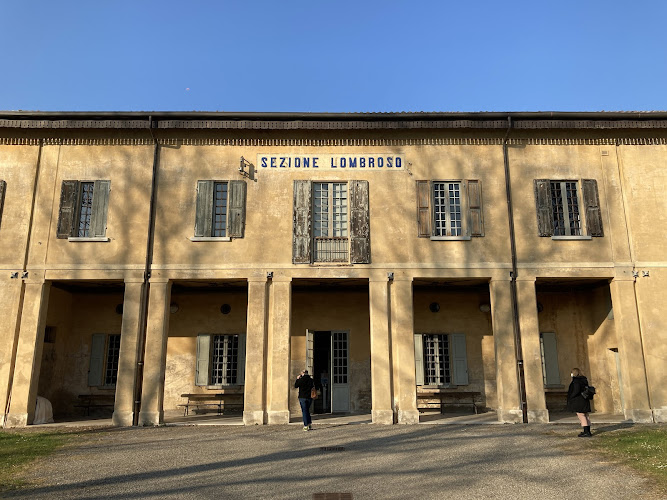
Museum of History of Psychiatry
chiostri di San Domenico
Find Accommodations Nearby
Recommended Tours & Activities
Visitor Reviews
There are no reviews yet. Be the first one to write one.
Share Your Experience
Have you visited Castle of Canossa? Help other travelers by leaving a review.