
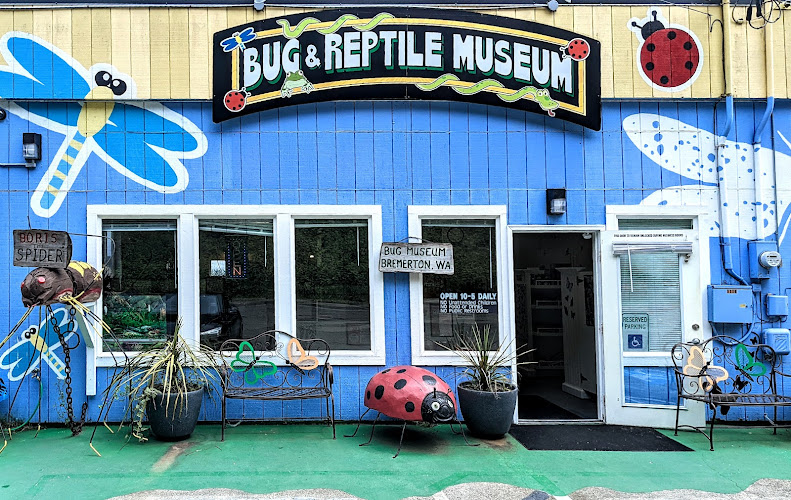
Bug & Reptile Museum
About Bug & Reptile Museum
Description
The Bug & Reptile Museum in Bremerton is a compact, hands-on museum and education center that lives inside what might at first look like a gift shop. It is the sort of place that surprises visitors — a little tucked-away gem where live tarantulas share space with carefully preserved insect displays and a handful of mellow snakes. The vibe is intimate, not cavernous; not a big-city spectacle but a focused, curious experience. Staff and volunteers are often on the floor, chatting with visitors, answering weird and wonderful questions, and sometimes letting a brave child (or adult) handle a docile creature under supervision. That personal touch is the personality of this place: small, earnest, and educational.
The museum balances preserved specimens with live reptiles and insects, offering a quick but memorable tour through arthropod diversity and reptile biology. Exhibits range from mounted beetle collections and framed entomology specimens to acrylic tanks where rattler-free snakes glide slowly across branches. Even though it occupies a modest footprint, the museum is deliberate with its displays — labels written in plain language, interactive elements geared toward kids, and a layout that encourages discovery without overwhelming. People who love oddities and families with inquisitive kids tend to linger longer than they planned. Those who come in just to browse the gift shop often end up doubling back into the displays three or four times; it creeps up on you.
The museum positions itself as a learning resource for local schools and families. Onsite services include guided mini-tours and kid-friendly demonstrations when staff availability allows. It doubles as a tourist stop for folks exploring Kitsap County and Puget Sound — quick, affordable, and different from typical sightseeing fare. Accessibility is taken seriously here: the entrance and parking are wheelchair accessible, making it straightforward for visitors with mobility needs to navigate the space. Parking is free and onsite, which is a small but significant convenience in a region where parking can be a headache.
One thing that stands out and is often not obvious from a quick web search: the museum is not trying to be a huge institution. It’s intentionally small because that size encourages conversation and hands-on learning. That means crowds rarely feel oppressive, but it also means that peak times can fill those few cozy corners faster than expected. The gift shop is integrated into the same space — a practical arrangement that lets families pick up science-themed souvenirs, specimen kits, field guides, or an educational toy after a short tour. No restaurant on premises, so plan accordingly for snacks or meals before or after the visit.
Key Features
- Kid-friendly exhibits combining both live animals and preserved specimens to foster curiosity and learning
- Small, intimate layout that encourages close-up viewing and personalized interactions with staff
- Onsite services include guided mini-tours and supervised handling demonstrations when available
- Gift shop integrated with the museum offering educational toys, specimen kits, and animal-themed merchandise
- Wheelchair accessible entrance and wheelchair accessible parking lot for easier access
- Free onsite parking in a dedicated lot — convenient for families and day-trippers
- Focus on education and outreach with content that appeals to school groups and young learners
- Combination of live reptiles (snakes, occasionally other small reptiles) and preserved insect collections (beetles, butterflies, arachnids)
- Compact footprint making visits efficient — great for pairing with other Bremerton or Kitsap Peninsula activities
Best Time to Visit
The museum works best as a short stop during a day exploring Bremerton or the Kitsap Peninsula. Weekdays outside of school field-trip hours are often calmer; mid-morning to early afternoon usually provides the quietest experience and the best chance to chat with staff without crowd pressure. Weekends, especially late morning and early afternoon, attract families and can be busier — still enjoyable, but expect the small rooms to feel lively. For visitors from Seattle or the broader Puget Sound region, planning a visit right after the ferry arrival or before a late-afternoon ferry departure makes logistical sense. The museum's size means visits typically run 30–60 minutes, so it can be paired easily with waterfront strolls, a nearby park, or other Bremerton attractions.
Seasonally, summer and school-break months bring more kids and families. If a visitor prefers a quieter, more reflective visit, try off-peak times in late fall or winter weekdays. Staff sometimes run special demos or thematic mini-programs during school holidays and summer, so calling ahead (or checking local community boards) can reveal opportunities for interactive programming. It’s worth noting that because the place is small, a steady trickle of visitors across the day can feel different from a concentrated group; both have charm, but the former gives more chances for one-on-one conversations with educators.
How to Get There
The museum is located within Bremerton and is accessible by car with free, on-site parking available in its parking lot. For many visitors coming from Seattle, the easiest approach is to take the ferry to Bremerton and then drive or take a short local ride to the museum area. Public transit options exist but may require transfers and a bit more planning; people traveling with strollers or wheelchairs often find a private or taxi ride from the ferry terminal more convenient. Parking being free onsite is a small luxury here — no need to hunt for meters or pay ramps.
Drivers arriving from the Kitsap Peninsula will find the museum straightforward to reach. Local signage points the way, and because the place is compact with a clear entry, finding the gift-shop/museum entrance is usually painless. Ride-hailing services and taxis operate in Bremerton for those who prefer not to drive. Cyclists should note that there isn’t a large bike rack area, though short-term bike parking near the curb is possible. Travelers with accessibility concerns will appreciate that the museum features a wheelchair accessible entrance and parking lot; still, calling ahead for confirmation and to ask about space configurations during a given visit is a good idea.
Tips for Visiting
Buy time, not more things. The visit is best experienced when visitors give themselves 30–60 minutes to slowly move through displays, ask questions, and stop for demonstrations. It is small but rich in detail, and rushing will mean missing the fine points that make the place memorable. Families will want to plan snack or restroom stops before or after the visit since there is no on-site restaurant.
Ask questions. Staff and volunteers are the hidden value. They bring stories about individual animals, collection methods, and local ecology that don’t appear on placards. A curious question can lead to a surprise: a gentle tarantula being held on a gloved hand, or an explanation of how beetle iridescence forms. The museum favors informal education, so little conversations go a long way.
Mind the size. Because it occupies a small footprint, large groups should plan ahead. School groups, scout troops, and birthday parties are accommodated but often require scheduling to avoid crowding. Call ahead if bringing a group, so staff can suggest the best times and prepare any extra materials.
Kids tend to love it — and yes, that means it’s sometimes loud. If a quiet experience is desired, aim for weekday mornings. But honestly, kids’ enthusiasm is contagious; it’s part of the museum’s energy. Young visitors leave humming about spiders and snakes in a way that only children can: unfiltered, excited, and a little bit loud. Parents should be prepared for sensory-rich encounters and maybe a small souvenir from the gift shop afterward.
Follow handling rules. Live animals are sometimes used for supervised encounters. These are controlled and safe when rules are followed, but visitors should respect staff directions. No unsupervised handling, no food near the animals, and wash hands afterward if handling is allowed. That keeps the animals healthy and the experience safe for everyone.
Accessibility matters — use it. The museum’s accessible entrance and parking are practical features that make visits simpler for everyone. If mobility aids are in use, visitors should mention this when calling to check on demonstrations; staff can often adjust how an exhibit is presented to include everyone comfortably.
Bring curiosity, not high expectations of scale. This is not a massive natural history museum; it’s closer to a focused teaching collection that packs personality into a small space. Expect close views of specimens, good conversations, and a gift shop that doubles as museum entry. If a person walks in expecting a sprawling institution, they might be surprised — but pleasantly so, if they enjoy learning and oddities.
Pair it with nearby activities. Because visits tend to be short and parking is free, the museum is ideal as part of a half-day or full-day itinerary in Bremerton and the Kitsap Peninsula. Folks often combine it with waterfront walks, naval history stops, or local parks. Even a quick loop through the nearby streets will give additional context to the area and fill out a day of exploring.
Last practical note: weather won’t affect the interior exhibits, but Bremerton is a maritime town. Dress for the climate if the trip includes outdoor walks or ferry rides. And for those who keep a travel checklist: camera? yes, but be mindful of flash and staff instructions around live animals. Curiosity and good questions are the best souvenirs — and the gift shop has some nice ones if a tangible memory is desired.
Key Features
- Live exhibits: tarantulas, snakes, lizards and other reptiles
- 8-foot-long ant farm showcasing colony behavior
- Mix of live animals and preserved specimens for education
- Kid-friendly hands-on and interpretive displays
- Small gift shop with nature-themed items and local touches
More Details
Updated August 30, 2025
Table of Contents
Description
The Bug & Reptile Museum in Bremerton is a compact, hands-on museum and education center that lives inside what might at first look like a gift shop. It is the sort of place that surprises visitors — a little tucked-away gem where live tarantulas share space with carefully preserved insect displays and a handful of mellow snakes. The vibe is intimate, not cavernous; not a big-city spectacle but a focused, curious experience. Staff and volunteers are often on the floor, chatting with visitors, answering weird and wonderful questions, and sometimes letting a brave child (or adult) handle a docile creature under supervision. That personal touch is the personality of this place: small, earnest, and educational.
The museum balances preserved specimens with live reptiles and insects, offering a quick but memorable tour through arthropod diversity and reptile biology. Exhibits range from mounted beetle collections and framed entomology specimens to acrylic tanks where rattler-free snakes glide slowly across branches. Even though it occupies a modest footprint, the museum is deliberate with its displays — labels written in plain language, interactive elements geared toward kids, and a layout that encourages discovery without overwhelming. People who love oddities and families with inquisitive kids tend to linger longer than they planned. Those who come in just to browse the gift shop often end up doubling back into the displays three or four times; it creeps up on you.
The museum positions itself as a learning resource for local schools and families. Onsite services include guided mini-tours and kid-friendly demonstrations when staff availability allows. It doubles as a tourist stop for folks exploring Kitsap County and Puget Sound — quick, affordable, and different from typical sightseeing fare. Accessibility is taken seriously here: the entrance and parking are wheelchair accessible, making it straightforward for visitors with mobility needs to navigate the space. Parking is free and onsite, which is a small but significant convenience in a region where parking can be a headache.
One thing that stands out and is often not obvious from a quick web search: the museum is not trying to be a huge institution. It’s intentionally small because that size encourages conversation and hands-on learning. That means crowds rarely feel oppressive, but it also means that peak times can fill those few cozy corners faster than expected. The gift shop is integrated into the same space — a practical arrangement that lets families pick up science-themed souvenirs, specimen kits, field guides, or an educational toy after a short tour. No restaurant on premises, so plan accordingly for snacks or meals before or after the visit.
Key Features
- Kid-friendly exhibits combining both live animals and preserved specimens to foster curiosity and learning
- Small, intimate layout that encourages close-up viewing and personalized interactions with staff
- Onsite services include guided mini-tours and supervised handling demonstrations when available
- Gift shop integrated with the museum offering educational toys, specimen kits, and animal-themed merchandise
- Wheelchair accessible entrance and wheelchair accessible parking lot for easier access
- Free onsite parking in a dedicated lot — convenient for families and day-trippers
- Focus on education and outreach with content that appeals to school groups and young learners
- Combination of live reptiles (snakes, occasionally other small reptiles) and preserved insect collections (beetles, butterflies, arachnids)
- Compact footprint making visits efficient — great for pairing with other Bremerton or Kitsap Peninsula activities
Best Time to Visit
The museum works best as a short stop during a day exploring Bremerton or the Kitsap Peninsula. Weekdays outside of school field-trip hours are often calmer; mid-morning to early afternoon usually provides the quietest experience and the best chance to chat with staff without crowd pressure. Weekends, especially late morning and early afternoon, attract families and can be busier — still enjoyable, but expect the small rooms to feel lively. For visitors from Seattle or the broader Puget Sound region, planning a visit right after the ferry arrival or before a late-afternoon ferry departure makes logistical sense. The museum’s size means visits typically run 30–60 minutes, so it can be paired easily with waterfront strolls, a nearby park, or other Bremerton attractions.
Seasonally, summer and school-break months bring more kids and families. If a visitor prefers a quieter, more reflective visit, try off-peak times in late fall or winter weekdays. Staff sometimes run special demos or thematic mini-programs during school holidays and summer, so calling ahead (or checking local community boards) can reveal opportunities for interactive programming. It’s worth noting that because the place is small, a steady trickle of visitors across the day can feel different from a concentrated group; both have charm, but the former gives more chances for one-on-one conversations with educators.
How to Get There
The museum is located within Bremerton and is accessible by car with free, on-site parking available in its parking lot. For many visitors coming from Seattle, the easiest approach is to take the ferry to Bremerton and then drive or take a short local ride to the museum area. Public transit options exist but may require transfers and a bit more planning; people traveling with strollers or wheelchairs often find a private or taxi ride from the ferry terminal more convenient. Parking being free onsite is a small luxury here — no need to hunt for meters or pay ramps.
Drivers arriving from the Kitsap Peninsula will find the museum straightforward to reach. Local signage points the way, and because the place is compact with a clear entry, finding the gift-shop/museum entrance is usually painless. Ride-hailing services and taxis operate in Bremerton for those who prefer not to drive. Cyclists should note that there isn’t a large bike rack area, though short-term bike parking near the curb is possible. Travelers with accessibility concerns will appreciate that the museum features a wheelchair accessible entrance and parking lot; still, calling ahead for confirmation and to ask about space configurations during a given visit is a good idea.
Tips for Visiting
Buy time, not more things. The visit is best experienced when visitors give themselves 30–60 minutes to slowly move through displays, ask questions, and stop for demonstrations. It is small but rich in detail, and rushing will mean missing the fine points that make the place memorable. Families will want to plan snack or restroom stops before or after the visit since there is no on-site restaurant.
Ask questions. Staff and volunteers are the hidden value. They bring stories about individual animals, collection methods, and local ecology that don’t appear on placards. A curious question can lead to a surprise: a gentle tarantula being held on a gloved hand, or an explanation of how beetle iridescence forms. The museum favors informal education, so little conversations go a long way.
Mind the size. Because it occupies a small footprint, large groups should plan ahead. School groups, scout troops, and birthday parties are accommodated but often require scheduling to avoid crowding. Call ahead if bringing a group, so staff can suggest the best times and prepare any extra materials.
Kids tend to love it — and yes, that means it’s sometimes loud. If a quiet experience is desired, aim for weekday mornings. But honestly, kids’ enthusiasm is contagious; it’s part of the museum’s energy. Young visitors leave humming about spiders and snakes in a way that only children can: unfiltered, excited, and a little bit loud. Parents should be prepared for sensory-rich encounters and maybe a small souvenir from the gift shop afterward.
Follow handling rules. Live animals are sometimes used for supervised encounters. These are controlled and safe when rules are followed, but visitors should respect staff directions. No unsupervised handling, no food near the animals, and wash hands afterward if handling is allowed. That keeps the animals healthy and the experience safe for everyone.
Accessibility matters — use it. The museum’s accessible entrance and parking are practical features that make visits simpler for everyone. If mobility aids are in use, visitors should mention this when calling to check on demonstrations; staff can often adjust how an exhibit is presented to include everyone comfortably.
Bring curiosity, not high expectations of scale. This is not a massive natural history museum; it’s closer to a focused teaching collection that packs personality into a small space. Expect close views of specimens, good conversations, and a gift shop that doubles as museum entry. If a person walks in expecting a sprawling institution, they might be surprised — but pleasantly so, if they enjoy learning and oddities.
Pair it with nearby activities. Because visits tend to be short and parking is free, the museum is ideal as part of a half-day or full-day itinerary in Bremerton and the Kitsap Peninsula. Folks often combine it with waterfront walks, naval history stops, or local parks. Even a quick loop through the nearby streets will give additional context to the area and fill out a day of exploring.
Last practical note: weather won’t affect the interior exhibits, but Bremerton is a maritime town. Dress for the climate if the trip includes outdoor walks or ferry rides. And for those who keep a travel checklist: camera? yes, but be mindful of flash and staff instructions around live animals. Curiosity and good questions are the best souvenirs — and the gift shop has some nice ones if a tangible memory is desired.
Key Highlights
- Live exhibits: tarantulas, snakes, lizards and other reptiles
- 8-foot-long ant farm showcasing colony behavior
- Mix of live animals and preserved specimens for education
- Kid-friendly hands-on and interpretive displays
- Small gift shop with nature-themed items and local touches
Location
Places to Stay Near Bug & Reptile Museum
Find and Book a Tour
Explore More Travel Guides
No reviews found! Be the first to review!
Traveler Reviews for Bug & Reptile Museum
There are no reviews yet. Be the first one to write one.
Have you visited Bug & Reptile Museum? Help other travelers by sharing your review.
Nearby Attractions
You Might Also Like
Albers Marcovina Vista Gardens

N.A.D. Park
Bloedel Reserve
Find Accommodations Nearby
Recommended Tours & Activities
Visitor Reviews
There are no reviews yet. Be the first one to write one.
Share Your Experience
Have you visited Bug & Reptile Museum? Help other travelers by leaving a review.