Brandenburgskiye Vorota
About Brandenburgskiye Vorota
Description
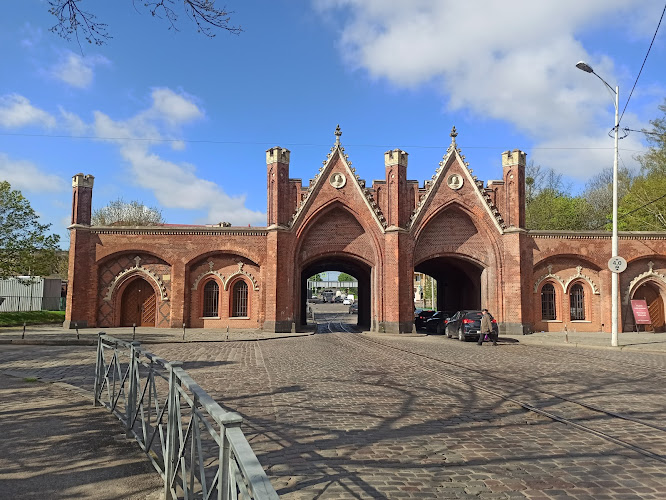
The Brandenburgskiye Vorota stands as one of the most fascinating remnants of Königsberg's storied past, a neo-Gothic gateway that has witnessed centuries of European history unfold around its brick arches. Built in the mid-19th century as part of the city's fortification system, this impressive structure has survived wars, political upheavals, and the complete transformation of a German city into the Russian Kaliningrad we know today. What makes this place particularly special—and honestly, kind of quirky in the best way possible—is that it now houses a completely unexpected treasure: a marzipan museum. I've always found it interesting how historical monuments take on new lives after their original purposes become obsolete. And the Brandenburg Gate (as English speakers often call it, though not to be confused with Berlin's more famous namesake) perfectly embodies this transformation. The gate itself is a stunning example of neo-Gothic architecture, with its red brick facade, pointed arches, and decorative elements that transport visitors back to an era when city gates actually served defensive purposes rather than just aesthetic ones. Walking through the tunnel-like passage, you'll immediately notice the thickness of the walls and the strategic design that once made this an important checkpoint into the city. The architecture speaks to a time when Königsberg was a major Baltic Sea port and a center of Prussian culture. But here's where things get delightfully unexpected—inside these medieval-looking walls, you'll find yourself surrounded by the sweet aroma of almonds and sugar as you explore exhibits dedicated to the art of marzipan making. The marzipan museum isn't just some random addition either. Königsberg was actually famous for its marzipan production, and this tradition has been carefully preserved even as the city changed hands and identities. The museum showcases intricate marzipan sculptures, explains the history of this confection in the region, and gives visitors a real appreciation for what was once a thriving local industry.Key Features
The Brandenburg Gate offers travelers a unique combination of historical and cultural experiences that you really won't find replicated anywhere else. Here's what makes this place worth adding to your itinerary:- Neo-Gothic architecture dating back to 1657 with significant reconstructions in the 1840s that showcase impressive brickwork and period-specific design elements
- One of only seven surviving city gates from historic Königsberg's fortification system
- Active vehicle and pedestrian passage that remains in use today, making it a living piece of history rather than just a museum piece
- Marzipan museum featuring historical exhibits about Königsberg's confectionery traditions and the role marzipan played in local culture and economy
- Displays of intricate marzipan sculptures and artwork that demonstrate the craft's artistic possibilities
- Information about the almond-based sweet's journey from the Middle East through Europe to becoming a Königsberg specialty
- Small gift shop where visitors can purchase authentic marzipan products and souvenirs
- Atmospheric interior spaces within the gate's thick walls that provide excellent photo opportunities
- Educational materials about the broader history of Königsberg and its transformation into Kaliningrad
- Compact size that makes for a manageable visit without requiring hours of your day
Best Time to Visit
Timing your visit to the Brandenburgskiye Vorota depends largely on what kind of experience you're after and your tolerance for Baltic weather. The museum operates year-round, but each season offers something different worth considering. Summer months from June through August bring the warmest temperatures and longest daylight hours, which is when you'll encounter the biggest crowds. The gate looks particularly photogenic under bright blue skies, and the warmer weather makes the walk there more pleasant if you're exploring on foot. However, I'd actually argue that late spring (May) or early autumn (September) might be your sweet spot. The weather's still decent, the tourist crowds thin out considerably, and there's something about the changing seasons that adds atmosphere to historical sites like this. Winter visits have their own appeal if you don't mind bundling up. There's fewer tourists to contend with, and seeing this medieval-style gate dusted with snow creates an almost fairy-tale ambiance. Plus, exploring a marzipan museum when it's cold outside just feels right somehow—maybe it's the cozy factor of being surrounded by sweet treats when the Baltic wind is howling outside. The museum typically sees its quietest periods on weekday mornings, particularly Tuesday through Thursday. If you're someone who prefers experiencing attractions without crowds (and honestly, who doesn't?), aim for a 10 or 11 AM arrival on a weekday. You'll have more space to examine the exhibits and better opportunities for photos without other tourists photo-bombing your shots. Keep in mind that Kaliningrad can be quite rainy, especially in autumn and spring, so checking the weather forecast before your visit is smart. The gate itself provides some shelter, but getting there might involve walking through rain depending on where you're staying.How to Get There
Getting to the Brandenburgskiye Vorota is refreshingly straightforward, especially compared to some historical sites that seem deliberately hidden from modern civilization. The gate sits in a fairly central area of Kaliningrad, and because it's still a functioning passageway with traffic flowing through it, you literally can't miss it once you're in the vicinity. For most travelers staying in Kaliningrad's city center, the gate is easily reachable on foot. It's about a 15-20 minute walk from the main cathedral area, and the route takes you through some interesting neighborhoods that give you a feel for modern Russian life in this unique exclave. I personally think walking is the best option if weather permits because you'll stumble upon other historical remnants and local spots that you'd miss from inside a vehicle. Public transportation works well too. Several bus routes pass near the gate, and locals are generally helpful if you show them the name written down or on your phone. The public transport system in Kaliningrad is affordable and reasonably reliable, though signage isn't always in English, so having a translation app handy makes things easier. Taxis and ride-sharing services are readily available throughout Kaliningrad, and they're quite affordable by Western European standards. If you're not confident navigating public transport or you're short on time, this option eliminates any navigation stress. Just make sure your driver understands you want to visit the gate museum rather than just pass through it, as many locals simply drive through without giving it a second thought. For those renting cars, there's limited street parking in the area, though as noted in the accessibility information, there isn't a dedicated wheelchair-accessible parking lot specifically for the attraction. The gate's location on an active thoroughfare means parking can be tricky during busy periods, so arriving early or using alternative transportation might save you some frustration.Tips for Visiting
After talking with travelers who've visited and considering the practical realities of exploring a working city gate that doubles as a museum, here are some tips that'll help you get the most out of your experience. Bring cash for admission and any purchases at the gift shop. While Russia has been modernizing payment systems, smaller museums and attractions don't always accept cards reliably, and you don't want to miss out because you assumed everywhere takes plastic. The admission fee is quite reasonable anyway, so it won't require carrying large amounts of money. The museum itself isn't huge, so most visitors spend about 30-45 minutes exploring the exhibits thoroughly. Don't plan this as an all-day activity, but rather as part of a broader exploration of Kaliningrad's historical sites. It pairs well with visits to other surviving gates or the cathedral area, creating a nice half-day historical tour. Photography is generally permitted, but be respectful of any posted restrictions and other visitors. The lighting inside can be challenging, so if you're serious about getting good photos, a camera that handles low light well will serve you better than a basic phone camera. While the attraction is noted as good for kids, keep in mind that it's still fundamentally a historical museum. Younger children might find the marzipan exhibits more engaging than the architectural history, but don't expect interactive displays or hands-on activities specifically designed for children. That said, the novelty of walking through an actual medieval-style gate often captivates kids' imaginations regardless of age. English signage exists but isn't comprehensive throughout the museum. Consider downloading a translation app before your visit, or better yet, hiring a local guide who can provide context and stories that bring the exhibits to life. The history of Königsberg's transformation into Kaliningrad is complex and fascinating, and understanding that context makes the gate itself much more meaningful. Dress in layers because the interior temperature can vary significantly from outside, especially during summer when the thick walls keep things cooler, or winter when heating may be minimal. Comfortable walking shoes are essential since you'll likely be exploring other sites in the area, and the floors inside can be uneven in places. The gift shop's marzipan products actually make excellent souvenirs or gifts. They're lightweight, distinctly local, and most varieties keep well for travel. Just maybe don't pack them in checked luggage if you're flying in summer heat—learned that lesson the hard way once with chocolate in Italy, and I imagine marzipan would have similar melting issues. Consider visiting as part of a broader gate tour of Kaliningrad. Seven gates survive from the original fortification system, and each has its own character and current use. Creating your own gate-hopping tour makes for a unique way to see the city and understand its layered history. Finally, approach this attraction with realistic expectations. It's not going to compete with major European museums or monuments in terms of scale or grandeur. But if you appreciate historical architecture, enjoy quirky museum topics, and want to understand this unique corner of Europe better, the Brandenburg Gate delivers an experience that's both educational and genuinely enjoyable. The combination of medieval military architecture and marzipan history is wonderfully odd, and that's exactly what makes it memorable.Key Features
- Neo-Gothic architecture dating back to 1657 with significant reconstructions in the 1840s that showcase impressive brickwork and period-specific design elements
- One of only seven surviving city gates from historic Königsberg's fortification system
- Active vehicle and pedestrian passage that remains in use today, making it a living piece of history rather than just a museum piece
- Marzipan museum featuring historical exhibits about Königsberg's confectionery traditions and the role marzipan played in local culture and economy
- Displays of intricate marzipan sculptures and artwork that demonstrate the craft's artistic possibilities
- Information about the almond-based sweet's journey from the Middle East through Europe to becoming a Königsberg specialty
- Small gift shop where visitors can purchase authentic marzipan products and souvenirs
- Atmospheric interior spaces within the gate's thick walls that provide excellent photo opportunities
More Details
Updated March 30, 2026
Table of Contents
Description
The Brandenburgskiye Vorota stands as one of the most fascinating remnants of Königsberg’s storied past, a neo-Gothic gateway that has witnessed centuries of European history unfold around its brick arches. Built in the mid-19th century as part of the city’s fortification system, this impressive structure has survived wars, political upheavals, and the complete transformation of a German city into the Russian Kaliningrad we know today. What makes this place particularly special—and honestly, kind of quirky in the best way possible—is that it now houses a completely unexpected treasure: a marzipan museum.
I’ve always found it interesting how historical monuments take on new lives after their original purposes become obsolete. And the Brandenburg Gate (as English speakers often call it, though not to be confused with Berlin’s more famous namesake) perfectly embodies this transformation. The gate itself is a stunning example of neo-Gothic architecture, with its red brick facade, pointed arches, and decorative elements that transport visitors back to an era when city gates actually served defensive purposes rather than just aesthetic ones.
Walking through the tunnel-like passage, you’ll immediately notice the thickness of the walls and the strategic design that once made this an important checkpoint into the city. The architecture speaks to a time when Königsberg was a major Baltic Sea port and a center of Prussian culture. But here’s where things get delightfully unexpected—inside these medieval-looking walls, you’ll find yourself surrounded by the sweet aroma of almonds and sugar as you explore exhibits dedicated to the art of marzipan making.
The marzipan museum isn’t just some random addition either. Königsberg was actually famous for its marzipan production, and this tradition has been carefully preserved even as the city changed hands and identities. The museum showcases intricate marzipan sculptures, explains the history of this confection in the region, and gives visitors a real appreciation for what was once a thriving local industry.
Key Features
The Brandenburg Gate offers travelers a unique combination of historical and cultural experiences that you really won’t find replicated anywhere else. Here’s what makes this place worth adding to your itinerary:
- Neo-Gothic architecture dating back to 1657 with significant reconstructions in the 1840s that showcase impressive brickwork and period-specific design elements
- One of only seven surviving city gates from historic Königsberg’s fortification system
- Active vehicle and pedestrian passage that remains in use today, making it a living piece of history rather than just a museum piece
- Marzipan museum featuring historical exhibits about Königsberg’s confectionery traditions and the role marzipan played in local culture and economy
- Displays of intricate marzipan sculptures and artwork that demonstrate the craft’s artistic possibilities
- Information about the almond-based sweet’s journey from the Middle East through Europe to becoming a Königsberg specialty
- Small gift shop where visitors can purchase authentic marzipan products and souvenirs
- Atmospheric interior spaces within the gate’s thick walls that provide excellent photo opportunities
- Educational materials about the broader history of Königsberg and its transformation into Kaliningrad
- Compact size that makes for a manageable visit without requiring hours of your day
Best Time to Visit
Timing your visit to the Brandenburgskiye Vorota depends largely on what kind of experience you’re after and your tolerance for Baltic weather. The museum operates year-round, but each season offers something different worth considering.
Summer months from June through August bring the warmest temperatures and longest daylight hours, which is when you’ll encounter the biggest crowds. The gate looks particularly photogenic under bright blue skies, and the warmer weather makes the walk there more pleasant if you’re exploring on foot. However, I’d actually argue that late spring (May) or early autumn (September) might be your sweet spot. The weather’s still decent, the tourist crowds thin out considerably, and there’s something about the changing seasons that adds atmosphere to historical sites like this.
Winter visits have their own appeal if you don’t mind bundling up. There’s fewer tourists to contend with, and seeing this medieval-style gate dusted with snow creates an almost fairy-tale ambiance. Plus, exploring a marzipan museum when it’s cold outside just feels right somehow—maybe it’s the cozy factor of being surrounded by sweet treats when the Baltic wind is howling outside.
The museum typically sees its quietest periods on weekday mornings, particularly Tuesday through Thursday. If you’re someone who prefers experiencing attractions without crowds (and honestly, who doesn’t?), aim for a 10 or 11 AM arrival on a weekday. You’ll have more space to examine the exhibits and better opportunities for photos without other tourists photo-bombing your shots.
Keep in mind that Kaliningrad can be quite rainy, especially in autumn and spring, so checking the weather forecast before your visit is smart. The gate itself provides some shelter, but getting there might involve walking through rain depending on where you’re staying.
How to Get There
Getting to the Brandenburgskiye Vorota is refreshingly straightforward, especially compared to some historical sites that seem deliberately hidden from modern civilization. The gate sits in a fairly central area of Kaliningrad, and because it’s still a functioning passageway with traffic flowing through it, you literally can’t miss it once you’re in the vicinity.
For most travelers staying in Kaliningrad’s city center, the gate is easily reachable on foot. It’s about a 15-20 minute walk from the main cathedral area, and the route takes you through some interesting neighborhoods that give you a feel for modern Russian life in this unique exclave. I personally think walking is the best option if weather permits because you’ll stumble upon other historical remnants and local spots that you’d miss from inside a vehicle.
Public transportation works well too. Several bus routes pass near the gate, and locals are generally helpful if you show them the name written down or on your phone. The public transport system in Kaliningrad is affordable and reasonably reliable, though signage isn’t always in English, so having a translation app handy makes things easier.
Taxis and ride-sharing services are readily available throughout Kaliningrad, and they’re quite affordable by Western European standards. If you’re not confident navigating public transport or you’re short on time, this option eliminates any navigation stress. Just make sure your driver understands you want to visit the gate museum rather than just pass through it, as many locals simply drive through without giving it a second thought.
For those renting cars, there’s limited street parking in the area, though as noted in the accessibility information, there isn’t a dedicated wheelchair-accessible parking lot specifically for the attraction. The gate’s location on an active thoroughfare means parking can be tricky during busy periods, so arriving early or using alternative transportation might save you some frustration.
Tips for Visiting
After talking with travelers who’ve visited and considering the practical realities of exploring a working city gate that doubles as a museum, here are some tips that’ll help you get the most out of your experience.
Bring cash for admission and any purchases at the gift shop. While Russia has been modernizing payment systems, smaller museums and attractions don’t always accept cards reliably, and you don’t want to miss out because you assumed everywhere takes plastic. The admission fee is quite reasonable anyway, so it won’t require carrying large amounts of money.
The museum itself isn’t huge, so most visitors spend about 30-45 minutes exploring the exhibits thoroughly. Don’t plan this as an all-day activity, but rather as part of a broader exploration of Kaliningrad’s historical sites. It pairs well with visits to other surviving gates or the cathedral area, creating a nice half-day historical tour.
Photography is generally permitted, but be respectful of any posted restrictions and other visitors. The lighting inside can be challenging, so if you’re serious about getting good photos, a camera that handles low light well will serve you better than a basic phone camera.
While the attraction is noted as good for kids, keep in mind that it’s still fundamentally a historical museum. Younger children might find the marzipan exhibits more engaging than the architectural history, but don’t expect interactive displays or hands-on activities specifically designed for children. That said, the novelty of walking through an actual medieval-style gate often captivates kids’ imaginations regardless of age.
English signage exists but isn’t comprehensive throughout the museum. Consider downloading a translation app before your visit, or better yet, hiring a local guide who can provide context and stories that bring the exhibits to life. The history of Königsberg’s transformation into Kaliningrad is complex and fascinating, and understanding that context makes the gate itself much more meaningful.
Dress in layers because the interior temperature can vary significantly from outside, especially during summer when the thick walls keep things cooler, or winter when heating may be minimal. Comfortable walking shoes are essential since you’ll likely be exploring other sites in the area, and the floors inside can be uneven in places.
The gift shop’s marzipan products actually make excellent souvenirs or gifts. They’re lightweight, distinctly local, and most varieties keep well for travel. Just maybe don’t pack them in checked luggage if you’re flying in summer heat—learned that lesson the hard way once with chocolate in Italy, and I imagine marzipan would have similar melting issues.
Consider visiting as part of a broader gate tour of Kaliningrad. Seven gates survive from the original fortification system, and each has its own character and current use. Creating your own gate-hopping tour makes for a unique way to see the city and understand its layered history.
Finally, approach this attraction with realistic expectations. It’s not going to compete with major European museums or monuments in terms of scale or grandeur. But if you appreciate historical architecture, enjoy quirky museum topics, and want to understand this unique corner of Europe better, the Brandenburg Gate delivers an experience that’s both educational and genuinely enjoyable. The combination of medieval military architecture and marzipan history is wonderfully odd, and that’s exactly what makes it memorable.
Key Highlights
- Neo-Gothic architecture dating back to 1657 with significant reconstructions in the 1840s that showcase impressive brickwork and period-specific design elements
- One of only seven surviving city gates from historic Königsberg's fortification system
- Active vehicle and pedestrian passage that remains in use today, making it a living piece of history rather than just a museum piece
- Marzipan museum featuring historical exhibits about Königsberg's confectionery traditions and the role marzipan played in local culture and economy
- Displays of intricate marzipan sculptures and artwork that demonstrate the craft's artistic possibilities
- Information about the almond-based sweet's journey from the Middle East through Europe to becoming a Königsberg specialty
- Small gift shop where visitors can purchase authentic marzipan products and souvenirs
- Atmospheric interior spaces within the gate's thick walls that provide excellent photo opportunities
Location
Places to Stay Near Brandenburgskiye Vorota
Find and Book a Tour
Explore More Travel Guides
No reviews found! Be the first to review!
Brandenburgskiye Vorota is a prominent attractions located in Kaliningrad.
Visit us at: Ulitsa Bagrationa, 137, Kaliningrad, Kaliningrad Oblast, ロシア 236039.
Traveler Reviews for Brandenburgskiye Vorota
There are no reviews yet. Be the first one to write one.
Have you visited Brandenburgskiye Vorota? Help other travelers by sharing your review.
Find Accommodations Nearby
Recommended Tours & Activities
Visitor Reviews
There are no reviews yet. Be the first one to write one.
Share Your Experience
Have you visited Brandenburgskiye Vorota? Help other travelers by leaving a review.
