
Blow
About Blow
More Details
Updated June 11, 2025
## Blow’s Downs Nature Reserve: Chalk Grassland Views on the Edge of Luton & Dunstable
Blow’s Downs Nature Reserve sits on the steep chalk hills between Luton and Dunstable in Bedfordshire, rising above the urban edge with wide views, rare plants, and surprisingly wild walking for such a built-up area.
Managed by the Wildlife Trust for Bedfordshire, Cambridgeshire & Northamptonshire, the reserve protects some of the last remaining unimproved chalk grassland in this part of the Chiltern Hills and forms part of a designated Site of Special Scientific Interest (SSSI).
—
### Where Is Blow’s Downs Nature Reserve?
– Location: Boundary between Luton and Dunstable, Bedfordshire, England
– Nearest road access: Half Moon Lane, Dunstable, LU5 4AE, United Kingdom
– Setting: Steep chalk slopes rising immediately from the urban fringe, part of the Chiltern Hills and within the Chilterns Area of Outstanding Natural Beauty (AONB).
On the ground, you’re walking above housing estates and the Luton–Dunstable guided busway, but once you’re on the higher slopes the skyline is dominated by open grassland and long views over south Bedfordshire.
—
### Why Visit Blow’s Downs?
1. Classic Chilterns chalk scenery
Blow’s Downs is a textbook example of chalk downland: steep, dry slopes, short turf, and a patchwork of grass, scrub and old quarry workings.
2. Important wildlife site
The SSSI covers around 33 hectares of biologically rich habitat, with the wider reserve extending over a larger area managed by the Wildlife Trust.
– Unimproved grassland here is now a scarce habitat in Bedfordshire.
– Grazing cattle are used to keep the sward open and suitable for wildflowers and invertebrates.
3. Views without a long drive
Because the hills rise straight from the town edge, you gain height quickly. From the higher paths you can look across Luton, Dunstable and the surrounding countryside, with the white scars of the old chalk pits clearly visible.
4. Easy, flexible walking
A network of informal paths lets you choose anything from a 30-minute leg-stretch to a longer circular route looping around the SSSI slopes. One described option is the “Blow Downs Bimble”, a loop walk starting from Half Moon Lane. Jauntly – Find Walks Near You
—
### Landscapes, Habitats & Wildlife
#### Chalk grassland and scrub
Blow’s Downs preserves fragments of the chalk grassland that once covered much of the Chiltern escarpment.
Key features include:
– Flower-rich turf – species recorded here include yellow rattle, wild thyme, squinancywort and the nationally scarce great pignut (Bunium bulbocastanum).
– Scrub and hedgerows – pockets of hawthorn and other shrubs provide cover for birds and add structural variety across the slopes. National Landscape
– Historic features – the reserve includes medieval cultivation terraces (strip lynchets) and the remains of a disused chalk quarry.
The site is part of a wider cluster of chalk downland and quarry habitats in south Bedfordshire, which together hold a significant proportion of the county’s SSSI-quality grassland.
#### Birds and other wildlife
Blow’s Downs is known among local naturalists as a good place for migrant birds, including Ring Ouzel in spring.
Other notable wildlife records include:
– Invertebrates: the scarce dor beetle Odontaeus armiger, which depends on undisturbed grassland soils.
– Botanical interest: the combination of common chalk grassland flowers with rarities such as great pignut gives the site high conservation value within Bedfordshire.
For visitors, this means peak spring and summer walks come with wildflower colour, butterflies, and plenty of bird activity, especially along the scrubby margins and old quarry faces.
—
### A Short History of Blow’s Downs
– The downs have been shaped by centuries of grazing and cultivation; medieval strip lynchets are still visible on parts of the slope.
– In the 19th and early 20th centuries, chalk was quarried here and processed in a limeworks complex linked to the Luton–Dunstable rail line.
– Industrial use ceased before the Second World War; the chalk pit was then used by the Home Guard as a training area.
– The site was designated a biological SSSI in 1989, and later large areas were acquired and managed by the Wildlife Trust to conserve the grassland.
You’ll see traces of this history in the form of old quarry faces, earthworks and abrupt changes in slope, which make the reserve more visually interesting than a smooth hillside.
—
### Walking Blow’s Downs: What to Expect
#### Terrain
– Steep slopes: The reserve is specifically described as steep chalk hills, so expect some demanding ascents and descents, especially on the higher ridges. National Landscape
– Informal paths: Footpaths and desire lines criss-cross the site rather than following one single surfaced trail. Jauntly – Find Walks Near You
– Ground conditions: Chalk grassland can be dry and firm in summer but slippery in wet weather. This can be challenging for people with limited mobility or balance issues.
Because of the gradients and unsurfaced tracks, the site is not an easy-access walk for wheelchair users or visitors who require level paths. That’s important when planning inclusive outings with mixed-ability groups.
#### Example circular loop
A commonly described route is a loop around the SSSI slopes: Jauntly – Find Walks Near You
1. Start: On-street parking area off Half Moon Lane at the edge of the reserve.
2. Climb: Follow paths up onto the open hillside with views over Luton and Dunstable.
3. Traverse: Contour across the upper slopes, passing areas of old quarry and scrub.
4. Descend: Drop back down towards the starting point on one of the lower paths.
This can be adapted into shorter or longer options simply by cutting across the hillside or extending along parallel paths.
—
### Practical Visitor Information
#### Opening hours & access
– Wanderlog and other visitor information sources list Blow’s Downs Nature Reserve as open 24 hours a day, seven days a week, with no formal closing times.
– The reserve boundary is open, so access is essentially informal countryside access rather than a gated attraction.
#### Getting there
– By car: From central Dunstable, directions from local groups advise heading south for around 1 km, then turning into Half Moon Lane and following it to the end, where there is a small parking area close to the reserve.
– By busway: One walking guide notes that the Luton–Dunstable guided busway stop is about five minutes’ walk from the start of the Blow Downs loop, making public transport a realistic option. Jauntly – Find Walks Near You
Because parking is limited to a small on-street area, it’s worth avoiding peak times if you’re arriving by car and considering the busway if you’re staying in Luton or Dunstable without a vehicle. Jauntly – Find Walks Near You
#### Facilities
Official and visitor information focus on the walking, views and wildlife rather than on-site amenities, and there is no mention of a visitor centre, café or toilets at Blow’s Downs in those sources.
In practice, that means:
– Plan to use facilities in Luton or Dunstable before or after your walk.
– Bring water, snacks and weather-appropriate clothing; there is very little built shelter apparent in images and descriptions of the site.
—
### Conservation Notes & Data Caveats
– The SSSI citation gives the chalk grassland area as 33.1 hectares, while some Wildlife Trust and local naturalist sources give slightly different figures for the total nature reserve and managed land (for example 46.22 hectares managed, of which 33.12 hectares are SSSI).
– These differences reflect updates in land acquisition and boundary mapping over time rather than a change you will notice on the ground, but they are worth noting if you are using area figures in technical or conservation contexts.
Region-wide, chalk grassland in Bedfordshire has been a focus of biodiversity projects aimed at reversing historical losses from quarrying, agriculture and development. Blow’s Downs is one of the key surviving sites contributing to that network.
—
### Planning Your Visit as Part of a Wider Itinerary
Blow’s Downs works well as:
– A half-day nature walk from Luton or Dunstable, especially if you’re interested in chalk flora and bird migration.
– A contrast to more formal attractions such as nearby parks and town-centre sights, giving you a feel for the Chilterns landscape without needing a car-heavy rural day trip. National Landscape
If you already have broader content covering Luton city breaks or Chiltern Hills walks, Blow’s Downs is an ideal internal-link target for readers who want a specific, manageable chalk downland walk with clear access from town.
Table of Contents
Location
Places to Stay Near Blow's Downs Nature Reserve
Find and Book a Tour
Explore More Travel Guides
No reviews found! Be the first to review!
Traveler Reviews for Blow
There are no reviews yet. Be the first one to write one.
Have you visited Blow? Help other travelers by sharing your review.
You Might Also Like

Orbital Trampoline Park
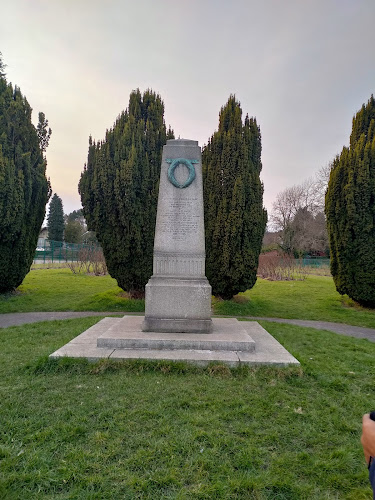
Luton Hoo Memorial Park
Locked Escape Rooms
Find Accommodations Nearby
Recommended Tours & Activities
Visitor Reviews
There are no reviews yet. Be the first one to write one.
Share Your Experience
Have you visited Blow? Help other travelers by leaving a review.