
Beit Guvrin-Maresha National Park
About Beit Guvrin-Maresha National Park
Key Features
- Extensive network of man-made caves: quarries, burial caves, columbariums and bell caves
- Maresha tell with archaeological layers from the First Temple through Roman periods
- UNESCO-recognized landscape and well-preserved underground chambers
- Above-ground ruins including city walls, streets and mosaic remains
- Accessible walking trails and viewpoints connecting caves and archaeological areas
More Details
Updated June 26, 2025
## Beit Guvrin–Maresha National Park: Underground Israel You Can Walk Through
Beit Guvrin–Maresha is one of those rare places where the map flips: much of the story sits below your feet. In the rolling Judean Lowlands, a honeycomb of man-made caves—quarries, oil-press halls, dovecotes, cisterns, tombs—forms a “city under a city.” The cave complexes are so dense and varied that UNESCO inscribed the site in 2014 for its outstanding universal value as a microcosm of subterranean life and craft over more than two millennia. World Heritage Centre
### Fast facts (the helpful bits up front)
– Where it is: Southern District, Israel, along Road 35, opposite Kibbutz Beit Guvrin. The park is literally split by Road 35 into a southern area (Tel Maresha and caves) and a northern area (Roman and Crusader remains). Nature and Parks Authority
– UNESCO status: “Caves of Maresha and Bet-Guvrin” (Property 1370), inscribed in 2014, Criterion (v). World Heritage Centre
– What’s special: Thousands of underground chambers (UNESCO cites ~3,500), including bell-shaped quarries, columbaria (dovecotes), cisterns, oil presses, and burial complexes such as the painted Sidonian tombs. World Heritage Centre
– Good to know: Official access points have parking, restrooms, tactile/signage aids for visitors with visual impairments, and on some circuits the authority advises visitors with significant mobility impairments to arrive with a companion. Nature and Parks Authority
—
## Why this landscape is unique
The entire system is carved into thick, homogeneous chalk—soft enough to excavate, strong enough to leave graceful arches and pillars. People initially quarried stone here; later generations re-purposed these cavities for everyday production and survival: oil pressing, pigeon-raising, water storage, worship, hiding in troubled times, and burial on the outskirts. The continuity of use—from the Iron Age through the Persian, Hellenistic, Roman, Byzantine, and Crusader periods—is why UNESCO calls it a compact lesson in how societies adapt the underground to their needs. World Heritage Centre
—
## What to see (and how to read it)
### 1) The Bell Caves (quarry cathedrals)
The most photogenic chambers are the bell-shaped quarries, some linked into networks of 40–50 rooms. Excavation typically began from a small shaft at the top, widening toward the base, leaving smooth, pale walls that catch light dramatically. You’ll see pick-marks and extraction seams that tell you exactly how the chalk was lifted out. (Scholars reckon hundreds of these exist in and around the park.)
How to look:
– Stand near a wall and trace the quarrying wedges and tool arcs; they’re the “fingerprints” of ancient labor.
– Note the oculus-like ceiling openings: they’re not decorative; they’re where the quarriers started and where stone was hoisted out.
### 2) Sidonian Burial Caves (painted iconography from a global crossroads)
A short drive from the bell caves you’ll encounter burial complexes associated with Greek, Sidonian, and Edomite communities. The most famous chamber includes painted animals and mythic figures—a cock to drive away demons, Cerberus at the gate of Hades, and even a phoenix as a resurrection motif—hovering above the burial niches. It’s an unusually explicit blend of Mediterranean beliefs on Judean soil.
How to look:
– Treat these as funerary art with protective symbols, not random decoration. The mix of Greek myth and local practice reflects Maresha’s position on east–west trade routes. World Heritage Centre
### 3) Columbaria (industrial dovecotes)
Look for subterranean halls studded with hundreds of small niches: these are columbaria for pigeons. Beyond meat and ritual, pigeons supplied fertilizer critical for agriculture. The scale at Maresha is among the most impressive in the Levant, and the geometry—rows of niches marching along curved walls—makes these spaces striking to photograph.
### 4) Roman–Byzantine Beit Guvrin (Eleutheropolis)
North of the road lies Beit Guvrin/Eleutheropolis, where you can trace later city life: amphitheater remains, churches, baths, mosaics. It’s a good counterpoint to the caves—life above ground, civic and public, mirroring the industrious world below.
—
## How to plan your circuit (time, sequence, and crowd-avoidance)
Minimum visit: 2–3 hours gets you the Bell Caves + one burial/industrial complex.
Half day: Add Sidonian tombs and one columbarium hall; loop north for Eleutheropolis.
Full day: Walk the Tel Maresha ruins (southern area) to connect the subterranean economy with the urban grid above, then continue to Roman/Crusader remains (northern area). The park roads, turn-offs, and signed parking pockets make self-driving straightforward. Nature and Parks Authority
Heat & light strategy: Shade is limited above ground. The caves are cooler, but stairwells and courtyards are exposed. Aim for morning starts, carry water, and expect uneven steps underfoot. (The authority’s own guidance emphasizes accessibility accommodations at key nodes but still advises a companion for visitors with significant mobility challenges.) Nature and Parks Authority
—
## Accessibility & facilities (inclusive trip notes)
– Access points & amenities: At the Bell Caves and Sidonian Cave Square, you’ll find parking, restrooms, picnic areas, a souvenir kiosk, and special visual aids and signage to support visitors with visual impairments. Nature and Parks Authority
– Wayfinding: The park uses information boards and trail markings. Surfaces vary: some paths are paved; others are chalk and gravel with steps. If you use a mobility device, prioritize the main nodes noted above and consider a travel companion. Nature and Parks Authority
– Religion & dress: Burial caves are archaeological, not active religious sites. Standard respectful behavior applies; there is no dress code enforced by the authority in the published guidance. (If you’re continuing to other sites the same day, check site-specific norms.)
—
## Tickets, hours, and reservations (check before you drive)
– Hours (Authority guidance):
– Summer: Sun–Thu & Sat 08:00–17:00; Fri & eve of holidays 08:00–16:00
– Winter: Sun–Thu & Sat 08:00–16:00; Fri & eve of holidays 08:00–15:00
– Last entry: at least 1 hour before closing; closed on Yom Kippur. Nature and Parks Authority
– Sample entrance fees (posted by the Authority): Adult ₪31, Child ₪16, Student ₪26, with group/senior rates published. Online reservations are supported via the Authority’s booking system; the site also offers an Accessible Visit Coordination Form. Nature and Parks Authority
Important accuracy note: Hours and prices change periodically and around holidays. Always verify on the Israel Nature & Parks Authority page for Beit Guvrin–Maresha before you go; treat the figures above as current at source rather than guaranteed. Nature and Parks Authority
—
## Getting there without guesswork
Set navigation to “Bet Govrin–Maresha National Park”. You’ll approach on Road 35; park entrances and lots are clearly signed. The split between southern (Tel Maresha) and northern (Beit Guvrin/Eleutheropolis) zones is part of the site design—plan a short drive hop between clusters rather than trying to walk the entire thing end-to-end. Nature and Parks Authority
—
## Responsible visiting: what not to do
– Stay on marked paths; chalk is soft, and cliff edges can degrade quickly.
– Do not touch painted surfaces in burial caves. Oils accelerate deterioration.
– Pack out litter; underground spaces trap debris and odors.
These aren’t idle suggestions: UNESCO highlights the fragility of cave vaults and the need for low-key conservation—your behavior helps. World Heritage Centre
—
## Context for history fans (why these caves mattered)
– Trade crossroads: Maresha and Beit Guvrin sat where routes to Mesopotamia and Egypt met; the caves supported the economy behind that connectivity. World Heritage Centre
– Adaptive reuse: Quarries became workshops, storage, dovecotes, cisterns, and sanctuaries—a long record of re-engineering space to match social and economic needs. World Heritage Centre
– Public life above, industry below: The amphitheater, baths, and churches of Beit Guvrin (Eleutheropolis) are the civic mirror to the productive underworld.
—
## Photography & timing tips (practical, not gimmicky)
– Bell Caves: Go early or late for angled light shafts through ceiling openings; midday flattens contrast.
– Tripod etiquette: Where permitted, keep legs tight to walls to avoid blocking narrow stairs.
– Color balance: The chalk’s warm tones push cameras yellow; consider manual white balance for truer textures.
(Always follow on-site staff guidance and posted rules.)
—
## Final checklist
– Footwear: Grippy soles for chalk dust and worn steps.
– Water & hat: Above-ground segments are exposed.
– Flashlight/phone torch: Helpful in dim corners (where access is allowed).
– Respectful conduct: Especially around burial complexes.
—
### Sources & currency notes
Core facts, site layout, access, hours/fees, and accessibility information are drawn from the Israel Nature & Parks Authority official page for Bet Guvrin–Maresha National Park, including the note that Road 35 divides the park and the published opening hours/fees and accessibility aids. UNESCO provides the inscription year (2014), scope (~3,500 chambers), and the interpretation of the site’s value and fragility. Wikipedia’s summary supports the presence of amphitheater/baths/church remains at Beit Guvrin and details of the Sidonian tomb iconography. Please consult the Authority page shortly before your visit for any seasonal or holiday changes. Nature and Parks Authority
This guide aims to be strictly factual and current with the cited sources. If you spot a change on the Authority’s page (ticketing, opening hours, accessibility arrangements), consider it authoritative.
Table of Contents
Key Highlights
- Extensive network of man-made caves: quarries, burial caves, columbariums and bell caves
- Maresha tell with archaeological layers from the First Temple through Roman periods
- UNESCO-recognized landscape and well-preserved underground chambers
- Above-ground ruins including city walls, streets and mosaic remains
- Accessible walking trails and viewpoints connecting caves and archaeological areas
Location
Places to Stay Near Beit Guvrin-Maresha National Park"A fun site with things to see both above and below ground."
Find and Book a Tour
Explore More Travel Guides
No reviews found! Be the first to review!
Traveler Reviews for Beit Guvrin-Maresha National Park
There are no reviews yet. Be the first one to write one.
Have you visited Beit Guvrin-Maresha National Park? Help other travelers by sharing your review.
Nearby Attractions
You Might Also Like
Ayalon Park
Adventure Israel
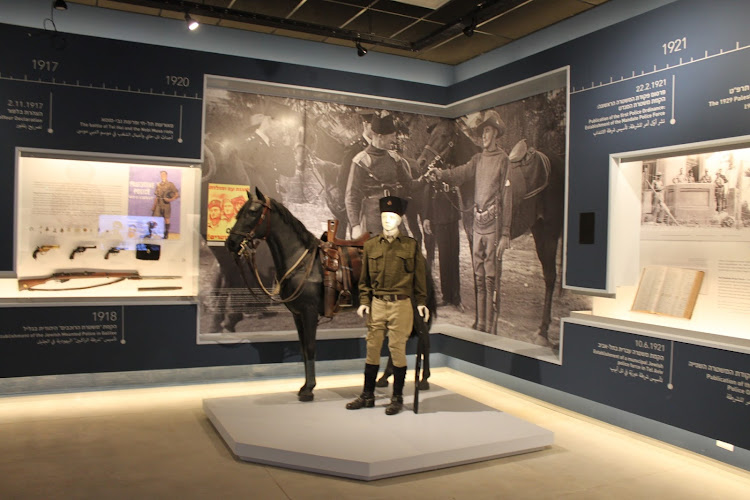
The Israel Police Heritage Museum
Find Accommodations Nearby
Recommended Tours & Activities
Visitor Reviews
There are no reviews yet. Be the first one to write one.
Share Your Experience
Have you visited Beit Guvrin-Maresha National Park? Help other travelers by leaving a review.