
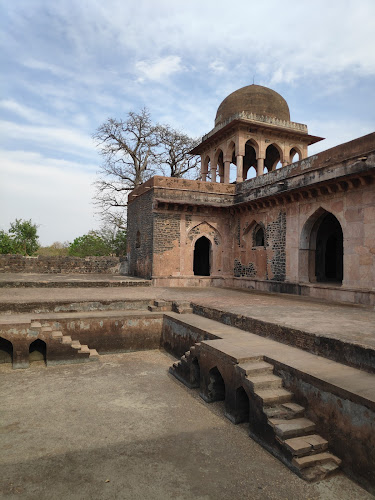
Baz Bahadur’s Palace
About Baz Bahadur’s Palace
Description
Baz Bahadur’s Palace in Mandav, Madhya Pradesh, India is one of those places that looks like it leapt straight out of a history textbook—but trust me, standing in the echoing courtyards is a whole different thing. Maybe you already know Mandu’s claim to fame: it’s the ancient city of joy, layered with tales of romance, war, art, and whatnot. But even among all the weathered ruins and grand mahals you’ll find scattered over the Malwa region, Baz Bahadur’s Palace carves out its own memorable story—one that’s tinged with love, a dash of tragedy, and a strong dose of architectural genius from a bygone era.
For context—Baz Bahadur was the last independent Sultan of Malwa, and if Bollywood existed back in the 16th century, his love story with the dazzling musician-queen, Rani Roopmati, would probably have been a blockbuster. The palace, built around 1509, was his royal residence—a space that witnessed both music-filled evenings and the ominous drums of the Mughal army when Akbar’s troops marched into the city. Now, everything’s silent except the calls of birds and the gentle wind, but the magic and melancholy hang thick in the air. As a history nerd, I’ve always had a soft spot for places like this: ignored by the crowds at first glance, but look a bit closer and layers peel back.
The architecture is a big part of what makes Baz Bahadur’s Palace stand out among India’s historical landmarks. Unlike the flashy marble of the Mughals, this place leans into the rugged beauty of Afghan design—lofty arches, huge open terraces, and pavilions planned for music and poetry. Some people find it a bit barebones at first (yup, I overheard a tourist say it felt “unfinished”), but let your imagination fill in the soft carpets, the flood of evening lamps, and the music echoing off stone. There’s a whole world hidden beneath those crumbling facades. Plus, kids seem to love darting up and down the ancient steps (it’s quite safe for them, by the way).
The palace also offers gorgeous views of the Malwa landscape. When you climb up to the terrace, it feels like the entire ancient city and its green fields are at your feet. You’ll see why Baz Bahadur picked this spot. And speaking of picking spots—don’t rush off before exploring nearby: Rewa Kund is a short walk away, and that’s where the love story with Rani Roopmati truly comes alive (but more on that in a bit).
Overall, while Baz Bahadur’s Palace might not have the glitter of, say, Jahaz Mahal or Hoshang Shah’s Tomb, it delivers something more subtle—a real, lived-in sense of time and memory, beauty and loss, and the faintest pulse of the past refusing to fade. It’s an absolute must for travelers keen to look beyond the obvious, especially if you’re the type to linger over old stones, half-lit stories, and the windswept ruins of ancient kingdoms.
Key Features
- Distinctive Afghan Architecture: This isn’t your usual Mughal extravaganza. Think broad arches, elegant corridors, and courtyards designed for both royal gatherings and moments of quiet music. If you’re a fan of structural poetry, the arches and the robust simplicity will fascinate you.
- Historical Significance: The palace marks the twilight of the Malwa Sultanate, being the residence of its last ruler, Sultan Baz Bahadur. There’s a palpable sense of history, especially knowing it withstood the onslaughts of Mughal invasions and the dramatic events that ended Baz Bahadur’s reign.
- Panoramic Views: From the terraced roof, you can catch sweeping sights of the Narmada river valley, Mandav’s lush surroundings, and, on clear days, way into the Malwa region. Sunrise and sunset here have this gentle magic—bring your camera.
- Romantic Legacy: The love story of Baz Bahadur and Rani Roopmati is legendary in this part of India. The Palace, along with nearby Roopmati Pavilion and Rewa Kund, forms a trail that lets you walk in their footsteps. There’s a wistful poetry to the place, especially at dusk.
- Spacious Courtyards and Pavilions: The design is open and airy, perfect for exploring. Even when there are a few tourists around (and honestly, it never gets mobbed), you won’t feel crowded. The various levels and pavilions make every corner a new discovery—kids and adults both will feel the urge to wander.
- Family Friendly: There’s enough room and safety for kids to roam, so you don’t have to keep them on a tight leash as you would in some traditional “don’t-touch-anything” monuments.
- Connection to Other Monuments: The palace is part of a rich constellation of heritage sites in the ancient city of Mandu—easy to combine in a day’s trip with the Jahaz Mahal, Hoshang Shah’s Tomb, and the picturesque Roopmati Pavilion.
Best Time to Visit
Alright, here’s where experience comes in handy. Everyone who’s visited Mandu in the summer comes back two tones darker and a little bit dustier. The Malwa region, while absolutely beautiful, can get scorching from April through June, so unless you love sizzling heat (and melting camera gear), avoid this stretch. The monsoon (July to September) is something else entirely—Baz Bahadur’s Palace gets shrouded in mist, and the entire ancient city feels straight out of a fairytale. The weather is cool, the grass fields all around are lush, and there’s water in every old tank. Be aware, though, it can be slippery (and don’t even ask my shoes about the mud).
The clear winner for most travelers: October through March. Days are sunny but mild; nights can be crisp and nice. You’ll have excellent light for photos and can wander the palace for hours without feeling like you need a bucket of water on your head. And hey, if you time your visit for early morning or just before sunset, the views from the terrace are unforgettable.
If you’re looking for something extra, try to check when local festivals or musical gatherings are on. The palace sometimes becomes a backdrop for performances that echo the music Baz Bahadur and Roopmati once would’ve heard.
How to Get There
Mandu (or Mandav, as locals often call it) is a few hours by road from Indore, the nearest major city in Madhya Pradesh. Indore is really well connected by air, road, and train to pretty much all of India. If you’re landing in Indore, you can hire a taxi or rent a car—the drive is scenic and straightforward, about 95 km and typically a two-hour trip.
From the city of Dhar (which is closer), you’re looking at just 35 km to Mandav. Local buses and shared tempos run this route, but if you prefer comfort (and a bit of legroom), book a cab. Pro tip: The country roads twist and climb as you get close to Mandu, so prepare for a few hairpins and absolutely gorgeous views.
Once you’re in Mandu, Baz Bahadur’s Palace is clearly signposted, close to Rewa Kund and not far from the core concentration of Mandu’s historical monuments. Walking is absolutely doable—if you’re like me and enjoy ambling from mahal to mahal, you’ll have the time of your life here. If not, local auto-rickshaws are available and pretty cheap.
If you’re driving yourself, there’s ample parking close to the main entrance. A lot of travelers come in hired vehicles or on bikes—either way, the trip up the Mandu plateau is a mini adventure all on its own.
Tips for Visiting
- Wear comfortable shoes. I learned this the hard way—those old steps and stone paths are not kind to dainty sandals. You’ll want sneakers or sturdy flats.
- Bring water and snacks. There aren’t many shops inside the monument complex, and it’s easy to lose track of time exploring. Pack enough especially if you’re with kids.
- Hire a local guide if possible. The official signage only scratches the surface. A good guide brings the legends, ghost stories, and love tales alive. Trust me, after hearing about the Mughal invasion or how Baz Bahadur tried to escape, the palace feels different.
- Photography is a must. Mornings offer the best light for Instagram-worthy shots from the palace terrace. Dusk is equally magical when the old stones glow golden.
- Respect the monument. Baz Bahadur’s Palace is part of India’s precious heritage. Don’t scribble on the walls (seriously, this is a pet peeve), don’t litter, and keep the noise reasonable—there are plenty of peaceful corners to sit and reflect.
- Combine with nearby sites. Mandu isn’t just the palace. Plan your trip so you see Jahaz Mahal, Hoshang Shah’s Tomb, Roopmati Pavilion, and especially Rewa Kund. All these places together spin the full story of the Malwa kingdom and its remarkable people.
- Travel light during the monsoon. Carry a small umbrella, and watch out for slippery steps—especially if you visit right after a rain shower.
- Kids will enjoy it. There’s open space for them to run, things to climb, and legends to fire up their imaginations. Tell them about Rani Roopmati’s music echoing across the hills—they might even belt out a tune!
Honestly, Baz Bahadur’s Palace isn’t just another tick on your “seen it” list. For lovers of history, seekers of old legends, or just anyone needing a reminder that kingdoms rise and fall but stories and stone stick around, it’s a genuinely special spot. And if you pause, quiet, at sunset with the last light touching those ancient arches—you may just understand, for a brief moment, what all the poets and musicians of Mandu felt centuries ago. Don’t be in a hurry; let the place tell you its secrets.
Key Features
- Key Features
- Best Time to Visit
- How to Get There
- Tips for Visiting
More Details
Updated August 5, 2025
Table of Contents
Description
Baz Bahadur’s Palace in Mandav, Madhya Pradesh, India is one of those places that looks like it leapt straight out of a history textbook—but trust me, standing in the echoing courtyards is a whole different thing. Maybe you already know Mandu’s claim to fame: it’s the ancient city of joy, layered with tales of romance, war, art, and whatnot. But even among all the weathered ruins and grand mahals you’ll find scattered over the Malwa region, Baz Bahadur’s Palace carves out its own memorable story—one that’s tinged with love, a dash of tragedy, and a strong dose of architectural genius from a bygone era.
For context—Baz Bahadur was the last independent Sultan of Malwa, and if Bollywood existed back in the 16th century, his love story with the dazzling musician-queen, Rani Roopmati, would probably have been a blockbuster. The palace, built around 1509, was his royal residence—a space that witnessed both music-filled evenings and the ominous drums of the Mughal army when Akbar’s troops marched into the city. Now, everything’s silent except the calls of birds and the gentle wind, but the magic and melancholy hang thick in the air. As a history nerd, I’ve always had a soft spot for places like this: ignored by the crowds at first glance, but look a bit closer and layers peel back.
The architecture is a big part of what makes Baz Bahadur’s Palace stand out among India’s historical landmarks. Unlike the flashy marble of the Mughals, this place leans into the rugged beauty of Afghan design—lofty arches, huge open terraces, and pavilions planned for music and poetry. Some people find it a bit barebones at first (yup, I overheard a tourist say it felt “unfinished”), but let your imagination fill in the soft carpets, the flood of evening lamps, and the music echoing off stone. There’s a whole world hidden beneath those crumbling facades. Plus, kids seem to love darting up and down the ancient steps (it’s quite safe for them, by the way).
The palace also offers gorgeous views of the Malwa landscape. When you climb up to the terrace, it feels like the entire ancient city and its green fields are at your feet. You’ll see why Baz Bahadur picked this spot. And speaking of picking spots—don’t rush off before exploring nearby: Rewa Kund is a short walk away, and that’s where the love story with Rani Roopmati truly comes alive (but more on that in a bit).
Overall, while Baz Bahadur’s Palace might not have the glitter of, say, Jahaz Mahal or Hoshang Shah’s Tomb, it delivers something more subtle—a real, lived-in sense of time and memory, beauty and loss, and the faintest pulse of the past refusing to fade. It’s an absolute must for travelers keen to look beyond the obvious, especially if you’re the type to linger over old stones, half-lit stories, and the windswept ruins of ancient kingdoms.
Key Features
- Distinctive Afghan Architecture: This isn’t your usual Mughal extravaganza. Think broad arches, elegant corridors, and courtyards designed for both royal gatherings and moments of quiet music. If you’re a fan of structural poetry, the arches and the robust simplicity will fascinate you.
- Historical Significance: The palace marks the twilight of the Malwa Sultanate, being the residence of its last ruler, Sultan Baz Bahadur. There’s a palpable sense of history, especially knowing it withstood the onslaughts of Mughal invasions and the dramatic events that ended Baz Bahadur’s reign.
- Panoramic Views: From the terraced roof, you can catch sweeping sights of the Narmada river valley, Mandav’s lush surroundings, and, on clear days, way into the Malwa region. Sunrise and sunset here have this gentle magic—bring your camera.
- Romantic Legacy: The love story of Baz Bahadur and Rani Roopmati is legendary in this part of India. The Palace, along with nearby Roopmati Pavilion and Rewa Kund, forms a trail that lets you walk in their footsteps. There’s a wistful poetry to the place, especially at dusk.
- Spacious Courtyards and Pavilions: The design is open and airy, perfect for exploring. Even when there are a few tourists around (and honestly, it never gets mobbed), you won’t feel crowded. The various levels and pavilions make every corner a new discovery—kids and adults both will feel the urge to wander.
- Family Friendly: There’s enough room and safety for kids to roam, so you don’t have to keep them on a tight leash as you would in some traditional “don’t-touch-anything” monuments.
- Connection to Other Monuments: The palace is part of a rich constellation of heritage sites in the ancient city of Mandu—easy to combine in a day’s trip with the Jahaz Mahal, Hoshang Shah’s Tomb, and the picturesque Roopmati Pavilion.
Best Time to Visit
Alright, here’s where experience comes in handy. Everyone who’s visited Mandu in the summer comes back two tones darker and a little bit dustier. The Malwa region, while absolutely beautiful, can get scorching from April through June, so unless you love sizzling heat (and melting camera gear), avoid this stretch. The monsoon (July to September) is something else entirely—Baz Bahadur’s Palace gets shrouded in mist, and the entire ancient city feels straight out of a fairytale. The weather is cool, the grass fields all around are lush, and there’s water in every old tank. Be aware, though, it can be slippery (and don’t even ask my shoes about the mud).
The clear winner for most travelers: October through March. Days are sunny but mild; nights can be crisp and nice. You’ll have excellent light for photos and can wander the palace for hours without feeling like you need a bucket of water on your head. And hey, if you time your visit for early morning or just before sunset, the views from the terrace are unforgettable.
If you’re looking for something extra, try to check when local festivals or musical gatherings are on. The palace sometimes becomes a backdrop for performances that echo the music Baz Bahadur and Roopmati once would’ve heard.
How to Get There
Mandu (or Mandav, as locals often call it) is a few hours by road from Indore, the nearest major city in Madhya Pradesh. Indore is really well connected by air, road, and train to pretty much all of India. If you’re landing in Indore, you can hire a taxi or rent a car—the drive is scenic and straightforward, about 95 km and typically a two-hour trip.
From the city of Dhar (which is closer), you’re looking at just 35 km to Mandav. Local buses and shared tempos run this route, but if you prefer comfort (and a bit of legroom), book a cab. Pro tip: The country roads twist and climb as you get close to Mandu, so prepare for a few hairpins and absolutely gorgeous views.
Once you’re in Mandu, Baz Bahadur’s Palace is clearly signposted, close to Rewa Kund and not far from the core concentration of Mandu’s historical monuments. Walking is absolutely doable—if you’re like me and enjoy ambling from mahal to mahal, you’ll have the time of your life here. If not, local auto-rickshaws are available and pretty cheap.
If you’re driving yourself, there’s ample parking close to the main entrance. A lot of travelers come in hired vehicles or on bikes—either way, the trip up the Mandu plateau is a mini adventure all on its own.
Tips for Visiting
- Wear comfortable shoes. I learned this the hard way—those old steps and stone paths are not kind to dainty sandals. You’ll want sneakers or sturdy flats.
- Bring water and snacks. There aren’t many shops inside the monument complex, and it’s easy to lose track of time exploring. Pack enough especially if you’re with kids.
- Hire a local guide if possible. The official signage only scratches the surface. A good guide brings the legends, ghost stories, and love tales alive. Trust me, after hearing about the Mughal invasion or how Baz Bahadur tried to escape, the palace feels different.
- Photography is a must. Mornings offer the best light for Instagram-worthy shots from the palace terrace. Dusk is equally magical when the old stones glow golden.
- Respect the monument. Baz Bahadur’s Palace is part of India’s precious heritage. Don’t scribble on the walls (seriously, this is a pet peeve), don’t litter, and keep the noise reasonable—there are plenty of peaceful corners to sit and reflect.
- Combine with nearby sites. Mandu isn’t just the palace. Plan your trip so you see Jahaz Mahal, Hoshang Shah’s Tomb, Roopmati Pavilion, and especially Rewa Kund. All these places together spin the full story of the Malwa kingdom and its remarkable people.
- Travel light during the monsoon. Carry a small umbrella, and watch out for slippery steps—especially if you visit right after a rain shower.
- Kids will enjoy it. There’s open space for them to run, things to climb, and legends to fire up their imaginations. Tell them about Rani Roopmati’s music echoing across the hills—they might even belt out a tune!
Honestly, Baz Bahadur’s Palace isn’t just another tick on your “seen it” list. For lovers of history, seekers of old legends, or just anyone needing a reminder that kingdoms rise and fall but stories and stone stick around, it’s a genuinely special spot. And if you pause, quiet, at sunset with the last light touching those ancient arches—you may just understand, for a brief moment, what all the poets and musicians of Mandu felt centuries ago. Don’t be in a hurry; let the place tell you its secrets.
Key Highlights
- Key Features
- Best Time to Visit
- How to Get There
- Tips for Visiting
Location
Places to Stay Near Baz Bahadur's Palace
Find and Book a Tour
Explore More Travel Guides
No reviews found! Be the first to review!
Traveler Reviews for Baz Bahadur’s Palace
There are no reviews yet. Be the first one to write one.
Have you visited Baz Bahadur’s Palace? Help other travelers by sharing your review.
You Might Also Like
Kodiyampalayam Island Beach

North Bay underwater activity

Velugumatla Urban Park
Find Accommodations Nearby
Recommended Tours & Activities
Visitor Reviews
There are no reviews yet. Be the first one to write one.
Share Your Experience
Have you visited Baz Bahadur’s Palace? Help other travelers by leaving a review.