
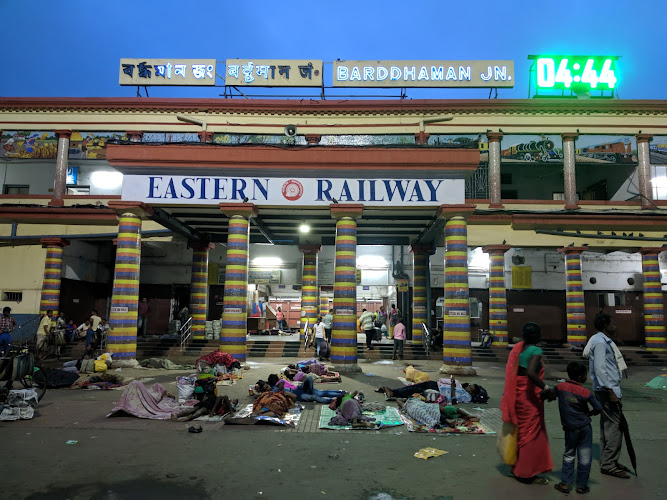
Barddhaman Junction.
About Barddhaman Junction.
Description
Barddhaman Junction, often called the beating heart of West Bengal’s railway network, is one of those places that feels alive no matter what time of day you arrive. It’s not just a station—it’s a story in motion. Trains rumble in and out constantly, carrying people, luggage, food, and chatter from all corners of India. The first time one steps onto its platform, there’s this unmistakable hum in the air—a mix of anticipation, nostalgia, and that familiar scent of steaming chai blending with diesel and dust. It’s old-school India meeting modern travel.
This junction stands proudly on the Howrah–Delhi main line, connecting major cities like Kolkata, Delhi, Patna, and Guwahati. It’s a vital link for both long-distance travelers and daily commuters, making it one of Eastern Railway’s busiest and most important stops. And yet, despite the crowd and chaos, there’s a rhythm to everything here. The announcements echo through the air, vendors call out for customers, and the trains glide in with the precision of a well-rehearsed orchestra. If you’ve ever traveled across India by train, you know the kind of energy I’m talking about—it’s chaotic, yes, but also strangely comforting.
What makes Barddhaman Junction stand out is how well it balances its heritage with modern amenities. Opened way back in 1855, it’s seen everything—from the early days of steam locomotives to today’s sleek electric trains. Over the years, it has evolved into a well-equipped hub. The station offers clean restrooms, baggage storage facilities, and both free and paid parking options. Accessibility has also been thoughtfully incorporated, with ramps, wheelchair-friendly entrances, and restrooms ensuring that everyone can navigate comfortably. You can tell that the management has been working to keep things efficient and traveler-friendly, even as thousands pass through daily.
Of course, like any major Indian railway junction, Barddhaman has its quirks. Sometimes the platforms get overcrowded, and you might find yourself elbowing your way through a sea of travelers. But that’s part of the charm, isn’t it? The hustle and bustle give it character. And if you pause for a moment—maybe grab a cup of tea from a local vendor—you’ll notice how seamlessly life flows here. There’s something deeply human about it all. People heading home, students returning to college, families off on adventures—it’s a crossroads of stories.
Key Features
- Major Railway Hub: Serves as a crucial junction on the Howrah–Delhi main line, connecting major cities across India.
- Extensive Connectivity: EMU services from both the Howrah–Barddhaman main line and chord line terminate here, offering frequent local and express options.
- Modern Amenities: Includes restrooms, baggage storage, and both free and paid parking facilities for travelers.
- Accessibility: Wheelchair-friendly design with accessible restrooms, entrances, and parking spaces.
- 24-Hour Transit: Trains operate round-the-clock, making it convenient for all types of travelers, including late-night arrivals.
- Platform Infrastructure: Multiple platforms designed to handle heavy passenger traffic efficiently, supported by footbridges and digital display systems.
- Nearby Facilities: Easy access to food stalls, local eateries, and lodging options within walking distance.
- Safety Measures: Regular security checks and RPF presence ensure a safe environment for passengers.
Best Time to Visit
Now, technically, Barddhaman Junction is open year-round—after all, trains don’t take holidays. But if you’re planning to explore the town or travel further from here, the best time to visit is between November and February. The weather during these months is pleasant, making it easier to move around without breaking a sweat. Summers in Barddhaman can get pretty intense (think 40°C and up), and monsoons, while beautiful, tend to slow things down a bit with heavy rains. I once traveled here in July, and while the earthy smell of rain on the tracks was magical, my shoes didn’t agree. Lesson learned: winter is your friend.
During winter, the mornings are crisp, and evenings are perfect for a stroll near the station area. You’ll find local tea stalls buzzing with conversation and small eateries serving up steaming plates of momos, samosas, and sweets that Barddhaman is quietly famous for. If you’re lucky, you might even catch one of the local fairs or cultural events that often take place around this time. They add a lovely local flavor to your journey.
How to Get There
Getting to Barddhaman Junction is refreshingly straightforward. It’s located on the main Howrah–Delhi line, so almost every major train passing through West Bengal makes a stop here. From Kolkata, it’s about 100 kilometers away, and you can hop on a local EMU or an express train from Howrah Station. The journey takes roughly two hours, depending on the train you choose. I’ve done this route countless times, and honestly, it’s one of those short train rides that’s both scenic and comfortable—especially if you manage to snag a window seat.
If you’re coming from other cities like Durgapur, Asansol, or even Patna, Barddhaman Junction is well-connected by frequent trains throughout the day. For those traveling by road, the station is easily accessible via the Grand Trunk Road (NH19), with plenty of bus and taxi options available nearby. And for the more adventurous, shared e-rickshaws are a fun (and cheap!) way to get around once you’re in town. They zip through traffic like they own the road—slightly nerve-wracking but undeniably efficient.
For international travelers landing in Kolkata, the easiest route is to take a train from Howrah or Sealdah stations. Both offer multiple daily services to Barddhaman. You can even book your ticket online in advance to avoid last-minute hassles. Trains here are generally punctual, but as with most Indian rail journeys, a little patience goes a long way. Bring a good book, some snacks, and enjoy the ride—it’s part of the experience.
Tips for Visiting
Visiting Barddhaman Junction can be smooth sailing if you keep a few things in mind. First, always check your train’s platform number as they sometimes change at the last minute. The digital boards are reliable, but it’s worth confirming with the station staff too. Trust me, I’ve nearly boarded the wrong train once—it happens to the best of us.
Second, keep an eye on your belongings. The station is generally safe, but with the crowd, it’s easy to misplace things. A small backpack with secure zippers works wonders. And if you’re waiting for a connecting train, there’s decent seating available, though it fills up fast during peak hours. If you have a longer layover, step outside for a bit—there are plenty of tea stalls and snack shops just beyond the main entrance. Nothing beats a hot cup of tea while watching trains roll by.
Another tip: if you’re traveling with elderly family members or anyone needing assistance, the station’s wheelchair accessibility and ramps are a big help. You can request assistance from the railway staff—they’re usually quite helpful, especially if you ask politely. And yes, carry some small change. Many local vendors still prefer cash, and you’ll want to try those irresistible local sweets without fumbling for digital payment options.
Lastly, don’t rush through Barddhaman Junction. It’s easy to treat it as just another stop on your journey, but there’s something special about this place. The energy, the people, the stories—it all adds up to an experience that’s uniquely Indian. Whether you’re heading toward the mountains, the sea, or back home, this station reminds you that every journey, no matter how routine, has its own little moments of wonder. And sometimes, those moments happen right here on the platform, with a cup of tea in hand and the sound of a train whistle echoing in the distance.
So, if you ever find yourself passing through Barddhaman Junction, take a moment to pause, look around, and soak it in. It’s more than just a railway station—it’s a living, breathing part of Bengal’s travel story, and maybe, just maybe, a small part of yours too.
Key Features
- Key Features
- Best Time to Visit
- How to Get There
- Tips for Visiting
More Details
Updated November 30, 2025
Table of Contents
Description
Barddhaman Junction, often called the beating heart of West Bengal’s railway network, is one of those places that feels alive no matter what time of day you arrive. It’s not just a station—it’s a story in motion. Trains rumble in and out constantly, carrying people, luggage, food, and chatter from all corners of India. The first time one steps onto its platform, there’s this unmistakable hum in the air—a mix of anticipation, nostalgia, and that familiar scent of steaming chai blending with diesel and dust. It’s old-school India meeting modern travel.
This junction stands proudly on the Howrah–Delhi main line, connecting major cities like Kolkata, Delhi, Patna, and Guwahati. It’s a vital link for both long-distance travelers and daily commuters, making it one of Eastern Railway’s busiest and most important stops. And yet, despite the crowd and chaos, there’s a rhythm to everything here. The announcements echo through the air, vendors call out for customers, and the trains glide in with the precision of a well-rehearsed orchestra. If you’ve ever traveled across India by train, you know the kind of energy I’m talking about—it’s chaotic, yes, but also strangely comforting.
What makes Barddhaman Junction stand out is how well it balances its heritage with modern amenities. Opened way back in 1855, it’s seen everything—from the early days of steam locomotives to today’s sleek electric trains. Over the years, it has evolved into a well-equipped hub. The station offers clean restrooms, baggage storage facilities, and both free and paid parking options. Accessibility has also been thoughtfully incorporated, with ramps, wheelchair-friendly entrances, and restrooms ensuring that everyone can navigate comfortably. You can tell that the management has been working to keep things efficient and traveler-friendly, even as thousands pass through daily.
Of course, like any major Indian railway junction, Barddhaman has its quirks. Sometimes the platforms get overcrowded, and you might find yourself elbowing your way through a sea of travelers. But that’s part of the charm, isn’t it? The hustle and bustle give it character. And if you pause for a moment—maybe grab a cup of tea from a local vendor—you’ll notice how seamlessly life flows here. There’s something deeply human about it all. People heading home, students returning to college, families off on adventures—it’s a crossroads of stories.
Key Features
- Major Railway Hub: Serves as a crucial junction on the Howrah–Delhi main line, connecting major cities across India.
- Extensive Connectivity: EMU services from both the Howrah–Barddhaman main line and chord line terminate here, offering frequent local and express options.
- Modern Amenities: Includes restrooms, baggage storage, and both free and paid parking facilities for travelers.
- Accessibility: Wheelchair-friendly design with accessible restrooms, entrances, and parking spaces.
- 24-Hour Transit: Trains operate round-the-clock, making it convenient for all types of travelers, including late-night arrivals.
- Platform Infrastructure: Multiple platforms designed to handle heavy passenger traffic efficiently, supported by footbridges and digital display systems.
- Nearby Facilities: Easy access to food stalls, local eateries, and lodging options within walking distance.
- Safety Measures: Regular security checks and RPF presence ensure a safe environment for passengers.
Best Time to Visit
Now, technically, Barddhaman Junction is open year-round—after all, trains don’t take holidays. But if you’re planning to explore the town or travel further from here, the best time to visit is between November and February. The weather during these months is pleasant, making it easier to move around without breaking a sweat. Summers in Barddhaman can get pretty intense (think 40°C and up), and monsoons, while beautiful, tend to slow things down a bit with heavy rains. I once traveled here in July, and while the earthy smell of rain on the tracks was magical, my shoes didn’t agree. Lesson learned: winter is your friend.
During winter, the mornings are crisp, and evenings are perfect for a stroll near the station area. You’ll find local tea stalls buzzing with conversation and small eateries serving up steaming plates of momos, samosas, and sweets that Barddhaman is quietly famous for. If you’re lucky, you might even catch one of the local fairs or cultural events that often take place around this time. They add a lovely local flavor to your journey.
How to Get There
Getting to Barddhaman Junction is refreshingly straightforward. It’s located on the main Howrah–Delhi line, so almost every major train passing through West Bengal makes a stop here. From Kolkata, it’s about 100 kilometers away, and you can hop on a local EMU or an express train from Howrah Station. The journey takes roughly two hours, depending on the train you choose. I’ve done this route countless times, and honestly, it’s one of those short train rides that’s both scenic and comfortable—especially if you manage to snag a window seat.
If you’re coming from other cities like Durgapur, Asansol, or even Patna, Barddhaman Junction is well-connected by frequent trains throughout the day. For those traveling by road, the station is easily accessible via the Grand Trunk Road (NH19), with plenty of bus and taxi options available nearby. And for the more adventurous, shared e-rickshaws are a fun (and cheap!) way to get around once you’re in town. They zip through traffic like they own the road—slightly nerve-wracking but undeniably efficient.
For international travelers landing in Kolkata, the easiest route is to take a train from Howrah or Sealdah stations. Both offer multiple daily services to Barddhaman. You can even book your ticket online in advance to avoid last-minute hassles. Trains here are generally punctual, but as with most Indian rail journeys, a little patience goes a long way. Bring a good book, some snacks, and enjoy the ride—it’s part of the experience.
Tips for Visiting
Visiting Barddhaman Junction can be smooth sailing if you keep a few things in mind. First, always check your train’s platform number as they sometimes change at the last minute. The digital boards are reliable, but it’s worth confirming with the station staff too. Trust me, I’ve nearly boarded the wrong train once—it happens to the best of us.
Second, keep an eye on your belongings. The station is generally safe, but with the crowd, it’s easy to misplace things. A small backpack with secure zippers works wonders. And if you’re waiting for a connecting train, there’s decent seating available, though it fills up fast during peak hours. If you have a longer layover, step outside for a bit—there are plenty of tea stalls and snack shops just beyond the main entrance. Nothing beats a hot cup of tea while watching trains roll by.
Another tip: if you’re traveling with elderly family members or anyone needing assistance, the station’s wheelchair accessibility and ramps are a big help. You can request assistance from the railway staff—they’re usually quite helpful, especially if you ask politely. And yes, carry some small change. Many local vendors still prefer cash, and you’ll want to try those irresistible local sweets without fumbling for digital payment options.
Lastly, don’t rush through Barddhaman Junction. It’s easy to treat it as just another stop on your journey, but there’s something special about this place. The energy, the people, the stories—it all adds up to an experience that’s uniquely Indian. Whether you’re heading toward the mountains, the sea, or back home, this station reminds you that every journey, no matter how routine, has its own little moments of wonder. And sometimes, those moments happen right here on the platform, with a cup of tea in hand and the sound of a train whistle echoing in the distance.
So, if you ever find yourself passing through Barddhaman Junction, take a moment to pause, look around, and soak it in. It’s more than just a railway station—it’s a living, breathing part of Bengal’s travel story, and maybe, just maybe, a small part of yours too.
Key Highlights
- Key Features
- Best Time to Visit
- How to Get There
- Tips for Visiting
Location
Places to Stay Near Barddhaman Junction.
Find and Book a Tour
Explore More Travel Guides
No reviews found! Be the first to review!
Traveler Reviews for Barddhaman Junction.
There are no reviews yet. Be the first one to write one.
Have you visited Barddhaman Junction.? Help other travelers by sharing your review.
You Might Also Like

Sarbamangala Temple Bardhaman
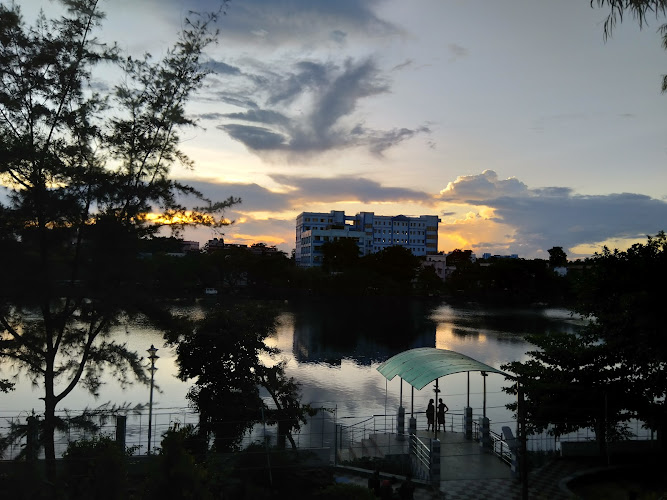
Shyamsayer Park
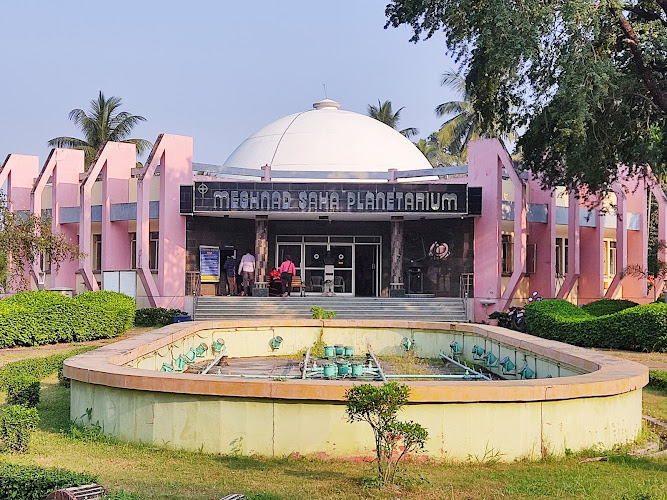
MEGHNAD SAHA PLANETORIUM
Find Accommodations Nearby
Recommended Tours & Activities
Visitor Reviews
There are no reviews yet. Be the first one to write one.
Share Your Experience
Have you visited Barddhaman Junction.? Help other travelers by leaving a review.