
Bandurria
About Bandurria
Key Features
More Details
Updated April 15, 2024
## Bandurria Archaeological Site (Huacho, Peru): A Practical Guide to One of Coastal Peru’s Oldest Settlements
At a glance: Bandurria is a Late Preceramic (Late Archaic) archaeological complex just south of Huacho in the Lima region. It sits by the Pacific coast near the Paraíso/Playa Chica wetlands, with monumental platforms, stairways, and a sunken circular plaza—features associated with early Andean urbanism.
—
### Where it is—and how to pinpoint it
Bandurria lies roughly 3 km south of Huacho, Huaura Province (Lima Region), near km 141 of the Panamericana Norte highway. The Peruvian tourism inventory also places it at about 30 m a.s.l. near the El Paraíso toll landmark. GPS-wise, the site sits at approximately –11.1869, –77.5885.
What surprises many first-timers is the immediate environment: a broad, desertic coast backed by coastal wetlands (Humedal del Paraíso/Playa Chica). Those wetlands are an important stopover for migratory birds and a biodiverse mosaic of lagoons and marshes immediately adjacent to the site area.
—
### Why Bandurria matters
Archaeologists classify Bandurria within the Late Preceramic (Late Archaic), broadly spanning the 4th to early 2nd millennium BCE on Peru’s coast. Excavations and analysis over several decades—building on early investigations in the 1970s and renewed work from 2005 led by Alejandro Chu—have established Bandurria as an early coastal settlement with monumental stone architecture. That architecture includes platform mounds, stairways, and a sunken circular plaza similar in layout to other north-central coastal centers of the period.
Radiocarbon work discussed in the literature places Bandurria securely in this horizon, with dates often cited in the mid-to-late 3rd millennium BCE and arguments that some constructions go earlier. (Different technical sources present different ranges due to sample context and calibration; the consistent point is Bandurria’s Late Preceramic age and its role in early monumental traditions.) For travelers, the practical takeaway is that you’re walking among some of the earliest large architectural works in the Americas.
> Note on “oldest” claims: You may see headlines asserting Bandurria is the oldest city/site in Peru or the Americas, sometimes contrasted with Caral. Those claims fluctuate with new dates and debate. The cautious, up-to-date consensus is that Bandurria is among the earliest monumental coastal centers of the Late Preceramic, contemporaneous with other sites in the region; exact superlatives depend on specific samples and contexts.
—
### What you’ll see on the ground
– Monumental sector with multiple mounds: Surface and excavation data identify at least four major artificial mounds (often described as pyramidal platforms) plus secondary knolls. Terraces and stepped façades are visible where erosion or excavation has exposed faces.
– Sunken circular plaza & stairways: A hallmark of north-central coastal ceremonial architecture of this era, used for gatherings and ritual performance.
– Domestic sector & early urban layout: Research at Bandurria has focused not only on ceremonial platforms but also household organization and inequality, revealing patterned domestic architecture and activity areas—rare, detail-rich windows into daily life of a preceramic coastal community.
– Coastal wetland backdrop: The Paraíso/Playa Chica wetland system sits beside the site. Birdlife (ibises, herons, ducks, grebes, and seasonal migrants) is notable; the site’s name references the bandurria (buff-necked ibis). Bring binoculars if you’re into archaeo-birding.
—
### A short timeline of study (for context)
– 1973: Bandurria is reported following irrigation works (Santa Rosa), which also damaged sectors via water infiltration—paradoxically exposing and threatening parts of the site. Early investigations by Rosa Fung recognized its Late Preceramic age.
– 2005 onward: The Bandurria Archaeological Project resumes major excavations under Alejandro Chu, documenting monumental architecture and household patterns. Support included U.S. National Science Foundation funding linked to Chu’s doctoral research at the University of Pittsburgh.
—
### Practical visiting advice
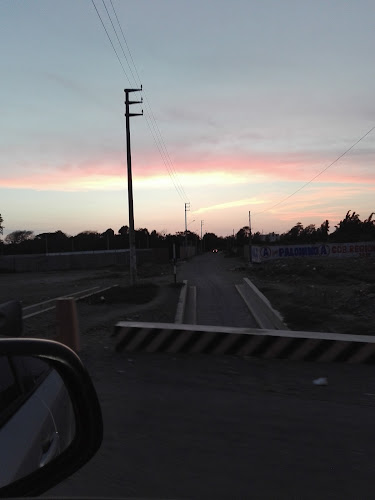
Access & orientation: From Huacho, head south toward km 141 Panamericana Norte. The approach roads are typically unpaved near the final stretch; conditions can vary seasonally. A local guide or pre-arranged transport from Huacho is advisable for first visits. (Official Peruvian tourism inventory confirms the general approach and low elevation; use that as a cross-check when navigating.)
What to bring:
– Sun protection (UV is strong year-round), hat, water, and closed shoes suitable for sandy/gravelly ground.
– Binoculars if the wetland is on your plan.
– Cash for local guiding or community-managed services where digital payments may not be available. (On-site amenities are limited.)
Accessibility: Terrain includes uneven surfaces, loose sand, and slopes on and around mounds. Visitors with mobility needs should plan for minimal shade, variable footing, and limited facilities. (There is no reliable, official accessibility infrastructure listed in public inventories; verify locally before traveling.)
Seasonality: The coast here has cool, often overcast winters with mist (garúa) and mild summers. The wetlands can be lively with migratory birds depending on the season; shoulder months offer balanced conditions for both site walks and birding. (Biodiversity details and the wetland’s importance are documented in Spanish-language sources focused on the Paraíso/Playa Chica system.)
—
### How Bandurria fits into the bigger Andean story
Bandurria is one node in a network of north-central coastal centers that experimented early with monumental public spaces and organized labor long before ceramics became widespread. Its sunken plaza and platform-and-stairway architecture echo patterns seen at sites like Caral in the Supe Valley, though Bandurria sits right on the coast and is intimately tied to marine and wetland ecologies. Scholarly work comparing paleodiets suggests a strong marine component in Late Preceramic coastal communities, aligning with Bandurria’s setting and the broader picture of maritime foundations on Peru’s coast.
From a traveler’s vantage, this means you can pair Bandurria with regional visits to other Late Preceramic sites (e.g., Supe Valley) to see how inland and coastal centers diversified their economies and ceremonial landscapes while sharing architectural principles. (UNESCO materials on Caral-Supe provide broader context for the period’s social and cultural values, useful for pre-trip reading.) World Heritage Centre
—
### Responsible travel & conservation notes
– Site fragility: Parts of Bandurria were compromised by irrigation seepage during the 1970s; erosion and unregulated access can further stress structures. Stay on paths and avoid climbing fragile faces unless a guide indicates a stabilized route.
– Wetland etiquette: The adjacent Paraíso/Playa Chica wetlands are sensitive habitats. Keep distance from roosting or nesting birds, pack out litter, and avoid off-track vehicles. (Spanish sources emphasize the wetland’s ecological importance and bird diversity.)
– Community engagement: When available, choose local guides and community services; it helps keep conservation and visitor management viable in the long run.
—
### Key facts (verified)
– Region/Province/District: Lima / Huaura / Huacho.
– Proximity: ~3 km south of Huacho, near km 141 Panamericana Norte.
– Elevation: ~30 m a.s.l. (inventory record).
– Cultural period: Late Preceramic / Late Archaic.
– Defining features: Platform mounds, stairways, sunken circular plaza; domestic sector with studied household organization.
—
### What’s potentially outdated or debated
– Superlatives (“oldest”): You may encounter messaging that Bandurria is definitively the oldest city/site in Peru or the Americas, or that it precedes Caral by specific centuries. These claims vary by publication and depend on which samples and calibrations are emphasized; ongoing scholarship reframes details over time. Treat absolute superlatives cautiously and focus on the solid point: Bandurria is one of the earliest monumental coastal centers of the Late Preceramic.
– Visitor logistics (hours/fees): Official, up-to-date hours, fee structures, or on-site services are not consistently published in stable government sources accessible online. Check locally in Huacho or with current cultural/municipal channels before arrival.
—
### Final take
If you’re building a coastal archaeology route from Lima, Bandurria + Paraíso Wetlands offers a two-for-one: a formative Late Preceramic center with monumental architecture and a bird-rich coastal ecosystem next door. Plan for basic conditions, hire local expertise where possible, and take the time to read context from scholarly summaries—your experience on the mounds and in the wetlands will be far richer for it.
—
Sources used in this guide include a synthesis of the Spanish-language encyclopedia entry, Peru’s official tourism inventory record, and academic work led by archaeologist Alejandro Chu (University of Pittsburgh) regarding household organization and the monumental sector at Bandurria.
Table of Contents
Key Highlights
Bandurria
Location
Places to Stay Near Bandurria
Find and Book a Tour
Explore More Travel Guides
No reviews found! Be the first to review!
Traveler Reviews for Bandurria
There are no reviews yet. Be the first one to write one.
Have you visited Bandurria? Help other travelers by sharing your review.
You Might Also Like
Gallos del Valle Huacho-Huaura
AA.HH Toma Y Calla Park
Huacho
Find Accommodations Nearby
Recommended Tours & Activities
Visitor Reviews
There are no reviews yet. Be the first one to write one.
Share Your Experience
Have you visited Bandurria? Help other travelers by leaving a review.