
Baihuajian
About Baihuajian
Key Features
More Details
Updated April 15, 2024
## Baihuajian, Shantou: A Coastal Hilltop Temple Inside Queshi Scenic Area
Baihuajian (白花尖) is a hilltop temple precinct and viewpoint inside Queshi Scenic Area on Shantou’s Haojiang Peninsula, facing the old city across Shantou Bay. The site is commonly referred to as Baihuajian Temple (also called Jiutian Niangniang Temple), a modern Taoist complex known for sweeping sea-and-granite scenery and for its devotion to Jiutian Niangniang, the “Nine Heavens” goddess in Chinese folk-Taoist belief. China Travel
### Where exactly is it?
Baihuajian sits within Queshi Scenic Area (礐石风景区), a 12-km² coastal park of granite hills, terraces, caves, and 43 named peaks in Haojiang District, Shantou. The park lies across the water from Shantou’s historic Small Park quarter and is reached by road or ferry links from the urban core. China Travel
### What you’ll see
– Taoist temple architecture with a coastal backdrop. Reviews and travel listings consistently place Baihuajian Temple inside Queshi, highlighting its Taoist dedication to Jiutian Niangniang and its popularity as a hilltop shrine with open courtyards and pavilions. Expect green-tiled halls, incense burners, and a skyline punctuated by nearby pagodas and rock slopes.
– Granite landforms and short up-and-down walks. Queshi’s terrain is mostly low granite peaks with paved paths threading between boulders and pockets of subtropical woodland—good for short, view-rich walks rather than strenuous hiking. China Guide
– Wide bay views. From Baihuajian’s pavilions and open plazas you get classic panoramas of Shantou Bay and the Haojiang shoreline, a common reason local tours include this stop for city views. Travel
> Terminology note. You’ll see the name written as Baihuajian Temple, Baihuajian Ancient Temple, or simply Baihuajian. All point to the same hilltop temple area within Queshi.
—
## Practical Planning
### Getting there
– By public transport + ferry/road. Queshi Scenic Area sits on the peninsula opposite central Shantou, with frequent ferries and multiple city buses to the park approaches; official travel guides mention both ferry and bus access options to Queshi. Once inside the park, follow signage up to the Baihuajian temple area.
– Within the park. Queshi has multiple sub-areas and peaks. Wayfinding varies, but Baihuajian is among the cultural sites signposted in park summaries and appears on most local sightseeing day tours. China Guide
### Tickets & hours
– Queshi Scenic Area posts standard day hours (commonly 08:00–17:30) on China-facing travel portals; on-the-ground hours can vary by gate and by specific sub-site. Confirm locally before you go.
### Facilities & terrain
– Paths and steps. Expect a mix of paved walkways, flights of steps, and open stone plazas. Surfaces can be steep or slick after rain. This is a hilltop temple environment rather than a fully barrier-free urban temple.
– Shade & weather. Queshi combines exposed granite with vegetation; shade varies by segment. Coastal humidity and heat are typical much of the year. Plan water and sun protection accordingly. (This is consistent with the park’s coastal-granite terrain.) China Guide
—
## Context: Why Baihuajian matters in Shantou
– A modern Taoist landmark. Travel sources identify Baihuajian as a Taoist temple dedicated to Jiutian Niangniang within Queshi. The complex is a prominent worship and sightseeing stop in Shantou’s attraction lists.
– Set inside Shantou’s signature scenic park. Queshi is repeatedly described by national travel guides as one of Shantou’s top attractions, notable for the combination of sea cliffs, granite peaks, and caves. Baihuajian adds a cultural-religious layer to that natural setting. China Guide
—
## Suggested Half-Day Route (terrain-aware)
> This route is designed around the verified layout of Queshi Scenic Area (granite peaks, pavilions, and cultural sites) and the location of Baihuajian Temple within it.
1. Enter Queshi Scenic Area via the main gate or ferry approach and pick up a park map. Prioritize the section leading up to Baihuajian/temple area.
2. Walk the paved paths uphill to Baihuajian’s temple courtyard. Pause for bay views and photos near pagodas and pavilions on adjacent slopes. Surfaces can be uneven.
3. Optional cable-car segment: Some sections of Queshi have a cable car; if operating on your visit, it can save time and elevation on the up-or-down portion of your loop in the broader park (not necessarily to the temple door; confirm locally).
4. Exit via an alternate path for different rock formations and woodland pockets before returning to the gate.
—
## Respect & Etiquette
– Religious site first. Baihuajian is an active Taoist space. Dress modestly, keep voices low near prayer halls, and follow posted rules on incense use and photography. (Multiple sources confirm the site’s Taoist nature and devotion.)
– No climbing on shrine structures. Granite boulders are part of the landscape; avoid scrambling on temple roofs, railings, or altars.
—
## Safety & Accessibility Notes
– Steps and elevation: Expect stairs and sloped paths; those with mobility concerns may find portions challenging. Handrails are not guaranteed along all segments.
– Weather exposure: Coastal wind, midday sun, and slick stone after rain are common. Pack water, sun protection, and non-slip footwear. Queshi’s coastal-granite environment is well documented by official guides. China Guide
—
## When to Go
– Clear-sky mornings are ideal for bay viewpoints.
– Shoulder seasons (spring and autumn) often bring more comfortable walking conditions in Guangdong’s humid subtropical climate; park descriptions emphasize outdoor walking and exposed granite, so temperature and humidity materially affect comfort. China Guide
—
## What’s Nearby
– Other Queshi peaks and caves. The park includes multiple named sub-areas and vantage points in addition to Baihuajian; if time allows, add a short detour to a pavilion viewpoint or cave walk. China Guide
– Historic Shantou (Small Park area). Across the bay, the concession-era streets and plazas form the city’s signature heritage district—often paired with Queshi on day tours. (Baihuajian is frequently bundled on local itineraries covering these highlights.) Travel
—
## What’s Verified vs. Variable (read before you go)
– Verified: Baihuajian is a Taoist temple complex within Queshi Scenic Area in Shantou’s Haojiang District, associated with the worship of Jiutian Niangniang; Queshi is a granite coastal park with multiple peaks, caves, and viewpoints. China Travel
– Variable / may change without notice: Operating hours, ticketing, internal shuttle/cable-car operations, and temporary closures or one-way pathing in the park. Cross-check locally on the day of your visit.
—
### Coordinates (for map users)
– Approximate park/temple area: 23.0497, 116.4004 (Shantou, Guangdong).
– These coordinates align with the Queshi peninsula area; exact entrance/parking points vary by gate. (Use local signage once onsite.)
—
### Sources Used
– Queshi Scenic Area overview and layout (location, terrain, peaks, access). China Travel
– Baihuajian Temple placement within Queshi; Taoist dedication to Jiutian Niangniang.
– Tour/route context mentioning Baihuajian scenic area & viewpoints. Travel
> Outdated-data flag: Third-party travel portals sometimes state temple superlatives or crowd counts for the 1990s opening—those figures are marketing-level and not independently verifiable here. Treat claims like “largest by area” or precise attendance numbers as promotional unless corroborated by an official source.
This guide focuses on details supported by multiple reputable travel references and observable park geography to keep your planning accurate and expectation-matched.
Table of Contents
Key Highlights
Baihuajian
Location
Places to Stay Near Baihuajian
Find and Book a Tour
Explore More Travel Guides
No reviews found! Be the first to review!
Traveler Reviews for Baihuajian
There are no reviews yet. Be the first one to write one.
Have you visited Baihuajian? Help other travelers by sharing your review.
You Might Also Like
Jieyang Chaoshan Airport
Haimen, Guangdong
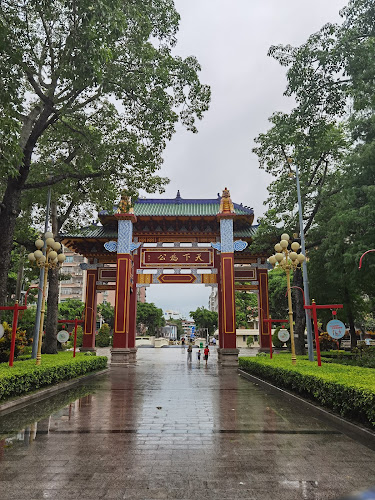
Zhongshan Park
Find Accommodations Nearby
Recommended Tours & Activities
Visitor Reviews
There are no reviews yet. Be the first one to write one.
Share Your Experience
Have you visited Baihuajian? Help other travelers by leaving a review.