
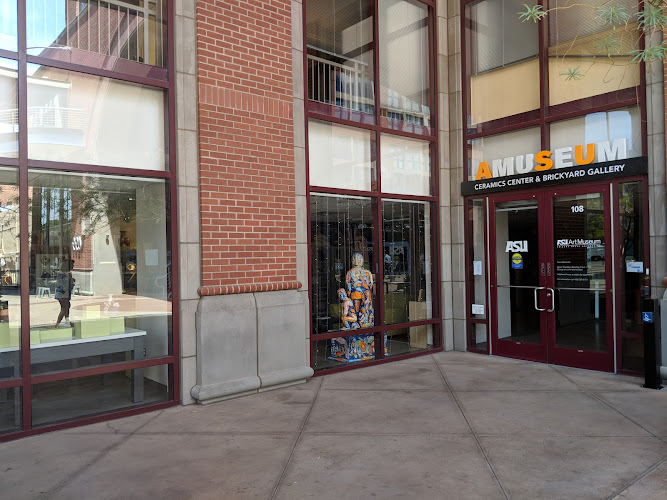
ASU Art Museum Ceramics Research Center
About ASU Art Museum Ceramics Research Center
Description
The ASU Art Museum Ceramics Research Center sits inside the Brickyard Engineering complex in Tempe and quietly punches above its weight as a hub for ceramic art, experimentation, and teaching. More than a gallery, it operates as a living lab — ovens, kilns, benches and the odd cloud of clay dust all working together with curatorial intent. The place is part museum, part research institute and part hands-on workshop, which makes it interesting for travelers who want to see art-making behind the glass rather than just the finished object on a pedestal.
Visitors will notice right away that the center balances two roles. One side is focused on exhibitions: rotating displays of contemporary ceramics, historical pieces that show technique over centuries, and thematic shows that push the idea of what a ceramic object can be. The other side is entirely practical — studios and labs where faculty, students, and visiting artists test glazes, fire kilns, and document processes. That mix gives the space an energy that a typical whitebox gallery often lacks. It feels alive. It feels used.
Accessibility is taken seriously here. The entrance, parking options, and restrooms are constructed to accommodate wheelchairs, which is a relief for travelers who want to explore without the stress of inaccessible layouts. There are tours offered on a regular basis too, and those guided walks tend to be small and informative rather than rushed. For families, the center is welcoming: kids can grasp the tactile history of clay, and educators often tailor short demo sessions that make ceramics approachable for younger minds. It’s one of those rare museum experiences that invites questions, not hushed silence.
What most travelers won’t expect is how interdisciplinary the atmosphere can be. The proximity to engineering labs in Brickyard Engineering encourages collaborations — the center sometimes hosts artist-engineer projects that investigate material science, new kiln technologies, or experimental forms made possible with 3D printing aids for ceramics. People who assume ceramics is just slow, hands-only craft are frequently surprised by the high-tech side of things: thermal imaging of firings, CAD-assisted mold making, and glaze chemistry that reads almost like a science experiment. It’s educational, and it’s oddly thrilling for anyone who likes to see art and tech shake hands.
There’s a research bent to the programming as well. Scholarship is visible here — publications, curatorial texts, and documented residencies leave a trace for visitors who want deeper context. If a traveler is the sort who enjoys reading labels and then spending a quiet hour with a catalog or a curatorial essay, the Ceramics Research Center rewards that curiosity. The exhibits tend to include interpretive material that explains not just what an object is, but how it was made and why it matters in a wider cultural conversation.
And yes, there’s a modest gift shop. It’s not the tacky tourist-trap kind of shop but a carefully curated selection of artist-made items, small tools, and books about ceramics. For visitors who want a tangible memory that also supports the artists and the program, it’s a good stop. There’s no full-service restaurant on site, so plan your meals accordingly — though the Tempe neighborhood has plenty of spots nearby for coffee, tacos, or a more substantial bite.
People who travel here for education rather than pure sightseeing will find things to love: public programs, artist talks, and sometimes hands-on workshops. These events are generally advertised through the museum calendar, but drop-in tourists may get lucky and catch a studio demo or an evening lecture. The tours, when available, often point out small but meaningful details: the way a particular kiln curve influences glaze behavior, or how an artist’s cultural background informs their use of form and surface. Those little explanations turn a brief visit into a memorable learning moment.
The visitor experience is thoughtfully designed but not fussy. Lighting is purposeful, often softer than museum-bright so surface details in low-relief work are legible without glare. Signage tends to be clear, though sometimes the most interesting bits are in printed handouts or on the staff’s lips during a tour. Crowds aren’t typically overwhelming — this is not the kind of place that feels like a theme-park attraction — and that lends a calm, contemplative vibe that many travelers appreciate after a busy day exploring downtown Tempe.
One lesser-known advantage: the center’s commitment to conservation and technical study means visitors occasionally see restoration or conservation processes in real time. That is both educational and oddly intimate. Observing a conservator stabilize a fragile piece, or watching a glaze test fired and documented, gives insight into the care and craft that happen behind the scenes of any museum collection. For travelers who favor behind-the-curtain access, this is a genuine perk.
Finally, the human element is important. Staff and graduate students who work there tend to be approachable, often happy to talk shop about materials, favorite kiln temperatures, or current research projects. Conversations can be spontaneous and enlightening; one visitor remembered a grad student enthusiastically demonstrating how a small difference in clay body could change the whole character of a piece. Those unscripted moments make the place feel less institutional and more like a creative community open to visitors for a short while.
So, for travelers looking for an art stop in Tempe that combines exhibitions, hands-on learning, and a peek into the research side of ceramics, the ASU Art Museum Ceramics Research Center is a strong pick. It is especially appealing to craft lovers, students, educators, and curious travelers who prefer depth over spectacle. Bring comfortable shoes, a willingness to ask questions, and maybe a notebook — there will be details worth jotting down.
Key Features
More Details
Updated August 30, 2025
Table of Contents
Description
The ASU Art Museum Ceramics Research Center sits inside the Brickyard Engineering complex in Tempe and quietly punches above its weight as a hub for ceramic art, experimentation, and teaching. More than a gallery, it operates as a living lab — ovens, kilns, benches and the odd cloud of clay dust all working together with curatorial intent. The place is part museum, part research institute and part hands-on workshop, which makes it interesting for travelers who want to see art-making behind the glass rather than just the finished object on a pedestal.
Visitors will notice right away that the center balances two roles. One side is focused on exhibitions: rotating displays of contemporary ceramics, historical pieces that show technique over centuries, and thematic shows that push the idea of what a ceramic object can be. The other side is entirely practical — studios and labs where faculty, students, and visiting artists test glazes, fire kilns, and document processes. That mix gives the space an energy that a typical whitebox gallery often lacks. It feels alive. It feels used.
Accessibility is taken seriously here. The entrance, parking options, and restrooms are constructed to accommodate wheelchairs, which is a relief for travelers who want to explore without the stress of inaccessible layouts. There are tours offered on a regular basis too, and those guided walks tend to be small and informative rather than rushed. For families, the center is welcoming: kids can grasp the tactile history of clay, and educators often tailor short demo sessions that make ceramics approachable for younger minds. It’s one of those rare museum experiences that invites questions, not hushed silence.
What most travelers won’t expect is how interdisciplinary the atmosphere can be. The proximity to engineering labs in Brickyard Engineering encourages collaborations — the center sometimes hosts artist-engineer projects that investigate material science, new kiln technologies, or experimental forms made possible with 3D printing aids for ceramics. People who assume ceramics is just slow, hands-only craft are frequently surprised by the high-tech side of things: thermal imaging of firings, CAD-assisted mold making, and glaze chemistry that reads almost like a science experiment. It’s educational, and it’s oddly thrilling for anyone who likes to see art and tech shake hands.
There’s a research bent to the programming as well. Scholarship is visible here — publications, curatorial texts, and documented residencies leave a trace for visitors who want deeper context. If a traveler is the sort who enjoys reading labels and then spending a quiet hour with a catalog or a curatorial essay, the Ceramics Research Center rewards that curiosity. The exhibits tend to include interpretive material that explains not just what an object is, but how it was made and why it matters in a wider cultural conversation.
And yes, there’s a modest gift shop. It’s not the tacky tourist-trap kind of shop but a carefully curated selection of artist-made items, small tools, and books about ceramics. For visitors who want a tangible memory that also supports the artists and the program, it’s a good stop. There’s no full-service restaurant on site, so plan your meals accordingly — though the Tempe neighborhood has plenty of spots nearby for coffee, tacos, or a more substantial bite.
People who travel here for education rather than pure sightseeing will find things to love: public programs, artist talks, and sometimes hands-on workshops. These events are generally advertised through the museum calendar, but drop-in tourists may get lucky and catch a studio demo or an evening lecture. The tours, when available, often point out small but meaningful details: the way a particular kiln curve influences glaze behavior, or how an artist’s cultural background informs their use of form and surface. Those little explanations turn a brief visit into a memorable learning moment.
The visitor experience is thoughtfully designed but not fussy. Lighting is purposeful, often softer than museum-bright so surface details in low-relief work are legible without glare. Signage tends to be clear, though sometimes the most interesting bits are in printed handouts or on the staff’s lips during a tour. Crowds aren’t typically overwhelming — this is not the kind of place that feels like a theme-park attraction — and that lends a calm, contemplative vibe that many travelers appreciate after a busy day exploring downtown Tempe.
One lesser-known advantage: the center’s commitment to conservation and technical study means visitors occasionally see restoration or conservation processes in real time. That is both educational and oddly intimate. Observing a conservator stabilize a fragile piece, or watching a glaze test fired and documented, gives insight into the care and craft that happen behind the scenes of any museum collection. For travelers who favor behind-the-curtain access, this is a genuine perk.
Finally, the human element is important. Staff and graduate students who work there tend to be approachable, often happy to talk shop about materials, favorite kiln temperatures, or current research projects. Conversations can be spontaneous and enlightening; one visitor remembered a grad student enthusiastically demonstrating how a small difference in clay body could change the whole character of a piece. Those unscripted moments make the place feel less institutional and more like a creative community open to visitors for a short while.
So, for travelers looking for an art stop in Tempe that combines exhibitions, hands-on learning, and a peek into the research side of ceramics, the ASU Art Museum Ceramics Research Center is a strong pick. It is especially appealing to craft lovers, students, educators, and curious travelers who prefer depth over spectacle. Bring comfortable shoes, a willingness to ask questions, and maybe a notebook — there will be details worth jotting down.
Key Highlights
ASU Art Museum Ceramics Research Center
Location
Places to Stay Near ASU Art Museum Ceramics Research Center
Find and Book a Tour
Explore More Travel Guides
No reviews found! Be the first to review!
Traveler Reviews for ASU Art Museum Ceramics Research Center
There are no reviews yet. Be the first one to write one.
Have you visited ASU Art Museum Ceramics Research Center? Help other travelers by sharing your review.
You Might Also Like
Rio Salado Park

Tempe Beach Park
Arizona Heritage Center
Find Accommodations Nearby
Recommended Tours & Activities
Visitor Reviews
There are no reviews yet. Be the first one to write one.
Share Your Experience
Have you visited ASU Art Museum Ceramics Research Center? Help other travelers by leaving a review.