
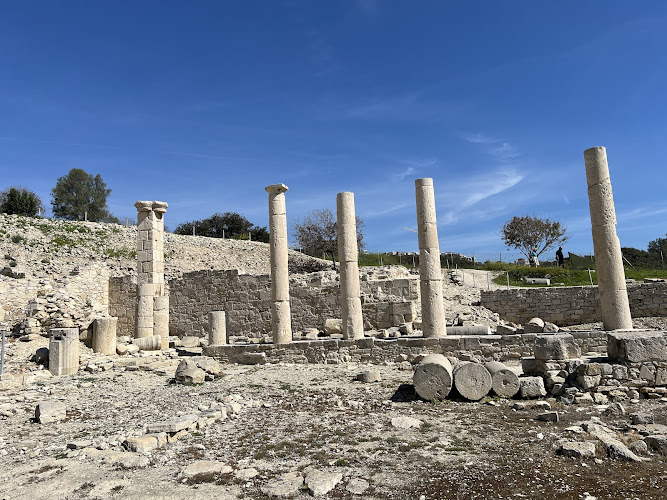
Archaeological Site of Amathous
About Archaeological Site of Amathous
Description
The Archaeological Site of Amathous in Agios Tychon, Cyprus is one of those places that instantly makes history feel tangible rather than just something you skimmed in a book at school. This was once a powerful ancient city-kingdom dating back to around the 11th century BC. It stood proudly on the Mediterranean coast, playing a major role in the political, cultural, and religious life of the island. Today, what remains are evocative ruins that still whisper stories of rulers, merchants, priests, and ordinary people who went about their lives thousands of years ago. Visiting it is like peeling back the layers of time.
Now, realistically, not everything here is perfectly intact—this is a ruin site, after all—and some visitors expect glossy restorations. But the beauty of Amathous lies in its authenticity. You’re not walking through a carefully polished recreation; you’re tracing the footprints of history itself. Ancient walls, sanctuaries, baths, and tombs lie in situ, and the sheer scale of the remains hints at the city’s former glory. If you pause long enough, you can almost picture the ships sailing into its ancient harbor or ceremonies unfolding at the Temple of Aphrodite, a structure that once drew worshippers from near and far. It’s fascinating, even haunting at times, in the best possible sense.
Amathous had its own unique identity among Cypriot kingdoms. While most know it for the sanctuary to Aphrodite, the site also bears traces of influences from the Greek, Roman, and Byzantine periods, each leaving their own mark. For anyone with a love of history and archaeology, this is a playground where myths and reality intermingle. Even for those with only a casual interest, standing on the acropolis and gazing out over the Mediterranean Sea is an experience hard to forget. It gives you that sense of being very small yet connected, part of a much bigger continuum of life that threads through this ancient island.
Key Features
- The remains of the Temple of Aphrodite, once a major sanctuary attracting devotees from across the ancient world.
- Extensive agoras (public marketplaces) that illustrate daily life in the ancient city.
- The acropolis hill, offering sweeping views over the coastline and the site below.
- Roman public baths that showcase impressive engineering and social customs of the time.
- A necropolis with carved tombs, revealing burial practices and belief systems.
- Archaeological remains of fortifications, harbor facilities, and residential quarters.
- Artifacts recovered from the site can be viewed in various museums across Cyprus and Europe, adding scholarly weight to what you see in person.
Best Time to Visit
Cyprus is famously sunny, but walking among ancient ruins under a blazing midday summer sun can be draining. The most pleasant time to explore the Archaeological Site of Amathous is during spring (April to early June) or autumn (September to early November), when the temperatures hover in the comfortable range and the light is golden without being overbearing. Morning visits are particularly rewarding, both to sidestep crowds and to soak up the cooler air. Winter is mild here too, though occasional showers can leave the ground a little slippery.
During summer, it’s still worth visiting—but bring water, sunscreen, and a hat because shade is scarce. There’s something special about standing on the acropolis at sunset any time of year, though. The combination of amber light playing across ancient stone and the Mediterranean Sea glittering below—you really can’t go wrong.
How to Get There
The site is located east of Limassol, in the modern area of Agios Tychon. It’s not far at all from Limassol city, making it an easy half-day trip if you’re staying in or near the area. By car, it’s straightforward: follow the coastal highway, and within minutes you’ll see signs directing you to the entrance. Public transport runs between Limassol and Agios Tychon as well, so you don’t necessarily need to rent a car.
If you’re arriving from Paphos or Larnaca, it’s still manageable as a day trip by car, roughly one to one and a half hours depending on traffic. Taxis are an option, but they’ll be more expensive—you’re better off pairing it with other nearby stops (like the Limassol seafront or Kolossi Castle) if you’re organizing private transfers. And honestly, if you enjoy unstructured exploring like I do, hiring a car gives you freedom to linger longer than a timetable might allow.
Tips for Visiting
Heading to the Archaeological Site of Amathous demands a bit of planning. Here are some practical notes that will help you make the most of it:
- Dress wisely: The terrain varies—stone paths, grassy patches, uneven ancient flooring—so shoes with grip make the walk far more enjoyable.
- Carry water: Even outside of summer, Cyprus runs warm, and there are limited facilities within the archaeological zone itself.
- Allow time: Plan at least two hours if you want to do more than a quick look around. The site is spread out, and rushing undermines the sense of discovery.
- Accessibility: Wheelchair-accessible entrances and parking exist, but certain elevated areas like the acropolis are trickier. If mobility is a concern, you can still see substantial portions of the ruins without the climb.
- Mix with other outings: Because it’s situated close to Limassol, you can easily combine it with a city walk, a seaside meal, or even other ancient sites like Kourion. That makes it perfect if you don’t want your day centered only around ruins.
- Engage your imagination: There won’t be flashy multimedia displays here, but that’s the charm. If you take the time to visualize the bustling agora, or priests at the Temple of Aphrodite, it suddenly comes alive in your mind.
- Bring children: Kids often love the open spaces and dramatic stories of gods, temples, and buried tombs. It’s far more “real” than a textbook—and a great way to instill some historical curiosity.
In the end, the Archaeological Site of Amathous is less about polished grandeur and more about quiet wonder. Some travelers may find parts of it understated compared to the ruins at Kourion, but those who linger tend to walk away deeply moved. For me, it’s one of those places where myths, sea breezes, and history mingle. Standing there, with the waves carrying a hint of salt in the air, you can’t help but feel that fleeting sense of stepping into another world—one where stories weren’t just told but lived here on these stones thousands of years ago.
Key Features
- Artifacts recovered from the site can be viewed in various museums across Cyprus and Europe, adding scholarly weight to what you see in person.
More Details
Updated October 3, 2025
Table of Contents
Description
The Archaeological Site of Amathous in Agios Tychon, Cyprus is one of those places that instantly makes history feel tangible rather than just something you skimmed in a book at school. This was once a powerful ancient city-kingdom dating back to around the 11th century BC. It stood proudly on the Mediterranean coast, playing a major role in the political, cultural, and religious life of the island. Today, what remains are evocative ruins that still whisper stories of rulers, merchants, priests, and ordinary people who went about their lives thousands of years ago. Visiting it is like peeling back the layers of time.
Now, realistically, not everything here is perfectly intact—this is a ruin site, after all—and some visitors expect glossy restorations. But the beauty of Amathous lies in its authenticity. You’re not walking through a carefully polished recreation; you’re tracing the footprints of history itself. Ancient walls, sanctuaries, baths, and tombs lie in situ, and the sheer scale of the remains hints at the city’s former glory. If you pause long enough, you can almost picture the ships sailing into its ancient harbor or ceremonies unfolding at the Temple of Aphrodite, a structure that once drew worshippers from near and far. It’s fascinating, even haunting at times, in the best possible sense.
Amathous had its own unique identity among Cypriot kingdoms. While most know it for the sanctuary to Aphrodite, the site also bears traces of influences from the Greek, Roman, and Byzantine periods, each leaving their own mark. For anyone with a love of history and archaeology, this is a playground where myths and reality intermingle. Even for those with only a casual interest, standing on the acropolis and gazing out over the Mediterranean Sea is an experience hard to forget. It gives you that sense of being very small yet connected, part of a much bigger continuum of life that threads through this ancient island.
Key Features
- The remains of the Temple of Aphrodite, once a major sanctuary attracting devotees from across the ancient world.
- Extensive agoras (public marketplaces) that illustrate daily life in the ancient city.
- The acropolis hill, offering sweeping views over the coastline and the site below.
- Roman public baths that showcase impressive engineering and social customs of the time.
- A necropolis with carved tombs, revealing burial practices and belief systems.
- Archaeological remains of fortifications, harbor facilities, and residential quarters.
- Artifacts recovered from the site can be viewed in various museums across Cyprus and Europe, adding scholarly weight to what you see in person.
Best Time to Visit
Cyprus is famously sunny, but walking among ancient ruins under a blazing midday summer sun can be draining. The most pleasant time to explore the Archaeological Site of Amathous is during spring (April to early June) or autumn (September to early November), when the temperatures hover in the comfortable range and the light is golden without being overbearing. Morning visits are particularly rewarding, both to sidestep crowds and to soak up the cooler air. Winter is mild here too, though occasional showers can leave the ground a little slippery.
During summer, it’s still worth visiting—but bring water, sunscreen, and a hat because shade is scarce. There’s something special about standing on the acropolis at sunset any time of year, though. The combination of amber light playing across ancient stone and the Mediterranean Sea glittering below—you really can’t go wrong.
How to Get There
The site is located east of Limassol, in the modern area of Agios Tychon. It’s not far at all from Limassol city, making it an easy half-day trip if you’re staying in or near the area. By car, it’s straightforward: follow the coastal highway, and within minutes you’ll see signs directing you to the entrance. Public transport runs between Limassol and Agios Tychon as well, so you don’t necessarily need to rent a car.
If you’re arriving from Paphos or Larnaca, it’s still manageable as a day trip by car, roughly one to one and a half hours depending on traffic. Taxis are an option, but they’ll be more expensive—you’re better off pairing it with other nearby stops (like the Limassol seafront or Kolossi Castle) if you’re organizing private transfers. And honestly, if you enjoy unstructured exploring like I do, hiring a car gives you freedom to linger longer than a timetable might allow.
Tips for Visiting
Heading to the Archaeological Site of Amathous demands a bit of planning. Here are some practical notes that will help you make the most of it:
- Dress wisely: The terrain varies—stone paths, grassy patches, uneven ancient flooring—so shoes with grip make the walk far more enjoyable.
- Carry water: Even outside of summer, Cyprus runs warm, and there are limited facilities within the archaeological zone itself.
- Allow time: Plan at least two hours if you want to do more than a quick look around. The site is spread out, and rushing undermines the sense of discovery.
- Accessibility: Wheelchair-accessible entrances and parking exist, but certain elevated areas like the acropolis are trickier. If mobility is a concern, you can still see substantial portions of the ruins without the climb.
- Mix with other outings: Because it’s situated close to Limassol, you can easily combine it with a city walk, a seaside meal, or even other ancient sites like Kourion. That makes it perfect if you don’t want your day centered only around ruins.
- Engage your imagination: There won’t be flashy multimedia displays here, but that’s the charm. If you take the time to visualize the bustling agora, or priests at the Temple of Aphrodite, it suddenly comes alive in your mind.
- Bring children: Kids often love the open spaces and dramatic stories of gods, temples, and buried tombs. It’s far more “real” than a textbook—and a great way to instill some historical curiosity.
In the end, the Archaeological Site of Amathous is less about polished grandeur and more about quiet wonder. Some travelers may find parts of it understated compared to the ruins at Kourion, but those who linger tend to walk away deeply moved. For me, it’s one of those places where myths, sea breezes, and history mingle. Standing there, with the waves carrying a hint of salt in the air, you can’t help but feel that fleeting sense of stepping into another world—one where stories weren’t just told but lived here on these stones thousands of years ago.
Key Highlights
- Artifacts recovered from the site can be viewed in various museums across Cyprus and Europe, adding scholarly weight to what you see in person.
Location
Places to Stay Near Archaeological Site of Amathous
Find and Book a Tour
Explore More Travel Guides
No reviews found! Be the first to review!
Traveler Reviews for Archaeological Site of Amathous
There are no reviews yet. Be the first one to write one.
Have you visited Archaeological Site of Amathous? Help other travelers by sharing your review.
You Might Also Like

Find Accommodations Nearby
Recommended Tours & Activities
Visitor Reviews
There are no reviews yet. Be the first one to write one.
Share Your Experience
Have you visited Archaeological Site of Amathous? Help other travelers by leaving a review.