
Arakura Fuji Sengen Shrine
About Arakura Fuji Sengen Shrine
Description
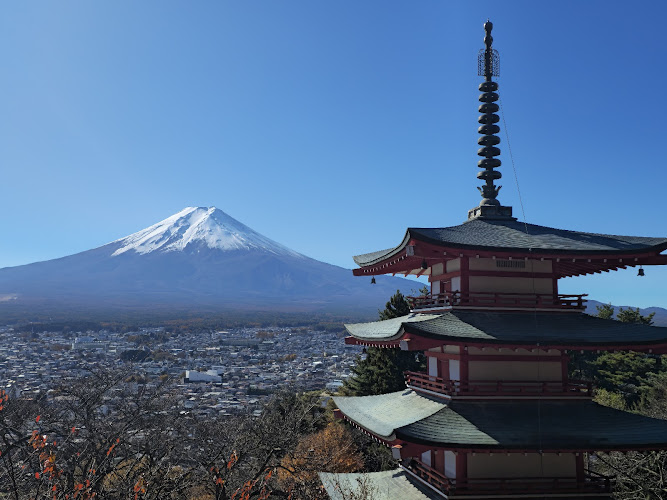
Arakura Fuji Sengen Shrine is one of those rare places that somehow manages to feel both sacred and cinematic at the same time. It’s perched halfway up Mount Arakura in Fujiyoshida, and if you’ve ever seen that postcard-perfect shot of Mount Fuji framed by a five-story pagoda and cherry blossoms—yep, this is the spot. The shrine dates back to 705 AD, making it one of the oldest in the region, and it’s deeply tied to the ancient worship of Mount Fuji as a living deity. What’s fascinating is how the site blends spirituality, history, and natural beauty so seamlessly that you can’t help but feel a quiet awe when you’re standing there, looking out over the city with Fuji towering in the background.
I remember the first time I climbed those long, steep steps up to the Chureito Pagoda—it felt endless, and I was half out of breath by the time I reached the top. But the moment I turned around and saw Mount Fuji perfectly framed behind the pagoda, all that effort suddenly felt worth it. There’s this hush that falls over everyone there, even when it’s crowded. You can hear camera shutters clicking, but you can also sense that people are genuinely moved by the view.
The shrine itself is small and understated, built in the traditional Shinto style with simple wooden structures surrounded by trees. It’s not flashy, and that’s part of its charm. You’ll often find locals stopping by to pray, tourists quietly exploring, and photographers staking out their perfect shot. The atmosphere changes with the seasons—cherry blossoms in spring, lush greenery in summer, fiery maples in autumn, and snow-dusted serenity in winter. It’s a place that feels alive all year round.
Key Features
- Chureito Pagoda: The iconic five-story pagoda built in 1963 as a peace memorial. It’s the star of countless photos featuring Mount Fuji in the background.
- Panoramic Observation Deck: Offers one of the most famous views in Japan—Mount Fuji rising above Fujiyoshida City, framed by the pagoda and seasonal scenery.
- Ancient Heritage: Founded in 705, the shrine has been a spiritual site for Mount Fuji worship for over a millennium.
- Seasonal Beauty: Cherry blossoms in April and crimson maple leaves in November create breathtaking contrasts with the pagoda and Fuji.
- Peaceful Atmosphere: Despite its popularity, there’s a sense of calm that lingers around the shrine grounds, especially early in the morning.
- Local Significance: Still an active place of worship, where locals come to pray for safety, prosperity, and peace.
And honestly, the climb up those 400 or so steps is part of the experience. It’s a bit of a workout, but it builds anticipation. Each step brings you closer to that iconic view. If you’re not in a rush, take your time—pause halfway, look back, and you’ll already start to see glimpses of Fuji peeking through the trees.
Best Time to Visit
Timing is everything at Arakura Fuji Sengen Shrine. If you’re after that classic postcard shot, spring is unbeatable—usually early to mid-April when the cherry blossoms are in full bloom. The pink petals, red pagoda, and snow-capped Mount Fuji create a scene that feels almost too perfect to be real. But don’t overlook autumn. Around late October to mid-November, the maple leaves turn deep shades of red and gold, giving the whole hillside a warm, glowing look.
Winter brings a quiet, almost solemn beauty. The air is crisp, the crowds thin out, and Fuji often appears in its clearest form, free of clouds. Summer, on the other hand, can be humid and hazy, though the lush greenery has its own charm. If you visit early in the morning—say, just after sunrise—you’ll catch soft light on the mountain and maybe even have the place mostly to yourself. Sunset is also magical, but expect more people with tripods ready to capture the changing colors.
Personally, I’d say spring mornings are the sweet spot. There’s something about watching the first light hit Fuji while cherry petals drift through the air that feels almost spiritual. Just bring a jacket—it can still be chilly up there.
How to Get There
Getting to Arakura Fuji Sengen Shrine is pretty straightforward, though it does take a bit of effort. The easiest way is to take a train to Shimoyoshida Station on the Fujikyu Railway Line. From there, it’s about a 10-minute walk through a quiet residential area before you reach the base of the steps leading up to the shrine. The walk itself is pleasant—you’ll pass small shops, vending machines (because, Japan), and maybe even a few friendly locals pointing you in the right direction.
If you’re driving, there’s limited parking near the base, but it tends to fill up quickly during peak seasons. Some visitors park farther away and walk up, which isn’t a bad idea if you want to stretch your legs and enjoy the scenery. There’s also a local bus that stops nearby, though schedules can vary depending on the season.
And just a heads-up: the climb up to the pagoda involves over 390 steps. It’s not overly difficult, but if you’ve got mobility issues, it can be a challenge. Unfortunately, the path isn’t wheelchair accessible, which is something to keep in mind when planning your visit.
Tips for Visiting
A few things I’ve learned from visiting (and from watching others do it wrong):
- Go early or late: The shrine gets crowded, especially during cherry blossom season. Early mornings and weekdays are your best bet for fewer people and softer light.
- Bring water: The climb can be tiring, especially in warmer months. There are vending machines near the station, so stock up before you start.
- Respect the site: Remember, this is an active shrine. Keep noise down, avoid blocking pathways, and be mindful of worshippers.
- Photography etiquette: Tripods are fine in most areas, but don’t set up in the middle of walkways or block others from enjoying the view.
- Weather check: Mount Fuji can be shy—sometimes hidden behind clouds. Check the forecast before you go to increase your chances of a clear view.
- Restrooms: There are basic facilities near the base, but not at the top, so plan accordingly.
- Stay nearby: If you can, spend a night in Fujiyoshida or Kawaguchiko. That way, you can visit at sunrise or sunset without rushing.
And one more thing—don’t rush your time up there. It’s tempting to snap a few photos and head back down, but take a moment to just stand still and take it all in. The quiet hum of the city below, the cool breeze through the trees, and that majestic view of Fuji—it’s one of those rare moments that sticks with you long after you’ve left.
Arakura Fuji Sengen Shrine isn’t just another sightseeing spot. It’s a place where history, faith, and natural beauty come together in a way that feels deeply personal. Whether you’re a photographer, a spiritual traveler, or just someone chasing that perfect view, this shrine has a way of leaving an imprint on your memory. And honestly, no matter how many photos you’ve seen of it online, nothing compares to standing there in person and realizing—this is Japan at its most timeless.
Key Features
- Key Features
- Best Time to Visit
- How to Get There
- Tips for Visiting
More Details
Updated November 7, 2025
Table of Contents
Description
Arakura Fuji Sengen Shrine is one of those rare places that somehow manages to feel both sacred and cinematic at the same time. It’s perched halfway up Mount Arakura in Fujiyoshida, and if you’ve ever seen that postcard-perfect shot of Mount Fuji framed by a five-story pagoda and cherry blossoms—yep, this is the spot. The shrine dates back to 705 AD, making it one of the oldest in the region, and it’s deeply tied to the ancient worship of Mount Fuji as a living deity. What’s fascinating is how the site blends spirituality, history, and natural beauty so seamlessly that you can’t help but feel a quiet awe when you’re standing there, looking out over the city with Fuji towering in the background.
I remember the first time I climbed those long, steep steps up to the Chureito Pagoda—it felt endless, and I was half out of breath by the time I reached the top. But the moment I turned around and saw Mount Fuji perfectly framed behind the pagoda, all that effort suddenly felt worth it. There’s this hush that falls over everyone there, even when it’s crowded. You can hear camera shutters clicking, but you can also sense that people are genuinely moved by the view.
The shrine itself is small and understated, built in the traditional Shinto style with simple wooden structures surrounded by trees. It’s not flashy, and that’s part of its charm. You’ll often find locals stopping by to pray, tourists quietly exploring, and photographers staking out their perfect shot. The atmosphere changes with the seasons—cherry blossoms in spring, lush greenery in summer, fiery maples in autumn, and snow-dusted serenity in winter. It’s a place that feels alive all year round.
Key Features
- Chureito Pagoda: The iconic five-story pagoda built in 1963 as a peace memorial. It’s the star of countless photos featuring Mount Fuji in the background.
- Panoramic Observation Deck: Offers one of the most famous views in Japan—Mount Fuji rising above Fujiyoshida City, framed by the pagoda and seasonal scenery.
- Ancient Heritage: Founded in 705, the shrine has been a spiritual site for Mount Fuji worship for over a millennium.
- Seasonal Beauty: Cherry blossoms in April and crimson maple leaves in November create breathtaking contrasts with the pagoda and Fuji.
- Peaceful Atmosphere: Despite its popularity, there’s a sense of calm that lingers around the shrine grounds, especially early in the morning.
- Local Significance: Still an active place of worship, where locals come to pray for safety, prosperity, and peace.
And honestly, the climb up those 400 or so steps is part of the experience. It’s a bit of a workout, but it builds anticipation. Each step brings you closer to that iconic view. If you’re not in a rush, take your time—pause halfway, look back, and you’ll already start to see glimpses of Fuji peeking through the trees.
Best Time to Visit
Timing is everything at Arakura Fuji Sengen Shrine. If you’re after that classic postcard shot, spring is unbeatable—usually early to mid-April when the cherry blossoms are in full bloom. The pink petals, red pagoda, and snow-capped Mount Fuji create a scene that feels almost too perfect to be real. But don’t overlook autumn. Around late October to mid-November, the maple leaves turn deep shades of red and gold, giving the whole hillside a warm, glowing look.
Winter brings a quiet, almost solemn beauty. The air is crisp, the crowds thin out, and Fuji often appears in its clearest form, free of clouds. Summer, on the other hand, can be humid and hazy, though the lush greenery has its own charm. If you visit early in the morning—say, just after sunrise—you’ll catch soft light on the mountain and maybe even have the place mostly to yourself. Sunset is also magical, but expect more people with tripods ready to capture the changing colors.
Personally, I’d say spring mornings are the sweet spot. There’s something about watching the first light hit Fuji while cherry petals drift through the air that feels almost spiritual. Just bring a jacket—it can still be chilly up there.
How to Get There
Getting to Arakura Fuji Sengen Shrine is pretty straightforward, though it does take a bit of effort. The easiest way is to take a train to Shimoyoshida Station on the Fujikyu Railway Line. From there, it’s about a 10-minute walk through a quiet residential area before you reach the base of the steps leading up to the shrine. The walk itself is pleasant—you’ll pass small shops, vending machines (because, Japan), and maybe even a few friendly locals pointing you in the right direction.
If you’re driving, there’s limited parking near the base, but it tends to fill up quickly during peak seasons. Some visitors park farther away and walk up, which isn’t a bad idea if you want to stretch your legs and enjoy the scenery. There’s also a local bus that stops nearby, though schedules can vary depending on the season.
And just a heads-up: the climb up to the pagoda involves over 390 steps. It’s not overly difficult, but if you’ve got mobility issues, it can be a challenge. Unfortunately, the path isn’t wheelchair accessible, which is something to keep in mind when planning your visit.
Tips for Visiting
A few things I’ve learned from visiting (and from watching others do it wrong):
- Go early or late: The shrine gets crowded, especially during cherry blossom season. Early mornings and weekdays are your best bet for fewer people and softer light.
- Bring water: The climb can be tiring, especially in warmer months. There are vending machines near the station, so stock up before you start.
- Respect the site: Remember, this is an active shrine. Keep noise down, avoid blocking pathways, and be mindful of worshippers.
- Photography etiquette: Tripods are fine in most areas, but don’t set up in the middle of walkways or block others from enjoying the view.
- Weather check: Mount Fuji can be shy—sometimes hidden behind clouds. Check the forecast before you go to increase your chances of a clear view.
- Restrooms: There are basic facilities near the base, but not at the top, so plan accordingly.
- Stay nearby: If you can, spend a night in Fujiyoshida or Kawaguchiko. That way, you can visit at sunrise or sunset without rushing.
And one more thing—don’t rush your time up there. It’s tempting to snap a few photos and head back down, but take a moment to just stand still and take it all in. The quiet hum of the city below, the cool breeze through the trees, and that majestic view of Fuji—it’s one of those rare moments that sticks with you long after you’ve left.
Arakura Fuji Sengen Shrine isn’t just another sightseeing spot. It’s a place where history, faith, and natural beauty come together in a way that feels deeply personal. Whether you’re a photographer, a spiritual traveler, or just someone chasing that perfect view, this shrine has a way of leaving an imprint on your memory. And honestly, no matter how many photos you’ve seen of it online, nothing compares to standing there in person and realizing—this is Japan at its most timeless.
Key Highlights
- Key Features
- Best Time to Visit
- How to Get There
- Tips for Visiting
Location
Places to Stay Near Arakura Fuji Sengen Shrine
Find and Book a Tour
Explore More Travel Guides
No reviews found! Be the first to review!
Traveler Reviews for Arakura Fuji Sengen Shrine
There are no reviews yet. Be the first one to write one.
Have you visited Arakura Fuji Sengen Shrine? Help other travelers by sharing your review.
You Might Also Like
Fujiyama Museum
Fuji-Q Highland
Arakurayama Sengen Park
Find Accommodations Nearby
Recommended Tours & Activities
Visitor Reviews
There are no reviews yet. Be the first one to write one.
Share Your Experience
Have you visited Arakura Fuji Sengen Shrine? Help other travelers by leaving a review.