
Anglo Boer War Graves
About Anglo Boer War Graves
Key Features
More Details
Updated April 15, 2024
## Anglo-Boer War Graves in Klerksdorp: a respectful visitor’s guide
The Anglo-Boer War (1899–1902) left deep marks across South Africa. In Klerksdorp, those marks are tangible: a concentration-camp memorial and cemetery where thousands of victims are commemorated, alongside military graves from later conflicts in the municipal cemetery. This guide keeps it practical and accurate so you can visit with context and respect.
—
### What this site commemorates
– Klerksdorp Concentration Camp Memorial & Cemetery. During the war, a British-run camp operated outside Klerksdorp. 1,495 people died there, and the memorial lists their names; the victims are buried at the adjoining cemetery.
– Not the same as the Commonwealth (WWI/WWII) plot. The municipal Klerksdorp Cemetery contains four First World War and eight Second World War Commonwealth burials. That’s a different section/cemetery used later and is often confused online with the Boer-War site.
> Bottom line: If you’re coming specifically for Anglo-Boer War graves, aim for the Concentration Camp Memorial & Cemetery near Klerksdorp, rather than the Commonwealth war-graves plot.
—
### Why Klerksdorp matters in the war’s timeline
– Late-war theatre nearby. The Battle of Rooiwal (11 April 1902)—the last major engagement of the war—took place near Klerksdorp. This explains the concentration of wartime sites and memorials in the district.
– Who was interned. The camp held civilians—primarily Boer women and children, plus men unfit for service. Conditions across the camp system were harsh and mortality high; the camps are now central to public memory of the war. African History Online
—
### What you’ll see on-site
– Name panels and marked plots. Expect a memorial listing the deceased and adjacent rows of graves associated with the camp’s fatalities (1899–1902).
– A separate military gravescape (if you also stop at the municipal cemetery). The Klerksdorp Cemetery’s Commonwealth headstones follow the familiar white-stone format used by the CWGC worldwide (WWI/WWII), but again, these are not Boer-War graves.
—
### Practical visiting notes
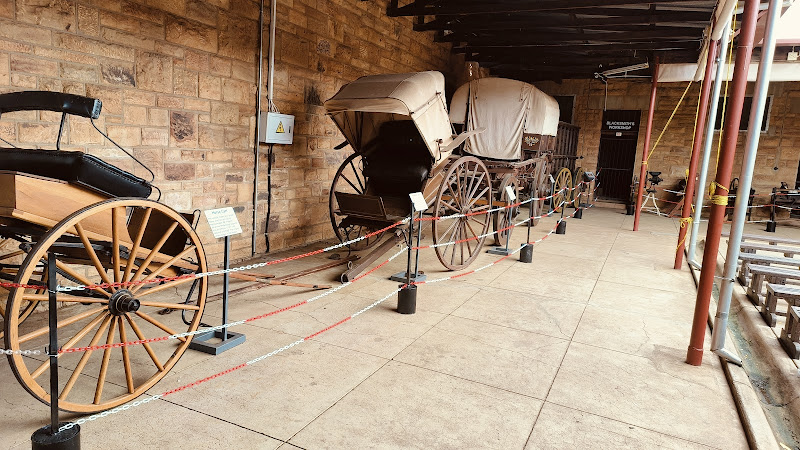
– Orientation & nearby context. Klerksdorp has multiple heritage points within short driving distance. If you want curated background before or after the cemetery, the Klerksdorp Museum (central Klerksdorp; Margaretha Prinsloo & Lombaard Street) offers local history exhibits and can anchor your visit. Check current hours/booking before you go.
– Wayfinding. Online navigation tools may show different “war graves” pins around town (some point to the municipal cemetery). If your interest is the concentration-camp memorial, verify the destination name in your map search (“Klerksdorp Concentration Camp Memorial and Cemetery”) rather than relying on generic “war graves” labels.
– Time on site. Plan 30–60 minutes for the memorial and graves—more if you read through name panels carefully.
– Photography etiquette. Discretion is expected. Avoid staging or stepping on graves. (General cemetery etiquette; confirm any posted rules on arrival.)
– Accessibility. Terrain is generally flat; pathways may be unpaved. If step-free access matters, build in extra time to assess ground conditions in dry vs. rainy seasons. (Local conditions vary; verify on the day.)
– Safety & weather. Klerksdorp’s sun can be intense; bring water, hat, sunscreen. Stick to daylight and keep valuables out of sight when parking (standard South Africa travel common sense).
—
### Reading the site with nuance
– The human toll. The memorial personalizes the camp: 1,495 deaths is not an abstract number—these were families broken up by wartime policy. Many were children. Viewing with that lens adds weight to the rows of stones.
– Wider camp system. The Klerksdorp site is one node in a wider network of concentration camps run by British forces. Scholarship documents how these camps evolved from “refugee” facilities to coercive concentration camps, with disease and malnutrition driving mortality. Use your visit as an entry point to that broader history. African History Online
– Other conflicts remembered locally. If you also visit the municipal cemetery’s Commonwealth plots, you’re stepping into a different chapter—South Africans who died in global wars. It’s a useful contrast in how South Africa memorializes different eras.
—
### How to build a meaningful itinerary around the graves
– Core stop: Klerksdorp Concentration Camp Memorial & Cemetery (allow 45 minutes). Confirm routing by name, not just “war graves.”
– Context stop: Klerksdorp Museum for exhibits and orientation. Call ahead for hours/availability; some guided activities reference cemetery visits.
– Optional contrast: Klerksdorp Cemetery (CWGC sections) if you’re interested in WWI/WWII commemoration in South Africa.
—
### Responsible remembrance
– Inclusivity note. While the Klerksdorp memorial focuses on Boer civilian victims, historians also document Black concentration camps during the war—sites that were long under-memorialized. Recognizing those parallel histories is part of visiting responsibly and making space for all who suffered. African History Online
– Outdated or conflicting data to watch for. Online pins and crowd-sourced pages sometimes conflate the Boer-War graves with the Commonwealth plots. When accuracy matters (e.g., for research), prioritize primary custodians and reputable databases such as the CWGC and dedicated war-memorial registries over social posts.
—
### Key facts (quick reference)
– Commemoration focus: Anglo-Boer War concentration-camp victims (civilian).
– Recorded deaths at the Klerksdorp camp: 1,495.
– Nearby related site: Klerksdorp Cemetery, with 4 WWI and 8 WWII Commonwealth burials (separate from the Boer-War memorial).
– Regional context: The last major battle of the war (Rooiwal, 11 April 1902) occurred near Klerksdorp.
—
#### Sources & verification
– Klerksdorp Concentration Camp Memorial and Cemetery (site overview; casualty total and purpose).
– Commonwealth War Graves Commission – Klerksdorp Cemetery (WWI/WWII burials).
– Background on the concentration-camp system (historical framing and inclusivity note). African History Online
– Klerksdorp’s war-era context (Rooiwal battle).
> If you need exact parking coordinates or a printable route map, say the word and I’ll generate a clean, shareable sheet with step-by-step routing to the memorial plus museum stopovers.
Table of Contents
Key Highlights
Anglo Boer War Graves
Location
Places to Stay Near Anglo Boer War Graves
Find and Book a Tour
Explore More Travel Guides
No reviews found! Be the first to review!
Traveler Reviews for Anglo Boer War Graves
There are no reviews yet. Be the first one to write one.
Have you visited Anglo Boer War Graves? Help other travelers by sharing your review.
You Might Also Like
Klerksdorp Museum
Kameeldoringpark Complex
Klerksdorp
Find Accommodations Nearby
Recommended Tours & Activities
Visitor Reviews
There are no reviews yet. Be the first one to write one.
Share Your Experience
Have you visited Anglo Boer War Graves? Help other travelers by leaving a review.