
Ang Panublion Museum
About Ang Panublion Museum
Description
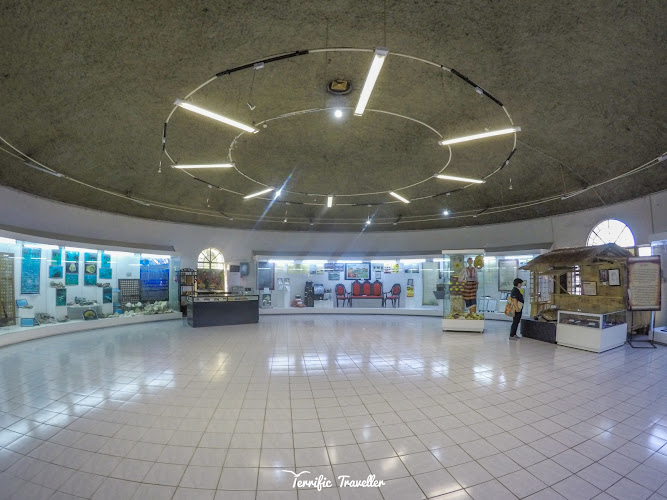
The Ang Panublion Museum in Roxas City, Capiz, Philippines sits inside a converted water tank built in 1910, and that single fact often catches visitors off guard. It is not a cookie-cutter museum; it is a former municipal structure reimagined as a place where local memory gets its moment. The cylindrical walls, thick concrete, and the way light filters through a small number of windows create a curious, slightly echoing atmosphere — intimate but also a little theatrical. The building itself is part of the exhibit: the container that once held water now holds stories.
The museum focuses on historical and cultural artifacts from Capiz and the surrounding region. Objects range from domestic items and religious paraphernalia to agricultural tools and photographs documenting the city's changing face. A casual browser can wander and absorb; a more focused visitor can trace specific threads — family histories, colonial era traces, or the development of local crafts. Many of the displays are curated to emphasize continuity: how ordinary lives shaped the identity of Roxas City and Capiz over time. That narrative approach makes it especially rewarding for people who like their history told through objects rather than through dry timelines.
Ang Panublion is quietly proud of its accessibility features. For visitors with mobility concerns there is a wheelchair accessible entrance, parking, and restroom facilities. That matters. Museums in smaller cities sometimes skimp on accessible infrastructure, but here the basics are handled — so grandparents, parents with strollers, and people using mobility aids can focus on the exhibits rather than on logistics. The museum does not have an on-site restaurant, so plan ahead for meals, but visitors will find a restroom on the premises, which for many is a surprisingly big plus.
Families with kids often find this museum more engaging than expected. The displays lend themselves to curious hands and short attention spans because the objects are tangible and relatable: a farming implement, a traditional dress, a child's toy from decades past. The exhibits are arranged so that a child can connect the item to a story — even if that story is told quickly and simply. That said, the experience is not built around flashy interactives or high-tech displays; it relies on genuine artifacts and human-scale storytelling. If a family expects neon exhibits and theatrical soundscapes, they might be a bit surprised. But if they like hands-on explanations, hearing stories from local guides, or actually touching reproductions when allowed, they will be pleased.
The museum’s interpretive style leans modest: clear labels, curated groupings, and occasional thematic panels. Lighting is subtle, and the spatial limits of a converted water tank lead to compact galleries rather than sprawling halls. Those constraints, oddly, can make the visit feel cozier and more immediate. A visitor can see the whole museum in an hour or two, depending on how much they linger. For history buffs who prefer deep dives, the museum rewards repeated visits and time with a guide who can unpack context for certain artifacts — colonial-era documents, local religious artifacts, and domestic objects that reveal everyday life across generations.
It’s important to be candid: not every exhibit is polished like a national museum. Some interpretive signs are brief; some display cases feel basic. But that unvarnished quality also contributes to the place’s charm. This is a museum about stewardship, not spectacle. The staff often explain that resources are limited and that community involvement has been crucial for preservation efforts. That community spirit is visible in donation plaques and in rotating displays that showcase items lent by local families. There’s a real sense of civic pride here, not corporate gloss.
One odd little anecdote — the kind that sticks with visitors — involves the echo. A small group once went in during a light rain; the museum’s shape amplified the patter and made a spoken story sound theatrical. The local guide, amused, used that echo to emphasize a tale about the city’s fishermen. It’s a small thing, but these kinds of human moments make the museum feel alive. The writer remembers leaning against the cool concrete and thinking about how a structure built for water had quietly become a vessel for memory. That image tends to linger.
Visitors who care about authenticity will appreciate the museum’s attention to provenance. Many objects are clearly described with where they came from and who donated them. This transparency helps build trust; a traveler often wonders if an item is staged or genuine. In this museum, most artifacts carry a lineage — names, towns, occasional family photos — that anchor them in the community. That link between object and owner is a subtle but meaningful form of storytelling that enriches the visitor experience.
For photographers, the museum offers opportunities but with caveats. The light is natural and soft in some areas, while in others it is intentionally dim to protect sensitive materials. A respectful approach is advised: low ISO, no flash for delicate objects, and be mindful of other visitors. People often come away with evocative shots of the circular interior, of display cases reflected in polished surfaces, and of small artifacts framed by the thick walls. These images tend to capture the museum’s dual identity as both artifact and container.
Practicalities matter to travelers. Admission is typically modest — affordable for both locals and visitors — and the museum is designed to be kid-friendly and plainly navigable. There is no restaurant inside, so allow time before or after the visit to explore nearby eateries in Roxas City. Some visitors combine a stop here with a walk through the city center or a market visit, making a half-day cultural circuit that feels nicely paced. The museum often serves as an anchor point for broader explorations of Capiz traditions and coastal life.
Ang Panublion also plays a role in education. School groups come through to study local history, and the displays are often tailored to curricular topics such as colonial history, local governance, and traditional livelihoods. That educational function means visitors may encounter student groups during weekdays, which can be lively and pleasant. For someone who prefers quieter visits, early mornings or the last hour before closing can be a good bet.
Cultural seasons affect what one sees. During certain festivals or commemorations, the museum may host temporary exhibits or special programming highlighting local crafts, historical anniversaries, or conservation efforts. These pop-ups add variety to repeat visits and often showcase community talent that doesn’t always make it into permanent displays. For travelers who time their trips around these events, the payoff can be substantial: hands-on workshops, guest speakers, and small exhibitions that deepen engagement with Capiz heritage.
One more practical note on accessibility: the museum’s wheelchair accessible parking and restroom make it a viable stop for travelers with limited mobility, and staff are generally accommodating. That simple investment in inclusivity changes the visitor mix in subtle but important ways. It becomes a place older residents can still enjoy, parents with strollers can manage, and tourists with mobility concerns can explore without constant logistical stress. That’s not just convenient; it’s socially meaningful.
Overall, Ang Panublion offers an honest, grounded museum experience. It is not about big-ticket multimedia shows or blockbuster artifacts. Rather, it is a place where the material culture of Roxas City and Capiz is gathered, preserved, and presented with care. For travelers who value authenticity, human stories, and a compact, memorable visit, this museum is a satisfying stop. Some items will make you chuckle, others might provoke reflection, and a few will probably surprise you simply because the building that houses them has its own story to tell.
Finally, the museum rewards curiosity and a willingness to ask questions. Talk to the staff, ask where an item came from, and linger over photographs. The best experiences here often come from conversations with local people — the volunteers, the curators, the donors — who are, after all, the keepers of these objects and the memories attached to them. For a traveler who wants to feel a connection to place, Ang Panublion quietly makes that possible.
Key Features
More Details
Updated August 30, 2025
Table of Contents
Description
The Ang Panublion Museum in Roxas City, Capiz, Philippines sits inside a converted water tank built in 1910, and that single fact often catches visitors off guard. It is not a cookie-cutter museum; it is a former municipal structure reimagined as a place where local memory gets its moment. The cylindrical walls, thick concrete, and the way light filters through a small number of windows create a curious, slightly echoing atmosphere — intimate but also a little theatrical. The building itself is part of the exhibit: the container that once held water now holds stories.
The museum focuses on historical and cultural artifacts from Capiz and the surrounding region. Objects range from domestic items and religious paraphernalia to agricultural tools and photographs documenting the city’s changing face. A casual browser can wander and absorb; a more focused visitor can trace specific threads — family histories, colonial era traces, or the development of local crafts. Many of the displays are curated to emphasize continuity: how ordinary lives shaped the identity of Roxas City and Capiz over time. That narrative approach makes it especially rewarding for people who like their history told through objects rather than through dry timelines.
Ang Panublion is quietly proud of its accessibility features. For visitors with mobility concerns there is a wheelchair accessible entrance, parking, and restroom facilities. That matters. Museums in smaller cities sometimes skimp on accessible infrastructure, but here the basics are handled — so grandparents, parents with strollers, and people using mobility aids can focus on the exhibits rather than on logistics. The museum does not have an on-site restaurant, so plan ahead for meals, but visitors will find a restroom on the premises, which for many is a surprisingly big plus.
Families with kids often find this museum more engaging than expected. The displays lend themselves to curious hands and short attention spans because the objects are tangible and relatable: a farming implement, a traditional dress, a child’s toy from decades past. The exhibits are arranged so that a child can connect the item to a story — even if that story is told quickly and simply. That said, the experience is not built around flashy interactives or high-tech displays; it relies on genuine artifacts and human-scale storytelling. If a family expects neon exhibits and theatrical soundscapes, they might be a bit surprised. But if they like hands-on explanations, hearing stories from local guides, or actually touching reproductions when allowed, they will be pleased.
The museum’s interpretive style leans modest: clear labels, curated groupings, and occasional thematic panels. Lighting is subtle, and the spatial limits of a converted water tank lead to compact galleries rather than sprawling halls. Those constraints, oddly, can make the visit feel cozier and more immediate. A visitor can see the whole museum in an hour or two, depending on how much they linger. For history buffs who prefer deep dives, the museum rewards repeated visits and time with a guide who can unpack context for certain artifacts — colonial-era documents, local religious artifacts, and domestic objects that reveal everyday life across generations.
It’s important to be candid: not every exhibit is polished like a national museum. Some interpretive signs are brief; some display cases feel basic. But that unvarnished quality also contributes to the place’s charm. This is a museum about stewardship, not spectacle. The staff often explain that resources are limited and that community involvement has been crucial for preservation efforts. That community spirit is visible in donation plaques and in rotating displays that showcase items lent by local families. There’s a real sense of civic pride here, not corporate gloss.
One odd little anecdote — the kind that sticks with visitors — involves the echo. A small group once went in during a light rain; the museum’s shape amplified the patter and made a spoken story sound theatrical. The local guide, amused, used that echo to emphasize a tale about the city’s fishermen. It’s a small thing, but these kinds of human moments make the museum feel alive. The writer remembers leaning against the cool concrete and thinking about how a structure built for water had quietly become a vessel for memory. That image tends to linger.
Visitors who care about authenticity will appreciate the museum’s attention to provenance. Many objects are clearly described with where they came from and who donated them. This transparency helps build trust; a traveler often wonders if an item is staged or genuine. In this museum, most artifacts carry a lineage — names, towns, occasional family photos — that anchor them in the community. That link between object and owner is a subtle but meaningful form of storytelling that enriches the visitor experience.
For photographers, the museum offers opportunities but with caveats. The light is natural and soft in some areas, while in others it is intentionally dim to protect sensitive materials. A respectful approach is advised: low ISO, no flash for delicate objects, and be mindful of other visitors. People often come away with evocative shots of the circular interior, of display cases reflected in polished surfaces, and of small artifacts framed by the thick walls. These images tend to capture the museum’s dual identity as both artifact and container.
Practicalities matter to travelers. Admission is typically modest — affordable for both locals and visitors — and the museum is designed to be kid-friendly and plainly navigable. There is no restaurant inside, so allow time before or after the visit to explore nearby eateries in Roxas City. Some visitors combine a stop here with a walk through the city center or a market visit, making a half-day cultural circuit that feels nicely paced. The museum often serves as an anchor point for broader explorations of Capiz traditions and coastal life.
Ang Panublion also plays a role in education. School groups come through to study local history, and the displays are often tailored to curricular topics such as colonial history, local governance, and traditional livelihoods. That educational function means visitors may encounter student groups during weekdays, which can be lively and pleasant. For someone who prefers quieter visits, early mornings or the last hour before closing can be a good bet.
Cultural seasons affect what one sees. During certain festivals or commemorations, the museum may host temporary exhibits or special programming highlighting local crafts, historical anniversaries, or conservation efforts. These pop-ups add variety to repeat visits and often showcase community talent that doesn’t always make it into permanent displays. For travelers who time their trips around these events, the payoff can be substantial: hands-on workshops, guest speakers, and small exhibitions that deepen engagement with Capiz heritage.
One more practical note on accessibility: the museum’s wheelchair accessible parking and restroom make it a viable stop for travelers with limited mobility, and staff are generally accommodating. That simple investment in inclusivity changes the visitor mix in subtle but important ways. It becomes a place older residents can still enjoy, parents with strollers can manage, and tourists with mobility concerns can explore without constant logistical stress. That’s not just convenient; it’s socially meaningful.
Overall, Ang Panublion offers an honest, grounded museum experience. It is not about big-ticket multimedia shows or blockbuster artifacts. Rather, it is a place where the material culture of Roxas City and Capiz is gathered, preserved, and presented with care. For travelers who value authenticity, human stories, and a compact, memorable visit, this museum is a satisfying stop. Some items will make you chuckle, others might provoke reflection, and a few will probably surprise you simply because the building that houses them has its own story to tell.
Finally, the museum rewards curiosity and a willingness to ask questions. Talk to the staff, ask where an item came from, and linger over photographs. The best experiences here often come from conversations with local people — the volunteers, the curators, the donors — who are, after all, the keepers of these objects and the memories attached to them. For a traveler who wants to feel a connection to place, Ang Panublion quietly makes that possible.
Key Highlights
Ang Panublion Museum
Location
Places to Stay Near Ang Panublion Museum
Find and Book a Tour
Explore More Travel Guides
No reviews found! Be the first to review!
Traveler Reviews for Ang Panublion Museum
There are no reviews yet. Be the first one to write one.
Have you visited Ang Panublion Museum? Help other travelers by sharing your review.
You Might Also Like
Cadimahan-Libotong River Tour
Loctugan Public Plaza
Culajao Mangrove Eco Park
Find Accommodations Nearby
Recommended Tours & Activities
Visitor Reviews
There are no reviews yet. Be the first one to write one.
Share Your Experience
Have you visited Ang Panublion Museum? Help other travelers by leaving a review.