
Agnes Keith House
About Agnes Keith House
Description
Agnes Keith House isn’t the sort of museum where you shuffle through silently, reading plaques and checking your watch. It’s more like stepping into someone’s life mid-sentence. The house once belonged to Agnes Newton Keith, an American author who lived in Sabah during the British colonial era, and the place still feels lived-in in a quiet, slightly messy way. And yes, I mean that as a compliment.
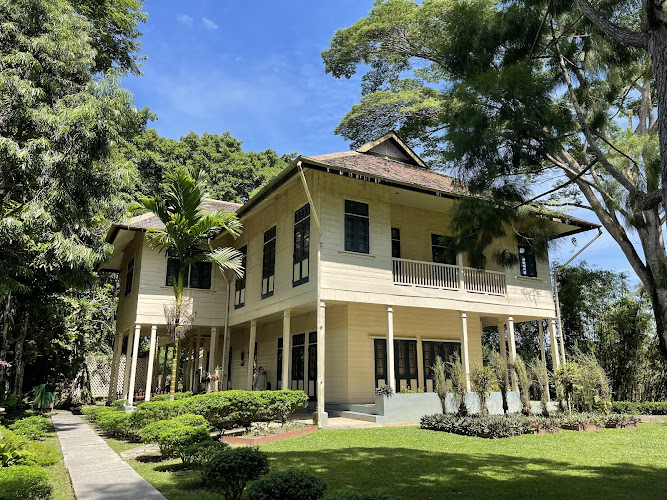
The building itself is a restored post-World War II colonial home perched on a hill, which already gives it a sense of remove from the modern city below. You walk in and you can almost hear ceiling fans turning lazily, even when they’re not. Agnes Keith wrote candidly about her life in Borneo, including the hardships of wartime imprisonment and the odd, funny details of colonial domestic life. Her voice was honest, sometimes sharp, sometimes tender, and the house reflects that same mood.
What makes this place special for travelers is how personal it feels. Many museums talk about history. Agnes Keith House talks to you. Her books, photographs, letters, and household items are displayed in a way that doesn’t feel over-curated. You’re not just learning dates and names; you’re learning how someone felt living here decades ago. And if you’ve ever wondered what daily life was like in North Borneo before independence, this house answers that question in small, human ways.
I’ve always believed historical places work best when they show imperfections, and this one does. Some rooms feel sparse, others packed with memories. The balance isn’t perfect, but that’s kind of the point. Travelers who like polished, high-tech museums might find it a little understated. But if you’re the type who enjoys imagining conversations that once happened over a dining table, you’ll feel right at home.
The house also carries the weight of war without being heavy-handed. Agnes Keith and her family survived the Japanese occupation, and that experience shaped much of her writing. There’s a quiet respect in how this part of history is presented. No dramatics, no forced emotion. Just facts, personal stories, and enough space for you to sit with it. I found myself slowing down here, reading more carefully than I usually do. And honestly, that doesn’t happen often.
Key Features
Agnes Keith House offers more than just rooms with old furniture. These are the elements that make it stand out as a historical landmark and museum worth your time:
- Original artifacts and personal items that belonged to Agnes Keith, including manuscripts, photographs, and everyday household objects.
- Restored colonial architecture that reflects post-WWII design, with wooden floors, wide windows, and airy interiors.
- Exhibits focused on wartime experiences, particularly the Japanese occupation, told through personal narratives rather than dry timelines.
- Informative display panels that balance context with readability, so you don’t feel like you’re studying for an exam.
- Onsite amenities including restrooms and a restaurant, which makes lingering easier than you’d expect.
- Kid-friendly layout with open spaces where younger visitors don’t feel trapped or bored.
- Wheelchair accessible parking, making the site more welcoming to travelers with mobility needs.
- Free parking, which sounds minor but feels like a small victory when you’re traveling.
One thing people don’t always mention is how peaceful the grounds feel. It’s not huge, but it’s enough to give you breathing room. I’ve had some of my best travel thoughts sitting on museum steps, not inside galleries, and this is one of those places.
Best Time to Visit
The Agnes Keith House can be visited year-round, but timing does make a difference in how much you enjoy it. Mornings are usually the sweet spot. The air is cooler, the light filters softly through the windows, and there are fewer visitors. You get that rare feeling of having a historical place almost to yourself, which is gold if you like to take photos or read every display slowly.
If you’re visiting during the hotter months, aim for earlier in the day or later afternoon. The house is well-ventilated, but it’s still a colonial-era building, not a shopping mall. And honestly, the heat adds to the atmosphere in a strange way. It makes Agnes Keith’s stories about daily life here feel more real. You start to understand why ceiling fans were such a big deal.
Weekdays tend to be quieter than weekends. On weekends, you might see families, school groups, or travelers ticking off major attractions. That’s not a bad thing, but it changes the mood slightly. If you’re someone who likes contemplative travel, plan accordingly.
Rainy days aren’t a deal-breaker either. In fact, I kind of like museums when it rains. The sound of rain on the roof adds to the reflective atmosphere. Just bring proper footwear, because paths can get a bit slick. Small detail, but worth mentioning.
How to Get There
Getting to Agnes Keith House is fairly straightforward, especially if you’re staying within the city area. It sits on elevated ground, which means you’ll probably notice the uphill approach. Don’t let that scare you. The climb is short, and the view from the top is part of the experience.
Most travelers opt for taxis or ride-hailing services, which are convenient and affordable. Drivers generally know the place by name, and if they don’t, mentioning Agnes Keith usually rings a bell. If you’re driving yourself, the free parking lot is a big plus. It removes a layer of stress that, let’s be real, can ruin a good museum mood.
Public transport can get you close, but you may need to walk the final stretch. I actually like that walk. It gives you time to mentally shift gears from city noise to historical quiet. But if you’re short on time or traveling with kids, a direct ride is probably the smarter move.
And yes, walking is an option if you’re staying nearby and enjoy a bit of exercise. Just keep an eye on the weather. Tropical heat has a way of humbling even confident walkers.
Tips for Visiting
If you want to get the most out of your visit to Agnes Keith House, a little planning goes a long way. This isn’t a place to rush through in twenty minutes. Give it the respect of your attention.
First, read some background on Agnes Keith before you go, even if it’s just a short summary of her life. Knowing who she was makes the exhibits click faster. I once visited without much context and enjoyed it, but the second time, with more knowledge, it hit deeper. Big difference.
Second, take your time with the text panels. They’re not overly long, but they’re thoughtful. Skimming does you no favors here. And don’t be afraid to sit down if there’s a bench. Museums aren’t marathons.
Third, if you’re visiting with children, frame the experience as a story rather than a lesson. Kids respond better when history feels like someone’s life instead of a school subject. This house is perfect for that approach.
Fourth, use the amenities. Grab a drink, use the restroom, slow your pace. Travel burnout is real, and places like this are meant to be savored, not conquered.
Lastly, manage your expectations. This is not a flashy attraction with interactive screens everywhere. It’s quieter, more reflective, and occasionally a bit uneven in presentation. But that’s also its charm. Agnes Keith House rewards curiosity and patience, not speed.
If you leave feeling like you understand a little more about life in Sabah’s past, and maybe even about resilience in general, then the visit has done its job. And if you don’t, well, at least you spent an hour somewhere that values stories over spectacle. I’ll take that any day.
Key Features
- Key Features
- Best Time to Visit
- How to Get There
- Tips for Visiting
More Details
Updated December 31, 2025
Table of Contents
- Description
- Key Features
- Best Time to Visit
- How to Get There
- Tips for Visiting
- Key Highlights
- Location
- Places to Stay Near Agnes Keith House
- Find and Book a Tour
- Explore More Travel Guides
- Agnes Keith House, Sandakan: A Smart Stop on the Sandakan Heritage Trail
- Where it is—and how to plan your visit
- Why this house matters
- The writer who branded “Land Below the Wind”
- Rebuilt, restored, reopened
- What you’ll actually see inside
- Practical advice you won’t find on generic lists
- Suggested half-day route (low-friction)
- Quick facts (to save to your notes)
- Is it worth it?
- Inclusivity & accuracy notes
- Final take
- Nearby Places You Might Like
- Traveler Reviews for Agnes Keith House
- Share Your Experience
Description
Agnes Keith House isn’t the sort of museum where you shuffle through silently, reading plaques and checking your watch. It’s more like stepping into someone’s life mid-sentence. The house once belonged to Agnes Newton Keith, an American author who lived in Sabah during the British colonial era, and the place still feels lived-in in a quiet, slightly messy way. And yes, I mean that as a compliment.
The building itself is a restored post-World War II colonial home perched on a hill, which already gives it a sense of remove from the modern city below. You walk in and you can almost hear ceiling fans turning lazily, even when they’re not. Agnes Keith wrote candidly about her life in Borneo, including the hardships of wartime imprisonment and the odd, funny details of colonial domestic life. Her voice was honest, sometimes sharp, sometimes tender, and the house reflects that same mood.
What makes this place special for travelers is how personal it feels. Many museums talk about history. Agnes Keith House talks to you. Her books, photographs, letters, and household items are displayed in a way that doesn’t feel over-curated. You’re not just learning dates and names; you’re learning how someone felt living here decades ago. And if you’ve ever wondered what daily life was like in North Borneo before independence, this house answers that question in small, human ways.
I’ve always believed historical places work best when they show imperfections, and this one does. Some rooms feel sparse, others packed with memories. The balance isn’t perfect, but that’s kind of the point. Travelers who like polished, high-tech museums might find it a little understated. But if you’re the type who enjoys imagining conversations that once happened over a dining table, you’ll feel right at home.
The house also carries the weight of war without being heavy-handed. Agnes Keith and her family survived the Japanese occupation, and that experience shaped much of her writing. There’s a quiet respect in how this part of history is presented. No dramatics, no forced emotion. Just facts, personal stories, and enough space for you to sit with it. I found myself slowing down here, reading more carefully than I usually do. And honestly, that doesn’t happen often.
Key Features
Agnes Keith House offers more than just rooms with old furniture. These are the elements that make it stand out as a historical landmark and museum worth your time:
- Original artifacts and personal items that belonged to Agnes Keith, including manuscripts, photographs, and everyday household objects.
- Restored colonial architecture that reflects post-WWII design, with wooden floors, wide windows, and airy interiors.
- Exhibits focused on wartime experiences, particularly the Japanese occupation, told through personal narratives rather than dry timelines.
- Informative display panels that balance context with readability, so you don’t feel like you’re studying for an exam.
- Onsite amenities including restrooms and a restaurant, which makes lingering easier than you’d expect.
- Kid-friendly layout with open spaces where younger visitors don’t feel trapped or bored.
- Wheelchair accessible parking, making the site more welcoming to travelers with mobility needs.
- Free parking, which sounds minor but feels like a small victory when you’re traveling.
One thing people don’t always mention is how peaceful the grounds feel. It’s not huge, but it’s enough to give you breathing room. I’ve had some of my best travel thoughts sitting on museum steps, not inside galleries, and this is one of those places.
Best Time to Visit
The Agnes Keith House can be visited year-round, but timing does make a difference in how much you enjoy it. Mornings are usually the sweet spot. The air is cooler, the light filters softly through the windows, and there are fewer visitors. You get that rare feeling of having a historical place almost to yourself, which is gold if you like to take photos or read every display slowly.
If you’re visiting during the hotter months, aim for earlier in the day or later afternoon. The house is well-ventilated, but it’s still a colonial-era building, not a shopping mall. And honestly, the heat adds to the atmosphere in a strange way. It makes Agnes Keith’s stories about daily life here feel more real. You start to understand why ceiling fans were such a big deal.
Weekdays tend to be quieter than weekends. On weekends, you might see families, school groups, or travelers ticking off major attractions. That’s not a bad thing, but it changes the mood slightly. If you’re someone who likes contemplative travel, plan accordingly.
Rainy days aren’t a deal-breaker either. In fact, I kind of like museums when it rains. The sound of rain on the roof adds to the reflective atmosphere. Just bring proper footwear, because paths can get a bit slick. Small detail, but worth mentioning.
How to Get There
Getting to Agnes Keith House is fairly straightforward, especially if you’re staying within the city area. It sits on elevated ground, which means you’ll probably notice the uphill approach. Don’t let that scare you. The climb is short, and the view from the top is part of the experience.
Most travelers opt for taxis or ride-hailing services, which are convenient and affordable. Drivers generally know the place by name, and if they don’t, mentioning Agnes Keith usually rings a bell. If you’re driving yourself, the free parking lot is a big plus. It removes a layer of stress that, let’s be real, can ruin a good museum mood.
Public transport can get you close, but you may need to walk the final stretch. I actually like that walk. It gives you time to mentally shift gears from city noise to historical quiet. But if you’re short on time or traveling with kids, a direct ride is probably the smarter move.
And yes, walking is an option if you’re staying nearby and enjoy a bit of exercise. Just keep an eye on the weather. Tropical heat has a way of humbling even confident walkers.
Tips for Visiting
If you want to get the most out of your visit to Agnes Keith House, a little planning goes a long way. This isn’t a place to rush through in twenty minutes. Give it the respect of your attention.
First, read some background on Agnes Keith before you go, even if it’s just a short summary of her life. Knowing who she was makes the exhibits click faster. I once visited without much context and enjoyed it, but the second time, with more knowledge, it hit deeper. Big difference.
Second, take your time with the text panels. They’re not overly long, but they’re thoughtful. Skimming does you no favors here. And don’t be afraid to sit down if there’s a bench. Museums aren’t marathons.
Third, if you’re visiting with children, frame the experience as a story rather than a lesson. Kids respond better when history feels like someone’s life instead of a school subject. This house is perfect for that approach.
Fourth, use the amenities. Grab a drink, use the restroom, slow your pace. Travel burnout is real, and places like this are meant to be savored, not conquered.
Lastly, manage your expectations. This is not a flashy attraction with interactive screens everywhere. It’s quieter, more reflective, and occasionally a bit uneven in presentation. But that’s also its charm. Agnes Keith House rewards curiosity and patience, not speed.
If you leave feeling like you understand a little more about life in Sabah’s past, and maybe even about resilience in general, then the visit has done its job. And if you don’t, well, at least you spent an hour somewhere that values stories over spectacle. I’ll take that any day.
Key Highlights
- Key Features
- Best Time to Visit
- How to Get There
- Tips for Visiting
Location
Places to Stay Near Agnes Keith House
Find and Book a Tour
Explore More Travel Guides
No reviews found! Be the first to review!
Agnes Keith House, Sandakan: A Smart Stop on the Sandakan Heritage Trail
Agnes Keith House is a compact but illuminating historic home museum in Sandakan, Sabah—ideal for pairing with the Sandakan Heritage Trail and a tea break next door. The house commemorates American author Agnes Newton Keith, whose Borneo memoirs (“Land Below the Wind,” “Three Came Home,” “White Man Returns”) captured pre-war life, wartime internment, and post-war recovery in British North Borneo (now Sabah). Today, the site is operated by Sabah Museum and presents period rooms, interpretive panels, and views over Sandakan Bay. oai_citation:0‡Wikipedia
Where it is—and how to plan your visit
- Location & access: The museum sits on a hill above central Sandakan at 296, Jalan Utara (often described as “on the Jalan Istana hill”). It’s around 10 km from Sandakan Airport and a short taxi or Grab ride from town. Wayfinding is straightforward if you’re following the Sandakan Heritage Trail, which brings you here after the “100 Steps.” oai_citation:1‡Trip.com
- Hours & ticketing: As of late 2025, posted hours are daily 9:00–17:00. Sabah Tourism lists admission at RM2 (Malaysians) and RM15 (non-Malaysians). Fees and hours are subject to change—confirm just before you go. oai_citation:2‡Sabah Tourism Board
- Combine with tea: The English Tea House & Restaurant sits immediately adjacent—popular for lunch or scones with bay views after your museum visit. Reservations aren’t essential on weekdays but help on weekends. oai_citation:3‡englishteahouse.org
Accuracy note: Ticket prices and hours occasionally change; check Sabah Tourism or call ahead the week of your visit. oai_citation:4‡Sabah Tourism Board
Why this house matters
The writer who branded “Land Below the Wind”
Agnes Newton Keith moved to Sandakan in the 1930s after marrying Harry Keith, a British forestry and conservation officer. Her first book, “Land Below the Wind” (1939), popularized the phrase still associated with Sabah; she later chronicled her family’s WWII imprisonment in “Three Came Home” (1946), and the post-war rebuild in “White Man Returns” (1951). Together, these works provide one of the most readable English-language windows into Borneo’s colonial and wartime eras. oai_citation:5‡Sandakan Rainforest Lodge
Rebuilt, restored, reopened
The wartime house was destroyed; the present timber dwelling (“Newlands”) was rebuilt in 1946–47 on the hill site and later fell into disuse. In 2001, Sabah Museum and the Federal Department of Museums and Antiquities began a restoration program; the museum opened to the public on 26 April 2004. That timeline explains the building’s tidy appearance: it’s a faithful restoration furnished with reproduction colonial pieces rather than a time capsule left untouched. oai_citation:6‡Wikipedia
What you’ll actually see inside
Expect a modest, well-curated home museum rather than a large gallery. Exhibits typically include:
- Period rooms dressed with reproduction colonial furniture, kitchenware, and household objects that illustrate everyday life in British North Borneo. oai_citation:7‡englishteahouse.org
- A first-floor gallery on Agnes, Harry, and their son George, with a Keith family timeline and panels about the books and their historical context. oai_citation:8‡englishteahouse.org
- Interpretation on Sandakan’s colonial grid and hill stations, which helps connect the house to other stops on the Heritage Trail (e.g., St. Michael’s & All Angels Church, the 100 Steps, and viewpoints). oai_citation:9‡Sabah Tourism Board
Most visitors spend 45–60 minutes inside; book lovers can linger longer reading panels and quotations before heading to the Tea House terrace next door. oai_citation:10‡Trip.com
Practical advice you won’t find on generic lists
- Go early for cooler air and emptier rooms. Doors open at 9:00; arriving near opening lets you enjoy the hill setting before the midday heat and any bus groups. If you’re walking the Heritage Trail, time your start so you reach the house after 9:00 (it’s sometimes mentioned as closed earlier in the morning). oai_citation:11‡Tripadvisor
- Pair with context. Read at least a chapter of “Land Below the Wind” on the plane or night before—then the kitchen, verandah, and service areas land differently. (Even The Atlantic’s 1939 blurb gives quick context in five minutes.) oai_citation:12‡The Atlantic
- Stair and hill awareness. The approach involves hills and steps if you’re on foot via the 100 Steps segment. In tropical rain, the path can be slick; taxis or Grab drop-offs at the entrance are a comfortable alternative. oai_citation:13‡Wanderlog
- Cash small bills. While Sabah Tourism lists clear pricing, small notes expedite entry and a drink at the Tea House after; card acceptance at independent venues can be inconsistent. (Prices can change—treat this as planning guidance, not a guarantee.) oai_citation:14‡Sabah Tourism Board
Suggested half-day route (low-friction)
- Start in town and follow waymarkers for the Sandakan Heritage Trail up to the 100 Steps. oai_citation:15‡Sabah Tourism Board
- Continue to Agnes Keith House for 45–60 minutes. Photograph exteriors and views; follow posted rules inside for any limitations. (House rules can vary—observe on-site signage.) oai_citation:16‡Wikipedia
- Lunch/tea at the English Tea House & Restaurant—verandah tables face Sandakan Bay. oai_citation:17‡englishteahouse.org
- Walk or ride back to town, or continue to another trail stop (church, memorials) depending on heat and time. oai_citation:18‡Sabah Tourism Board
Quick facts (to save to your notes)
- Name: Agnes Keith House (Rumah Agnes Keith) — Historic house museum run by Sabah Museum. Opened: 26 April 2004. oai_citation:19‡Wikipedia
- Address: 296, Jalan Utara, 90000 Sandakan (on the Jalan Istana hill area). Airport: ~10 km. Hours: daily 09:00–17:00 (verify). Admission (guide price): RM2 (Malaysians), RM15 (non-Malaysians). oai_citation:20‡Trip.com
- Next door: English Tea House & Restaurant (colonial-style venue inspired by the house, with gardens and views). oai_citation:21‡englishteahouse.org
- Literary links: “Land Below the Wind” (1939), “Three Came Home” (1946), “White Man Returns” (1951). oai_citation:22‡Sandakan Rainforest Lodge
Is it worth it?
Yes—if you value context. Agnes Keith House is small, but it delivers clarity on Sandakan’s layered past, and it anchors the Heritage Trail with a tangible narrative: pre-war domestic life, rupture, and post-war rebuilding. Add an hour for tea next door and you have a relaxed, historically rich morning that fits neatly between wildlife highlights like Sepilok or a cruise on the Kinabatangan (plan those for separate days).
Inclusivity & accuracy notes
- Accessibility: The site sits on a hill, with steps/gradients that may be challenging for some visitors; consider a vehicle drop-off at the entrance rather than approaching via the 100 Steps. oai_citation:23‡Wanderlog
- Data freshness: Hours and ticket prices reflect Sabah Tourism’s listing at time of writing and may change without notice; confirm just ahead of your visit. oai_citation:24‡Sabah Tourism Board
- Language: Exhibits are primarily in English and Malay; ask staff for guidance if you need additional language support.
Final take
For readers plotting a Sandakan city day, pencil the Agnes Keith House right after breakfast and before the heat peaks. You’ll leave with a sharper mental map of Sabah’s “Land Below the Wind” era—and a better appreciation for the places you’ll see next. oai_citation:25‡Sandakan Rainforest Lodge
All facts above are drawn from Sabah Tourism, Sabah Museum, and on-site/adjacent venue information; operational details can change, so verify just before your visit. oai_citation:26‡Sabah Tourism Board
Traveler Reviews for Agnes Keith House
There are no reviews yet. Be the first one to write one.
Have you visited Agnes Keith House? Help other travelers by sharing your review.
You Might Also Like
Labuk Bay Proboscis Sanctuary - Platform B

Sandakan Heritage Trail

Jejak Seni Sandakan
Find Accommodations Nearby
Recommended Tours & Activities
Visitor Reviews
There are no reviews yet. Be the first one to write one.
Share Your Experience
Have you visited Agnes Keith House? Help other travelers by leaving a review.