
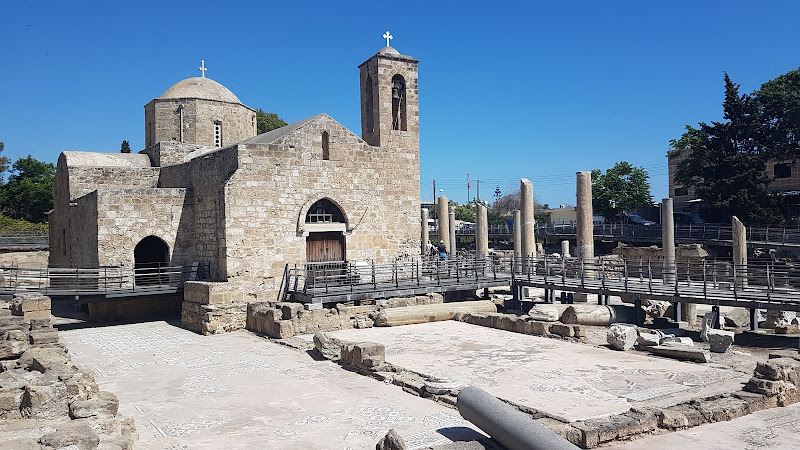
Agia Kyriaki Chrysopolitissa
About Agia Kyriaki Chrysopolitissa
Description
Ah, Agia Kyriaki Chrysopolitissa - now there's a mouthful! But don't let the tongue-twister name fool you; this place is an absolute gem. Picture this: you're strolling through Paphos, Cyprus, when suddenly you stumble upon these incredible ruins. It's like stepping into a time machine, I tell ya!
This 13th-century church isn't just any old pile of rocks. Oh no, it's got character by the bucketload. The first thing that'll catch your eye is the stunning mosaic floor. I'm talking vibrant colors that have somehow managed to survive centuries of foot traffic and weather. It's pretty mind-blowing when you think about it.
Now, I've seen my fair share of ancient sites, but there's something special about Agia Kyriaki Chrysopolitissa. Maybe it's the way the sunlight dances across the worn stones, or how the sea breeze carries whispers of long-forgotten prayers. Whatever it is, this place has got atmosphere in spades.
Don't get me wrong, it's not all perfectly preserved. This church has seen better days, that's for sure. But that's part of its charm, if you ask me. The crumbling walls and weathered columns tell a story of resilience. It's like the building itself is saying, "I'm still here, come and explore!"
And explore you should! The site is more than just the church itself. There are remnants of an early Christian basilica that'll make any history buff weak at the knees. It's amazing to think about all the feet that have walked these grounds over the centuries.
But you don't have to be a history nut to appreciate Agia Kyriaki Chrysopolitissa. Even if you can't tell your Byzantine from your Baroque, you'll still be blown away by the sheer beauty of the place. It's got a certain je ne sais quoi that appeals to pretty much everyone who visits.
One thing I love about this site is how it mixes the sacred with the everyday. You might see locals popping in for a quiet moment of reflection, right alongside tourists snapping photos. It's a reminder that these ancient places aren't just relics - they're living, breathing parts of the community.
Now, I'll be honest with you - it's not the Taj Mahal or the Colosseum. If you're expecting a massive, perfectly preserved monument, you might be a tad disappointed. But if you're after a slice of authentic Cypriot history that's off the beaten path? Well, you've hit the jackpot, my friend.
The best part? You don't need to be a millionaire to visit. It's free to enter, though there's a donation box if you're feeling generous. And trust me, after you've soaked in the atmosphere and marveled at those mosaics, you might just feel like dropping in a euro or two.
So, if you find yourself in Paphos with an hour or two to spare, do yourself a favor and seek out Agia Kyriaki Chrysopolitissa. It's a little slice of Cyprus that'll stick with you long after you've left the island. Just remember to bring your camera - and maybe a pronunciation guide!
Key Features
- 13th-century church ruins with a rich history
- Stunning, well-preserved mosaic floor
- Remains of an early Christian basilica
- Free entry (donations welcome)
- Mix of architectural styles reflecting different historical periods
- Peaceful atmosphere, perfect for reflection or photography
- Located in the heart of Paphos, easy to combine with other sightseeing
- Important religious site for both locals and visitors
- Excellent example of Cyprus's diverse cultural heritage
- Offers shade and a cool respite from the Cypriot sun
Best Time to Visit
Alright, let's talk timing. When should you grace Agia Kyriaki Chrysopolitissa with your presence? Well, I've got some thoughts on that.
First off, Cyprus is blessed with a Mediterranean climate, which means hot summers and mild winters. But don't let that fool you into thinking any time is perfect. Trust me, I've made that mistake before!
If you're anything like me and start melting as soon as the temperature hits 30°C (that's 86°F for my American friends), you might want to avoid the peak summer months of July and August. I once visited in August, and let me tell you, exploring ancient ruins under a blazing sun is not my idea of fun. I was sweating buckets and longing for an ice-cold frappe!
Spring (April to mid-June) and autumn (September to November) are your best bets. The weather's just right - warm enough to enjoy being outdoors, but not so hot that you'll feel like you're in a sauna. Plus, the light during these seasons is absolutely gorgeous. Trust me, your photos will thank you.
If you're a fan of having places all to yourself (and who isn't?), consider visiting in the shoulder season. Late March or early November can be magical. You might need a light jacket, but you'll have the place practically to yourself. It's pretty special to stand among those ancient stones with just the whisper of the wind for company.
Winter isn't a bad shout either, especially if you're escaping colder climes. Cyprus enjoys mild winters, and while you might catch some rain, it's nothing compared to the downpours back home. Just keep in mind that some facilities might have reduced hours during the off-season.
Now, here's a pro tip: try to time your visit for early morning or late afternoon. Not only will you avoid the worst of the day's heat (your forehead will thank you), but you'll also catch the site in the most flattering light. There's something magical about watching the sun's rays dance across those ancient mosaics. It's enough to make even the most jaded traveler feel a bit awe-struck.
If you're into photography, the golden hour just before sunset is your friend. The warm light makes those old stones glow like they're lit from within. It's pretty special, I gotta say.
Oh, and one more thing - if you're visiting during a major Christian holiday like Easter, you might catch a service or celebration at the church. It's a unique experience, but be prepared for crowds and remember to be respectful.
So there you have it. My two cents on when to visit Agia Kyriaki Chrysopolitissa. Whatever time you choose, I reckon you'll be in for a treat. Just remember to bring water, wear comfy shoes, and maybe pack a hat. Trust me, your future self will thank you!
How to Get There
Alright, let's talk about getting to Agia Kyriaki Chrysopolitissa. Now, I'll be honest with you - the first time I tried to find this place, I got a bit turned around. But don't worry, I've learned from my mistakes, and I'm here to make sure you don't end up wandering aimlessly under the Cypriot sun like I did!
First things first - this beautiful old church is smack dab in the middle of Paphos. That's good news for you, because it means it's pretty easy to reach no matter where you're staying in town. If you're in central Paphos, you might even be able to walk there. Just follow your nose (and maybe a map) towards the harbor area.
If you're driving, well, brace yourself for an adventure in Cypriot parking! The streets around the church can be a bit narrow and busy, especially in peak tourist season. My advice? Look for parking a little further out and enjoy a short walk. It'll save you some stress, and you might discover some hidden gems along the way. Just remember, they drive on the left in Cyprus - caught me out the first time, I'll tell ya!
Taking a bus? You're in luck. Paphos has a pretty decent bus network, and several routes stop near the church. Look for buses heading to the harbor or the archaeological park - they'll get you close. Just be sure to check the schedules, as they can be a bit... let's say "relaxed" during off-peak hours.
If you're staying at one of the resorts outside Paphos, don't fret. Most hotels run shuttle services into town, or can arrange a taxi for you. Just make sure you agree on the fare beforehand if you're taking a cab. I learned that lesson the hard way!
Now, here's a tip from someone who's been there - don't rely solely on your GPS. Technology's great and all, but sometimes it gets a bit confused in the winding streets of old Paphos. Keep an eye out for signs, and don't be afraid to ask locals for directions. Cypriots are generally friendly folks, and most speak English well.
If you're feeling adventurous (and it's not too hot), renting a bike can be a fun way to get around Paphos. Just be prepared for some hills, and remember to keep hydrated!
One last thing - Agia Kyriaki Chrysopolitissa is right next to St. Paul's Pillar, another important historical site. So, if you find one, you've found the other. Two for the price of one, eh?
Getting to Agia Kyriaki Chrysopolitissa might take a bit of effort, but trust me, it's worth it. And hey, sometimes the journey is half the fun, right? Just remember to wear comfy shoes, bring water, and maybe a hat. Oh, and don't forget your camera - you'll want to remember this!
Tips for Visiting
Right, so you've made it to Agia Kyriaki Chrysopolitissa. Congrats! Now, let me share some pearls of wisdom to make your visit as smooth as a well-aged Cypriot wine.
First up, timing is everything. I'd recommend hitting this spot early in the morning or later in the afternoon. Why? Well, for one, you'll dodge the worst of the day's heat. Trust me, exploring ruins under the midday sun is about as fun as a sunburn on your nose. Plus, the light during these times is just magical for photos. Your Instagram will thank me later.
Speaking of the sun, don't underestimate it. Cyprus can get hot, and I mean seriously hot. Bring water - lots of it. A hat and sunscreen are your best friends here. I once forgot my hat and ended up using my guidebook as a makeshift sun shield. Not my finest moment, let me tell you.
Now, let's talk footwear. You might be tempted to rock up in your fancy flip-flops, but trust me, sturdy shoes are the way to go. The ground can be uneven, and those ancient stones aren't exactly known for their cushioning properties. Your ankles will thank you.
Oh, and here's a pro tip: bring a pair of binoculars if you can. They're great for getting a closer look at the intricate details of the mosaics and architecture. I spotted some fascinating little details I would've missed otherwise.
While we're on the subject of looking closely, don't forget to look up! It's easy to get caught up in the beautiful floor mosaics, but the remaining structures have some pretty impressive features too. Take your time and soak it all in.
Now, I know it's tempting to take a little piece of history home with you, but please, resist the urge. Not only is it illegal, but it's also just not cool. Let's keep this beautiful place intact for future visitors, yeah?
If you're into history (and even if you're not), consider hiring a guide or at least picking up a guidebook. The stories behind this place are fascinating, and they really bring the ruins to life. Did you know St. Paul was supposedly flogged near here? Wild stuff!
Don't rush your visit. This isn't a place to tick off a list; it's a place to absorb. Sit for a while, imagine the centuries of history that have unfolded here. It's pretty mind-
Key Features
- 13th-century Panagia Chrysopolitissa (Agia Kyriaki) church built over Early Byzantine basilica ruins
- Ruined Early Christian basilica remains with mosaic fragments and large column bases
- The traditional Pillar of Saint Paul associated with the apostle’s flogging
- Picturesque location near Kato Paphos harbour and archaeological park
- Blend of active worship space and archaeological site offering atmospheric photography
More Details
Updated January 3, 2025
Table of Contents
Description
Ah, Agia Kyriaki Chrysopolitissa – now there’s a mouthful! But don’t let the tongue-twister name fool you; this place is an absolute gem. Picture this: you’re strolling through Paphos, Cyprus, when suddenly you stumble upon these incredible ruins. It’s like stepping into a time machine, I tell ya!
This 13th-century church isn’t just any old pile of rocks. Oh no, it’s got character by the bucketload. The first thing that’ll catch your eye is the stunning mosaic floor. I’m talking vibrant colors that have somehow managed to survive centuries of foot traffic and weather. It’s pretty mind-blowing when you think about it.
Now, I’ve seen my fair share of ancient sites, but there’s something special about Agia Kyriaki Chrysopolitissa. Maybe it’s the way the sunlight dances across the worn stones, or how the sea breeze carries whispers of long-forgotten prayers. Whatever it is, this place has got atmosphere in spades.
Don’t get me wrong, it’s not all perfectly preserved. This church has seen better days, that’s for sure. But that’s part of its charm, if you ask me. The crumbling walls and weathered columns tell a story of resilience. It’s like the building itself is saying, “I’m still here, come and explore!”
And explore you should! The site is more than just the church itself. There are remnants of an early Christian basilica that’ll make any history buff weak at the knees. It’s amazing to think about all the feet that have walked these grounds over the centuries.
But you don’t have to be a history nut to appreciate Agia Kyriaki Chrysopolitissa. Even if you can’t tell your Byzantine from your Baroque, you’ll still be blown away by the sheer beauty of the place. It’s got a certain je ne sais quoi that appeals to pretty much everyone who visits.
One thing I love about this site is how it mixes the sacred with the everyday. You might see locals popping in for a quiet moment of reflection, right alongside tourists snapping photos. It’s a reminder that these ancient places aren’t just relics – they’re living, breathing parts of the community.
Now, I’ll be honest with you – it’s not the Taj Mahal or the Colosseum. If you’re expecting a massive, perfectly preserved monument, you might be a tad disappointed. But if you’re after a slice of authentic Cypriot history that’s off the beaten path? Well, you’ve hit the jackpot, my friend.
The best part? You don’t need to be a millionaire to visit. It’s free to enter, though there’s a donation box if you’re feeling generous. And trust me, after you’ve soaked in the atmosphere and marveled at those mosaics, you might just feel like dropping in a euro or two.
So, if you find yourself in Paphos with an hour or two to spare, do yourself a favor and seek out Agia Kyriaki Chrysopolitissa. It’s a little slice of Cyprus that’ll stick with you long after you’ve left the island. Just remember to bring your camera – and maybe a pronunciation guide!
Key Features
- 13th-century church ruins with a rich history
- Stunning, well-preserved mosaic floor
- Remains of an early Christian basilica
- Free entry (donations welcome)
- Mix of architectural styles reflecting different historical periods
- Peaceful atmosphere, perfect for reflection or photography
- Located in the heart of Paphos, easy to combine with other sightseeing
- Important religious site for both locals and visitors
- Excellent example of Cyprus’s diverse cultural heritage
- Offers shade and a cool respite from the Cypriot sun
Best Time to Visit
Alright, let’s talk timing. When should you grace Agia Kyriaki Chrysopolitissa with your presence? Well, I’ve got some thoughts on that.
First off, Cyprus is blessed with a Mediterranean climate, which means hot summers and mild winters. But don’t let that fool you into thinking any time is perfect. Trust me, I’ve made that mistake before!
If you’re anything like me and start melting as soon as the temperature hits 30°C (that’s 86°F for my American friends), you might want to avoid the peak summer months of July and August. I once visited in August, and let me tell you, exploring ancient ruins under a blazing sun is not my idea of fun. I was sweating buckets and longing for an ice-cold frappe!
Spring (April to mid-June) and autumn (September to November) are your best bets. The weather’s just right – warm enough to enjoy being outdoors, but not so hot that you’ll feel like you’re in a sauna. Plus, the light during these seasons is absolutely gorgeous. Trust me, your photos will thank you.
If you’re a fan of having places all to yourself (and who isn’t?), consider visiting in the shoulder season. Late March or early November can be magical. You might need a light jacket, but you’ll have the place practically to yourself. It’s pretty special to stand among those ancient stones with just the whisper of the wind for company.
Winter isn’t a bad shout either, especially if you’re escaping colder climes. Cyprus enjoys mild winters, and while you might catch some rain, it’s nothing compared to the downpours back home. Just keep in mind that some facilities might have reduced hours during the off-season.
Now, here’s a pro tip: try to time your visit for early morning or late afternoon. Not only will you avoid the worst of the day’s heat (your forehead will thank you), but you’ll also catch the site in the most flattering light. There’s something magical about watching the sun’s rays dance across those ancient mosaics. It’s enough to make even the most jaded traveler feel a bit awe-struck.
If you’re into photography, the golden hour just before sunset is your friend. The warm light makes those old stones glow like they’re lit from within. It’s pretty special, I gotta say.
Oh, and one more thing – if you’re visiting during a major Christian holiday like Easter, you might catch a service or celebration at the church. It’s a unique experience, but be prepared for crowds and remember to be respectful.
So there you have it. My two cents on when to visit Agia Kyriaki Chrysopolitissa. Whatever time you choose, I reckon you’ll be in for a treat. Just remember to bring water, wear comfy shoes, and maybe pack a hat. Trust me, your future self will thank you!
How to Get There
Alright, let’s talk about getting to Agia Kyriaki Chrysopolitissa. Now, I’ll be honest with you – the first time I tried to find this place, I got a bit turned around. But don’t worry, I’ve learned from my mistakes, and I’m here to make sure you don’t end up wandering aimlessly under the Cypriot sun like I did!
First things first – this beautiful old church is smack dab in the middle of Paphos. That’s good news for you, because it means it’s pretty easy to reach no matter where you’re staying in town. If you’re in central Paphos, you might even be able to walk there. Just follow your nose (and maybe a map) towards the harbor area.
If you’re driving, well, brace yourself for an adventure in Cypriot parking! The streets around the church can be a bit narrow and busy, especially in peak tourist season. My advice? Look for parking a little further out and enjoy a short walk. It’ll save you some stress, and you might discover some hidden gems along the way. Just remember, they drive on the left in Cyprus – caught me out the first time, I’ll tell ya!
Taking a bus? You’re in luck. Paphos has a pretty decent bus network, and several routes stop near the church. Look for buses heading to the harbor or the archaeological park – they’ll get you close. Just be sure to check the schedules, as they can be a bit… let’s say “relaxed” during off-peak hours.
If you’re staying at one of the resorts outside Paphos, don’t fret. Most hotels run shuttle services into town, or can arrange a taxi for you. Just make sure you agree on the fare beforehand if you’re taking a cab. I learned that lesson the hard way!
Now, here’s a tip from someone who’s been there – don’t rely solely on your GPS. Technology’s great and all, but sometimes it gets a bit confused in the winding streets of old Paphos. Keep an eye out for signs, and don’t be afraid to ask locals for directions. Cypriots are generally friendly folks, and most speak English well.
If you’re feeling adventurous (and it’s not too hot), renting a bike can be a fun way to get around Paphos. Just be prepared for some hills, and remember to keep hydrated!
One last thing – Agia Kyriaki Chrysopolitissa is right next to St. Paul’s Pillar, another important historical site. So, if you find one, you’ve found the other. Two for the price of one, eh?
Getting to Agia Kyriaki Chrysopolitissa might take a bit of effort, but trust me, it’s worth it. And hey, sometimes the journey is half the fun, right? Just remember to wear comfy shoes, bring water, and maybe a hat. Oh, and don’t forget your camera – you’ll want to remember this!
Tips for Visiting
Right, so you’ve made it to Agia Kyriaki Chrysopolitissa. Congrats! Now, let me share some pearls of wisdom to make your visit as smooth as a well-aged Cypriot wine.
First up, timing is everything. I’d recommend hitting this spot early in the morning or later in the afternoon. Why? Well, for one, you’ll dodge the worst of the day’s heat. Trust me, exploring ruins under the midday sun is about as fun as a sunburn on your nose. Plus, the light during these times is just magical for photos. Your Instagram will thank me later.
Speaking of the sun, don’t underestimate it. Cyprus can get hot, and I mean seriously hot. Bring water – lots of it. A hat and sunscreen are your best friends here. I once forgot my hat and ended up using my guidebook as a makeshift sun shield. Not my finest moment, let me tell you.
Now, let’s talk footwear. You might be tempted to rock up in your fancy flip-flops, but trust me, sturdy shoes are the way to go. The ground can be uneven, and those ancient stones aren’t exactly known for their cushioning properties. Your ankles will thank you.
Oh, and here’s a pro tip: bring a pair of binoculars if you can. They’re great for getting a closer look at the intricate details of the mosaics and architecture. I spotted some fascinating little details I would’ve missed otherwise.
While we’re on the subject of looking closely, don’t forget to look up! It’s easy to get caught up in the beautiful floor mosaics, but the remaining structures have some pretty impressive features too. Take your time and soak it all in.
Now, I know it’s tempting to take a little piece of history home with you, but please, resist the urge. Not only is it illegal, but it’s also just not cool. Let’s keep this beautiful place intact for future visitors, yeah?
If you’re into history (and even if you’re not), consider hiring a guide or at least picking up a guidebook. The stories behind this place are fascinating, and they really bring the ruins to life. Did you know St. Paul was supposedly flogged near here? Wild stuff!
Don’t rush your visit. This isn’t a place to tick off a list; it’s a place to absorb. Sit for a while, imagine the centuries of history that have unfolded here. It’s pretty mind-
Key Highlights
- 13th-century Panagia Chrysopolitissa (Agia Kyriaki) church built over Early Byzantine basilica ruins
- Ruined Early Christian basilica remains with mosaic fragments and large column bases
- The traditional Pillar of Saint Paul associated with the apostle’s flogging
- Picturesque location near Kato Paphos harbour and archaeological park
- Blend of active worship space and archaeological site offering atmospheric photography
Location
Places to Stay Near Agia Kyriaki Chrysopolitissa
Find and Book a Tour
Explore More Travel Guides
No reviews found! Be the first to review!
Traveler Reviews for Agia Kyriaki Chrysopolitissa
There are no reviews yet. Be the first one to write one.
Have you visited Agia Kyriaki Chrysopolitissa? Help other travelers by sharing your review.
Nearby Attractions
Find Accommodations Nearby
Recommended Tours & Activities
Visitor Reviews
There are no reviews yet. Be the first one to write one.
Share Your Experience
Have you visited Agia Kyriaki Chrysopolitissa? Help other travelers by leaving a review.