
Last modified August 23, 2026
The German souvenirs worth buying are the ones with a legal definition behind them. A Solingen blade, a VdS-certified Black Forest cuckoo clock, Meissen porcelain with an underglaze crossed-swords mark, Nürnberger Lebkuchen and Dresdner Christstollen are all names that a manufacturer may not print on a product unless it meets a published standard. That turns souvenir shopping into something you can verify instead of guess at, whatever else you are looking at on the shelf.
Two rules shape the whole trip. US Customs and Border Protection does not admit meat products, so the sausage half of German food shopping cannot come home with you. And Germany’s tax-free refund scheme requires more than €50 on a single receipt, from one shop, on one day, which a basket of small souvenirs almost never reaches. Prices, authenticity checks and both rule sets are below.
Quick answers
- Best things to buy in Germany: Solingen cutlery, a certified Black Forest cuckoo clock, Meissen porcelain, Nürnberger Lebkuchen, Dresdner Christstollen, a marked Westerwald stein.
- What you cannot take home to the US: meat, in any form, including bouillon and packet soups.
- Minimum spend for a VAT refund: €50.01 on one receipt, one shop, one day.
- The most you can get back: 15.97 percent of the price on the tag, not 19 percent.
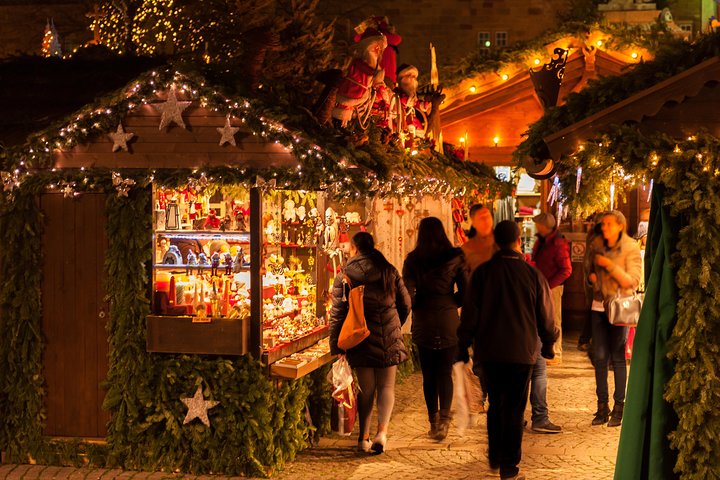
- Best time to buy gifts from Germany: the Christmas markets, which open in late November and always close on 24 December.
What are the best souvenirs to buy in Germany?
The best and most famous German souvenirs fall into six categories where a certifying body or a law will tell you whether the item is real: Solingen cutlery, Black Forest cuckoo clocks, Meissen porcelain, Nürnberger Lebkuchen, Dresdner Christstollen and beer steins from a named Westerwald pottery. Everything else in a souvenir store is decoration, which is fine as a gift, but it is not checkable. If you want something unique rather than something iconic, that distinction is where to start.
| Souvenir | What makes it verifiable | Flies home to the US? |
|---|---|---|
| Solingen knives, scissors, razors, manicure tools | Solingen Regulation (SolingenV), a federal statutory order | Yes, in checked baggage only |
| Black Forest cuckoo clock | VdS certificate and seal, mechanical movements only | Yes |
| Meissen porcelain | Underglaze crossed swords, no cancellation lines | Yes |
| Nürnberger Lebkuchen | EU protected geographical indication since 1996 | Yes, baked goods are generally admissible |
| Dresdner Christstollen | EU protected geographical indication since 2010 | Yes, baked goods are generally admissible |
| Beer stein from a named pottery | Maker’s mark from a Westerwald manufacturer | Yes, pack it in the hold |
| Cured sausage, Landjäger, Bratwurst | Regional recipes, some protected | No. CBP does not admit meat products |
What do German souvenirs actually cost?
Expect roughly €30 to €55 for an official Oktoberfest stein and €180 upward for a mechanical Black Forest cuckoo clock that carries a VdS certificate. The prices below come from the sellers’ own listings and were checked on 24 August 2026. Where a category had no published price from a primary seller, it is left out rather than estimated.
| Item | Price | Source checked 24 Aug 2026 |
|---|---|---|
| Official Oktoberfest 2026 series stein | €34.90 | Official Oktoberfest online shop, on sale from 1 September |
| Same stein with a pewter lid | €54.90 | Official Oktoberfest online shop |
| Festkrug | €39.90 | Official Oktoberfest online shop |
| Salt-glazed stoneware Halbe stein | €29.90 | Official Oktoberfest online shop |
| One litre of beer inside an Oktoberfest tent, 2026 | €14.80 to €15.90 | Published 2026 Wiesn tent prices; Augustiner Festhalle at €14.90 |
| Mechanical cuckoo clock with VdS certificate | from about €180 to €200 | Schwarzwaldportal buying guide |
| Quartz clock in Black Forest styling | from about €80 | Schwarzwaldportal buying guide |
One number in that table decides more than it looks. The official 2026 Oktoberfest stein at €34.90 sits below Germany’s €50.01 tax-free threshold, so on its own it can never qualify for a VAT refund. The mug costs more than two litres of the beer served in it.

How do you check that a German souvenir is genuine?
Every check below can be done in the shop, in under a minute, without expertise. Four of the six rest on a published legal standard rather than a seller’s assurance.
| Souvenir | The check | What it proves |
|---|---|---|
| Solingen cutlery | The word Solingen stamped on the blade or tang | Under the Solingen Regulation the name is lawful only if all the major stages of manufacture happened inside Solingen or the neighbouring town of Haan, and the material and workmanship make the item fit for purpose. Both tests must pass; either one failing makes the name unlawful in trade. |
| Black Forest cuckoo clock | A VdS certificate and seal in the box | The Black Forest Clock Association, founded in 1987, certifies only clocks made in the Black Forest with an entirely mechanical movement. A quartz or solar clock can never carry the certificate, whatever the shop calls it. |
| Meissen porcelain | Run a fingernail across the crossed-swords mark | A genuine mark is painted under the glaze and feels perfectly smooth. If the mark catches your nail or feels raised, it was applied over the glaze after firing, which points to a copy or a later reproduction. |
| Meissen porcelain, second check | Look for lines ground through the swords | One, two or three scratched lines are the factory’s own cancellation marks, or Schleifstriche. The piece is authentic Meissen but was graded a second or third for a firing or painting flaw, and it is worth considerably less than a first. |
| Nürnberger Lebkuchen | The protected name on the packaging | Registered as an EU protected geographical indication in 1996, the first German food to receive protected status. |
| Dresdner Christstollen | The protected name and the Dresden Stollen seal | Protected under Commission Regulation (EU) No 1098/2010 of 26 November 2010. The recipe sets minimum proportions against the flour weight: type 405 or 550 flour, 50 percent butter, 65 percent raisins, 20 percent candied orange and lemon, 15 percent almonds. |
The Solingen Regulation reaches further than most shoppers expect. Article 3 defines cutlery to include scissors and blades of all kinds, table implements such as cake servers and sugar tongs, cigar cutters, letter openers, nutcrackers and corkscrews, razors and razor blades, hair clippers, and manicure and pedicure instruments such as nail files, clippers and tweezers. A Solingen nail-scissor set is covered by the same statute as a chef’s knife, and the list in the regulation is explicitly not exhaustive.
Because the regulation never defined the phrase “major stages of manufacturing” precisely, the Wuppertal-Solingen-Remscheid Chamber of Industry and Commerce published minimum qualifications for use of the name in 1997, in consultation with the trade. Those minimums are what the industry now works to, and they are why a knife made in Germany is not automatically a Solingen knife.
What happens to the Solingen and Glashütte names on 2 December 2026?
National protection for geographical indications on craft and industrial products ends on 2 December 2026 unless a valid request for EU-wide protection has been filed by that date, under Article 70 of Regulation (EU) 2023/2411. In Germany the two designations this affects are the ones tourists buy: Solingen for cutlery under the Solingen Regulation, and Glashütte for watches under the Glashütte Regulation.
Producers can apply to the German Patent and Trade Mark Office for Europe-wide protection under the new regulation, and names filed or registered are entered in the EUIPO’s Union register. What this means for a shopper is narrow but real: if you are buying a Solingen knife or a Glashütte watch after that date, check the EUIPO register rather than assuming the older national rule still stands behind the name on the product. Before that date, the Solingen Regulation applies as described above.
What German food can you legally bring back to the United States?
Baked goods, chocolate, sweets and cured cheese are generally admissible. Meat is not. Almost anything containing meat products, including bouillon cubes and soup mixes, is not admissible, and a homemade sausage wrapped in foil is confiscated regardless of how it was made because an officer cannot verify its ingredients or preparation.
| German food souvenir | Into the US? | The rule |
|---|---|---|
| Landjäger, Bratwurst, cured or dried sausage | No | Meat products are not admissible |
| Bouillon cubes, packet soups with meat | No | Almost anything containing meat products is not admissible |
| Nürnberger Lebkuchen, Stollen, Pumpernickel | Generally yes | Baked goods are generally admissible |
| Chocolate, marzipan, Gummibärchen | Generally yes | Candy and chocolate are generally admissible |
| Hard and cured cheese with no meat in it | Generally yes | Cured cheese is generally admissible; declare it anyway |
| Fresh fruit, plants, seeds, soil | Generally no | Restricted; must be declared |
| Schnapps, wine, beer | Yes, within limits | Travellers aged 21 and over may include one litre in the duty-free exemption |
Three numbers are worth carrying in your head. The personal duty-free exemption for a returning US resident is $800. The alcohol allowance inside it is one litre for travellers aged 21 and over, and state law can be stricter than federal law, in which case CBP enforces the state rule. Failing to declare a prohibited agricultural product carries civil penalties that may run up to $1,000 for a first offence, so an undeclared sausage can become an expensive souvenir. Bring more than 50 pounds of one item and it is treated as a commercial shipment with extra inspection.
Declaring an item is not the same as losing it. Declare everything edible on the form, hand it to the agriculture specialist, and the worst outcome is that the item is taken. Not declaring it is what turns a confiscation into a fine.
How much VAT can you actually claim back in Germany?
The most you can ever get back is 15.97 percent of the price on the tag, not 19 percent, and refund operators take a fee out of that. The confusion is arithmetic. Germany’s standard VAT rate is 19 percent, but it is 19 percent of the net price, not of the price you pay. A tag reading €119.00 is €100.00 of goods plus €19.00 of VAT, and €19.00 is 15.97 percent of €119.00.
| Price on the tag | VAT inside it at 19% | Share of what you paid |
|---|---|---|
| €60.00 | €9.58 | 15.97% |
| €119.00 | €19.00 | 15.97% |
| €300.00 | €47.90 | 15.97% |
| €60.00 at the reduced 7% rate | €3.93 | 6.54% |
Food and books carry the reduced 7 percent rate, which works out to 6.54 percent of the shelf price. So the Lebkuchen tin refunds proportionally less than the cuckoo clock, before any operator fee.
Who qualifies, and what disqualifies you
- You must have permanent residence outside the EU and be visiting short-term.
- The purchase must exceed €50, so from €50.01, on a single receipt, from a single shop, on the same day.
- The goods must leave the EU unused within three months of purchase.
- German Customs must validate the export when you leave the EU. Without that confirmation there is no refund.
- Services, used goods and vehicle-related purchases are excluded.
The single-receipt rule is what defeats most souvenir shoppers. A stein at €34.90, a Lebkuchen tin and an Ampelmännchen mug bought in three different shops add up to well over €50 and refund nothing. The same total spent in one shop on one day qualifies. If a refund matters to you, consolidate.

Where should you buy German souvenirs?
Buy from the maker’s own shop or a named specialist, and treat the Christmas markets, the ones that made German Christmas famous around the world, as a season rather than a place. The two largest run for under a month and both close on Christmas Eve.
| Market | 2026 dates | Daily hours |
|---|---|---|
| Dresden Striezelmarkt, Altmarkt | 25 November to 24 December 2026 | Opening day 16:00 to 21:00; 26 Nov to 23 Dec 10:00 to 21:00; 24 Dec 10:00 to 14:00 |
| Nuremberg Christkindlesmarkt | 27 November to 24 December 2026 | 10:00 to 21:00; 10:00 to 14:00 on 24 December |
For Berlin’s Ampelmännchen, the motif is licensed and the official AMPELMANN shops carry more than 600 products across six Berlin locations, and the motif is known well beyond the city, including the flagship at the corner of Unter den Linden and Friedrichstraße, the original shop in the Hackesche Höfe open since December 2001, Kurfürstendamm, the Alexa centre, Tacheles on Oranienburger Straße and the Hauptbahnhof. Copies sell elsewhere in the city; the official shops are where the licensing revenue goes back to the brand.
If you are building a route around this, our guides to places to visit in Germany and the one-week Germany itinerary cover which cities put you near which makers. Germany trip cost sets the wider budget these purchases sit inside.
Are lederhosen and dirndls worth buying in Germany?
Yes, if you buy them from a Trachten shop rather than a costume shop, and no if you are buying the polyester version sold near the Oktoberfest gates. Traditional Bavarian dress is one of the few German souvenir categories with no protected name behind it, so the only test available to you is the material and the label, not a certificate.
- A real pair of lederhosen is leather, usually deer or goat, and it is meant to darken and soften over years of wear. Costume-shop lederhosen are printed synthetic fabric cut to look like leather.
- A Trachten dirndl comes as three pieces, the dress, the blouse and the apron, sold separately so they can be mixed. A single-piece dirndl with the blouse sewn in is a costume.
- Check where it was made. Tracht is not a protected designation, so a shop in Munich can legally sell imported dirndls beside German-made ones. The label is the only place this is settled.
- Bavaria and Austria are not the same tradition. Lederhosen and dirndls are Bavarian and Alpine, not a national German costume, and you will find far less of it for sale in Berlin, Hamburg or Cologne than in Munich.
If you want the look for one festival rather than for life, the costume version is an honest purchase at a costume price. The mistake is paying Trachten money for it. Our guide to where to stay in Munich covers the districts where the specialist shops cluster.
Which famous German brands are worth buying at the source?
The brands worth buying in Germany are the ones where the German product differs from the export version or where the local price is materially better. Several of the most famous names on this list are also Solingen companies, which means the legal test described above applies to them directly.
| Brand | Where it comes from | Why buy it there |
|---|---|---|
| Zwilling J.A. Henckels | Solingen, trading since 1731 | Knives carrying the Solingen name fall under the Solingen Regulation, so the two-part test applies |
| Wüsthof | Solingen, family-run since 1814 | Same statutory protection; a good reason to buy the knife in Germany rather than online |
| Steiff | Giengen an der Brenz | The Knopf im Ohr, the button in the ear, has identified the company’s bears since 1904 and is the check to make |
| Ritter Sport | Waldenbuch, near Stuttgart | The German range carries flavours that are never exported, and the factory shop sells seconds |
| Haribo | Bonn | German Goldbären use a different recipe from the American ones, which is the whole point of buying them there |
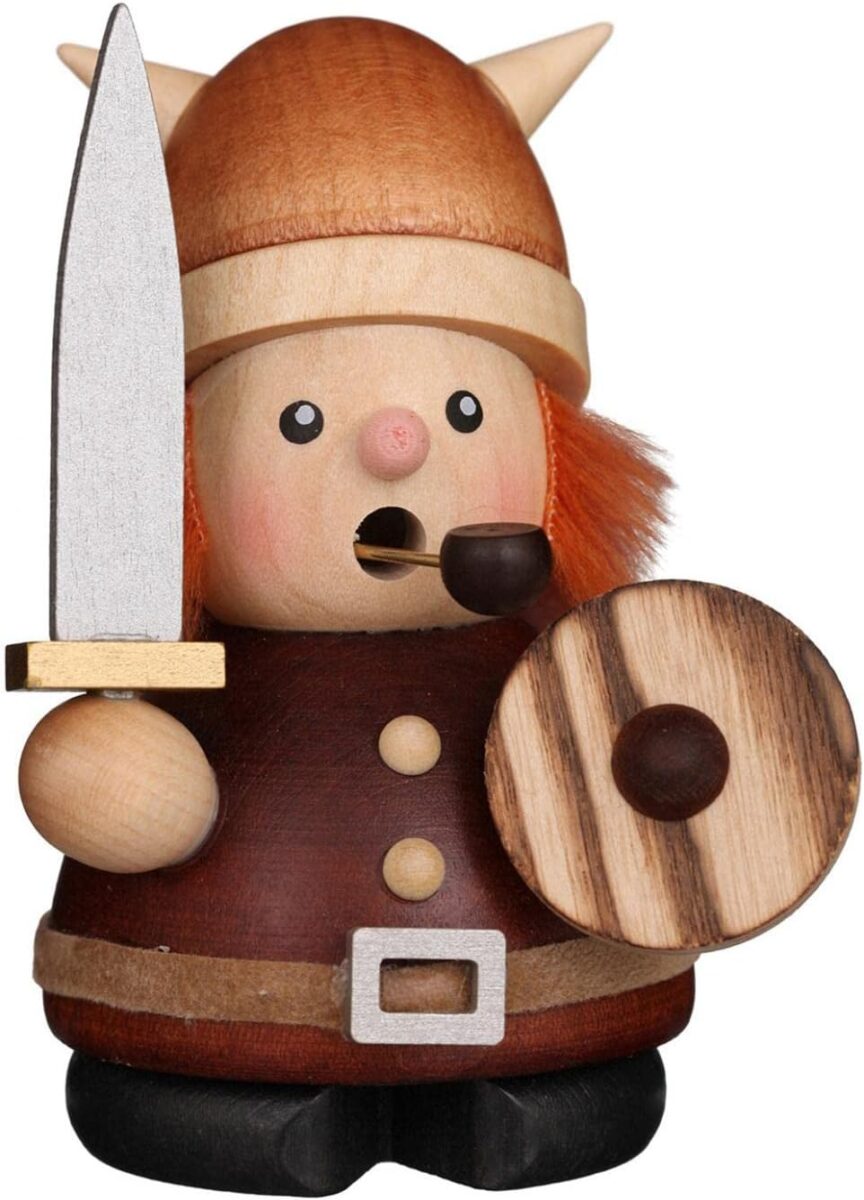
| Erzgebirge woodwork | Ore Mountains, Saxony | Nutcrackers, Räuchermann incense smokers and Schwibbogen candle arches; no statutory name protection, so buy from a named workshop |
| Westerwald stoneware | Kannenbäckerland, Rhineland-Palatinate | Salt-glazed ceramic beer steins and mugs from a region potting since the 16th century; look for the maker’s mark |
Two of these are worth a detour on their own. The Erzgebirge workshops are the source of the wooden Christmas decorations that every market in the country resells, so buying them in Saxony cuts out several margins. And a Westerwald stein with a maker’s mark on the base is a different object from the transfer-printed tourist mug beside it, even when the designs look alike.
Which German souvenirs are worth skipping?
Skip anything sold on a protected name that cannot produce the proof behind it, and skip the food you cannot legally carry home. These are the traditional gifts from Germany most likely to disappoint once you get back home.
- A cuckoo clock under about €150 described as Black Forest. Mechanical certified clocks start near €180. Below that you are almost certainly buying a quartz movement, which by the association’s own rules can never be certified.
- Sausage and meat-filled products, if you are flying to the United States. Buy them, eat them in Germany, and photograph the label instead.
- Meissen with a raised or smudged mark. Underglaze marks are smooth and razor-thin. A mark that catches your nail is the clearest single warning available to a non-expert.
- Knives in hand luggage. The purchase is legal; the cabin is not the place for it. Solingen blades travel in checked baggage.
- Souvenirs bought in three separate shops if you want the VAT back. The threshold is per receipt, per shop, per day.
What this guide deliberately does not publish
Three things were checked and left out rather than estimated.
- Euro shelf prices for Lebkuchen tins, Stollen and beer steins from individual potteries. The listings that surfaced were export retailers pricing in US and Canadian dollars, which does not tell you what the same item costs in a Nuremberg shop. Buy in Germany and the euro price will differ.
- A verdict on the Meissen cancellation-mark grading system. The underglaze and Schleifstriche checks above are widely documented by porcelain identification specialists, but they are not a substitute for an appraisal on a piece of any value.
- Whether Solingen or Glashütte have already filed for EU-wide protection. The 2 December 2026 deadline is published; the filing status of either designation is not something this guide can confirm, and the EUIPO register is the place to check it.
Frequently asked questions
What is the most popular souvenir from Germany?
Beer steins are the most widely bought German souvenir, and the official Oktoberfest 2026 series stein costs €34.90, or €54.90 with a pewter lid. Cuckoo clocks and Christmas ornaments follow. Popularity and quality are not the same thing, which is why the authenticity checks above matter more than the category. Beer steins and cuckoo clocks are the two items most people love and the two most often faked.
Can I bring German sausage back to the United States?
No. US Customs and Border Protection does not admit meat products, and almost anything containing meat, including bouillon and packet soups, is also inadmissible. Homemade sausage is confiscated regardless of preparation because an officer cannot verify its ingredients. Failing to declare it can carry a civil penalty of up to $1,000 for a first offence.
How do I know a cuckoo clock is really from the Black Forest?
Look for the VdS certificate and seal from the Black Forest Clock Association, which has certified clocks since 1987. The association only certifies clocks made in the Black Forest with an entirely mechanical movement, so a quartz or solar-powered clock can never carry one. Certified mechanical clocks generally start around €180 to €200.
What does the Solingen mark on a knife actually guarantee?
Two things at once. Under the Solingen Regulation the name may only be used if all the major stages of manufacture took place in Solingen or the neighbouring town of Haan, and if the raw material and workmanship make the item fit for purpose. Both conditions must be met; failing either makes the name unlawful in trade. The regulation covers scissors, razors, manicure instruments, nutcrackers and corkscrews as well as knives.
How much VAT do tourists get back in Germany?
At most 15.97 percent of the price you paid, before the refund operator’s fee. The 19 percent headline rate is charged on the net price, so a €119.00 tag contains €19.00 of VAT, which is 15.97 percent of €119.00. Food and books at the reduced 7 percent rate refund 6.54 percent of the shelf price.
What is the minimum spend for tax-free shopping in Germany?
More than €50, so €50.01, on a single receipt from a single shop on the same day. You must live permanently outside the EU, export the goods unused within three months, and have German Customs validate the export as you leave the EU. Purchases split across several shops do not combine.
When do the Nuremberg and Dresden Christmas markets open in 2026?
Dresden’s Striezelmarkt runs 25 November to 24 December 2026 on the Altmarkt, opening at 16:00 on the first day and running 10:00 to 21:00 daily until 23 December, then 10:00 to 14:00 on Christmas Eve. Nuremberg’s Christkindlesmarkt runs 27 November to 24 December 2026, 10:00 to 21:00, closing at 14:00 on Christmas Eve.
Is Meissen porcelain with scratched lines through the mark fake?
No, the opposite. One, two or three lines ground through the crossed swords are the factory’s own cancellation marks, or Schleifstriche, applied to pieces graded as seconds or thirds for a firing or painting flaw. The piece is genuine Meissen, but it is worth considerably less than a first-quality piece, and the price should reflect that.
Buying the same things at home
Some of these travel badly, and the classic items often sell out before you get there. Three honest substitutes if you run out of time on the trip, or if what you want is only sold in one region of the country: The caveats that matter:
- A one-litre Hofbräuhaus München dimpled glass is the Maß shape you drink from in Munich, and glass survives a suitcase better than a lidded stoneware stein.
- A German incense smoker covers the Räuchermann category, which is Erzgebirge woodwork rather than a protected name, so there is no certificate to check either way.
- A quartz pendulum cuckoo clock gives you the shape at a fraction of the price. Be clear about what it is: a quartz movement cannot receive a VdS certificate under any circumstances, so this is Black Forest styling, not a Black Forest clock.
Affiliate disclosure: some links in this article are affiliate links. If you buy through one, Real Journey Travels may earn a commission at no extra cost to you. The recommendations and the authenticity rules above are not affected by that, and the quartz clock is labelled as a quartz clock for exactly that reason.
Sources and how this was checked
- German Federal Customs Administration (Zoll), Regulation for the Protection of the Name Solingen, for the two-part test and the Article 3 definition of cutlery.
- German Patent and Trade Mark Office (DPMA), Geographical indications, for the 2 December 2026 deadline under Article 70 of Regulation (EU) 2023/2411 and the Solingen and Glashütte designations.
- US Customs and Border Protection, Bringing Food into the U.S. and Types of Exemptions, for the restricted categories, the $800 exemption and the one-litre alcohol allowance.
- Verein die Schwarzwalduhr, the VdS certificate, for the mechanical-movement requirement.
- Striezelmarkt Dresden and the official Oktoberfest shop, for 2026 dates and 2026 stein prices.
- Cologne Tourism, Christmas in Cologne, for the city’s market programme.
Related reading on this site: traditional German food if you want to know what the sausage you cannot bring home actually tastes like, what to pack for Germany for the suitcase side of this, is Munich safe and is Berlin safe for the two cities most of this shopping happens in, day trips from Berlin, and the same treatment for Japan.
Last updated 24 August 2026. This revision added euro prices where none existed, the US customs table, the VAT arithmetic, the Solingen and VdS authenticity tests, the 2 December 2026 change to national geographical-indication protection, and 2026 Christmas market dates. Prices, market dates and customs rules change; the linked primary sources above are the ones to re-check before you travel.


