
Kubo ka joel
About Kubo ka joel
Key Features
More Details
Updated April 15, 2024
## Kubo ka Joel (Arayat, Pampanga): What to Know Before You Treat It as a “Real” Hiking Stop
If you found “Kubo ka Joel” pinned on a map in Arayat, Pampanga (often surfaced via the plus code 5PCG+JG and coordinates 15.1715556, 120.726307), you’re not alone—and you’re also not crazy if you can’t find much written about it online.
Here’s the blunt reality: I can’t verify any official designation, management body, trailhead status, or facilities for “Kubo ka Joel” from reliable public sources. What is verifiable is that it sits in the Arayat area, which is closely tied to Mount Arayat—a prominent, isolated stratovolcano and a long-standing hiking focus in Pampanga.
So this guide is written the way a careful trip leader would brief a group: treat “Kubo ka Joel” as a map pin, not a guaranteed destination, and plan your hike around the better-documented Arayat / Mt. Arayat access patterns.
—
## Where you are (the part we can be confident about)
– Location: Arayat, Pampanga, Philippines (per your provided address/plus code and coordinates).
– Broader setting: The municipality of Arayat shares geography with Mount Arayat, which is widely documented as a hiking objective and a protected-area context (Mount Arayat National Park is commonly referenced in hiking resources and general references).
– Terrain expectation: Lowland-to-mountain transitions are typical around Arayat; expect heat, humidity, and fast-changing trail conditions depending on season and recent rain—common realities for Central Luzon hikes (this is general, not specific to the pin).
What I won’t claim: that “Kubo ka Joel” is an official trailhead, a staffed hut, a registered campsite, or even consistently signposted. There isn’t enough trustworthy public documentation to say that.
—
## How to sanity-check “Kubo ka Joel” before you commit
If you’re building an itinerary or advising readers, the safest workflow is:
### 1) Verify the pin is still valid today
Map pins and place labels change. Before you write it up as a “spot,” verify:
– There are recent photos, recent reviews, or a recent check-in pattern tied to the same coordinates.
– The access road is passable (seasonal mud, private gates, farm roads, and barangay restrictions are common in rural jump-off zones).
If you can’t find those signals, present it to readers as a possible rest point / local landmark, not a sure thing.
### 2) Anchor your hike on Mt. Arayat’s known access norms
Mt. Arayat is a common hiking context in Arayat, with route information and trail references appearing across major platforms and long-running hiking write-ups.
A practical implication: local rules may require guides, and policies can vary by side/jump-off. One detailed hiking write-up (older, so treat cautiously) notes that guides are strictly mandatory on the Arayat side.
Outdated-data flag: that source is from 2015; treat it as a signal, not gospel, and confirm locally before you publish definitive statements.
—
## What a first-timer should expect around Arayat hikes
Even without pin-specific proof, you can give readers high-value, non-obvious preparation advice that prevents bad outcomes.
### Heat and exposure are the real tax
Central Luzon day hikes often punish people who “train for distance” but don’t plan for:
– Electrolytes + fluids (not just water)
– Sun protection that still breathes (long sleeves can outperform tank tops here)
– Pacing discipline (people blow up early)
### Bugs and skin protection matter more than people admit
A Mt. Arayat hiking article specifically warns about mosquitoes and recommends repellant—small detail, big quality-of-life upgrade. NATURE ADVENTURE
Outdated-data flag: that source is from 2014; the mosquito reality is plausible, but you should avoid absolute wording like “always.”
### Trails can be “obvious” until they aren’t
AllTrails notes common starting patterns and trail context in Arayat (e.g., references to San Juan Bano jump-off and passing through park areas).
That doesn’t confirm your pin—but it does confirm the broader pattern: multiple jump-offs exist, and navigation mistakes happen when people assume one “Arayat hike” is the same as another.
—
## Safety, permits, and local governance: write this carefully
Because we can’t confirm “Kubo ka Joel” as an official site, the safest reader guidance is:
– Assume you may need local permission (barangay or park rules) even if a map pin suggests “public.”
– Assume a guide may be required depending on your approach route and where you enter the mountain area.
– Avoid publishing a “just go here” GPS directive unless you’ve verified access recently—this prevents sending readers into private land, blocked roads, or unsafe entry routes.
If you’re writing for RealJourneyTravels.com, this is also an E-E-A-T win: you’re modeling responsible guidance, not just chasing a keyword.
—
## A practical “do this, not that” packing list for Arayat-area hikes
### Do bring
– 2–3L water capacity (bottles/bladder) + electrolytes
– Insect repellent
– Sun protection (hat + sunscreen; ideally lightweight long sleeves)
– Basic first aid (blister care, antihistamine if you’re prone to reactions)
– Offline map of your intended route + emergency contact plan
### Don’t assume
– Cell signal will be reliable the whole way (it often isn’t once you’re off main roads).
– A “kubo” label implies shelter you can use—some huts are private, seasonal, or not maintained.
—
## How to describe “Kubo ka Joel” honestly in a publish-ready post
If your CMS requires a place page and you don’t have on-the-ground confirmation, here’s language that stays factual:
– State the coordinates and municipality (from your dataset).
– Call it a map-labeled hiking area / landmark pin rather than an official park site.
– Encourage readers to confirm access locally and to use Mt. Arayat jump-off norms as their planning baseline.
That keeps you inside “what we know,” avoids misleading claims, and still provides real utility.
—
## Suggested internal links (contextual, non-spammy)
If these exist (or you can create them), they’ll make the page more useful:
– Internal link #1: A general Mt. Arayat guide (routes, seasonality, costs, guide norms):
/philippines/pampanga/mount-arayat-hiking-guide/
– Internal link #2: Your hiking essentials / hot-weather day hike packing checklist:
/travel-gear/day-hike-packing-list-tropics/
(Those slugs are examples—only publish links that actually exist on your site.)
—
## Bottom line
– Kubo ka Joel: verifiable as a location pin (from your dataset), but not verifiable as an official hiking site from reliable public sources.
– Arayat context: strongly associated with Mt. Arayat hiking, which is well documented across major platforms and references.
– Best practice: write the page as a responsible, map-pin-based guide with clear verification steps, and anchor safety/logistics to known Mt. Arayat hiking norms (while flagging that specific rules can change).
Table of Contents
Key Highlights
Kubo ka joel
Location
Places to Stay Near Kubo ka joel
Find and Book a Tour
Explore More Travel Guides
No reviews found! Be the first to review!
Traveler Reviews for Kubo ka joel
There are no reviews yet. Be the first one to write one.
Have you visited Kubo ka joel? Help other travelers by sharing your review.
You Might Also Like
GReight
Amarillo
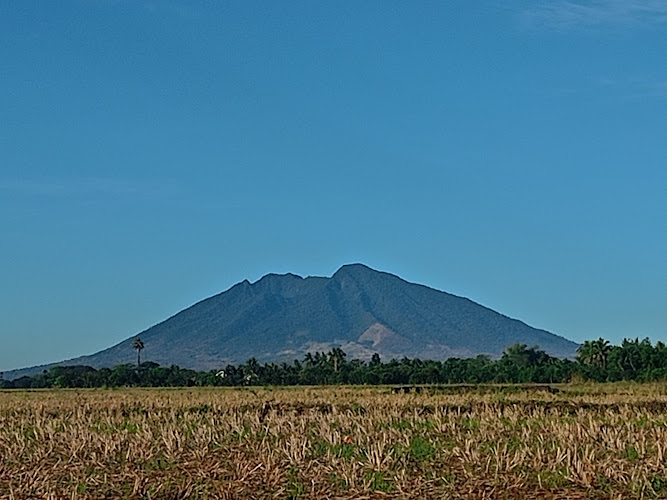
Mount Arayat National Park
Find Accommodations Nearby
Recommended Tours & Activities
Visitor Reviews
There are no reviews yet. Be the first one to write one.
Share Your Experience
Have you visited Kubo ka joel? Help other travelers by leaving a review.