
Dante’s Tomb
About Dante’s Tomb
Key Features
More Details
Updated June 11, 2025
The mystery of Dante Alighieri’s remains
## Dante’s Tomb in Ravenna: how to visit (and why it works best as part of a half-day walk)
Dante’s Tomb (Tomba di Dante) is one of those places where the scale is small but the weight is enormous. It sits on Via Dante Alighieri, a few steps from the Basilica of San Francesco, inside a quiet pedestrian pocket Ravenna explicitly frames as a space of respect and contemplation. Turismo
If you come expecting a big museum-style experience, you’ll be done quickly. If you come expecting a concentrated, symbolic stop that anchors a wider Ravenna itinerary—mosaics, cloisters, and a city that held Dante at the end—this is exactly the right kind of “short visit.” Turismo
### Quick facts you can rely on
– Address: Via Dante Alighieri, 9, Ravenna (city center). Turismo
– What it is: A Neoclassical mausoleum built between 1780 and 1781 to honor Dante Alighieri, designed by architect Camillo Morigia. Turismo
– Setting: The tomb is the focal point of Ravenna’s “Zone of Silence” (Zona del Silenzio)—a traffic-limited, quiet area created through urban works in the 1920s–1930s and centered on Dante-related monuments. Turismo
– Why Ravenna: Dante died in 1321 and was buried in Ravenna; the tomb complex and its history reflect centuries of dispute over his remains. Turismo
## What you’re actually looking at
### The “sugar bowl” mausoleum
Ravenna’s official tourism site notes the local nickname “sugar bowl” for the compact, domed structure. Its façade is intentionally restrained—simple lines, sober decoration—very much in keeping with late-18th-century Neoclassicism. Turismo
At the entrance, a marble plaque reads “Dantis Poetae Sepulcrum” (“Tomb of the poet Dante”). That small detail matters: it’s the clearest visual cue that you’re not looking for a grand cathedral portal—this is a memorial chapel with a focused purpose. Turismo
### Inside: the tomb, the relief, and the lamp
Inside, the tomb preserves:
– The sepulchre containing Dante’s remains (as kept in the mausoleum today). Turismo
– A 1483 marble bas-relief commissioned by Bernardo Bembo and made by sculptor Pietro Lombardo, portraying Dante’s face (visible inside). Turismo
– A votive lamp that burns with oil donated by Tuscany, with an annual offering by Florence’s municipality on the second Sunday of September. Turismo
That last point is easy to miss if you rush. It’s also one of the most revealing: Ravenna and Florence’s relationship around Dante isn’t only historical drama—it’s still ritualized annually in the space. Turismo
## The “Zone of Silence” is part of the visit, not just the backdrop
Ravenna describes the Zone of Silence as an intentional urban-planning project designed to isolate the area from city noise and traffic, creating a “dimension of sacredness and contemplation” around Dante’s sepulchre. Turismo
The zone includes:
– Dante’s Tomb
– Quadrarco di Braccioforte
– Old Franciscan Cloisters
– Dante Museum and Casa Dante
– Basilica of San Francesco (where Ravenna notes Dante’s funeral was celebrated) Turismo
Even if you only have 15–20 minutes, treat the surrounding courtyard and passages as part of the experience. The atmosphere is the point.
## Planning your “half-day” around the tomb (the smart way)
Your source text hints at the right strategy: don’t make this a standalone mission. Ravenna is dense with high-value sites within walking distance—especially early Christian and Byzantine monuments recognized by UNESCO. World Heritage Centre
A practical, low-friction half-day flow in the historic center:
1. Start at Dante’s Tomb + Zone of Silence (quiet, quick, grounding). Turismo
2. Basilica of San Francesco (right there; it’s explicitly tied to Dante’s funeral in Ravenna’s account). Turismo
3. Walk to Basilica di San Vitale + Mausoleum of Galla Placidia (major mosaic punch in a compact radius; part of Ravenna’s UNESCO-listed early Christian monuments). World Heritage Centre
4. If you’re continuing beyond the center later, consider Basilica of Sant’Apollinare in Classe (outside the core; also part of the UNESCO inscription). World Heritage Centre
That arc keeps your day balanced: literature/history → contemplative space → visual intensity (mosaics) → optional extension.
## Practical visit tips (that actually reduce friction)
### Getting there without stress
Ravenna notes the tomb sits in a pedestrian area limited to traffic, and is easy to reach on foot from the railway station; there’s also a bus stop about 20 meters away in Piazza Caduti per la Libertà. Turismo
### Accessibility
Ravenna states the Zone of Silence is entirely accessible to people with disabilities. Turismo
### What to do if you want a “living” Dante moment
Ravenna describes a daily, ongoing public reading initiative in front of the tomb (“L’ora che volge il disìo”), where a canto from the Divine Comedy is read aloud as a perpetual tribute. Details and timing can change, but the existence of the initiative is explicitly noted by the city’s tourism page. Turismo
## Internal link ideas for RealJourneyTravels.com
(Use whichever pages you already have—these are safe contextual targets that fit reader intent.)
– Link to your Ravenna city guide / Ravenna itinerary page (helps readers bundle sites into a half-day plan).
– Link to your guide for the Basilica of San Francesco or the Zone of Silence area (keeps the Dante stop from feeling isolated). Turismo
## Accuracy + “outdated data” flags
– Opening hours / ticketing: Ravenna confirms the Zone of Silence is always open and free of charge, but the tomb interior and nearby museum/cloister access can have separate rules and schedules. Verify current details via the official contacts and site listed on Ravenna’s page (e.g., the “vivadante.it” link and museum email). Turismo
– Interpretive claims: The tomb’s long “mystery of the remains” story is presented in a narrative style on the city page; treat it as an official-local account and avoid overstating beyond what you can verify in primary sources. Turismo
If you want, paste 2–3 internal URLs you actually have on RealJourneyTravels.com (Ravenna, San Vitale, Galla Placidia, San Francesco, etc.) and I’ll weave them in as fully formatted, publication-ready internal links with natural anchor text.
Table of Contents
Key Highlights
Dante’s Tomb
Location
Places to Stay Near Dante's Tomb"... but group it with other things in the srea and make half a day of it."
Find and Book a Tour
Explore More Travel Guides
No reviews found! Be the first to review!
Traveler Reviews for Dante’s Tomb
There are no reviews yet. Be the first one to write one.
Have you visited Dante’s Tomb? Help other travelers by sharing your review.
You Might Also Like
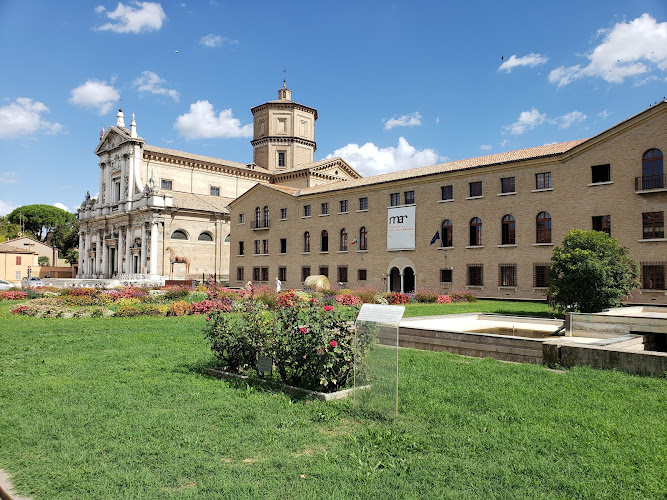
MAR - Museo d’Arte della Città di Ravenna
Giardino Rasponi o delle erbe dimenticate
Archiepiscopal Museum, Ravenna
Find Accommodations Nearby
Recommended Tours & Activities
Visitor Reviews
There are no reviews yet. Be the first one to write one.
Share Your Experience
Have you visited Dante’s Tomb? Help other travelers by leaving a review.