
Casa Barco Irupé
About Casa Barco Irupé
Key Features
More Details
Updated April 15, 2024
## Casa Barco Irupé: The Ship-Shaped House Watching Over San Nicolás
At first glance, Casa Barco Irupé looks like a small coastal vessel that somehow ran aground in a quiet residential street of San Nicolás de los Arroyos. Step closer and you realize it’s not a ship at all, but a fully functional house – bow, stern, portholes and anchor included – built by a river-obsessed poet who turned his home into a piece of living architecture. Obscura
For anyone exploring San Nicolás or road-tripping through the north of Buenos Aires province, this quirky landmark is one of the most distinctive sights in town. It’s quick to visit, easy to combine with the riverfront and the famous Marian sanctuary, and tells you a lot about the city’s relationship with the Paraná.
—
## Where Is Casa Barco Irupé?
Casa Barco Irupé stands at José Ingenieros 72, in the city of San Nicolás de los Arroyos, in the far north of Buenos Aires province, Argentina.
A few key location facts you can rely on:
– The house is in a central neighborhood close to the waterfront, about 100 meters from a branch of the Paraná River, in the river zone often called costanera baja.
– It sits very near the Santuario de la Virgen María del Rosario de San Nicolás, one of the city’s major pilgrimage sites.
– San Nicolás itself is roughly 240 km from Buenos Aires and about 70 km from Rosario, linked by National Route 9 and regular bus and train services.
For most travelers, Casa Barco Irupé is a short stop built into a wider day exploring San Nicolás’s sanctuary, costanera, and central streets. For context on planning that wider visit, it’s a natural fit inside a broader piece like a San Nicolás de los Arroyos weekend guide or a Buenos Aires province road-trip itinerary (perfect spots for internal links).
—
## The Story Behind the Ship-House
Casa Barco Irupé isn’t a theme attraction dreamed up by a tourism board. It began as a very personal project.
What we know from local historical sources:
– The house was designed and built by Oscar Felipe Cafiero, a poet from San Nicolás, and his wife María Celia Vera, a painter and typist. El Norte – San Nicolás
– Construction began around 1963–1964, and the distinctive “ship” home was completed in 1964. El Norte – San Nicolás
– Cafiero worked many years for Prefectura Naval Argentina (the national coast guard). His daily life by the river and the ships at the port shaped the design: he literally took measurements and inspiration from real vessels he saw working on the Paraná. El Norte – San Nicolás
– The family lived here for almost 40 years, until Cafiero’s death in 2003. The house remains associated with his widow and children.
Local press and a tourism study produced in San Nicolás both describe Casa Barco Irupé as a symbolic architectural landmark for the city – categorized officially as a contemporary artistic/technical work within the urban heritage inventory.
> ⚠️ About conflicting information online
> Some aggregate travel sites recycle a description that credits the design to the Argentine architect Amancio Williams and claims mid-20th-century iron-and-glass modernist features. This directly contradicts municipal and local historical sources that attribute the design and construction to Cafiero himself, beginning in the early 1960s, and there is no independent evidence linking Williams to the project.
Given that, it’s much safer – and more accurate – to treat Casa Barco Irupé as a self-built artistic home by Cafiero and Vera, not as a work by a famous modernist architect.
—
## Architecture & Design: A House That Really Looks Like a Boat
Casa Barco Irupé is not a vague “boat-inspired” façade; it reads almost literally as a small ship frozen in concrete. Photos and local coverage consistently highlight several features: Obscura
– Bow and stern: The street-facing side is the “bow,” curving out toward the sidewalk, while the rear suggests a stern – echoing real river boats seen in the local port.
– Ship-like proportions: The structure is elongated along the plot, imitating a hull drawn up onto land, rather than just a flat façade with a painted prow.
– Porthole windows: Round windows punctuate the hull, reinforcing the illusion of being on board.
– Color scheme: The exterior is repeatedly described and photographed in blue hull tones with white superstructure and red trim, comparable to painted river vessels.
– Nautical details: Images show railings, ropes, and an anchor, plus a maritime emblem near the bow, all of which anchor the house visually in river culture.
This isn’t polished “starchitect” architecture. It’s personal, idiosyncratic, and clearly handcrafted – which is exactly why it photographs so well and why it has become a point of reference for directions in the city (“two blocks from the ship-house,” etc.). El Norte – San Nicolás
—
## Visiting Casa Barco Irupé Today
### Is It a Museum or a Private House?
This is one of the most important clarifications for travelers.
– A 2010s tourism study prepared in San Nicolás explicitly states that Casa Barco Irupé is a normal dwelling, owned by Cafiero’s family, and “not currently visited” as an interior attraction.
– Multiple recent TripAdvisor and Google reviews stress that it is private property and not a formal museum, although it is widely recognized as a tourist landmark.
– Several visitors mention that if a family member is present, they sometimes come out to chat and share the story of the house; that’s hospitality, not a guaranteed, ticketed tour.
Some third-party sites list weekday “opening hours” and describe regular guided visits, exhibitions, and concerts inside. Those claims do not match the city’s own tourism study (which notes that the interior is not generally open) and are likely extrapolated or AI-generated based on a mixture of reviews.
The safest, most accurate expectation for readers:
> Treat Casa Barco Irupé as an exterior landmark and photo stop.
> You can admire it freely from the public street; any access beyond the fence depends entirely on the owners and may change over time.
### What You Can Realistically Do There
Based on consistent reports and photos:
– Walk by and photograph the façade from the sidewalk on José Ingenieros.
– Observe the ship details – bow, portholes, anchor, lifebuoys, deck railings.
– Use it as a reference point when exploring the Santuario de la Virgen del Rosario and the lower riverside/costanera just a short walk away.
– Occasionally, meet a member of the Cafiero family if they happen to be outside and willing to talk; several reviews describe this, but it’s not a formal service.
Most independent travelers describe Casa Barco Irupé as a short stop rather than a long visit: you walk over, take a look, snap photos, and move on to the riverfront or sanctuary. el camino nos lleve
—
## How to Get There & Build It Into an Itinerary
Because San Nicolás sits on the main Buenos Aires–Rosario corridor, Casa Barco Irupé is very easy to weave into a bigger Argentina route.
From Buenos Aires City
– Distance is roughly 235–245 km by road, depending on exact starting point, via National Route 9.
– San Nicolás is marketed locally as a weekend escape for porteños, particularly for river time and the Marian sanctuary. Cronista
From Rosario
– Road distance is around 70–75 km south along the same corridor.
Within San Nicolás, you can walk from the central area and sanctuary to Casa Barco Irupé; local descriptions put it just a short distance from the main religious complex and the river.
For RealJourneyTravels, Casa Barco Irupé fits neatly as:
– A photo stop in a San Nicolás weekend guide – ideal for an internal link to something like ../san-nicolas-de-los-arroyos-travel-guide/.
– A quirky highlight on a longer Paraná river corridor route between Buenos Aires and Rosario – another natural internal link anchor, e.g. ../parana-river-road-trip-argentina/.
—
## Practical Tips & Things to Know (with Data Caveats)
### 1. Ratings & “Best Time to Visit”
– Aggregated data shows Casa Barco Irupé holds around 4.2/5 on Google Maps and 3.8/5 on TripAdvisor, based on a modest number of reviews.
– These numbers fluctuate, and review volume is low, so they should be treated as indicative only, not as a robust statistical measure.
There is no consistent, authoritative source that confirms fixed opening hours or a ticket system. Where hours appear online, they are usually scraped or inferred from user contributions and may be out of date or purely indicative.
> ✅ Outdated data flag
> – A 2018 tourism study explicitly stated that the house was not open to visits, being used as a normal family home.
> – Newer online entries now treat it as a “historic building” attraction and sometimes imply formal visiting hours.
> – Because these sources contradict each other and are not official municipal announcements, any visiting-hours information should be considered uncertain and potentially outdated.
### 2. Accessibility & Etiquette
From images and local commentary, Casa Barco Irupé: el camino nos lleve
– Can be viewed clearly from street level, which is helpful for travelers who prefer to avoid stairs.
– Is enclosed by a fence at the “bow”; respect that boundary and avoid leaning or climbing.
– Is surrounded by an ordinary residential block. Noise, drones, and intrusive photography pointed into windows are inappropriate – this remains a family home with neighbors, not an open-air museum.
Given San Nicolás’s blend of pilgrims, families, and older visitors, it’s worth emphasizing in your article that Casa Barco Irupé is best enjoyed with basic respect for privacy and local residents.
—
## Folding Casa Barco Irupé Into a Wider San Nicolás Stay
Casa Barco Irupé is one of several compact, walkable sights around the city’s historic and religious core:
Table of Contents
Key Highlights
Casa Barco Irupé
Location
Places to Stay Near Casa Barco Irupé
Find and Book a Tour
Explore More Travel Guides
No reviews found! Be the first to review!
Traveler Reviews for Casa Barco Irupé
There are no reviews yet. Be the first one to write one.
Have you visited Casa Barco Irupé? Help other travelers by sharing your review.
You Might Also Like
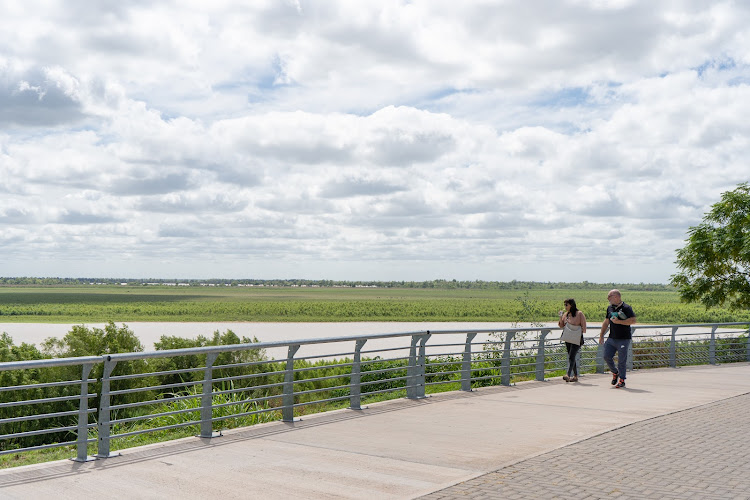
San Martín San Nicolás Park
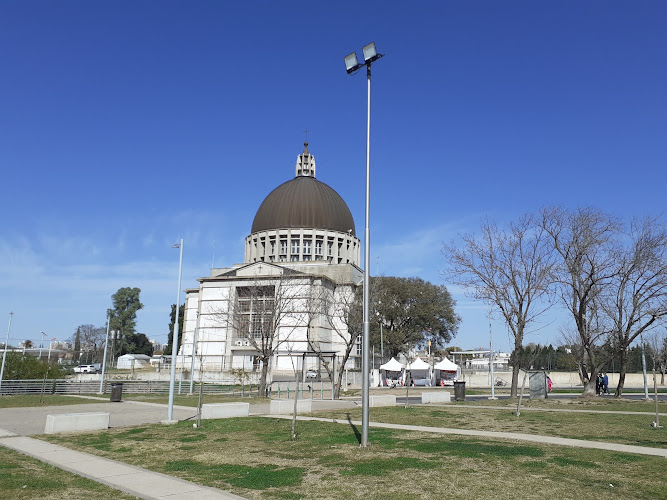
Costanera Alta - Perón Park
Anfiteatro Municipal Costanera San Nicolás
Find Accommodations Nearby
Recommended Tours & Activities
Visitor Reviews
There are no reviews yet. Be the first one to write one.
Share Your Experience
Have you visited Casa Barco Irupé? Help other travelers by leaving a review.