
The Museum of Policing in Cheshire
About The Museum of Policing in Cheshire
Description
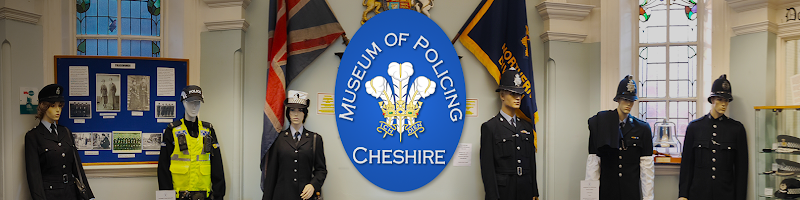
The Museum of Policing in Cheshire sits within the County Police Office at Warrington Police Station and offers a surprisingly intimate, behind-the-scenes look at more than a century of local law enforcement. Run entirely by volunteers and set up as a registered charity, the museum is modest in size but rich in stories, artifacts, and an unmistakable sense of purpose: to educate visitors about the history of policing in Cheshire and the incidents and investigations that shaped the force and the communities it serves. It’s the sort of place that rewards curiosity; linger a little, and odd details begin to pop — an old truncheon with a maker’s stamp, a faded mugshot with a story attached, a former police uniform so small it suggests how young some recruits once were.
Visitors often remark that the museum feels less like a temperature-controlled exhibit hall and more like a living archive, a collection lovingly curated by people who have a connection to the material. And that’s exactly right: nearly everything on display has been donated, catalogued, and explained by volunteers — retired officers, family members of police personnel, local historians, and enthusiasts. Because of that human touch, plaques and labels are often accompanied by anecdotes. A badge might be linked to a single officer’s notable career, or a radio console might be described alongside a recollection of a particularly snowy winter when the kit kept the station connected to the community. Those human stories are the museum’s heartbeat.
Because the museum is housed inside an active police station, visits are by appointment only. This is not an uptight security measure meant to put visitors off; it’s simply practical — the building needs to function as a workplace while also opening its doors to the public. Appointments are free, and the staff (again, volunteers) are clear about booking: it helps everyone get the most out of the visit, especially if someone in a group needs extra assistance or a guided tour. And yes, they do make allowances for spontaneity now and then, but it’s best to plan ahead, particularly on weekends or during school holidays when demand climbs.
The museum makes accessibility a priority. Wheelchair accessible entrances, accessible parking nearby, and wheelchair-adapted restrooms are all available, and the volunteers are experienced in offering tailored tours for visitors with disabilities. That means someone who uses a mobility aid can explore the majority of the exhibits without feeling boxed out, and families with pushchairs will find movement through the displays reasonable and unhurried. Sensible, thoughtful design choices like this are more than convenience; they reflect the museum’s broader commitment to community inclusion, which is part of its charitable mission.
For families, the Museum of Policing in Cheshire is a quietly engaging stop. Kids tend to gravitate toward uniforms, handcuffs (safely secured, of course), and the interactive bits like radio equipment or replica incident boards where a child can imagine piecing together clues. There’s an educational angle, too: volunteers happily tailor explanations to different age groups, and school visits can be arranged to align with curriculum topics such as civics or local history. This is not a flashy, high-tech visitor attraction — it doesn’t need to be. The charm lies in the authenticity, the tactile objects, and the volunteers who can tell you why a particular arrest book mattered in 1952 or how policing tactics changed over decades.
Visitors often come for one thing and leave with a dozen impressions: a renewed respect for everyday policing, a curiosity about forensic methods from the past, and sometimes even a personal connection — perhaps a relative’s old photo appears in the gallery, or a volunteer recognizes a family name. That has happened more than once. Small discoveries like that are common and make for memorable, human-centered visits. The museum’s aim to educate isn’t dry or formal; it’s conversational. People leave feeling like they’ve overheard a good story and then were invited to peek behind the curtain.
Because of its location inside Warrington Police Station, the museum also offers a rarer kind of experience: context. Rather than seeing artifacts in isolation, visitors can sense the operational heartbeat of a working police environment. You’ll notice practical things — signage, staff circulation spaces, the actual noticeboards that once carried urgent operational messages — which subtly reinforce the relationship between heritage and the live duty of keeping a community safe. That context is valuable for anyone trying to grasp how policing has evolved: the past sits alongside the present, and the museum illustrates that continuity rather than pretending history is a separate, sealed-off chapter.
Education here is multi-layered. On one level there are timelines and displays about uniform evolution, vehicles and equipment, and notable cases involving Cheshire Police. On another, deeper level, there are ethical and social reflections — how laws changed, how community expectations shifted, and how policing adapted to technology and societal pressures. For the thoughtful traveler, this makes a museum visit more than a checklist item; it becomes an opportunity to consider broader civic questions while grounded in local examples.
One of the more unexpected pleasures for many visitors is the volunteers themselves. They are storytellers. Often former officers, sometimes local historians, often both, they can turn what might be a dry catalog description into an evocative narrative that brings the artifact alive. It’s not uncommon to hear someone say afterward that a volunteer’s anecdote made them laugh or cry, or both. And while volunteers aim to be accurate and measured, their passion shows through — which, frankly, makes the experience far more human and engaging than a purely institutional exhibit.
For photographers and social historians, there are treasures too: archival photographs, old police ledgers, recruitment posters, and restored items that photograph beautifully and lend themselves to closer study. But the museum also takes its responsibilities seriously — some sensitive material is displayed with care and context, respectful of victims, communities, and privacy. Visitors should expect a thoughtful approach to difficult subjects, not sensationalism. There is a quiet dignity in how the museum handles controversial or traumatic incidents; it remembers and explains without exploiting.
Practicalities are straightforward. Admission is free, which is a relief to budget-conscious travelers. There aren’t flashy cafés or souvenir emporiums; instead, the emphasis is on learning and conversation. The restroom facilities are available on site, and the volunteer staff will happily recommend nearby cafes or spots to continue a conversation after the tour. Keep in mind that because it’s volunteer-run and inside a station, opening hours may be limited and can change, so booking in advance is both courteous and practical.
Finally, visitors who value small-scale, authentic cultural experiences will likely leave satisfied. It’s not a blockbuster museum — there are no glitzy audio-visual displays, no sprawling galleries — but it offers something arguably rarer: connection. Connection to local history, to the evolution of policing, and to people who care enough to preserve and share these stories. If a traveler wants a meaningful, educational stop in Warrington that provides context to regional policing history and does so with warmth, integrity, and accessibility, the Museum of Policing in Cheshire is worth penciling into the day’s plans. Book ahead, bring inquisitive questions, and be prepared to hear a story or two that lingers long after the visit.
Key Features
More Details
Updated August 30, 2025
Table of Contents
Description
The Museum of Policing in Cheshire sits within the County Police Office at Warrington Police Station and offers a surprisingly intimate, behind-the-scenes look at more than a century of local law enforcement. Run entirely by volunteers and set up as a registered charity, the museum is modest in size but rich in stories, artifacts, and an unmistakable sense of purpose: to educate visitors about the history of policing in Cheshire and the incidents and investigations that shaped the force and the communities it serves. It’s the sort of place that rewards curiosity; linger a little, and odd details begin to pop — an old truncheon with a maker’s stamp, a faded mugshot with a story attached, a former police uniform so small it suggests how young some recruits once were.
Visitors often remark that the museum feels less like a temperature-controlled exhibit hall and more like a living archive, a collection lovingly curated by people who have a connection to the material. And that’s exactly right: nearly everything on display has been donated, catalogued, and explained by volunteers — retired officers, family members of police personnel, local historians, and enthusiasts. Because of that human touch, plaques and labels are often accompanied by anecdotes. A badge might be linked to a single officer’s notable career, or a radio console might be described alongside a recollection of a particularly snowy winter when the kit kept the station connected to the community. Those human stories are the museum’s heartbeat.
Because the museum is housed inside an active police station, visits are by appointment only. This is not an uptight security measure meant to put visitors off; it’s simply practical — the building needs to function as a workplace while also opening its doors to the public. Appointments are free, and the staff (again, volunteers) are clear about booking: it helps everyone get the most out of the visit, especially if someone in a group needs extra assistance or a guided tour. And yes, they do make allowances for spontaneity now and then, but it’s best to plan ahead, particularly on weekends or during school holidays when demand climbs.
The museum makes accessibility a priority. Wheelchair accessible entrances, accessible parking nearby, and wheelchair-adapted restrooms are all available, and the volunteers are experienced in offering tailored tours for visitors with disabilities. That means someone who uses a mobility aid can explore the majority of the exhibits without feeling boxed out, and families with pushchairs will find movement through the displays reasonable and unhurried. Sensible, thoughtful design choices like this are more than convenience; they reflect the museum’s broader commitment to community inclusion, which is part of its charitable mission.
For families, the Museum of Policing in Cheshire is a quietly engaging stop. Kids tend to gravitate toward uniforms, handcuffs (safely secured, of course), and the interactive bits like radio equipment or replica incident boards where a child can imagine piecing together clues. There’s an educational angle, too: volunteers happily tailor explanations to different age groups, and school visits can be arranged to align with curriculum topics such as civics or local history. This is not a flashy, high-tech visitor attraction — it doesn’t need to be. The charm lies in the authenticity, the tactile objects, and the volunteers who can tell you why a particular arrest book mattered in 1952 or how policing tactics changed over decades.
Visitors often come for one thing and leave with a dozen impressions: a renewed respect for everyday policing, a curiosity about forensic methods from the past, and sometimes even a personal connection — perhaps a relative’s old photo appears in the gallery, or a volunteer recognizes a family name. That has happened more than once. Small discoveries like that are common and make for memorable, human-centered visits. The museum’s aim to educate isn’t dry or formal; it’s conversational. People leave feeling like they’ve overheard a good story and then were invited to peek behind the curtain.
Because of its location inside Warrington Police Station, the museum also offers a rarer kind of experience: context. Rather than seeing artifacts in isolation, visitors can sense the operational heartbeat of a working police environment. You’ll notice practical things — signage, staff circulation spaces, the actual noticeboards that once carried urgent operational messages — which subtly reinforce the relationship between heritage and the live duty of keeping a community safe. That context is valuable for anyone trying to grasp how policing has evolved: the past sits alongside the present, and the museum illustrates that continuity rather than pretending history is a separate, sealed-off chapter.
Education here is multi-layered. On one level there are timelines and displays about uniform evolution, vehicles and equipment, and notable cases involving Cheshire Police. On another, deeper level, there are ethical and social reflections — how laws changed, how community expectations shifted, and how policing adapted to technology and societal pressures. For the thoughtful traveler, this makes a museum visit more than a checklist item; it becomes an opportunity to consider broader civic questions while grounded in local examples.
One of the more unexpected pleasures for many visitors is the volunteers themselves. They are storytellers. Often former officers, sometimes local historians, often both, they can turn what might be a dry catalog description into an evocative narrative that brings the artifact alive. It’s not uncommon to hear someone say afterward that a volunteer’s anecdote made them laugh or cry, or both. And while volunteers aim to be accurate and measured, their passion shows through — which, frankly, makes the experience far more human and engaging than a purely institutional exhibit.
For photographers and social historians, there are treasures too: archival photographs, old police ledgers, recruitment posters, and restored items that photograph beautifully and lend themselves to closer study. But the museum also takes its responsibilities seriously — some sensitive material is displayed with care and context, respectful of victims, communities, and privacy. Visitors should expect a thoughtful approach to difficult subjects, not sensationalism. There is a quiet dignity in how the museum handles controversial or traumatic incidents; it remembers and explains without exploiting.
Practicalities are straightforward. Admission is free, which is a relief to budget-conscious travelers. There aren’t flashy cafés or souvenir emporiums; instead, the emphasis is on learning and conversation. The restroom facilities are available on site, and the volunteer staff will happily recommend nearby cafes or spots to continue a conversation after the tour. Keep in mind that because it’s volunteer-run and inside a station, opening hours may be limited and can change, so booking in advance is both courteous and practical.
Finally, visitors who value small-scale, authentic cultural experiences will likely leave satisfied. It’s not a blockbuster museum — there are no glitzy audio-visual displays, no sprawling galleries — but it offers something arguably rarer: connection. Connection to local history, to the evolution of policing, and to people who care enough to preserve and share these stories. If a traveler wants a meaningful, educational stop in Warrington that provides context to regional policing history and does so with warmth, integrity, and accessibility, the Museum of Policing in Cheshire is worth penciling into the day’s plans. Book ahead, bring inquisitive questions, and be prepared to hear a story or two that lingers long after the visit.
Key Highlights
The Museum of Policing in Cheshire
Location
Places to Stay Near The Museum of Policing in Cheshire
Find and Book a Tour
Explore More Travel Guides
No reviews found! Be the first to review!
Traveler Reviews for The Museum of Policing in Cheshire
There are no reviews yet. Be the first one to write one.
Have you visited The Museum of Policing in Cheshire? Help other travelers by sharing your review.
You Might Also Like
Sankey Valley Park
Birchwood Forest Park
Fun2b Indoor Play and Party Centre
Find Accommodations Nearby
Recommended Tours & Activities
Visitor Reviews
There are no reviews yet. Be the first one to write one.
Share Your Experience
Have you visited The Museum of Policing in Cheshire? Help other travelers by leaving a review.