
Concepción Metropolitan Area
About Concepción Metropolitan Area
Key Features
More Details
Updated April 15, 2024
Ciudad de Concepción – Concepción y Arauco Chile
## Concepción Metropolitan Area (Gran Concepción): a practical guide to Chile’s Biobío hub
Concepción Metropolitan Area (often called Gran Concepción or Greater Concepción) is the large, continuous urban zone anchored by the city of Concepción in Chile’s Biobío Region. It’s widely treated as the country’s second major urban conurbation after Santiago.
### What “metropolitan area” means here (and why the definition matters)
Chile has used “Gran Concepción” for years as a way to describe the conurbation around Concepción, and older planning references commonly describe 10 comunas (municipalities) in the urban area.
In 2024, the Chilean government (SUBDERE) formally constituted the Área Metropolitana del Gran Concepción and described it as including 11 comunas: Concepción, Coronel, Chiguayante, Hualpén, Lota, Penco, San Pedro de la Paz, Talcahuano, Santa Juana, Hualqui, and Tomé, with a population figure of 985,034.
Outdated-data flag: you’ll still see older sources using the 10-comuna framing (and older population estimates like “2012 pre-census” figures). Treat those as historical snapshots, not current governance.
—
## Quick orientation: where you are in Chile
The metro area sits in south-central Chile, in the Biobío Region, whose regional capital is Concepción. Biobío
Expect a geography defined by river systems, coastal bays, and low mountain ranges, with different “personalities” across communes—port cities on the bay, inland university/civic zones, and residential lake districts.
—
## Getting there
### Fly: Carriel Sur International Airport (CCP)
The region’s main airport is Carriel Sur International Airport:
– IATA: CCP
– Location: Talcahuano (serving Greater Concepción)
Some sources state it’s roughly 8 km from Concepción’s downtown area.
Passenger totals are often reported annually (for example, Wikipedia reports 2023 passengers: 2,099,240). Outdated-data flag: always double-check current schedules/airline routes before booking; frequencies can change.
—
## Getting around the metro area
### Biotren (commuter rail)
Biotren is the standout piece of metro transport: a commuter rail system serving Greater Concepción. Reported system details include:
– Began operation: 1999
– Lines: 2
– Stations: 25
– System length: 66.6 km
It connects key communes including Concepción, Talcahuano, Hualpén, San Pedro de la Paz, Chiguayante, and Hualqui.
There have also been public reports of Biotren fleet updates in recent years (useful context if you care about comfort/capacity). Gazette
Outdated-data flag: ridership stats you’ll find online commonly cite pre-2020 numbers (e.g., “2019 daily ridership”). Treat them as background, not a live indicator of crowding.
—
## How to “read” Gran Concepción: the communes, in plain terms
Because the metropolitan area is multi-core (not a single downtown), your experience changes depending on which commune you anchor in.
### Concepción (the civic + university core)
Concepción is the regional capital and the central reference point for the metro area. Biobío
This is typically where you’ll find the most concentrated civic institutions and a strong student/university presence (the city is closely associated with major universities, including the University of Concepción).
### Talcahuano + San Vicente (port/industrial bay frontage)
Talcahuano is a key coastal/port commune in the metro area. Sub-areas like Puerto San Vicente are part of the port-city identity and are frequently highlighted in local port/city materials.
### San Pedro de la Paz (lakes + residential districts)
San Pedro de la Paz is often associated with lagoon landscapes, especially Laguna Grande.
### Coronel, Lota, Tomé, Penco, Chiguayante, Hualpén, Hualqui, Santa Juana
These communes are included in the official 2024 metropolitan-area framing.
If you’re mapping logistics: think of them as a ring of distinct centers that change your access to coast, industrial zones, and quieter inland areas.
—
## What to prioritize as a visitor (without overpromising)
If you’re coming for a short stay and want a high-confidence plan grounded in what’s consistently documented:
– Start in central Concepción for a “baseline” sense of the region’s civic core and museums/cultural venues that are commonly referenced in travel coverage.
– Add a bay/port angle via Talcahuano if you want maritime context and a different urban texture.
– Balance city time with water-and-green space around San Pedro de la Paz’s Laguna Grande, which is widely referenced as a local natural feature.
—
## Practical reality check: planning + safety considerations
### Seismic risk (Chile-wide)
Chile is one of the world’s most seismically active countries. This is a general, stable planning fact rather than a “Concepción-specific scare.” Practical implication: pick accommodations that clearly state compliance with local building standards, and know basic earthquake procedures (drop/cover/hold). (No single source cited here because this is widely established general knowledge; if you want local emergency guidance links, tell me your language preference and I’ll pull official resources.)
### Inclusivity & accessibility
Because “what’s accessible” changes by venue and neighborhood, the only honest approach is verification per site (elevators, step-free access, tactile paving, accessible bathrooms). For transport, start by checking Biotren station accessibility on official operator channels before assuming step-free access at every stop.
—
—
## Source notes (why some numbers differ)
– Governance framing (2024, official): 11 communes + population figure 985,034.
– Older “Gran Concepción” framing: commonly 10 communes in reference descriptions.
That mismatch is exactly why you’ll see different totals across articles—often they’re describing different definitions across time.
—
If you want this optimized for your publishing workflow, paste the two internal URLs you want to link to (or your Concepción-related category page), and I’ll slot them in with tight anchors and zero filler.
Table of Contents
Key Highlights
Concepción Metropolitan Area
Location
Places to Stay Near Concepción Metropolitan Area
Find and Book a Tour
Explore More Travel Guides
No reviews found! Be the first to review!
Traveler Reviews for Concepción Metropolitan Area
There are no reviews yet. Be the first one to write one.
Have you visited Concepción Metropolitan Area? Help other travelers by sharing your review.
You Might Also Like
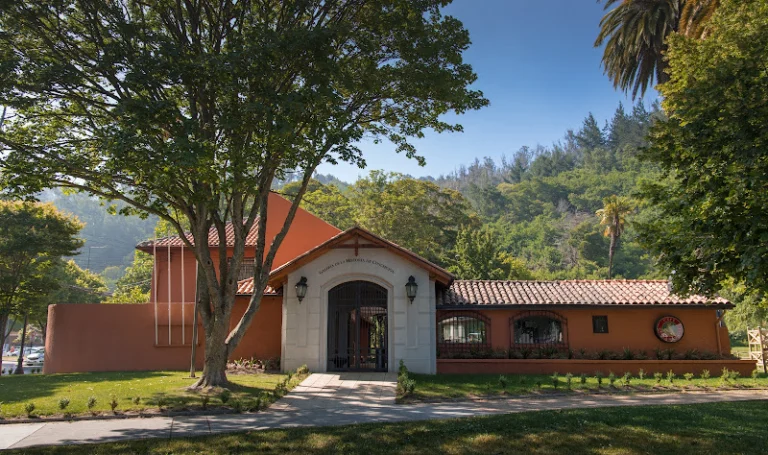
Galería de la Historia de Concepción
Castillo de la Concepción
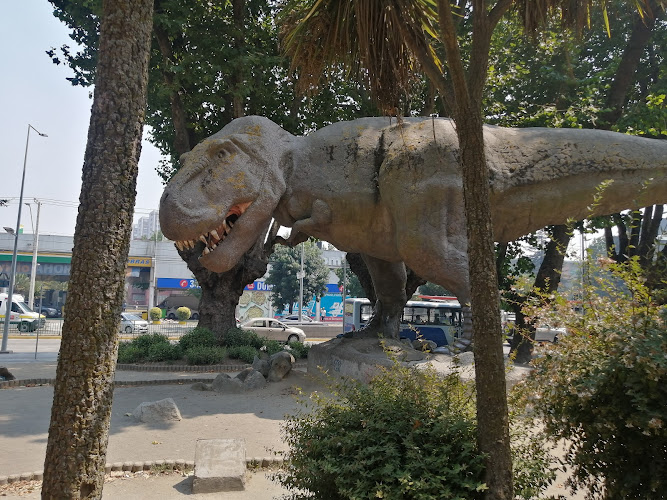
Acevedo Square
Find Accommodations Nearby
Recommended Tours & Activities
Visitor Reviews
There are no reviews yet. Be the first one to write one.
Share Your Experience
Have you visited Concepción Metropolitan Area? Help other travelers by leaving a review.