
Gingee Fort
About Gingee Fort
Key Features
More Details
Updated June 11, 2025
## Gingee Fort (Senji Fort): a three-hill citadel on Tamil Nadu’s UNESCO-listed Maratha Military Landscapes
If you like places where the terrain does half the defending, Gingee Fort delivers. The fort complex sits on three distinct hillocks—Rajagiri (Anandagiri), Krishnagiri, and Chandrayandurg/Chakkilidurg—linked by long defensive walls that turn the site into a single, sprawling fortification system rather than one “castle on a hill.”
Your coordinates (12.2500981, 79.394847) put you at the Gingee/Senji area in Villupuram district, Tamil Nadu—the administrative district matters because a lot of listings still mis-file Gingee under nearby hubs.
—
## Why Gingee Fort matters (beyond “it’s old”)
### It’s officially part of a UNESCO World Heritage property (inscribed 2025)
Gingee Fort is a component (ID 1739-012) of “Maratha Military Landscapes of India,” which UNESCO lists as inscribed in 2025. That’s not just a badge—World Heritage status tends to drive better documentation, conservation standards, and visitor infrastructure over time. World Heritage Centre
### The “three citadels” layout is the headline feature
Many forts are one core keep plus outer works. Gingee is different: each hill functions as a self-contained citadel, and the linking walls make the whole complex feel like a fortified landscape.
—
## What you’ll actually see on site
### The hill citadels
– Rajagiri (Anandagiri): commonly treated as the main climb/viewpoint because it gives you the clearest sense of how the walls stitch the hills together.
– Krishnagiri and Chandrayandurg/Chakkilidurg: the “other two corners” of the system—worth it if you want the full triangular logic of the fort rather than one summit photo.
### Distinctive structures inside the complex
– Kalyana Mahal (multi-storeyed “marriage hall”): a prominent landmark in the complex and frequently referenced as a signature structure.
– Water systems and storage: UNESCO documentation specifically highlights the fort’s water systems and functional architecture (granaries, etc.) as part of what makes the landscape work as a defensible, lived-in stronghold. World Heritage Centre
—
## A quick, accurate history frame (so the ruins make sense)
Gingee changed hands across multiple powers in South India and beyond. A practical way to read this site is as a fort that kept being upgraded—not a one-era monument frozen in time. A widely cited outline is:
– Early development under Chola-era fortification, then major phases under later regional powers and empires, including the Vijayanagara sphere, and later Maratha-era strategic importance (including periods of siege and conflict).
If you want the simplest “why it’s here” takeaway: Gingee’s strength is geography + layered engineering—granite hills, stitched with walls, gates, and practical infrastructure. World Heritage Centre
—
## Planning your visit: what I can say with confidence
### Management and tickets
Gingee Fort is maintained/administered by the Archaeological Survey of India (ASI).
ASI also operates an official online ticketing page for Gingee Fort (date selection and time-slot style booking).
What I’m not treating as “100% certain”: exact entry fees and daily closing times. Different travel sites and review platforms publish different numbers, and these can change. If you need current pricing/hours for a trip date, the safest approach is to rely on ASI’s official channels on the day you go.
### Terrain + effort level (realistic expectations)
This is a hill-fort complex. Expect:
– Heat exposure (granite reflects sun; shade is limited on climbs)
– Uneven stone steps and long stair sequences
– Wind on the summit (nice in hot months; harsh in storms)
Practical gear that’s genuinely worth packing: 1–2 liters of water per person, sun protection, and shoes with grip (smooth soles feel sketchy on worn stone).
### Accessibility notes (reported plans)
A recent local news report described ASI plans for visitor-friendly upgrades such as braille brochures and a battery-operated vehicle for elderly/physically challenged visitors, plus AR/VR-style interpretive media. Treat these as planned/rolling improvements rather than guaranteed amenities until you confirm on-site. Times of India
—
## How to explore Gingee Fort in a way most people miss
### 1) Don’t treat it as “one climb”
If you only do a single hill and leave, you’ll miss the site’s defining idea: three citadels linked by defenses. Build your route around seeing at least two hills + a stretch of connecting wall, even if you don’t summit all three.
### 2) Read the fort as infrastructure, not just ruins
UNESCO’s description emphasizes how the complex includes meeting halls, temples, mosques, granaries, and water systems—the fort functioned like a defended town system, not just a lookout. Once you look for that “systems” logic, the scattered remains feel far more coherent. World Heritage Centre
—
## Data quality check: what in your dataset looks off
– City listed as “Cuddalore”: Gingee Fort is documented under Villupuram district (and Gingee/Senji locality). Cuddalore is a different district, so your “city” field looks misassigned or inherited from a broader region bucket.
—
## Two contextual internal link opportunities (RealJourneyTravels.com-style)
Because I don’t have your site’s exact URL structure, here are anchor-text-ready internal link placements you can map to your existing India/Tamil Nadu hubs:
– Link phrase: “our Tamil Nadu travel planning guide (heat, transport, temple etiquette)” — place it in the “Planning your visit” section.
– Link phrase: “our guide to UNESCO World Heritage sites in India (what inscription changes for visitors)” — place it in the UNESCO section.
—
## Quick facts (from authoritative sources)
– Name: Gingee Fort (Senji Fort)
– Location: Villupuram district, Tamil Nadu, India
– UNESCO: Component 1739-012 of “Maratha Military Landscapes of India” (inscribed 2025) World Heritage Centre
– Complex structure: Three hill citadels (Rajagiri, Krishnagiri, Chandrayandurg/Chakkilidurg) linked by fortifications
– Admin: Archaeological Survey of India; official online ticketing exists
If you want, I can also generate the FAQ + “Know Before You Go” snippet block (schema-friendly, concise, no shaky claims) using only ASI/UNESCO-confirmable statements.
Table of Contents
Key Highlights
Gingee Fort
Location
Places to Stay Near Gingee Fort"Awesome place to explore"
Find and Book a Tour
Explore More Travel Guides
No reviews found! Be the first to review!
Traveler Reviews for Gingee Fort
There are no reviews yet. Be the first one to write one.
Have you visited Gingee Fort? Help other travelers by sharing your review.
You Might Also Like
Cuddalore
Cuddalore Castle Island
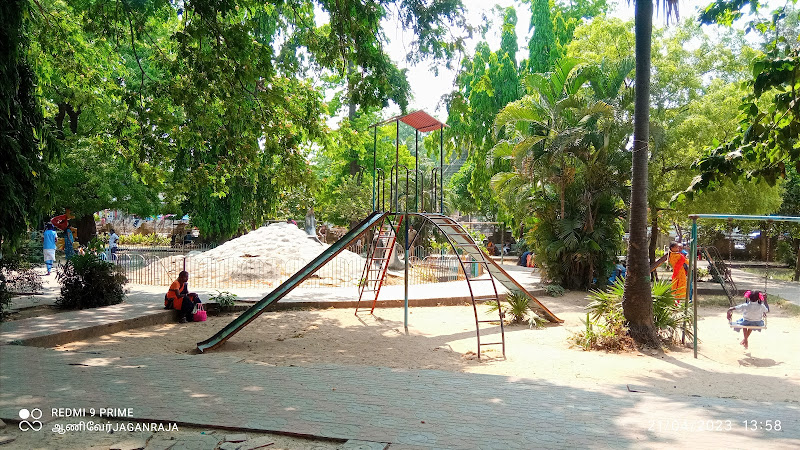
Cuddalore Corporation Subbhurayalu Park
Find Accommodations Nearby
Recommended Tours & Activities
Visitor Reviews
There are no reviews yet. Be the first one to write one.
Share Your Experience
Have you visited Gingee Fort? Help other travelers by leaving a review.