
Catedral Basílica de Nuestra Señora de la Paz, Potosí
About Catedral Basílica de Nuestra Señora de la Paz, Potosí
Key Features
More Details
Updated June 11, 2025
## Visiting the Catedral Basílica de Nuestra Señora de la Paz in Potosí, Bolivia
Rising over Plaza 10 de Noviembre, the Catedral Basílica de Nuestra Señora de la Paz is one of the key landmarks in Potosí’s historic center and a useful anchor point for understanding the city’s mix of faith, wealth, and mining history. The cathedral is both the seat of the local diocese and a minor basilica, combining baroque and neoclassical influences on a monumental stone façade.
This guide walks through what you’ll actually see, how to plan your visit at 4,000+ meters of altitude, and how the cathedral fits into a wider Potosí itinerary.
—
## Quick facts
– Official name: Catedral Basílica de Nuestra Señora de La Paz (Cathedral Basilica of Our Lady of Peace)
– Location: Plaza 10 de Noviembre, in the center of Potosí, Bolivia
– Coordinates: approx. -19.5887, -65.7527 (matches your data)
– Architectural style: Colonial baroque with neoclassical influence; stone façade and twin towers
– Construction of current building: roughly 1809–1836/1838, replacing an earlier church that collapsed in 1807
– Religious status: Cathedral of the Diocese of Potosí and minor basilica
—
## A brief history: from mining boom to monumental basilica
Potosí’s rise is tied directly to Cerro Rico, the “rich mountain” whose silver fueled the Spanish Empire and helped shape early global trade. UNESCO describes Potosí as a historic urban and industrial landscape built around one of the major silver mines of modern times. World Heritage Centre
The first main church on this site dates back to the 16th century, when Potosí’s population soared during the silver boom. That earlier structure eventually became unsafe; sources note that it collapsed in the early 19th century (1807), prompting a total rebuild.
The current cathedral was constructed between about 1809 and 1836–1838, under the direction of Franciscan friar Manuel (or Francisco) de Sanahuja/Sanauja, and later declared a cathedral of the diocese.
Key historical points you can confidently build into your visit:
– The cathedral represents the transition from exuberant baroque to more restrained neoclassical forms in late colonial architecture in Bolivia.
– It stands directly on Plaza 10 de Noviembre, Potosí’s main square, surrounded by other colonial-era buildings and monuments.
– The building you see today is a replacement for an earlier church—so it already embodies one cycle of destruction and reconstruction in a city built on mining risk.
—
## Architecture and what to look for
Even before stepping inside, there’s plenty to unpack from the plaza.
### Exterior: stone façade and twin towers
From Plaza 10 de Noviembre, you’ll face a stone façade framed by two towers.
Factual highlights:
– The façade is built in stone masonry and shows a blend of baroque curves and neoclassical symmetry.
– The twin towers emphasize verticality and were rebuilt after structural issues with previous towers in the early 19th century.
– The cathedral dominates one entire side of Plaza 10 de Noviembre, creating the classic “cathedral-square” relationship seen across colonial Latin America.
From the plaza, you can also see how the cathedral’s massing lines up with the grid of central Potosí—a detail that becomes more obvious if you later climb to viewpoints over the city (for example, from Cerro Rico or other miradores).
### Interior: naves, choir, mausoleum and bell tower
Guided tours and descriptions of the interior consistently highlight specific spaces and features.
Inside, factual points to look for:
– Naves and altars: The interior consists of multiple naves with altars and religious artwork, including paintings and decorative elements associated with the late colonial period.
– Decorative details: Tours specifically mention paintings, decorations and gold-leaf panelling, which you can see along the naves and near the main altar area.
– Mausoleum: Part of the guided route includes a mausoleum area, where notable religious or civic figures connected to the cathedral and city are commemorated.
– Choir: The choir loft is another stop on tours, giving a different vantage point to appreciate the spatial organization of the interior.
– Bell tower views: Guided visits often culminate at the bell tower, which offers a panoramic view over the historic center and the silhouette of Cerro Rico behind it.
Because this is an active place of worship, specific artworks or side chapels accessible to visitors can change over time (for example, if an area is under restoration). Treat the tour descriptions as indicative rather than an exhaustive inventory.
—
## Practical visiting information (with up-to-date caveats)
### Location and orientation
– The cathedral occupies a prominent position on Plaza 10 de Noviembre in central Potosí.
– Mapping services and travel guides list an address along Junín s/n, Villa Imperial de Potosí, immediately adjacent to the square.
From the plaza, most key sights in the historic center—such as the Casa de la Moneda and several other churches—are easily walkable.
### Opening hours (and why you should double-check)
Recent directory-style sources and travel aggregators currently give very similar visiting hours:
– Monday–Saturday: approximately 09:00–12:00 and 14:30–18:00
– Sunday: often listed as closed for general visiting (though Mass may still be celebrated). E Directory
These hours are not official in the sense of being published by the cathedral’s own maintained site, and multiple Potosí churches have had issues with inconsistent or poorly communicated schedules. Travel
Outdated-data flag:
– Hours can change with liturgical calendars, maintenance, or local events. The last clearly timestamped data for the schedule above is from late 2025. E Directory
– Before you go, it’s wise to confirm on the ground: ask at your hotel/guesthouse, check recent reviews, or verify with the local tourism office on Plaza 10 de Noviembre.
### Guided tours
Several operators, including Civitatis, advertise guided visits inside the Basilica Cathedral of Potosí, covering the façade, interior naves, choir, mausoleum, and bell tower lookout.
Factually safe takeaways:
– Guided tours exist, and at least some are run by commercial agencies rather than the cathedral itself.
– Tours typically focus on the architectural stages, religious art, and panoramic views from the tower.
What we cannot confirm from current data:
– Exact ticket prices, whether tours are mandatory for access to certain areas, or whether there is a separate fee for the bell tower. Those details vary between operators and can change seasonally, so they’re best checked at the time of booking.
### Accessibility and inclusivity considerations
There is limited formal documentation in the sources about accessibility adaptations inside the cathedral (ramps, accessible restrooms, etc.). Based on what is visible in photos and tour descriptions, at least part of access—especially to upper areas such as the bell tower—requires stairs.
Given the lack of fully detailed, official information:
– You should not assume that upper levels (choir, tower) are accessible to visitors with mobility impairments.
– The main entrance area appears to involve a short exterior stairway from plaza level; again, this may present a barrier depending on your mobility needs.
If accessibility is a priority, the most reliable approach is to:
– Confirm directly with the Catbalogan City Tourism Office equivalent in Potosí or local tourism office on Plaza 10 de Noviembre (names vary, but the municipal tourism desk is typically just off the main square).
– Ask staff on site about alternative entrances or possible assistance before committing to a guided tour.
Inside, standard norms for an active Catholic church apply: dress that covers shoulders and midriff reasonably, respectful noise levels, and being cautious when photographing during services.
—
## The cathedral in the context of Potosí and Cerro Rico
Part of what makes a visit here compelling is the immediate contrast between sacred architecture and the extractive landscape around it.
– Potosí and Cerro Rico together form a UNESCO World Heritage Site, recognized for their role as one of the world’s major silver mines and the industrial-water infrastructure that powered ore processing. World Heritage Centre
– The historic center where the cathedral stands still preserves a dense collection of colonial buildings that reflect the silver-funded boom of the 16th–18th centuries. World Heritage Centre
### Current condition of Cerro Rico (important, and not just background trivia)
The mountain looming behind the city is now structurally fragile:
– Cerro Rico has been heavily mined for centuries; more than a thousand kilometers of tunnels have made parts of the mountain unstable. Observatory
– In 2014, UNESCO placed Potosí and Cerro Rico on the List of World Heritage in Danger due to the risk of collapse from ongoing mining.
– As of 2025, independent reporting notes continuing subsidence near the summit and a slow, partial closure of the highest mine entrances; experts characterize the risk of significant collapse as serious. País
This matters for cathedral visitors because:
– The view from the bell tower gives a direct line of sight to Cerro Rico, making it one of the most accessible vantage points to visually connect the religious, civic, and mining landscapes in a single frame.
– Understanding the endangered status of the mountain adds context to the wealth embodied in the cathedral architecture—and to the ongoing social and environmental debates in contemporary Potosí.
—
## How to integrate the cathedral into your Potosí itinerary
Given its central position and limited but concentrated visiting hours, many travelers sensibly combine the cathedral with a half- or full-day exploration of the historic center.
A realistic order that stays within the bounds of confirmed information:
Table of Contents
Key Highlights
Catedral Basílica de Nuestra Señora de la Paz, Potosí
Location
Places to Stay Near Catedral Basílica de Nuestra Señora de la Paz, Potosí
Find and Book a Tour
Explore More Travel Guides
No reviews found! Be the first to review!
Traveler Reviews for Catedral Basílica de Nuestra Señora de la Paz, Potosí
There are no reviews yet. Be the first one to write one.
Have you visited Catedral Basílica de Nuestra Señora de la Paz, Potosí? Help other travelers by sharing your review.
You Might Also Like
Amigos de Bolivia
Hidalgo Tours
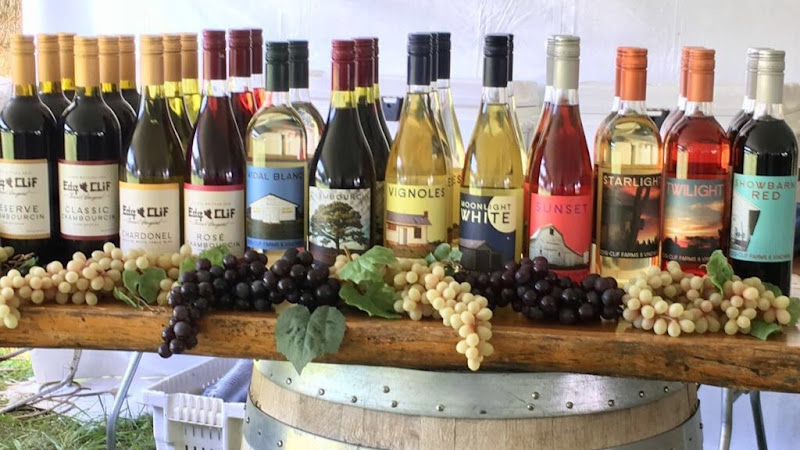
Edg-Clif Vineyard, Winery, Brewery
Find Accommodations Nearby
Recommended Tours & Activities
Visitor Reviews
There are no reviews yet. Be the first one to write one.
Share Your Experience
Have you visited Catedral Basílica de Nuestra Señora de la Paz, Potosí? Help other travelers by leaving a review.