
Labintatlong Martir ng Kabite Historical Marker
About Labintatlong Martir ng Kabite Historical Marker
Key Features
More Details
Updated April 15, 2024
## Labintatlong Martir ng Kabite Historical Marker: a small stop with heavy history in Trece Martires, Cavite
If you’re traveling through Cavite and want a quick, grounded way to connect the modern city to the Philippine Revolution, the Labintatlong Martir ng Cavite (Thirteen Martyrs of Cavite) historical marker is one of the most direct places to do it. It isn’t a sprawling museum or a multi-hour itinerary item. It’s a biographical historical marker—installed to name the people, state why they were targeted, and anchor their story in a real landscape you can stand in today.
What makes this marker worth your time is its specificity. It doesn’t speak in vague heroic language. It identifies a chain of events (arrests tied to an uprising, a military tribunal, a death sentence, and an execution) and then lists the martyrs by name.
—
## Where it is (and why you should double-check the exact pin)
Two different official-ish ways of locating this marker show up online:
– The NHCP historical sites registry lists the location as Governor’s Drive corner City Hall Road, Trece Martires, Cavite. It also records that this is a Level II historical marker, dated 1997, installed by the National Historical Institute (NHI)—the predecessor institution to today’s NHCP.
– A commonly used navigation listing (Waze) places “Labintatlong Martir ng Kabite Historical Marker” at 7VJC+98F, Unnamed Road, Trece Martires City, Cavite (the same plus code you provided).
Those aren’t necessarily contradictory—large civic areas often generate multiple “valid” map labels—but they can lead you to slightly different drop-off points. If you’re heading there with limited time, use the NHCP registry location as your primary reference, then cross-check the plus code against your live navigation app before you commit to the last turn.
—
## What the marker actually says (in plain terms)
The NHCP registry includes the marker text. In summary, it states that these were known Cavite residents arrested on accusations of conspiring with the Katipunan in relation to an uprising in Cavite on August 31, 1896. It adds that they were sentenced to death by a military commission and shot on the afternoon of September 12, 1896 at Fort San Felipe in Cavite City.
The marker then lists the martyrs’ names:
– Luis Aguado
– Eugenio Cabezas
– Feliciano Cabuco
– Agapito Conchu
– Maximo Inocencio
– Maximo Gregorio
– Jose Lallano
– Severino Lapidario
– Victoriano Luciano
– Alfonso de Ocampo
– Francisco Osorio
– Hugo Perez
– Antonio San Agustin
That list matters because you’ll sometimes see minor spelling variations in secondary sources. When your goal is accuracy, the NHCP registry text is the cleanest reference for what the marker itself records.
—
## The wider historical context: who the “Thirteen Martyrs of Cavite” were
Broadly, the Thirteen Martyrs of Cavite are remembered as Filipino patriots executed by the Spanish colonial government during the early period of the Philippine Revolution. Multiple sources agree on the execution date (September 12, 1896) and the framing that their deaths were linked to alleged cooperation with the Katipunan.
This isn’t just a Cavite story. It’s a snapshot of how revolutionary networks were policed: arrests based on conspiracy allegations, military adjudication, and execution used as deterrence. The marker’s mention of a military commission is a crucial detail because it signals how the state processed dissent at that moment—not merely that dissent existed.
—
## Why Trece Martires is the right place to see a marker about them
Trece Martires literally means “thirteen martyrs,” and the city’s naming is tied to commemorating this group. That connection isn’t folklore—it’s stated directly in standard references on the city’s identity and history.
So visiting the marker in Trece Martires isn’t random “history collecting.” It’s visiting a place whose civic identity is built around that commemoration, even as the city functions today as a working provincial hub.
—
## What to do when you’re there (practical, no guessing)
Because opening hours, site staffing, and on-the-ground conditions can change (and I’m not going to invent them), here’s what you can reliably do at a historical marker like this without needing any operational assumptions:
### 1) Read the marker like a primary source
Treat it as an official, curated statement: what it includes (dates, tribunal, place of execution) and what it omits (trial details, broader biographies) tells you what the commemorating institution prioritized. The NHCP registry confirms the marker’s institutional origin and date.
### 2) Take a “documentation” photo, not just a souvenir shot
If you’re researching or writing, get at least one clear image where the full text is readable. This helps you avoid repeating misspellings or paraphrases from third-party blogs later.
### 3) Build your understanding outward
The marker anchors two other factual points you can pursue elsewhere in Cavite’s historical landscape:
– the 1896 Cavite uprising date reference (Aug 31, 1896)
– the execution location at Fort San Felipe, Cavite City
Even if you don’t travel to those locations the same day, the marker gives you a clean narrative spine.
—
## Data checks and “what might be outdated”
Here’s what I can responsibly flag based on the sources:
– Marker administration naming: The registry says “Installed by: National Historical Institute (NHI)” and dates the marker to 1997. NHI is historically associated with what is now the NHCP, and older markers often still carry the installing agency name from their time.
– Pin/location precision: The NHCP registry location description (Governor’s Drive corner City Hall Road) and popular navigation labeling (plus code on an “Unnamed Road”) may refer to the same area, but they can also route you differently. If your goal is to stand at the actual marker, validate the final approach with live navigation using both references.
Everything else above—dates, names, and the execution location as stated—is directly supported by the NHCP registry text and corroborated by general references about the Thirteen Martyrs and Trece Martires’ naming.
Table of Contents
Key Highlights
Labintatlong Martir ng Kabite Historical Marker
Location
Places to Stay Near Labintatlong Martir ng Kabite Historical Marker
Find and Book a Tour
Explore More Travel Guides
No reviews found! Be the first to review!
Traveler Reviews for Labintatlong Martir ng Kabite Historical Marker
There are no reviews yet. Be the first one to write one.
Have you visited Labintatlong Martir ng Kabite Historical Marker? Help other travelers by sharing your review.
You Might Also Like
Cavite
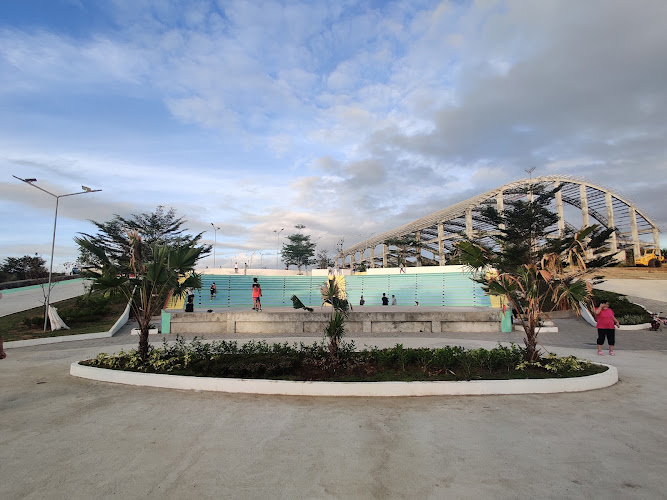
Trece Martires People's Park
Pabahay
Find Accommodations Nearby
Recommended Tours & Activities
Visitor Reviews
There are no reviews yet. Be the first one to write one.
Share Your Experience
Have you visited Labintatlong Martir ng Kabite Historical Marker? Help other travelers by leaving a review.