
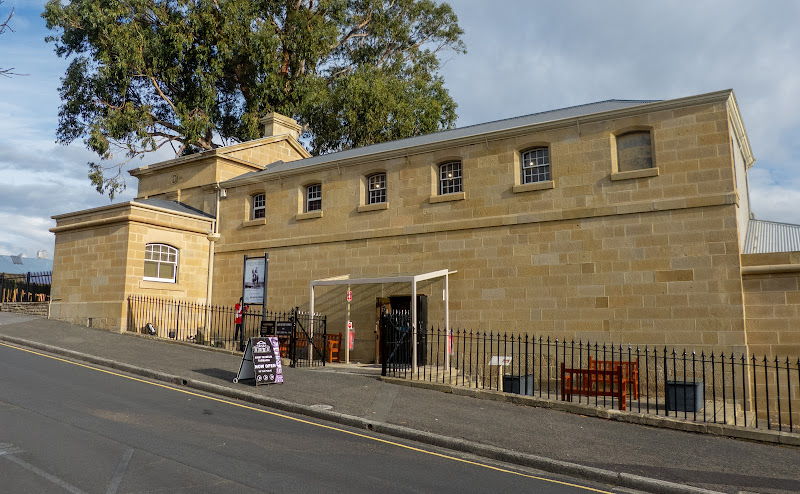
Army Museum of Tasmania
About Army Museum of Tasmania
Description
The Army Museum of Tasmania sits within the historic precinct of Anglesea Barracks in Hobart, offering a concentrated, thoughtful look at Tasmania's military past from the colonial era through later 20th-century engagements. Housed in buildings that have been part of the military landscape since the early 1800s, the museum combines architecture that feels lived-in with displays that are quietly powerful. Visitors often find the contrast striking: weathered brick and timber exteriors lead to carefully curated galleries where medals, uniforms, documents and personal objects tell stories more human than heroic.
This museum specializes in British colonial–era material and Tasmanian contributions to Australian military history. It is not a flashy, hands-on entertainment spot; rather, it leans into context, provenance, and narrative. The exhibits are arranged to guide visitors through time—starting with the early garrison life during the colonial period, then moving through the formation and evolution of local units, and finally into Australia's roles in larger conflicts. The emphasis is on understanding the people behind the uniforms: the families who waited at home, the local regiments formed in small Tasmanian towns, and the complex interaction between a penal-colony past and a growing Australian identity.
Anglesea Barracks itself is part of the attraction. The site is one of the oldest military installations still in use in Australia, and being inside it adds a layer of authenticity that many military museums cannot match. There is an immediacy here—walkways, parade grounds, and original barrack rooms give context to the artifacts on display. The museum manages to be both a repository of objects and a living interpretation of a place where history happened. For history buffs, architects, and photographers, that sense of place is gold. For families with curious kids, the museum provides accessible storytelling that makes complex events understandable without dumbing anything down.
Accessibility and practical amenities have been considered. The museum offers a wheelchair-accessible entrance and parking, and restroom facilities are available onsite. It should be noted that assistive hearing loop systems are not in operation, so groups with hearing impairment may want to plan ahead. There is no onsite restaurant, but paid street parking is available nearby, and the museum’s central position in Hobart means cafes and eateries are within walking distance. Practical but important: the galleries are compact, so the visit can be comfortably completed in an hour or two, which makes it a good fit for travelers working with tight itineraries.
What often surprises first-time visitors is the intimacy of many displays. Instead of only showcasing large weapons or tanks, the museum foregrounds smaller, personal artifacts—letters home, service medals, embroidered badges, and photographs. These items are the connective tissue between public history and private life. There are uniforms that show the evolution of material and style over decades; these are presented alongside explanatory notes that discuss not just the uniform itself but what it signified socially and politically. For those who like the tactile side of history, the text labels are refreshingly detailed, often including provenance and human stories that turn dates into lived experiences.
Another distinctive attribute is the focus on local narratives. The museum invests effort in telling the story of Tasmanian units and servicemen and women—people who are rarely headline names in broader histories—but whose stories illuminate regional perspectives on national events. This local emphasis creates a different rhythm of history: small towns, local regiments, and community memorials are given equal weight alongside more well-known campaigns. A traveler who has been to larger national military museums may find this regional focus both informative and oddly grounding.
Curatorial choices here favor depth over breadth. The displays are not an exhaustive accounting of every conflict; rather, they are carefully selected modules that invite curiosity. There are themed cases on colonial policing and garrison life, cabinets dedicated to the First and Second World Wars, and sections which discuss service beyond conventional battlefields—logistics, medical services, and the impact on civilian life. Visitors who enjoy reading labels and following cross-references will find themselves rewarded. It’s the sort of place where a single display case can lead to a half-hour detour into an unexpected story.
Interactive elements are modest but useful. The museum uses a few multimedia stations to add oral histories and archival film, which work well for people who respond to voices and faces. These clips are short and to the point—no marathon documentaries that eat into limited travel time. For families, the museum has curated pathways that make it easier to direct younger visitors toward kid-friendly content without losing the adults' interest. Staff and volunteers are often praised for being approachable and knowledgeable; they can offer up anecdotes, point out local connections, and occasionally unlock a drawer or two for a closer look if the museum schedule permits. That human behind-the-glass touch makes a visit feel like a conversation rather than a lecture.
There are a few lesser-known highlights worth mentioning because they elevate the visitor experience beyond the expected. One is the presence of original barrack rooms and associated structures within the museum precinct—these spaces allow a kind of time-travel that pictorial displays alone cannot provide. Another is the archival corner where researchers and enthusiasts can request access to curated documents; it’s handy for anyone doing deeper genealogical or academic work. And, quietly charming, the museum’s collection includes oddities that prompt curiosity—objects donated by local families, sometimes with handwritten notes that capture the messier, human side of service life. Those little bits often become the most memorable things to visitors.
There is also an educational emphasis: school groups visit regularly, and the museum’s interpretive approach is structured to engage young minds without sensationalising war. The displays provide context about why conflicts occurred and how they affected ordinary people. That considered approach appeals to travelers who prefer responsible historical interpretation—again, not showy, but thoughtful.
No museum is perfect, and the Army Museum of Tasmania has a humble footprint that sometimes leads visitors to wish for more gallery space or more interactive features. Some may find certain exhibits denser than others, and because the museum balances archival depth with physical conservation, not every artifact comes with an expansive modern display. But for many, that restraint is part of the charm. This is not a place of blockbuster spectacles; it is steadier, quieter—like the kind of guide who leans in and tells a story properly rather than shouting for attention.
For travelers mapping out Hobart’s cultural offerings, the Army Museum of Tasmania is a compact, enriching stop that pairs easily with nearby attractions in the city. It gives context to Hobart and Tasmania’s social history in a way that other attractions might miss. Whether the visitor is a military history enthusiast, a family on a rainy afternoon, a photographer looking for textured historical backdrops, or a researcher following a thread from a war diary back to its origin, the museum supplies material that informs, provokes, and sometimes surprises.
In short, the Army Museum of Tasmania rewards curiosity. It asks visitors to slow down, read closely, and consider the local threads woven into larger historical tapestries. And while the museum won’t keep someone in Hobart for days, it will enrich a traveler’s understanding of Tasmania’s past in a way that lingers—quiet, human, and honest.
Key Features
More Details
Updated August 30, 2025
Table of Contents
Description
The Army Museum of Tasmania sits within the historic precinct of Anglesea Barracks in Hobart, offering a concentrated, thoughtful look at Tasmania’s military past from the colonial era through later 20th-century engagements. Housed in buildings that have been part of the military landscape since the early 1800s, the museum combines architecture that feels lived-in with displays that are quietly powerful. Visitors often find the contrast striking: weathered brick and timber exteriors lead to carefully curated galleries where medals, uniforms, documents and personal objects tell stories more human than heroic.
This museum specializes in British colonial–era material and Tasmanian contributions to Australian military history. It is not a flashy, hands-on entertainment spot; rather, it leans into context, provenance, and narrative. The exhibits are arranged to guide visitors through time—starting with the early garrison life during the colonial period, then moving through the formation and evolution of local units, and finally into Australia’s roles in larger conflicts. The emphasis is on understanding the people behind the uniforms: the families who waited at home, the local regiments formed in small Tasmanian towns, and the complex interaction between a penal-colony past and a growing Australian identity.
Anglesea Barracks itself is part of the attraction. The site is one of the oldest military installations still in use in Australia, and being inside it adds a layer of authenticity that many military museums cannot match. There is an immediacy here—walkways, parade grounds, and original barrack rooms give context to the artifacts on display. The museum manages to be both a repository of objects and a living interpretation of a place where history happened. For history buffs, architects, and photographers, that sense of place is gold. For families with curious kids, the museum provides accessible storytelling that makes complex events understandable without dumbing anything down.
Accessibility and practical amenities have been considered. The museum offers a wheelchair-accessible entrance and parking, and restroom facilities are available onsite. It should be noted that assistive hearing loop systems are not in operation, so groups with hearing impairment may want to plan ahead. There is no onsite restaurant, but paid street parking is available nearby, and the museum’s central position in Hobart means cafes and eateries are within walking distance. Practical but important: the galleries are compact, so the visit can be comfortably completed in an hour or two, which makes it a good fit for travelers working with tight itineraries.
What often surprises first-time visitors is the intimacy of many displays. Instead of only showcasing large weapons or tanks, the museum foregrounds smaller, personal artifacts—letters home, service medals, embroidered badges, and photographs. These items are the connective tissue between public history and private life. There are uniforms that show the evolution of material and style over decades; these are presented alongside explanatory notes that discuss not just the uniform itself but what it signified socially and politically. For those who like the tactile side of history, the text labels are refreshingly detailed, often including provenance and human stories that turn dates into lived experiences.
Another distinctive attribute is the focus on local narratives. The museum invests effort in telling the story of Tasmanian units and servicemen and women—people who are rarely headline names in broader histories—but whose stories illuminate regional perspectives on national events. This local emphasis creates a different rhythm of history: small towns, local regiments, and community memorials are given equal weight alongside more well-known campaigns. A traveler who has been to larger national military museums may find this regional focus both informative and oddly grounding.
Curatorial choices here favor depth over breadth. The displays are not an exhaustive accounting of every conflict; rather, they are carefully selected modules that invite curiosity. There are themed cases on colonial policing and garrison life, cabinets dedicated to the First and Second World Wars, and sections which discuss service beyond conventional battlefields—logistics, medical services, and the impact on civilian life. Visitors who enjoy reading labels and following cross-references will find themselves rewarded. It’s the sort of place where a single display case can lead to a half-hour detour into an unexpected story.
Interactive elements are modest but useful. The museum uses a few multimedia stations to add oral histories and archival film, which work well for people who respond to voices and faces. These clips are short and to the point—no marathon documentaries that eat into limited travel time. For families, the museum has curated pathways that make it easier to direct younger visitors toward kid-friendly content without losing the adults’ interest. Staff and volunteers are often praised for being approachable and knowledgeable; they can offer up anecdotes, point out local connections, and occasionally unlock a drawer or two for a closer look if the museum schedule permits. That human behind-the-glass touch makes a visit feel like a conversation rather than a lecture.
There are a few lesser-known highlights worth mentioning because they elevate the visitor experience beyond the expected. One is the presence of original barrack rooms and associated structures within the museum precinct—these spaces allow a kind of time-travel that pictorial displays alone cannot provide. Another is the archival corner where researchers and enthusiasts can request access to curated documents; it’s handy for anyone doing deeper genealogical or academic work. And, quietly charming, the museum’s collection includes oddities that prompt curiosity—objects donated by local families, sometimes with handwritten notes that capture the messier, human side of service life. Those little bits often become the most memorable things to visitors.
There is also an educational emphasis: school groups visit regularly, and the museum’s interpretive approach is structured to engage young minds without sensationalising war. The displays provide context about why conflicts occurred and how they affected ordinary people. That considered approach appeals to travelers who prefer responsible historical interpretation—again, not showy, but thoughtful.
No museum is perfect, and the Army Museum of Tasmania has a humble footprint that sometimes leads visitors to wish for more gallery space or more interactive features. Some may find certain exhibits denser than others, and because the museum balances archival depth with physical conservation, not every artifact comes with an expansive modern display. But for many, that restraint is part of the charm. This is not a place of blockbuster spectacles; it is steadier, quieter—like the kind of guide who leans in and tells a story properly rather than shouting for attention.
For travelers mapping out Hobart’s cultural offerings, the Army Museum of Tasmania is a compact, enriching stop that pairs easily with nearby attractions in the city. It gives context to Hobart and Tasmania’s social history in a way that other attractions might miss. Whether the visitor is a military history enthusiast, a family on a rainy afternoon, a photographer looking for textured historical backdrops, or a researcher following a thread from a war diary back to its origin, the museum supplies material that informs, provokes, and sometimes surprises.
In short, the Army Museum of Tasmania rewards curiosity. It asks visitors to slow down, read closely, and consider the local threads woven into larger historical tapestries. And while the museum won’t keep someone in Hobart for days, it will enrich a traveler’s understanding of Tasmania’s past in a way that lingers—quiet, human, and honest.
Key Highlights
Army Museum of Tasmania
Location
Places to Stay Near Army Museum of Tasmania
Find and Book a Tour
Explore More Travel Guides
No reviews found! Be the first to review!
Traveler Reviews for Army Museum of Tasmania
There are no reviews yet. Be the first one to write one.
Have you visited Army Museum of Tasmania? Help other travelers by sharing your review.
You Might Also Like
Markree House Museum and Garden
Kelly’s Steps
Lakefront Park
Find Accommodations Nearby
Recommended Tours & Activities
Visitor Reviews
There are no reviews yet. Be the first one to write one.
Share Your Experience
Have you visited Army Museum of Tasmania? Help other travelers by leaving a review.