
Ruth Paine House Museum
About Ruth Paine House Museum
Description
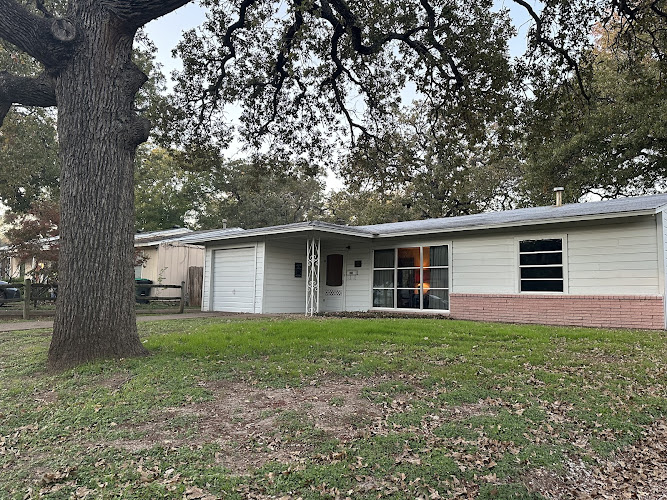
The Ruth Paine House Museum in Irving, Texas is a restored suburban 1960s home turned museum that tells one of the most intense, closely examined chapters of modern American history. It is the house where Lee Harvey Oswald spent the night before the assassination of President John F. Kennedy, and the museum frames that single night within a broader narrative: the Paine family life, the daily rhythms of a Cold War-era American suburb, and the events that unfolded across Dallas the next day. The site is quiet, sober, and meticulously preserved to reflect domestic details of the era — wallpaper patterns, a kitchen that feels almost familiar, family photographs, and the echo of ordinary life interrupted by extraordinary events.
The museum experience is more intimate than the big downtown institutions. It is not a sprawling complex. Instead, it offers close-up access to rooms and objects that feel lived-in and real. Visitors often comment that the restored interiors do what big exhibits sometimes cannot: they humanize history. The exhibition design focuses on context and chronology, guiding visitors through the Paine family's perspective, Marina Oswald's presence there, and the chain of events surrounding that November morning. Interpretive panels, original artifacts, and a knowledgeable tour guide combine to deliver an accessible, layered account of what happened and why those details matter.
The museum is run with the aim of education and preservation. The city of Irving purchased and restored the property to maintain it as a public historical site, and volunteers and guides emphasize factual storytelling over speculation. While the subject matter is heavy — assassination, public trauma, and contested narratives — the museum avoids sensationalism. Instead, it invites careful consideration. The atmosphere is contemplative; visitors soon realize this is a place for reflection, questions, and sober curiosity rather than entertainment.
The writer remembers first approaching the house on an overcast morning; the lawn and porch looked unremarkable, and that ordinariness is the house's power. It reveals how world-changing events can intersect with everyday domestic spaces. That juxtaposition is what makes the Ruth Paine House Museum a compelling stop for travelers who care about American history, political events, and how ordinary lives become entwined with public tragedy.
Key Features
- Restored 1960s suburban house interior that recreates domestic life during the era
- Guided tours led by trained docents who focus on factual chronology and context
- Exhibits about Lee Harvey Oswald's stay, Marina Oswald's connection to the Paine family, and events surrounding the assassination
- Small, thoughtful interpretive panels and family photographs that personalize history
- Wheelchair accessible entrance, parking lot, and restroom to accommodate visitors with mobility needs
- Gift shop offering books, reproductions, and locally produced items for visitors who want a memento
- Educational programming suitable for older children and teens; families often find it a powerful learning opportunity
- Quiet, contemplative setting that contrasts with larger, busier museums in the Dallas area
- Recommended advance ticket purchase for guided tour slots to guarantee availability
- On-site restroom; no full-service restaurant, so plan ahead for meals
Best Time to Visit
The best time to visit is when the neighborhood is calm — weekday mornings or early afternoons — when tours are smaller and the house feels especially peaceful. Summer can be busy with school groups, and mid-morning tour slots often fill fast. Winters in North Texas are mild, and autumn brings comfortable weather, making an afternoon visit followed by a stroll through nearby Irving neighborhoods pleasant.
For travelers planning a day trip from Dallas, visits scheduled mid-week tend to be the smoothest. Weekends draw a mix of local history buffs and out-of-town visitors, which sometimes means larger groups on guided tours. If a more contemplative, personal experience matters, aim for off-peak times. The museum recommends buying tickets in advance for guided tours — this is not a place for spontaneous crowds to be left waiting, and advance planning helps avoid disappointment.
Weather matters more for the trip to the site than the interior visit itself, but Texas traffic does matter: late afternoon traffic heading back toward Dallas can add unexpected time. The author once squeezed in a last-minute visit on a Saturday only to find a full tour and an hour's wait, so take that as a friendly nudge to plan ahead. It saves time, and frankly, your mood.
How to Get There
The Ruth Paine House Museum sits in Irving, part of the greater Dallas–Fort Worth region. For travelers coming from downtown Dallas, plan on a short drive — traffic dependent, but commonly a 20–30 minute trip by car. Parking is available on-site with accessible spaces close to the entrance. Ride-share services are a practical option for those who prefer not to drive; drop-off near the entrance makes the visit easy and low-stress.
Public transit connections vary and can involve transfers. Visitors relying on buses or light rail should check the regional transit authority for current schedules and transfer points. If taking transit, allow extra time for connections and an easy walk from the nearest stop. The museum's location is in a residential area, so navigation apps generally guide visitors to the driveway without difficulty.
Driving directions are straightforward from major highways, and street parking in the immediate area is limited intentionally to preserve the residential feel. The site benefits from being close to Dallas without being in the heart of the city — that suburban character is part of the interpretive experience. Travelers combining a Ruth Paine House visit with other Dallas-area sites like Dealey Plaza or the Sixth Floor Museum should plan their day to factor in traffic patterns and parking at each location.
Tips for Visiting
Buy tickets in advance. The museum offers guided tours that often sell out, and pre-purchasing guarantees a spot and keeps the visit smooth. This is especially true for weekends and holiday periods. If the traveler is flexible, mid-week visits usually provide smaller groups and a more conversational tour experience.
Allow 60–90 minutes. Most visitors find that an hour covers the guided tour and a quick look through the small gift shop, but those who like to linger over photos and documents may prefer 90 minutes. The house is compact; rushing through reduces the value of seeing the domestic details that bring the story to life.
Respect the tone. The subject matter can be heavy. Guides appreciate visitors who treat the site and the story with seriousness and respect. That means tempering loud behavior, keeping conversations low, and understanding that some displays evoke strong emotions. The museum is educational, not a spectacle.
Accessibility matters. The museum provides a wheelchair accessible entrance, restroom, and parking. Families traveling with strollers may want to know spaces are manageable but sometimes tight, so be prepared for a bit of maneuvering. Staff and volunteers are helpful; don’t hesitate to ask for assistance or clarification if mobility accommodations are needed.
Bring curiosity, not assumptions. The tour guide's role is to present the documented sequence of events and the Paine household context. There's a lot of mythology and conspiracy lore surrounding the assassination; the museum's approach is evidence-based and contextual. Visitors who come with open questions leave with a clearer sense of documented facts and the Paine family's place in the story.
Photography? Ask. Many visitors take photos of certain areas for personal use, but exhibit rules can vary, and some items may be restricted. The staff will politely explain what is allowed. The author once wished they had asked before photographing a fragile display — better to ask and avoid an awkward moment.
Combine nearby attractions. Travelers can make a full day of it by pairing the Ruth Paine House Museum with other Dallas–Fort Worth historical sites. But be realistic about timing; traffic and parking can turn a tightly packed itinerary into a rushed afternoon. If planning to visit Dealey Plaza or the Sixth Floor Museum as well, allocate ample time and expect emotional overlap: the themes and images are resonant and sometimes repetitive.
Go with older kids in mind. The museum is suitable for children, particularly teens, who are capable of discussing historical complexity and solemn topics. Younger children may find the content perplexing or unsettling. The museum is educational, and many families use it as a chance to discuss the 1960s, civic life, and how individual lives intersect with public events.
Shop the gift store. For readers who enjoy tangibles, the small gift shop carries books, postcards, and locally made items that help preserve the museum. Buying a guidebook or a local historian's take is a good way to extend the visit into future reading.
Expect a balanced, measured narrative. The museum does not promote sensational theories; it presents a place-based history grounded in documents, testimony, and the Paine family's story. That approach suits many visitors looking for clarity rather than conjecture. If the traveler wants forensic timelines or extensive archival materials, partner the visit with a library or larger archive in the Dallas area for deeper research.
Finally, listen to the guides. They are often volunteers or local historians who have spent years with this story. They can point out small details — a photograph, a scuff on a floorboard, a family anecdote — that transform the visit from a passive look into an engaged historical encounter. The author still recalls a guide who pointed out a small, everyday object and made it the hinge of an entire line of questioning; it was the kind of detail that makes history feel near and human.
Visiting the Ruth Paine House Museum is more than checking off a landmark. It is an invitation to stand where ordinary people lived, to consider how ordinary places are woven into national events, and to leave with a firmer grasp of a pivotal moment in American history. Travelers who value context, careful interpretation, and the quiet power of place will find the visit worthwhile, surprising, and — at times — quietly haunting.
Key Features
- Authentically restored 1960s suburban home interior and furnishings
- Guided tours that contextualize the Paine family's role in JFK assassination history
- Original artifacts and interpretive exhibits linked to November 1963 events
- Located in Irving’s cultural corridor with access via the Irving Archives & Museum
- Small-group, docent-led visits that preserve neighborhood privacy and intimacy
More Details
Updated August 29, 2025
Table of Contents
Description
The Ruth Paine House Museum in Irving, Texas is a restored suburban 1960s home turned museum that tells one of the most intense, closely examined chapters of modern American history. It is the house where Lee Harvey Oswald spent the night before the assassination of President John F. Kennedy, and the museum frames that single night within a broader narrative: the Paine family life, the daily rhythms of a Cold War-era American suburb, and the events that unfolded across Dallas the next day. The site is quiet, sober, and meticulously preserved to reflect domestic details of the era — wallpaper patterns, a kitchen that feels almost familiar, family photographs, and the echo of ordinary life interrupted by extraordinary events.
The museum experience is more intimate than the big downtown institutions. It is not a sprawling complex. Instead, it offers close-up access to rooms and objects that feel lived-in and real. Visitors often comment that the restored interiors do what big exhibits sometimes cannot: they humanize history. The exhibition design focuses on context and chronology, guiding visitors through the Paine family’s perspective, Marina Oswald’s presence there, and the chain of events surrounding that November morning. Interpretive panels, original artifacts, and a knowledgeable tour guide combine to deliver an accessible, layered account of what happened and why those details matter.
The museum is run with the aim of education and preservation. The city of Irving purchased and restored the property to maintain it as a public historical site, and volunteers and guides emphasize factual storytelling over speculation. While the subject matter is heavy — assassination, public trauma, and contested narratives — the museum avoids sensationalism. Instead, it invites careful consideration. The atmosphere is contemplative; visitors soon realize this is a place for reflection, questions, and sober curiosity rather than entertainment.
The writer remembers first approaching the house on an overcast morning; the lawn and porch looked unremarkable, and that ordinariness is the house’s power. It reveals how world-changing events can intersect with everyday domestic spaces. That juxtaposition is what makes the Ruth Paine House Museum a compelling stop for travelers who care about American history, political events, and how ordinary lives become entwined with public tragedy.
Key Features
- Restored 1960s suburban house interior that recreates domestic life during the era
- Guided tours led by trained docents who focus on factual chronology and context
- Exhibits about Lee Harvey Oswald’s stay, Marina Oswald’s connection to the Paine family, and events surrounding the assassination
- Small, thoughtful interpretive panels and family photographs that personalize history
- Wheelchair accessible entrance, parking lot, and restroom to accommodate visitors with mobility needs
- Gift shop offering books, reproductions, and locally produced items for visitors who want a memento
- Educational programming suitable for older children and teens; families often find it a powerful learning opportunity
- Quiet, contemplative setting that contrasts with larger, busier museums in the Dallas area
- Recommended advance ticket purchase for guided tour slots to guarantee availability
- On-site restroom; no full-service restaurant, so plan ahead for meals
Best Time to Visit
The best time to visit is when the neighborhood is calm — weekday mornings or early afternoons — when tours are smaller and the house feels especially peaceful. Summer can be busy with school groups, and mid-morning tour slots often fill fast. Winters in North Texas are mild, and autumn brings comfortable weather, making an afternoon visit followed by a stroll through nearby Irving neighborhoods pleasant.
For travelers planning a day trip from Dallas, visits scheduled mid-week tend to be the smoothest. Weekends draw a mix of local history buffs and out-of-town visitors, which sometimes means larger groups on guided tours. If a more contemplative, personal experience matters, aim for off-peak times. The museum recommends buying tickets in advance for guided tours — this is not a place for spontaneous crowds to be left waiting, and advance planning helps avoid disappointment.
Weather matters more for the trip to the site than the interior visit itself, but Texas traffic does matter: late afternoon traffic heading back toward Dallas can add unexpected time. The author once squeezed in a last-minute visit on a Saturday only to find a full tour and an hour’s wait, so take that as a friendly nudge to plan ahead. It saves time, and frankly, your mood.
How to Get There
The Ruth Paine House Museum sits in Irving, part of the greater Dallas–Fort Worth region. For travelers coming from downtown Dallas, plan on a short drive — traffic dependent, but commonly a 20–30 minute trip by car. Parking is available on-site with accessible spaces close to the entrance. Ride-share services are a practical option for those who prefer not to drive; drop-off near the entrance makes the visit easy and low-stress.
Public transit connections vary and can involve transfers. Visitors relying on buses or light rail should check the regional transit authority for current schedules and transfer points. If taking transit, allow extra time for connections and an easy walk from the nearest stop. The museum’s location is in a residential area, so navigation apps generally guide visitors to the driveway without difficulty.
Driving directions are straightforward from major highways, and street parking in the immediate area is limited intentionally to preserve the residential feel. The site benefits from being close to Dallas without being in the heart of the city — that suburban character is part of the interpretive experience. Travelers combining a Ruth Paine House visit with other Dallas-area sites like Dealey Plaza or the Sixth Floor Museum should plan their day to factor in traffic patterns and parking at each location.
Tips for Visiting
Buy tickets in advance. The museum offers guided tours that often sell out, and pre-purchasing guarantees a spot and keeps the visit smooth. This is especially true for weekends and holiday periods. If the traveler is flexible, mid-week visits usually provide smaller groups and a more conversational tour experience.
Allow 60–90 minutes. Most visitors find that an hour covers the guided tour and a quick look through the small gift shop, but those who like to linger over photos and documents may prefer 90 minutes. The house is compact; rushing through reduces the value of seeing the domestic details that bring the story to life.
Respect the tone. The subject matter can be heavy. Guides appreciate visitors who treat the site and the story with seriousness and respect. That means tempering loud behavior, keeping conversations low, and understanding that some displays evoke strong emotions. The museum is educational, not a spectacle.
Accessibility matters. The museum provides a wheelchair accessible entrance, restroom, and parking. Families traveling with strollers may want to know spaces are manageable but sometimes tight, so be prepared for a bit of maneuvering. Staff and volunteers are helpful; don’t hesitate to ask for assistance or clarification if mobility accommodations are needed.
Bring curiosity, not assumptions. The tour guide’s role is to present the documented sequence of events and the Paine household context. There’s a lot of mythology and conspiracy lore surrounding the assassination; the museum’s approach is evidence-based and contextual. Visitors who come with open questions leave with a clearer sense of documented facts and the Paine family’s place in the story.
Photography? Ask. Many visitors take photos of certain areas for personal use, but exhibit rules can vary, and some items may be restricted. The staff will politely explain what is allowed. The author once wished they had asked before photographing a fragile display — better to ask and avoid an awkward moment.
Combine nearby attractions. Travelers can make a full day of it by pairing the Ruth Paine House Museum with other Dallas–Fort Worth historical sites. But be realistic about timing; traffic and parking can turn a tightly packed itinerary into a rushed afternoon. If planning to visit Dealey Plaza or the Sixth Floor Museum as well, allocate ample time and expect emotional overlap: the themes and images are resonant and sometimes repetitive.
Go with older kids in mind. The museum is suitable for children, particularly teens, who are capable of discussing historical complexity and solemn topics. Younger children may find the content perplexing or unsettling. The museum is educational, and many families use it as a chance to discuss the 1960s, civic life, and how individual lives intersect with public events.
Shop the gift store. For readers who enjoy tangibles, the small gift shop carries books, postcards, and locally made items that help preserve the museum. Buying a guidebook or a local historian’s take is a good way to extend the visit into future reading.
Expect a balanced, measured narrative. The museum does not promote sensational theories; it presents a place-based history grounded in documents, testimony, and the Paine family’s story. That approach suits many visitors looking for clarity rather than conjecture. If the traveler wants forensic timelines or extensive archival materials, partner the visit with a library or larger archive in the Dallas area for deeper research.
Finally, listen to the guides. They are often volunteers or local historians who have spent years with this story. They can point out small details — a photograph, a scuff on a floorboard, a family anecdote — that transform the visit from a passive look into an engaged historical encounter. The author still recalls a guide who pointed out a small, everyday object and made it the hinge of an entire line of questioning; it was the kind of detail that makes history feel near and human.
Visiting the Ruth Paine House Museum is more than checking off a landmark. It is an invitation to stand where ordinary people lived, to consider how ordinary places are woven into national events, and to leave with a firmer grasp of a pivotal moment in American history. Travelers who value context, careful interpretation, and the quiet power of place will find the visit worthwhile, surprising, and — at times — quietly haunting.
Key Highlights
- Authentically restored 1960s suburban home interior and furnishings
- Guided tours that contextualize the Paine family’s role in JFK assassination history
- Original artifacts and interpretive exhibits linked to November 1963 events
- Located in Irving’s cultural corridor with access via the Irving Archives & Museum
- Small-group, docent-led visits that preserve neighborhood privacy and intimacy
Location
Places to Stay Near Ruth Paine House Museum
Find and Book a Tour
Explore More Travel Guides
No reviews found! Be the first to review!
Traveler Reviews for Ruth Paine House Museum
There are no reviews yet. Be the first one to write one.
Have you visited Ruth Paine House Museum? Help other travelers by sharing your review.
Nearby Attractions
You Might Also Like
Irving Arts Center
Irving Heritage House
Mahatma Gandhi Memorial Plaza
Find Accommodations Nearby
Recommended Tours & Activities
Visitor Reviews
There are no reviews yet. Be the first one to write one.
Share Your Experience
Have you visited Ruth Paine House Museum? Help other travelers by leaving a review.