
Oku-Iya Double Vine Bridge
About Oku-Iya Double Vine Bridge
Description
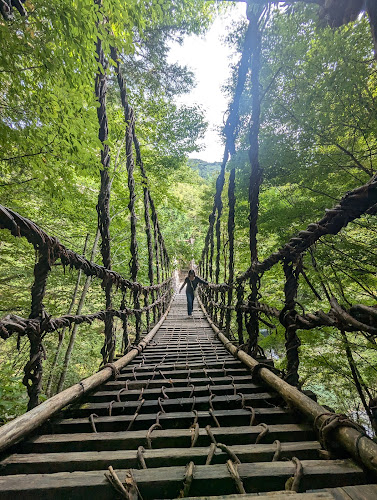
Deep within the remote mountains of Miyoshi, Japan, there’s a place that feels untouched by time. The Oku-Iya Double Vine Bridge, or Oku-Iya Niju Kazurabashi as locals call it, is a pair of suspension bridges woven from twisted vines and wooden slats. Crossing it feels a bit like stepping back several centuries to old Japan when people built with only the materials that nature offered. It’s not just a bridge—it’s an experience, a delicate balance between thrill and awe. Many travelers describe the sensation of the vines swaying beneath their feet as both intimidating and oddly peaceful. That mix—fear, excitement, wonder—is what makes it unforgettable.
Each bridge stretches gracefully over a rocky river deep in the forest. The sound of rushing water echoes below, and the thick scent of moss fills the air. On a misty morning, it’s as if the world narrows to just you, the vines, and the wild hum of nature. The double bridge has an interesting twist—one bridge is known as the male, the other as the female—positioned about a few meters apart, both carrying a quietly ancient dignity. They are said to have been inspired by the ingenuity of the Heike clan, refugees who once hid in the valleys of Tokushima centuries ago. It’s easy to imagine them retreating into these dense, green mountains and crafting these vine crossings as a way to stay connected yet protected.
People come for the thrill, yes, but also for the sense of connection to something older and rawer than modern life. While many travelers find it an easy highlight of their journey through Shikoku Island, others note the bridges aren’t entirely for the faint of heart. The steps can feel uneven, the gaps between them wide enough to make your stomach flutter a bit. Still, that’s the whole charm—walking one careful step at a time, gazing across the deep Iya Valley while the wind whispers through the leaves. It’s not polished or fancy, but it’s remarkably genuine. And that’s perhaps why it’s often described as one of the most authentic experiences of rural Tokushima Prefecture.
Key Features
- Historic vine craftsmanship: The bridges are built using hardy vines known as kazura, combined with sturdy wooden planks, a practice dating back hundreds of years.
- Two separate bridges: The “male” and “female” bridges stand side by side, offering slightly different perspectives across the mountain stream.
- Picturesque natural setting: Surrounded by dense forest and cut by a crystal-clear river, it’s an ideal location for photography and quiet contemplation.
- Rustic accessibility: Though not wheelchair accessible, designated paths and gentle approaches make it manageable for most visitors.
- On-site amenities: Visitors will find clean restrooms nearby and a small parking lot, albeit limited in capacity.
- Rich local lore: Said to be built by descendants of the Heike clan, these bridges carry legends intertwined with Japanese history.
- Preserved craftsmanship: Rebuilt every few years to maintain safety, the design honors traditional techniques passed through generations.
- Tranquil yet thrilling atmosphere: The feeling of walking above a rushing river while enveloped by silence is half the attraction.
Best Time to Visit
Timing really shapes your experience here. Spring, from April through May, brings a soft burst of color as new green leaves frame the bridges. The valley feels alive then—the air fresh, the stream high with melted snow. Summer can be gorgeous too, but be ready for humidity and a lot of insects (pack some repellent; you’ll thank me later). The real magic, if you ask me, arrives in autumn. Around late October into November, the mountains blaze with fiery reds, oranges, and yellows. It’s when photographers practically camp out nearby just to catch the reflection of the fall foliage rippling in the river below.
Winter is quiet. There’s something poetic about it—bare trees, icy water, fewer voices. The bridges are open year-round, though icy patches in colder months can make the planks slippery. So, if you’re not one for tricky footing, you might prefer the warmer seasons. Still, on a clear winter morning, with frost sparkling on the twisted vines, it’s hard to deny the quiet beauty of it all. Any season you choose, the serenity here is what people end up remembering most.
How to Get There
Getting to the Oku-Iya Double Vine Bridge might feel like a bit of a journey, but it’s worth every winding turn of the road. Most travelers start their trip from Awa-Ikeda Station or JR Oboke Station, both in Miyoshi City. From there, you can rent a car—honestly, the easiest option—or hop on a local Shikoku Kotsu bus bound for the Iya Valley area. The road into Oku-Iya is narrow and full of curves, snaking deep into the mountains. It’s about an hour and a half drive from the city area, but every turn seems to reveal another beautiful view of rivers, terraced villages, and distant mountains like Tsurugi rising in the background.
If you prefer public transport, buses do reach the area, but make sure to check the schedules—they’re infrequent. The closest bus stop is a short walk from the bridges, though “short” in mountain speak can still mean a fair uphill stretch. For those who like freedom to explore nearby spots—like the Nagoro Scarecrow Village or the Ochiai Village—a rental car gives you more flexibility. And hey, part of the fun here is the drive itself. The mountain air, the hidden waterfalls along the way, even the occasional monkey darting across the road—it all adds to the experience of being somewhere remote and remarkable.
Tips for Visiting
A few heads-ups from someone who’s learned the hard way—because no one likes turning up unprepared, right? First off, wear shoes with good grip. The slats can get wet and slippery after rain (and believe me, rain visits often in Tokushima). Avoid high heels or anything fancy; comfort will serve you far better. Bring cash too—this isn’t exactly Tokyo, and small stands or entry booths often don’t take cards. As of my last visit, an entrance fee was required, but it’s modest considering the upkeep these bridges need.
Arrive early if you want the place to yourself, especially on weekends. Nothing kills the peaceful atmosphere like a crowd of selfie sticks. I showed up once around 8:30 a.m., and it was perfect—mist still hanging in the air, sunlight trying to break through the trees. By midday, buses started rolling in, and the mood changed. Also, mind that drones are typically restricted here; the area is protected to preserve its natural ecosystem and historical design.
Another small but good-to-know tip—cell signal drops in and out. It’s part of the charm, honestly. But if you’re relying on GPS navigation, download offline maps before setting out. There are a few vending machines nearby, but snacks are limited, so pack water and a little something for energy. Don’t rush your time here. Sit by the riverbank for a while; listen. You might just feel why so many call this one of the most beautiful spots in Shikoku.
And while accessibility is somewhat limited—no wheelchair ramps or smooth pavement—the rustic terrain is what makes it feel real. It’s raw nature at its core, unchanged and proud of it. If you’ve been craving a corner of Japan that still feels hidden, the Oku-Iya Double Vine Bridge delivers. It’s not about luxury or speed but slowing down long enough to remember what adventure smells like—pine, moss, and fresh mountain air.
So yes, make the trip, cross the bridges, take a deep breath, and look back over your shoulder afterward. The sight of the twin vines stretching behind you in the shadows of the forest—it kind of sticks with you. Maybe that’s what everyone’s really crossing for, in the end: a small reminder that beauty often hides in the quiet, difficult places.
Key Features
- Key Features
- Best Time to Visit
- How to Get There
- Tips for Visiting
More Details
Updated October 21, 2025
Table of Contents
Description
Deep within the remote mountains of Miyoshi, Japan, there’s a place that feels untouched by time. The Oku-Iya Double Vine Bridge, or Oku-Iya Niju Kazurabashi as locals call it, is a pair of suspension bridges woven from twisted vines and wooden slats. Crossing it feels a bit like stepping back several centuries to old Japan when people built with only the materials that nature offered. It’s not just a bridge—it’s an experience, a delicate balance between thrill and awe. Many travelers describe the sensation of the vines swaying beneath their feet as both intimidating and oddly peaceful. That mix—fear, excitement, wonder—is what makes it unforgettable.
Each bridge stretches gracefully over a rocky river deep in the forest. The sound of rushing water echoes below, and the thick scent of moss fills the air. On a misty morning, it’s as if the world narrows to just you, the vines, and the wild hum of nature. The double bridge has an interesting twist—one bridge is known as the male, the other as the female—positioned about a few meters apart, both carrying a quietly ancient dignity. They are said to have been inspired by the ingenuity of the Heike clan, refugees who once hid in the valleys of Tokushima centuries ago. It’s easy to imagine them retreating into these dense, green mountains and crafting these vine crossings as a way to stay connected yet protected.
People come for the thrill, yes, but also for the sense of connection to something older and rawer than modern life. While many travelers find it an easy highlight of their journey through Shikoku Island, others note the bridges aren’t entirely for the faint of heart. The steps can feel uneven, the gaps between them wide enough to make your stomach flutter a bit. Still, that’s the whole charm—walking one careful step at a time, gazing across the deep Iya Valley while the wind whispers through the leaves. It’s not polished or fancy, but it’s remarkably genuine. And that’s perhaps why it’s often described as one of the most authentic experiences of rural Tokushima Prefecture.
Key Features
- Historic vine craftsmanship: The bridges are built using hardy vines known as kazura, combined with sturdy wooden planks, a practice dating back hundreds of years.
- Two separate bridges: The “male” and “female” bridges stand side by side, offering slightly different perspectives across the mountain stream.
- Picturesque natural setting: Surrounded by dense forest and cut by a crystal-clear river, it’s an ideal location for photography and quiet contemplation.
- Rustic accessibility: Though not wheelchair accessible, designated paths and gentle approaches make it manageable for most visitors.
- On-site amenities: Visitors will find clean restrooms nearby and a small parking lot, albeit limited in capacity.
- Rich local lore: Said to be built by descendants of the Heike clan, these bridges carry legends intertwined with Japanese history.
- Preserved craftsmanship: Rebuilt every few years to maintain safety, the design honors traditional techniques passed through generations.
- Tranquil yet thrilling atmosphere: The feeling of walking above a rushing river while enveloped by silence is half the attraction.
Best Time to Visit
Timing really shapes your experience here. Spring, from April through May, brings a soft burst of color as new green leaves frame the bridges. The valley feels alive then—the air fresh, the stream high with melted snow. Summer can be gorgeous too, but be ready for humidity and a lot of insects (pack some repellent; you’ll thank me later). The real magic, if you ask me, arrives in autumn. Around late October into November, the mountains blaze with fiery reds, oranges, and yellows. It’s when photographers practically camp out nearby just to catch the reflection of the fall foliage rippling in the river below.
Winter is quiet. There’s something poetic about it—bare trees, icy water, fewer voices. The bridges are open year-round, though icy patches in colder months can make the planks slippery. So, if you’re not one for tricky footing, you might prefer the warmer seasons. Still, on a clear winter morning, with frost sparkling on the twisted vines, it’s hard to deny the quiet beauty of it all. Any season you choose, the serenity here is what people end up remembering most.
How to Get There
Getting to the Oku-Iya Double Vine Bridge might feel like a bit of a journey, but it’s worth every winding turn of the road. Most travelers start their trip from Awa-Ikeda Station or JR Oboke Station, both in Miyoshi City. From there, you can rent a car—honestly, the easiest option—or hop on a local Shikoku Kotsu bus bound for the Iya Valley area. The road into Oku-Iya is narrow and full of curves, snaking deep into the mountains. It’s about an hour and a half drive from the city area, but every turn seems to reveal another beautiful view of rivers, terraced villages, and distant mountains like Tsurugi rising in the background.
If you prefer public transport, buses do reach the area, but make sure to check the schedules—they’re infrequent. The closest bus stop is a short walk from the bridges, though “short” in mountain speak can still mean a fair uphill stretch. For those who like freedom to explore nearby spots—like the Nagoro Scarecrow Village or the Ochiai Village—a rental car gives you more flexibility. And hey, part of the fun here is the drive itself. The mountain air, the hidden waterfalls along the way, even the occasional monkey darting across the road—it all adds to the experience of being somewhere remote and remarkable.
Tips for Visiting
A few heads-ups from someone who’s learned the hard way—because no one likes turning up unprepared, right? First off, wear shoes with good grip. The slats can get wet and slippery after rain (and believe me, rain visits often in Tokushima). Avoid high heels or anything fancy; comfort will serve you far better. Bring cash too—this isn’t exactly Tokyo, and small stands or entry booths often don’t take cards. As of my last visit, an entrance fee was required, but it’s modest considering the upkeep these bridges need.
Arrive early if you want the place to yourself, especially on weekends. Nothing kills the peaceful atmosphere like a crowd of selfie sticks. I showed up once around 8:30 a.m., and it was perfect—mist still hanging in the air, sunlight trying to break through the trees. By midday, buses started rolling in, and the mood changed. Also, mind that drones are typically restricted here; the area is protected to preserve its natural ecosystem and historical design.
Another small but good-to-know tip—cell signal drops in and out. It’s part of the charm, honestly. But if you’re relying on GPS navigation, download offline maps before setting out. There are a few vending machines nearby, but snacks are limited, so pack water and a little something for energy. Don’t rush your time here. Sit by the riverbank for a while; listen. You might just feel why so many call this one of the most beautiful spots in Shikoku.
And while accessibility is somewhat limited—no wheelchair ramps or smooth pavement—the rustic terrain is what makes it feel real. It’s raw nature at its core, unchanged and proud of it. If you’ve been craving a corner of Japan that still feels hidden, the Oku-Iya Double Vine Bridge delivers. It’s not about luxury or speed but slowing down long enough to remember what adventure smells like—pine, moss, and fresh mountain air.
So yes, make the trip, cross the bridges, take a deep breath, and look back over your shoulder afterward. The sight of the twin vines stretching behind you in the shadows of the forest—it kind of sticks with you. Maybe that’s what everyone’s really crossing for, in the end: a small reminder that beauty often hides in the quiet, difficult places.
Key Highlights
- Key Features
- Best Time to Visit
- How to Get There
- Tips for Visiting
Location
Places to Stay Near Oku-Iya Double Vine Bridge
Find and Book a Tour
Explore More Travel Guides
No reviews found! Be the first to review!
Traveler Reviews for Oku-Iya Double Vine Bridge
There are no reviews yet. Be the first one to write one.
Have you visited Oku-Iya Double Vine Bridge? Help other travelers by sharing your review.
You Might Also Like
Vine Bridge in the Iya Valley

7-7 Miyoshidai
Obokekyo Mannaka
Find Accommodations Nearby
Recommended Tours & Activities
Visitor Reviews
There are no reviews yet. Be the first one to write one.
Share Your Experience
Have you visited Oku-Iya Double Vine Bridge? Help other travelers by leaving a review.