
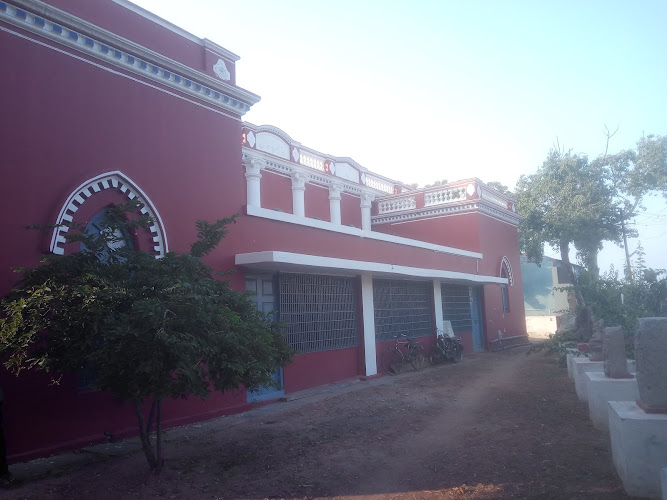
Anantapur Museum
About Anantapur Museum
Description
The Anantapur Museum sits quietly in the heart of Anantapur, Andhra Pradesh, and it has a way of surprising visitors who arrive expecting a small, routine collection. The museum is modest in size but packs a thoughtful selection of archaeological finds, regional sculptures, and cultural exhibits that sketch the long, complicated story of the district and surrounding region. The tone here is unpretentious: this is a place where local history is preserved with care, rather than staged for spectacle. That matters — especially for travelers who prefer subtle authenticity over flash.
On entering, visitors will notice the focus on artifacts that speak to the agricultural and temple-centered life of the area: stone carvings, pottery shards, inscriptions, and occasional ritual objects recovered from nearby sites. There are also interpretive panels—simple, clear, and sometimes a little sparse—so those who like deeper context should plan a quick read-ahead or pair the visit with a local guide. The layout is straightforward, easy to walk through, and accessible to most visitors. Practical note: the museum provides restrooms and has a wheelchair-accessible restroom, which is a thoughtful plus not always guaranteed at smaller regional museums in India.
Families traveling with children often find the museum surprisingly kid-friendly. Exhibits are compact enough that a curious child can make the whole visit feel like an achievable adventure, and some displays include larger objects—sculptures and architectural fragments—that kids tend to gravitate toward. At the same time, the lack of a cafeterial restaurant on-site means families should plan snacks and water ahead of time. There are shaded seating spots nearby, and a short walk will usually lead to local eateries where one can taste simple Andhra snacks (dosas, idlis, or even spicy local chutneys if one’s brave).
The emotional texture of a visit is a little different depending on expectations. Those who come expecting a sprawling national museum will leave underwhelmed; those interested in the specific historical threads of Anantapur district and the archaeological fabric of Andhra Pradesh will find the collection rewarding. The museum’s strengths are in tangible connections to place: plaques tell of ancient temple complexes, local artisanship, and fragments of pre-modern life that are rarely displayed elsewhere. It’s a good spot for travelers who like to piece together a region’s story stitch by stitch rather than swallow a long summary in one go.
There is a pleasantly low-key atmosphere. Instead of enforced hush and stern guards, the place feels like a local institution—quiet conversation is permitted, and sometimes school groups or regional historians stop in and add an extra layer of storytelling. On one of the quieter afternoons a visiting school class animatedly pointed out details on a stone carving; that energy—a mixture of pride and curiosity—gave the museum a warm, lived-in feeling. Again, not polished to metropolitan museum standards, but that is part of the charm.
Practical visitors note both positives and things to watch for. The museum is wheelchair-accessible in part (with a wheelchair-accessible restroom), but some display cases sit a bit high for those who use wheelchairs or for small children. Lighting varies: a few galleries are well-lit and crisp, others a touch dim, which can be atmospheric but may frustrate photographers. Photography is usually allowed for personal use, though policies can change, so it’s wise to ask at the desk.
For history buffs, the museum’s holdings are an invitation to dive deeper into the archaeological landscape of south India. Artifacts connected to regional temple architecture and Vijayanagara-influenced sculpture are on display, along with local inscriptions that hint at networks of trade and devotion. The labels sometimes assume a baseline knowledge; still, even casual visitors will pick up evocative details—the shape of a lotus motif, the tool marks on a carved lintel, the weathered face on a centuries-old stone—that make the past feel tactile and immediate.
It’s worth noting that the museum has been through ups and downs in funding and attention, like many smaller government-run institutions. This means some exhibits are periodically reworked or closed for conservation, and visitor amenities are functional rather than luxurious. But conservation efforts, when visible, signal a commitment to protecting these objects for future visitors. The staff—often local, often passionate—are usually willing to chat and point out lesser-known pieces. They tend to appreciate visitors who show curiosity; ask a question, and one may get more context than the placard alone provides.
Visitors who couple the museum with nearby sites—temples, ruins, or local markets—get the best value from their day. The museum works as a compact primer before heading to ancient temple complexes nearby, or as a gentle decompression stop after exploring open-air archaeological sites. It gives shape to the region’s larger narrative: the interplay of religion, agriculture, and trade that defined Anantapur district over centuries.
For travelers who track accessibility and family-friendly credentials, the practical facts help planning. The presence of working restrooms and a wheelchair-accessible restroom means the museum is more considerate than some comparable institutions. The absence of an on-site restaurant is a downside only if one forgets to bring water and a snack. Entry fees, when charged, are typically modest and in line with small regional museums; sometimes there are concessions for students or groups. Crowds are generally light outside of school group visits, so lone travelers and couples often enjoy a reflective visit.
In short, the Anantapur Museum is a subtle, honest place. It does not trumpet big-ticket objects or claim national prominence. Instead it offers a careful, place-focused collection that rewards curiosity and patience. Travelers who slow down, read a few plaques, and maybe chat with staff will come away with a deeper sense of how Anantapur and its surrounding region fit into the wider history of Andhra Pradesh and south India. It feels like a local keeper of memory—small, maybe imperfect, but sincere—and for many visitors that sincerity is the real draw.
Finally, a small personal aside: many travelers underestimate the value of these compact museums. The writer has often found that a brief hour in a regional museum yields more insightful context about a town than a long, polished tourist brochure. So allow time, wander slowly, and let the small objects do the heavy lifting. They will reveal patterns and stories that are rarely shouted from guidesheets but are, nonetheless, the backbone of local history.
Key Features
More Details
Updated August 29, 2025
Table of Contents
Description
The Anantapur Museum sits quietly in the heart of Anantapur, Andhra Pradesh, and it has a way of surprising visitors who arrive expecting a small, routine collection. The museum is modest in size but packs a thoughtful selection of archaeological finds, regional sculptures, and cultural exhibits that sketch the long, complicated story of the district and surrounding region. The tone here is unpretentious: this is a place where local history is preserved with care, rather than staged for spectacle. That matters — especially for travelers who prefer subtle authenticity over flash.
On entering, visitors will notice the focus on artifacts that speak to the agricultural and temple-centered life of the area: stone carvings, pottery shards, inscriptions, and occasional ritual objects recovered from nearby sites. There are also interpretive panels—simple, clear, and sometimes a little sparse—so those who like deeper context should plan a quick read-ahead or pair the visit with a local guide. The layout is straightforward, easy to walk through, and accessible to most visitors. Practical note: the museum provides restrooms and has a wheelchair-accessible restroom, which is a thoughtful plus not always guaranteed at smaller regional museums in India.
Families traveling with children often find the museum surprisingly kid-friendly. Exhibits are compact enough that a curious child can make the whole visit feel like an achievable adventure, and some displays include larger objects—sculptures and architectural fragments—that kids tend to gravitate toward. At the same time, the lack of a cafeterial restaurant on-site means families should plan snacks and water ahead of time. There are shaded seating spots nearby, and a short walk will usually lead to local eateries where one can taste simple Andhra snacks (dosas, idlis, or even spicy local chutneys if one’s brave).
The emotional texture of a visit is a little different depending on expectations. Those who come expecting a sprawling national museum will leave underwhelmed; those interested in the specific historical threads of Anantapur district and the archaeological fabric of Andhra Pradesh will find the collection rewarding. The museum’s strengths are in tangible connections to place: plaques tell of ancient temple complexes, local artisanship, and fragments of pre-modern life that are rarely displayed elsewhere. It’s a good spot for travelers who like to piece together a region’s story stitch by stitch rather than swallow a long summary in one go.
There is a pleasantly low-key atmosphere. Instead of enforced hush and stern guards, the place feels like a local institution—quiet conversation is permitted, and sometimes school groups or regional historians stop in and add an extra layer of storytelling. On one of the quieter afternoons a visiting school class animatedly pointed out details on a stone carving; that energy—a mixture of pride and curiosity—gave the museum a warm, lived-in feeling. Again, not polished to metropolitan museum standards, but that is part of the charm.
Practical visitors note both positives and things to watch for. The museum is wheelchair-accessible in part (with a wheelchair-accessible restroom), but some display cases sit a bit high for those who use wheelchairs or for small children. Lighting varies: a few galleries are well-lit and crisp, others a touch dim, which can be atmospheric but may frustrate photographers. Photography is usually allowed for personal use, though policies can change, so it’s wise to ask at the desk.
For history buffs, the museum’s holdings are an invitation to dive deeper into the archaeological landscape of south India. Artifacts connected to regional temple architecture and Vijayanagara-influenced sculpture are on display, along with local inscriptions that hint at networks of trade and devotion. The labels sometimes assume a baseline knowledge; still, even casual visitors will pick up evocative details—the shape of a lotus motif, the tool marks on a carved lintel, the weathered face on a centuries-old stone—that make the past feel tactile and immediate.
It’s worth noting that the museum has been through ups and downs in funding and attention, like many smaller government-run institutions. This means some exhibits are periodically reworked or closed for conservation, and visitor amenities are functional rather than luxurious. But conservation efforts, when visible, signal a commitment to protecting these objects for future visitors. The staff—often local, often passionate—are usually willing to chat and point out lesser-known pieces. They tend to appreciate visitors who show curiosity; ask a question, and one may get more context than the placard alone provides.
Visitors who couple the museum with nearby sites—temples, ruins, or local markets—get the best value from their day. The museum works as a compact primer before heading to ancient temple complexes nearby, or as a gentle decompression stop after exploring open-air archaeological sites. It gives shape to the region’s larger narrative: the interplay of religion, agriculture, and trade that defined Anantapur district over centuries.
For travelers who track accessibility and family-friendly credentials, the practical facts help planning. The presence of working restrooms and a wheelchair-accessible restroom means the museum is more considerate than some comparable institutions. The absence of an on-site restaurant is a downside only if one forgets to bring water and a snack. Entry fees, when charged, are typically modest and in line with small regional museums; sometimes there are concessions for students or groups. Crowds are generally light outside of school group visits, so lone travelers and couples often enjoy a reflective visit.
In short, the Anantapur Museum is a subtle, honest place. It does not trumpet big-ticket objects or claim national prominence. Instead it offers a careful, place-focused collection that rewards curiosity and patience. Travelers who slow down, read a few plaques, and maybe chat with staff will come away with a deeper sense of how Anantapur and its surrounding region fit into the wider history of Andhra Pradesh and south India. It feels like a local keeper of memory—small, maybe imperfect, but sincere—and for many visitors that sincerity is the real draw.
Finally, a small personal aside: many travelers underestimate the value of these compact museums. The writer has often found that a brief hour in a regional museum yields more insightful context about a town than a long, polished tourist brochure. So allow time, wander slowly, and let the small objects do the heavy lifting. They will reveal patterns and stories that are rarely shouted from guidesheets but are, nonetheless, the backbone of local history.
Key Highlights
Anantapur Museum
Location
Places to Stay Near Anantapur Museum
Find and Book a Tour
Explore More Travel Guides
No reviews found! Be the first to review!
Traveler Reviews for Anantapur Museum
There are no reviews yet. Be the first one to write one.
Have you visited Anantapur Museum? Help other travelers by sharing your review.
Find Accommodations Nearby
Recommended Tours & Activities
Visitor Reviews
There are no reviews yet. Be the first one to write one.
Share Your Experience
Have you visited Anantapur Museum? Help other travelers by leaving a review.