
Eling Tide Mill Experience
About Eling Tide Mill Experience
Key Features
More Details
Updated June 11, 2025
## Eling Tide Mill Experience (Totton, Southampton): what to expect, when to go, and how to make it worth the stop
If you like places where engineering history is still visible (and not just explained on a wall panel), the Eling Tide Mill Experience delivers. It’s a Grade II* listed tide mill dating to c. 1785, built on an artificial causeway at Eling, near Totton and Southampton. Experience
What makes it genuinely unusual: it’s one of the only remaining operating tide mills in the UK (paired with Woodbridge Tide Mill in Suffolk). The whole point of the site is that you can understand—visually—how tidal water can be captured and turned into rotational power to drive millstones.
—
## Fast facts for your visit (based on the official site)
– Name: Eling Tide Mill Experience Experience
– Address: Eling Hill, Totton, Southampton SO40 9HF, United Kingdom Out With The Kids
– Coordinates: 50.9110947, -1.4822663 Out With The Kids
– What’s on site: the tide mill, riverside walks, an Interactive Discovery Room, and a café Experience
– Dogs: permitted inside buildings and in outside areas Experience
### Current operational note (important)
The official site states they have not produced flour for some time, and that milling times will be added once more information is available; it also notes the millers are undertaking training. In other words: go for the story, the mechanism, and the setting—don’t plan your whole visit around seeing flour being made. Experience
—
## What you’ll actually do here (and why it works for families)
### 1) Understand a tide mill by watching the logic, not memorising it
Eling is a water mill that harnesses the power of the tide to grind wheat into flour, and the site has been associated with milling for over 900 years. That long timeline matters because it frames tidal power as practical infrastructure, not a novelty. Experience
A key detail you can look for (and it’s the kind of thing most visitors miss): historically, the mill had two waterwheels, each driving two sets of millstones. The site explains that one wheel and one set of millstones have been restored, while the other remains static so visitors can see “identical machinery” up close without safety housings. Experience
That “one moving / one static” pairing is surprisingly effective for kids: one side is kinetic and dramatic, the other is a safe, slow inspection zone.
### 2) Use the Discovery Room as the “translation layer”
The official site positions the Interactive Discovery Room as part of the core visitor offering alongside the mill and café. If you’re visiting with children (or with adults who don’t automatically parse gears and sluices), this is where the visit becomes coherent rather than “we saw an old building.” Experience
### 3) Pair the mill with the outdoor sections so it feels like a proper outing
Management and access improvements explicitly include the outdoor areas of Goatee Beach and Bartley Water, plus the surrounding riverside walks. That’s a built-in way to avoid the common “we were done in 20 minutes” problem some small heritage attractions have. Experience
—
## Timing strategy: when the site is simplest to enjoy
### Check opening patterns before you go
The official opening-times page lists a seasonal schedule. For example, Winter Hours are shown as 28 September 2025 – 31 January 2026, with:
– Café & Discovery Room: Wednesday–Sunday, 9:30–16:00
– Mill & Shop: closed until 31 January 2026 (and also noted as closed between 14 Dec 2025 – 31 Jan 2026 in the same winter-hours context) Experience
Because these schedules change, treat the official page as your source of truth right before travel. Experience
### Ticket pricing (what’s free vs paid)
The official homepage lists:
– Winter tickets for the Discovery Room:
– Adult (16+): £3.00
– Child: £1.50
– Concessions & Seniors: £2.20
– Family (2 adults + up to 3 children): £9.00
– Café and Walks: Free admission Experience
—
## Getting there, parking, and the toll-bridge reality
The site says the experience is on Eling Hill opposite the toll booth and is accessible by car, foot or public transport. Experience
For parking, the official guidance includes:
– A free car park on the opposite side of the toll bridge, by the cemetery and church
– Alternative parking by the Eling public slipway (next to the Anchor Pub) Experience
That detail matters: if you arrive without a plan, you may end up circling and accidentally paying the toll when you didn’t need to. (The site confirms the toll bridge context; it doesn’t publish current toll charges on the lines we can see, so I’m not quoting any prices.) Experience
—
## Accessibility and inclusivity notes you should know up front
– Dogs are permitted inside buildings and in outdoor areas. Experience
– The site states walks are accessible all year round. Experience
– For additional access specifics, the official menu includes an “Access” page (worth checking for mobility details before you go). Experience
—
## How to make this a “high-satisfaction” stop (even if milling isn’t running)
A tide mill can be deceptively compact—so a great visit usually comes from sequencing:
1) Start with the Discovery Room (get the story and the mechanism in your head). Experience
2) Go to the mill and match the explanations to the physical parts. Experience
3) Walk the riverside section to see why tidal geography matters here (and why a causeway location is not random). Experience
4) Finish with the café so the outing lands as a relaxed half-day, not a quick pop-in. Experience
That structure is also kid-proof: it alternates “learning / seeing / moving / refuelling.”
—
—
## Data freshness & what could be outdated
– Opening times and what’s open (mill/shop vs Discovery Room/café) are clearly seasonal and change by date ranges (e.g., Winter Hours 2025–2026). Always verify using the official opening-times page close to your visit. Experience
– The site states milling is not currently producing flour and that milling times will be added later—this is inherently time-sensitive. Experience
—
If you want, I can also generate:
– a meta title + meta description tuned for UK family day-out intent,
– 10–15 FAQ blocks (schema-ready) using only what’s supported by the sources above.
Table of Contents
Key Highlights
Eling Tide Mill Experience
Location
Places to Stay Near Eling Tide Mill Experience"Things to do for kids."
Find and Book a Tour
Explore More Travel Guides
No reviews found! Be the first to review!
Traveler Reviews for Eling Tide Mill Experience
There are no reviews yet. Be the first one to write one.
Have you visited Eling Tide Mill Experience? Help other travelers by sharing your review.
You Might Also Like

Netley Abbey
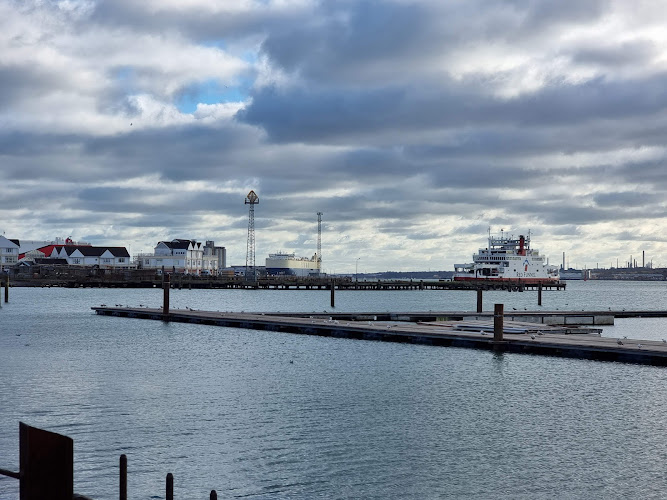
Mayflower Park

New Forest Wildlife Park
Find Accommodations Nearby
Recommended Tours & Activities
Visitor Reviews
There are no reviews yet. Be the first one to write one.
Share Your Experience
Have you visited Eling Tide Mill Experience? Help other travelers by leaving a review.